Episode List

The 3 Rites of Passage Every Developer Goes Through (And Nobody Warned Me About)
I wrote a triple nested for loop that took down a grocery chain's ordering system. I broke buttons across multiple sites as a senior engineering manager at Clorox. And I've sat in rooms feeling like the dumbest engineer there — more than once.In this episode, I break down the three uncomfortable milestones every developer hits: wanting to stop being "the junior guy," shipping code that breaks production in spectacular fashion, and being the weakest engineer in the room. No fluff, no motivational poster garbage — just honest stories from 12+ years in the industry.AI won't save you from any of these. You just have to go through them.If you're in one of those moments right now, this one's for you.Want to level up? 👇Coding bootcamp for career switchersLearned Javascript the right way Break into AI engineering
Build This AI Project and You’re Ahead of 90% of Developers
Follow along with the project by going here: https://www.parsity.io/5-day-ai-advisory-boardIn this episode, I walk you through a side project that, if you actually build it, will put you ahead of roughly 90–95% of software developers right now.Most developers are using AI tools. Very few are actually building with them.So instead of talking about it, we build something real.The project is an AI advisory board — a system where you can ask questions like:What would Theo Browne say about Node?What would ThePrimeagen say about Vim?What would Alex Hormozi say about sales?What would I say about testing?And instead of generic AI responses, you get answers grounded in real transcripts and real opinions.We go step-by-step through:Calling an LLM programmatically (Gemini API)Setting up a backend route to handle requestsAdding system prompts and guardrailsBuilding a simple knowledge basePulling in real YouTube transcriptsInjecting data into the model at the right time (naive RAG)This is the kind of project that forces you out of “AI user” mode and into actually building AI-powered products.
The 6 Skills You Need to Become an AI Engineer
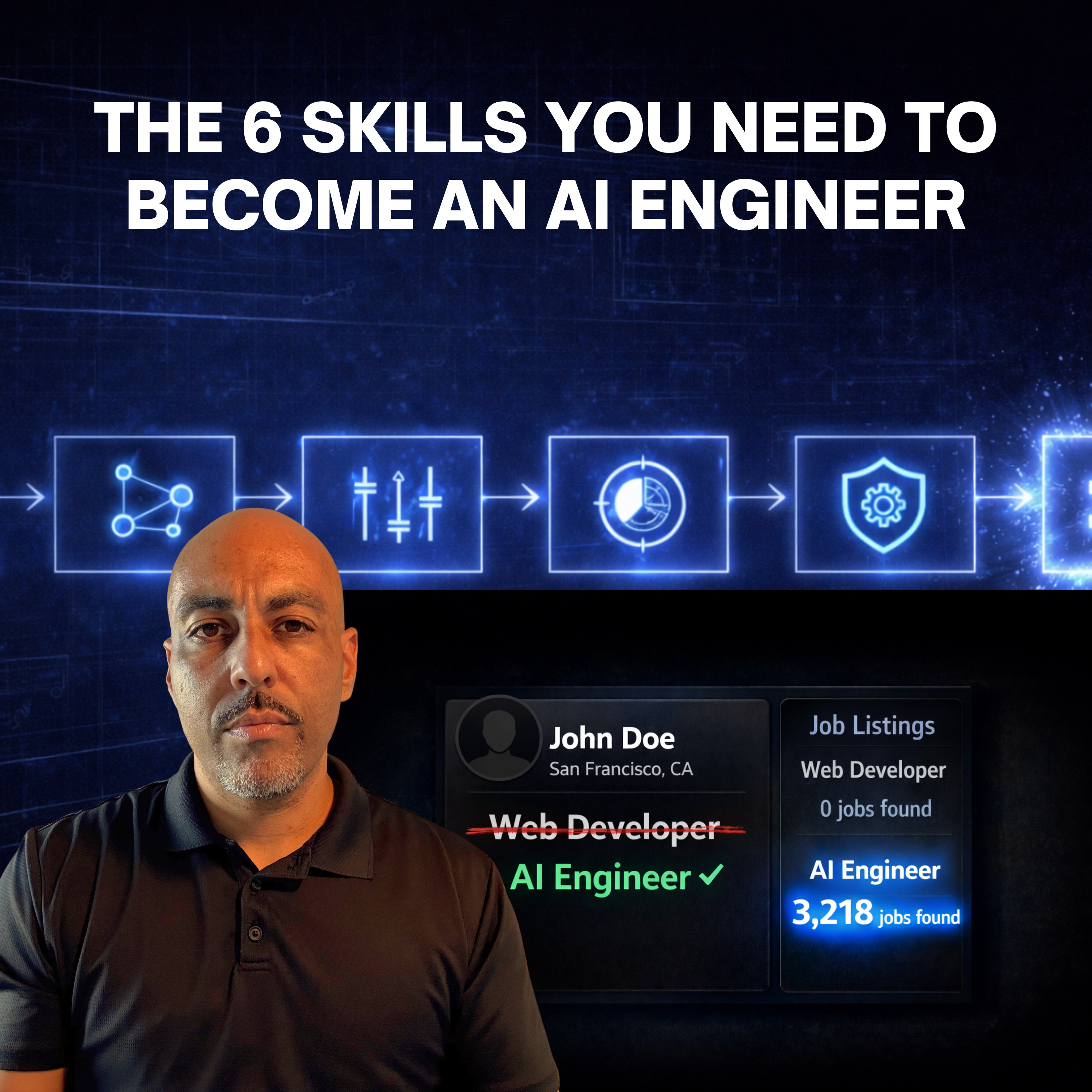
Resources mentioned 👇parsity.io/ai-with-ragThe Router Pattern – A Smarter WayI mentioned that I got a lot more requests for interviews. Here's the proof: Da Proof3 Ways We Work with Software Developers (and noobs) 👇AI Dev Program – parsity.io/ai-devApply for our full stack software engineering programLearn JavaScript in 30 days... the hard way
AI destroys your coding skills. A warning for junior developers
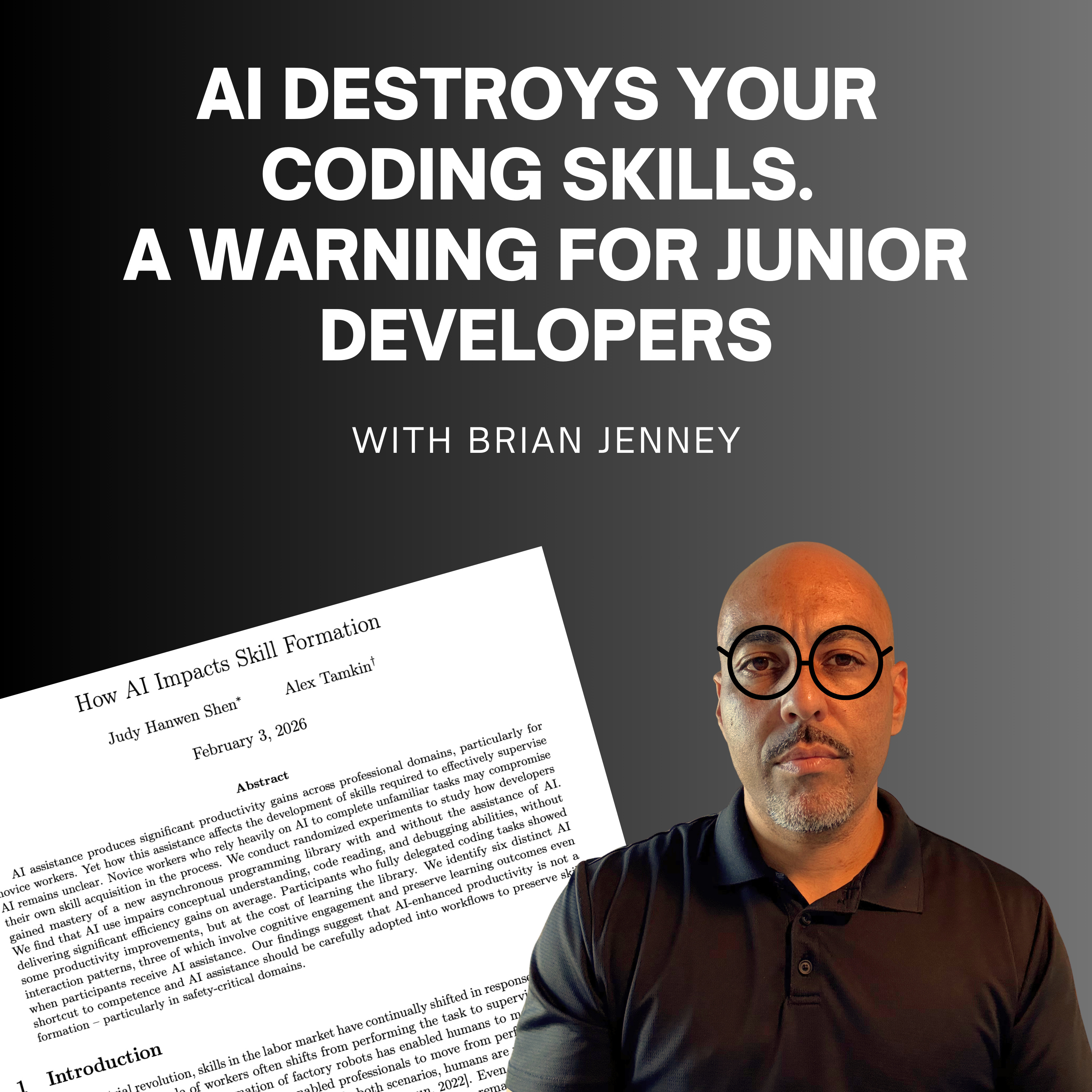
I created a free project for developers who want to learn AI the hard way: https://parsity.io/ai-with-ragI don't envy new coders. AI is being jammed down your throat and at the same time, you're being told you must understand the code it generates.It's a confusing time.Using AI too early comes with a cost. More importantly, we'll look at some proven ways to make sure you are learning deeply and can work efficiently with your little code bot.You can read the study from Anthropic here: https://www.anthropic.com/research/AI-assistance-coding-skills
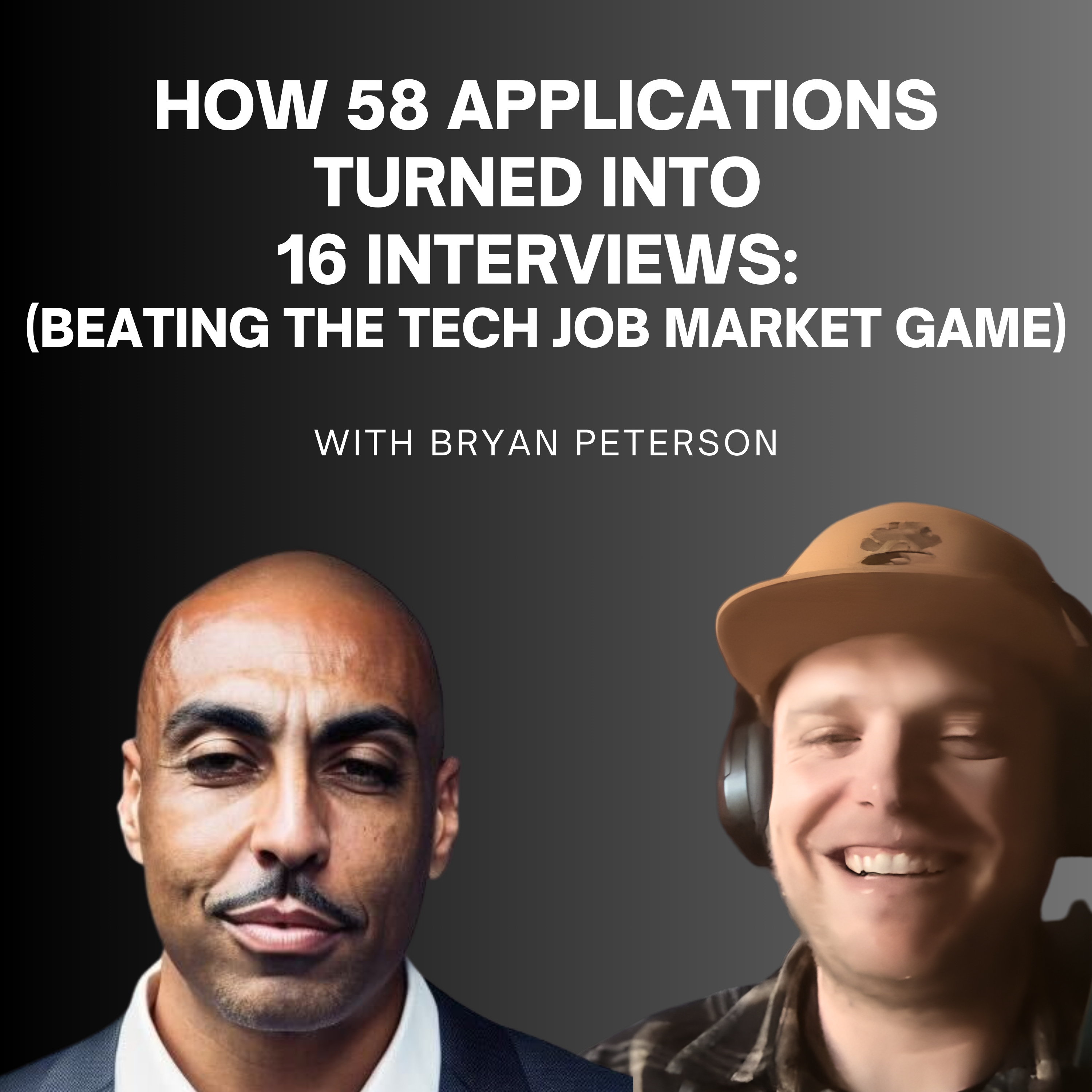
#306 - How 58 Applications Turned Into 16 Interviews: (Beating the Tech Job Market Game)
If you're curious about Bryan's strategy, you can apply to work with him here: 👉 Application form.The tech job market is brutal right now. Everyone knows it.People are sending hundreds of applications, getting ghosted, and wondering what the hell is actually going on behind the scenes of hiring.So in this episode I sat down with Bryan, someone I met on LinkedIn and later met up with in Reno, and he shared something that honestly blew my mind.Last year he did what most people do:Around 250 applications over 8 months… and almost no interviews.This year he completely changed his approach.Instead of blasting applications everywhere, he used a targeted strategy and applied to only 58 roles.That turned into 16 interviews across 9 companies and multiple final rounds.Yeah… that got my attention.In this conversation we talk about what he’s seeing on the front lines of the hiring market, including:Why most resumes never get seenWhat hiring managers are actually filtering forThe mistake developers make in behavioral interviewsWhy STAR stories matter way more than people thinkThe reality of DSA interviews and why speed mattersWhy applying to the “right level” can dramatically increase your chancesAnd why job searching is really a game of probabilityIf you’ve been applying to jobs and feel like everything is disappearing into a black hole, this episode should help you understand how the hiring game actually works right now.And honestly, Brian’s story proves something important:You don’t need hundreds of companies to say yes.You just need one










Get this podcast on your phone, Free


Create Your Podcast In Minutes
- Full-featured podcast site
- Unlimited storage and bandwidth
- Comprehensive podcast stats
- Distribute to Apple Podcasts, Spotify, and more
- Make money with your podcast