Episode List
Episode 1.23 – The Taiping Heavenly Family
Painting of a wealthy Qing family. Integrating tens of thousands of new adherents, while planning and launching an insurrection against the Qing, put strain on Taiping society and pushed them to reorganize their society in novel ways. In this episode we’ll look at how the Taiping navigated these challenges in the lead up to their first battles with the Qing government and declaration of the Taiping Heavenly Kingdom. The shape into which Taiping society formed was mediated by their cultural expectations and mores, by what they read in the Bible, and by the idiosyncrasies of Hong Xiuquan himself.
Episode 1.22 – Long Live the Heavenly King
In 1850, Guangxi was wracked by all kinds of social maladies and natural disasters – corrupt officials, disease and epidemics, ethnic conflict, drought, and all kinds of organized and less organized crime. In this tempest the Society of God Worshipers grew stronger than ever and transformed into an insurrectionist, revolutionary movement, The Taiping Tianguo, the Kingdom of Heavenly Peace, with Hong Xiuquan as it’s Heavenly King. In this episode, things finally boil over and the Heavenly Kingdom is finally declared after the God Worshipers & Qing soldiers come to blows.

Episode 1.21 – The Emperor Is Dead
The Xianfeng Emperor, showing off a set of his yellow imperial robes. The Daoguang Emperor died in 1850. He has been the Qing Emperor for the past dozen episodes and his actions (or lack thereof) helped set the stage for the cataclysmic decade that will be the 1850s. But he didn’t live to see it. Instead, the Qing Empire was left to his teenage son. In this episode, we’ll take a look at the state of the Qing Empire and see how global forces combined with poor imperial policies to create the massive financial crisis and economic depression that beset China during the 1840’s.
Episode 1.20 – The Voice of God
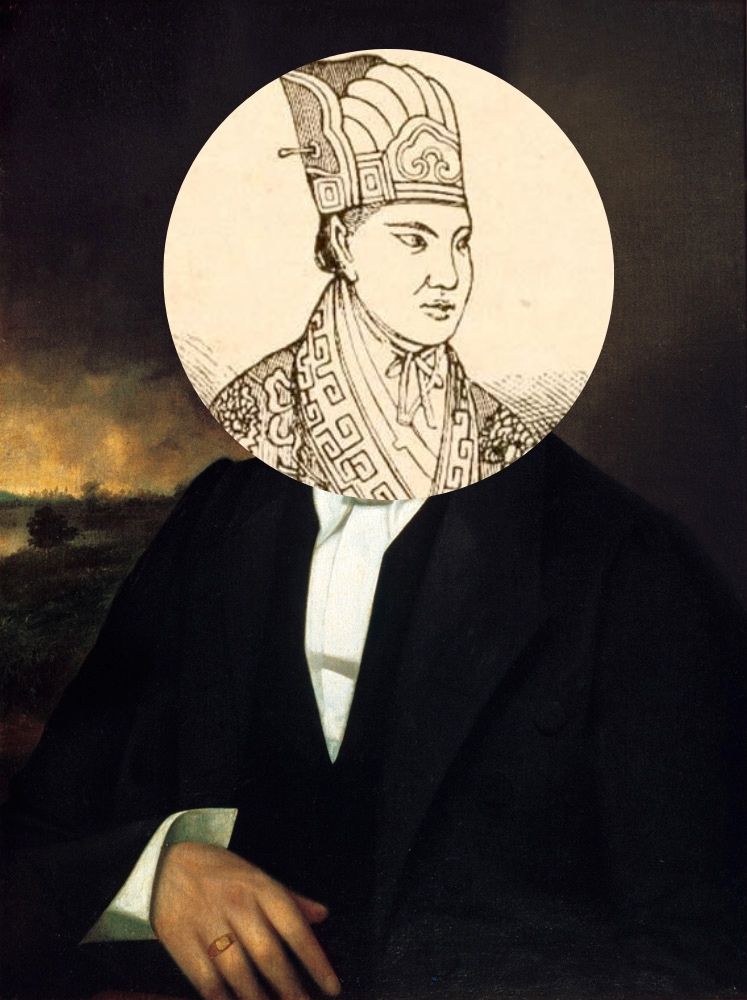
God doesn’t speak to just anyone. Communicating with the divine is mediated by clerics, sacred texts, by long and complicated rituals. Many traditions, such as Christianity, put a special emphasis on the written word, recordings of revelations from prophets, aeons, or the divine itself. So what happens when God talks to someone who isn’t “supposed” to hear him? What distinguishes new divine revelation from blasphemy? How can you be sure it’s God speaking and not a devil or demon? Not a charlatan faking a religious experience for their own ends? The emergence of new divine revelation that challenges or reinterprets the existing theology has happened in many traditions. In this episode we’re going to begin the story of how the God Worshipers – and then the Taiping – handled it when God began speaking regularly at Thistle Mountain.

Episode 1.19 – Radicalization
(Painting of the missionary Robert Morrison, who was successful and popular enough to have his portrait painted. The same can not be said for Issachar Roberts). On the surface, Hong Xiuquan’s life in 1845 and 1846 was unremarkable. He was in his early thirties, married with young children. His job as a school teacher had been secured through a mix of qualifications & family connections. And then 1847 happened. By the beginning of 1848 Hong was a wanted man, actively leading a growing & radical religious community and writing about his intentions to assume imperial power over the largest empire on earth. So what the hell happened in 1847? That’s the question this episode attempts to answer.

Get this podcast on your phone, Free


Create Your Podcast In Minutes
- Full-featured podcast site
- Unlimited storage and bandwidth
- Comprehensive podcast stats
- Distribute to Apple Podcasts, Spotify, and more
- Make money with your podcast