
Episode List
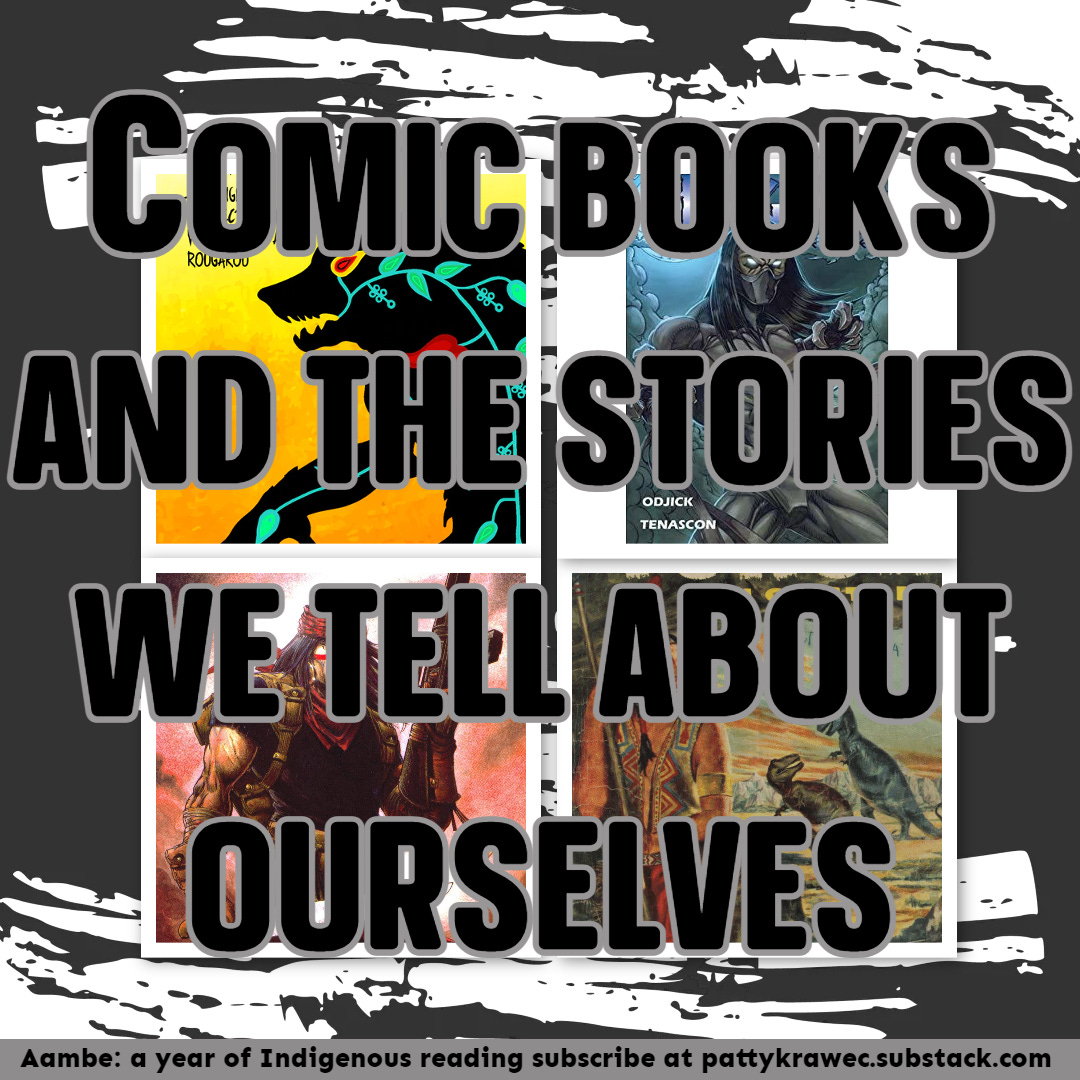
Indigenous Comics
Note: When we recorded this episode the panelist Myka used a different name. While the transcript has been updated to reflect their current name the audio recording reflects that history.Patty KrawecThis is Ambe. And we're here for our conversation about comic books and graphic novels, or kind of whatever people want to call them. I was looking up for some good quotes on it. And I came across one where some somebody had said that the difference between graphic novels and comic books are the binding.This is part of a yearlong project of mine where we're talking about Indigenous literature's and it started with a book I read that Daniel Heath Justice had written. And as I was kind of going through the months, and kind of creating the different categories that occurred to me, this is a valid category of literature. But it doesn't often get, it doesn't often get a lot of attention, Neil pointed out that Daniel was a contributor in one of the Moonshot volumes.We've got Jay Odjick, who actually designed my avatar. If you see me on social media, and I look like a superhero Jay is why. That was a really interesting process that I had absolutely no idea. I was just like, make me look cool. And he's like, but I need to know this. And I need to know that. I was like, wow, that's, there's just so much information. I was like, I do, I jump into things all the time with no idea of what's actually required. So it was, it was an amazing process. And I really love her.And so we've got Neil, who is probably my most frequent flyer with this, because he's just so cool and into everything. Lee Francis, who was actually one of the very first guests on my Medicine for the Resistance podcast that I co-host with Kerry Goring. And we were talking about Indigenous futurism. And that was just such a neat conversation. And someday, I hope to get to Indigenous ComiCon because that looks really cool. And then we've got Myka Foubert who, who is my cousin, but also a really cool person. And likes, likes, comic books, graphic novels, all that, all that artistic literature stuff.So now what I'm gonna do, I'm just gonna kind of go around and ask each of you to give a better introduction than the one that I just gave a little bit about kind of how you connect with or do this, you know, this … kind of what it is about graphic novels and comic books. that got your attention and keeps you there. So we'll start with JayJay Odjick So yeah, kwe-kwe, Jay Odjick n’dishnikaahz. Hello, my name is Jay Odjick . I'm an Anishinaaabe artist, writer, TV producer jack of all trades, master of absolutely none. And I've been reading comics since I was old enough to be able to read. Even though I'm from the kidney got Kitigan Zibi Anishinabeg community in Quebec, which was where my dad's from I was born in Rochester, New York. And because my dad, like a lot of guys from the rest, there wasn't a lot of work in the community. So a lot of guys left to work, construction, high steel jobs like that. So I was born in Rochester. And right off the street from where we lived was a comic book shop. And we didn't have a lot of money. But luckily for me, the comic shop had this kind of dubious practice of taking the comics that didn't sell and tearing off the covers and selling them for five cents. So as a kid without a lot of money, it was pretty great because you walk in with like 25 cents, walk out with a couple of comics, roll them up, stick them in your back pocket. Nowadays was a guy who makes comics for a living and I'm like, “How could you?” But at the time, it was absolutely awesome. So that's how I kind of got into it. And I fell in love with the idea I think of using pictures to tell stories. I really wanted to be able to tell stories, and that's what brought me to it and I fell in love with the medium in that way of doing it because it seemed like something we could do without needing, you know, a ton of camera and equipment, video equipment and things like that.So I've been working in comics for longer than I care to mention on camera. I'm actually a lot older than I look I'd like to say, and I'm best known I would think for my original graphic novel called Kagagi, the Raven. That led into an animated series I was the executive producer and showrunner on called Kagagi The Raven, which aired in Canada, the United States and Australia. I drew two books with a Canadian author Robert Munch called Black Flies and Bear for Breakfast. And both of those I think are important because they were they were very commercially successful, but they featured all Native cast of characters and they were both set in First Nations communities. And it was a real trip for me to be able to go into any bookstore anywhere in Canada and find books with heroic looking Native children. And in addition to that we had Bear, which was these were published by Scholastic Canada. And we had Bear For Breakfast published in Anishinaabemowin. And I think that was a really important thing too, because up until then, they just published the books in English and French. And I said, Why don't we consider doing that an Indigenous language?So that's something I'm going to try to push for and hope we can see more of is more books like that mainstream books published in Indigenous languages, I think Anishinaabemowin was just a start. And hopefully we can move into more in the future. And other than that, I've worked with Lee most recently, on his Kickstarter anthology project, edited by Beth Le Pensee called A Howl: Werewolf Anthology . And I've got a story in that that's really interesting. And we'll we'll talk about that more later. But yeah, that's me. And that's who I am.Neil Ellis OrtsAh, howdy. I'm Neil. I'm in Houston, Texas. I grew up reading comics. Archie was the gateway drug. The 1960s Batman TV series also a little bit. I am not Native, there's not a ounce of anything in my cells that is Native. So I'm the settler here who is just coming here to geek out about comics.Myka FoubertHi! I'm Myka. I grew up reading comic books, because they were easier for me to read, then those nasty paper books. As someone who is disabled, having something that was easier to read was great, because I read just as much as all the other kids did, if not more, I just read Calvin and Hobbes instead. Because that's, that's the comic book that was was my gateway drug. But that got me into superhero comics. Like that got me into Spider Man that got me into the X Men. I was a huge fan of the DC Comics for Bat Girl. I'm still a huge comic book and superhero nerd. But yeah, my interest in comics really stems from wanting to read as much as everybody else but not really having the ability to, and just the easiest form for me to consume literature was through graphic novels and stuff like that. And I still own graphic novels. I still read them as much as I can. Though, admittedly, being a university student, I have not really had the chance to read them, because I've been really busy with all the mandatory stuff that I have to read. But yeah, that's that's me.Lee Francis IVHey, guw'aadzi! this is so exciting that we get to hang out again. So yeah, my name is Lea Francis, my family's from the Pueblo of Laguna on my dad's side. And the Pueblo of Missouri on my mom's side. So I was like to say that people get confused. They're like, there's a Pueblo of Missouri? And I was like, No, I'm just kidding. My mom's like, straight Anglo. Yeah, so my love of comics also stretches back to about as far back as I can read, my dad was a huge science fiction and fantasy fan. That's what our shelves were filled with. It got to the point where my dad literally had to look at the dates that things were published, because oftentimes, they would upgrade, you know, update the covers for like Science Fiction/Fantasy things. And if it was anytime before, he would like, he'd be like, it was anytime before like, 1986. He's like, I've read it. So that's how much like I come by my nerditry like it's genetic nerd, right, genetic, Indigenous nerd.So, but most of the time, I spent my my, my worlds leading up until I started native realities in education. And I think that was really formative. I mean, I'll make the joke that the other joke I like to make, which is I got a PhD in education so that I could open a comic shop. You know, but essentially, I, when I started working in schools, because I loved comic books, what I would see on the shelves for my kids and I worked at home, so I worked at my home Rez Laguna/Acoma high school. That's where I, you know, almost a decade of my career there. When I’d look at the shelves, what you would see is essentially you'd see like a whole bunch of kids books, like, you know, and a lot of them would be non Native writers within you know, the kid’s, early kids literature, and this is probably you know, 20 years ago when I started teaching, so you'd have the stack of kids books and stuff like Paul Goble. Maybe there'd be a storyteller to like a local storyteller too.But you know, not not really not a lot. And so and then and then on the same shelf, there would be just like this gap, because there was no YA. There certainly were, there was like maybe two comics that people could find out, and then would jump right into adult literature. And then you're reading Louise Erdrich. Right. And it was just like, Man, that's a huge thing to cover from reading a picture book, to jumping into Louise's work, right? And especially for me, because I didn't see any comics, and I think a lot of us have gotten into this as native creatives of like, you know, I didn't see anybody that looked like me. And even when there was a comic that came out or something, you know, at least in the mainstream, oftentimes, it would be, you know, my northern plains, brothers and sisters, right. So, head dress, horse riding, you know, just ripped. They're all jacked, they are, those guys are just yoked across the board, right? I mean, for real, you know, Plains, riding the horse, what I was, like, Yo, my people were short, and we, like grew corn. Uh, you know, I was like, I don't see my people all that much in this kind of stuff.So I just started kicking around ideas, and I wasn't really doing anything. And it was 2014 I met Arigon Starr at a Native writers event, we just started laughing about, you know, like, we should have like a native comic code that we can stamp on books to give them like some authority. And, and a lot of it just took off from there. We started publishing out of my nonprofit at the time, because I was like, Well, you know, the comic people, let's arrange them and start getting stuff out the door. And I and then a lot of people hit us up on Facebook, they're like, this is great. You guys should publish more. And I was like, really should publish. So started publishing, and then just crazy way leads unto way.You know, it started out like, you know, republishing and then 2016 I was like, we should all get together and have a Comic Con. Because there's not one for us. Like, usually we're, we're the what are we We're the we're the we're the token native at the Comic Con talking about Native stuff, right? It was like, I'd rather it be just a Comic Con for us. And we all get to hang out at party and play. And that's what I wanted to do. And then 2017 we opened Red Planet books and comics. Because I had so much stuff piled up from the Comic Con in my house, my wife was starting to get a little crazy. She's like, this is gotta get out of the hallway. So I was like, alright, we should open an office or something, right? And we opened a shop instead. And now we're the only native comic shop in the world where the largest distributor of native comics, we still publish. We're doing Howl with Jay and a whole bunch of other Native writers got a water protectors comic coming up. We just, I mean, I'll talk more. We just got the license from Tim Truman, we’re his,we’re his publisher for scout for his reproduction fn Scout. So if anybody knows that's probably the original native comic, like single superhero comic that came out in the mid 80s. So yeah, I mean, that's, that's kind of this. This all revolves around my life. I love comics, nerds, games, toys, collectibles. I do RPGs , I do comics. I mean, it's just it's writing and trying to get more of the stuff out there on the shelves for our kids. You know, any way that I can?PattySo Neil, you had mentioned a couple of Indigenous comic book characters whose names have fallen out of my brain because I didn't write them down. And what Lee was just saying just made me think of like, representation like how, how were we there back when we were younger? And I mean, I was just reading Archie comics when I was a kid. So there was like, no Indigenous content at all unless it was a Halloween issue.NeilWell, the two series that I I followed a little bit, well, one I followed completely, I kind of fell in and out of the earliest one I remember was called Turok, Son of Stone, which was a Indian and dinosaur story that Turok in his young Ward, Andar because they always had a young sidekick. Got lost in this last world with dinosaurs and cavemen and, and the whole story was them trying to find their way out. This was published originally by Dell comics, and then later by Gold Key. And so I mean, it wasn't really a Indigenous setting. It was Indigenous characters lost in a lost world kind of thing.And I, as I was thinking about this, the similarity between this and the next one was called Arak , which was created by Roy Thomas, who did a lot of Marvel, he brought Conan into comics. He created this for DC Comics, and Arak was a Indigenous young boy his tribe is decimated by another tribe. It's made, he made up a tribe. And is set adrift at sea is picked up by Vikings and taken to Europe. So he's another kind of fish out of water story. Not an Indigenous setting, but Indigenous central character. So those are characters that I kind of grew up reading. Well, by the time Arak came out, I was well into high school, so. But as a young person, reading those books, and I was reading something really different. Of course, it's all by white creators, as far as I know, but I mean, respectfully, that and of course, previous to that there's, you know, all kinds of Western books. And you have the character Scalp Hunter, which was a white guy raised by Indians. I think there's more than one of those kinds of characters in the back in the in the canon. Of course, there was a time when Lone Ranger was a big, big franchise, Tonto had his own comic for a while, but I don't think I read any of those. But this thing, this is all very mainstream. sort of generic Hollywood, Indian.PattyAre those familiar to you, Jay? I think you and Lee, were both kind of nodding along at different places. Were those familiar to you?JayYeah, for sure. Sure, Turok more so than the others. I remember Arak from when I was just a little kid. But I remember Turok because there was some cross media stuff that was done, there was a video game, I believe, for the Nintendo 64 or something. It was a pretty popular game. So for, Scalp Hunter and things like that go I remember those. And the first one, that really first Indigenous character that was created by non Indigenous people that I remember really prominently was in a book called Alpha Flight by John Byrne, there was this character called Shaman. And it was, you know, the tropes we've come to know and expect as it comes to the native people. The mystical native guy, and I don't know about any of you know, the rest of our guests, but I don't actually have mystical powers. I'm sorry, I hate to disappoint for anybody who's tuning in who was expecting me to do some sort of magic, but not not in my repertoire.So we saw that a lot. And as well, with Shaman, it was really funny. Because the thing I always say is, whenever you get a native character, in these from these corporate companies, their identity as a hero tends to be their Indigeneity. So we can't have a guy who's just like a crimefighter, like a daredevil or somebody like that he has to be, you know, like Red Wolf or something of that nature. So the way I the way I was explained, it is like, if there's a fire in Gotham, city and apartment building on fire, people aren't like, oh, no, the the buildings on fire, we're all gonna die. Wait, we're saved. That's white Batman. He's just Batman. Whereas when you look at like, African American characters, every one of them has the word Black in their title. So it's like Black Vulcan, Black Panther. You know, they all get that. And it's kind of been the same in a way for us where, you know, every character kind of has that thing hung on it. And you will never get to see just the native character who just a cool native character, it has to be about that. At the same time, the costume has to have all of the stereotypes and tropes of the past. So we don't see guys in modern superhero costumes, we see people still wearing leather and buckskin.Now looking at like Lee, and everyone else here, we're not wearing leather and bucksin, and I'm wearing T shirts, some jeans and some shoes, like some Jordans I paid way too much for. So I always kind of wondered as a kid why these things were the way they were. I mean, we've seen it. It's something that's played out numerous times. And that was a part of the reason why I created Kagagi the way I did, because I wanted to create a character who moved away from the stereotypes who just look like a visually cool character that any kid could look at, oh, that looks interesting. I want to check that out, and almost suckering them into reading and if they weren't native, because it was a costume design that I felt could stand next to Batman or Wolverine and didn't scream like this is a stereotype where he's wearing clothing that that's been out dated for 100 years or something.So I think that's one of the big things with modern Indigenous comics is we're starting to see from Indigenous creators moves away from those types of things, but yeah, and as far Scout goes. Scout was the first time I saw an actual native character who I thought was cool. And I remember, we used to go to the store that would take these like kind of mystery bags, or they take a bag and you couldn't see what was in it. And you get a stack of comics for like five bucks or something. And you just hoped there was something decent in it. And my brother and I picked up a couple of these and got home a normal book with this Scout. And we're like, oh, he's native like, and it was the first time I saw something, where it wasn't that stereotype where the character, you know, again, with all due respect to characters like Shaman, and the people who created them, a lot of those characters spoken at very, like, many moons ago, my people and I'd be like, Hey, Dad, can you you know, tell me something you did a long time ago. And he'd be like, Yeah, way back in the day. And I'm like, Yeah, that's it. We don't talk like that. So it really you know, there were there were a lot of times when I saw characters who really reflected who we are. In the modern era, I will say, I think that's the best way I can put itpatty krawec Yeah, I call that cigar store Indian, when they when they talk when they when they talk like that. But we all know people who put on that rez voice when they get in front of white people. We all know those people. A long time ago, I wrote an article that got published by a Canadian magazine and they sent a photographer out to take my picture for the magazine and I wore this purple dress that I had worn all the powers that I had gone because I liked the skirt twirled and and so she says like, where are your traditional clothes? I was like, What are you talking about? And she says your you know, your traditional clothes, like she said, louder and slower as if that would help me understand it better. And I was just like, What are you .. I don't have .. so I let her remake me into to kind of cobbled together and you know, there's a picture of Ben. He's wearing like a feather. It's like a hairpiece, but he's wearing it like a medallion. It's just It's horrible. I mean, from the magazine’s standpoint, I'm sure it looks great. You wanted beads and buckskin and when I was complaining about this on a message board that I belong to this one guy, you know, Oglala Lakota and at the time I was just reconnecting right so he was like a rock star Indian for me. Yeah, exactly. Lee’s making like a stoic Indian face and he says yeah, well my traditional clothes are jeans and a white t shirt so it'd be so much better.But Myka, you read some read some of Kagagi? Right You were saying that you weren't able to get all the way through it because of that whole university thingMykaYeah University has been really the knocking me on my ass but yeah if I was working my way through it and I'm when I have downtime I I've been reading it on the bus trying to get there and I was blown away I was like this is awesome. I want more I could not like I had to keep putting it down because of like I need to make sure I'm on the right I'm getting off the bus at the right spot. I don't want to be stuck on the bus I have to go to class. But yeah, it I was I really liked it because it, It really played into the superhero stereotypes but not the this is like this is native stereotype it played into the this was a superhero trope, the transformation scene, I was so excited when he finally for the first time transformed into the raven and I was like this is awesome. This is great.This is this really scratches that superhero itch because growing up reading superhero comics watching Iron Man watching Thor being a huge Marvel and DC fan. There's just tropes that you expect to see in superhero comic things. And one of them is like have a cool costume. Have you know a cool transformation moment, have a cool name, have some cool powers. And this checked off all of the boxes that I had going into it and I was pleased as punch reading it and I'm super excited to continue reading it. I'm excited to watch the animated series especially because like streams here and in Australia, my significant other is Australian. So I'm gonna force him to watch it with me because he doesn't get a choice anymore.But I was super excited and especially because I read it because I knew that Jay was going to be on the on the panel and I was like, Oh, I'll read this, you know, to be able to like these are my thoughts and I was like this is awesome. And it made me so nervous that I was going to be here and had to have to talk about it in front of the guy who made it. So you put me on the spot here but but yeah, it it really like I was I mentioned or earlier me and me and Patty were talking about the an episode of The X Files in which they're on the rez. And one of the things that you see a lot in shows Around that time and in the X Files was definitely guilty for doing this, but people of color showing up and being the magical fixers, but they're magical people of color powers doing magical things. And I just something it struck me as something was off as I was just trying to enjoy the episode when there was just a few too many cinematically timed, like Eagle noises. And I was like, you know, I'm starting to think that yeah, I'm starting to think that there's something a little, you know, pizzazzy about this. And they're not exactly, you know, doing what they should. But, I mean, I would be if I could remake The X Files I had totally, that was, that'd be one of the episodes I want to redo. And I'd want to redo it right. Because there was just a couple couple issues with that, like they they made up a tribe. There was a whole there's a whole thing about Indigenous people and werewolves. Which I'm super excited to, to read Lee’s stuff about, because it's definitely an interesting trope. But why is it always Indigenous people that are werewolves? Like good, is, I'm sure they can be more than werewolves guys. But yeah, I'm super looking forward to that stuff. But I don't know what else to say.PattyI think it was that one. It's about the shapeshifters there in the Pacific West and it's the shapeshifter. It's the shapeshifter episode that I think Metis in Space actually watched and talked about if I'm if I'm remembering correctly. Yeah, that's a really great episode. And then there's the whole Blessing Way arc, where that involves the ancient aliens and Mulder takes his like, traveled through the other world or whatever. It's just, it's just so terrible. But yeah, the magical Indians who exist for no reason, but to save the white guy is just …JayI just thought, I just like to say a quick thanks to Rya for that that, honestly, is incredibly touching. And don't be nervous. You did a great job. And I'm really glad you enjoyed it. Because honestly, that's that's why I wanted to do it was because I don't think we ever got to see those things. The time when I created Kagagi. I know there's a lot more comics now created by Indigenous people with really cool Indigenous characters. But you made my, you made my day. And that's the reason why, why I worked on it. And thank you very much. And I hope you enjoyed the animated series. So Chi-Miigwech Thank you.MykaYeah, I'm super excited for it. Like I one of the things that's always been weird to me, because I grew up in an area where there were I had family, of course, that that are Indigenous while I am not. And I had friends who are Indigenous while I'm not. And it was really bizarre that I could see kind of pieces of myself. Of course, there was there's a whole issue about disability representation and stuff like that in just about everything. But it was really weird that I couldn't see the people that I grew up with. I couldn't see my cousins I couldn't see aunts and uncles I couldn't see, even just the people I went to school with, it was always super weird to me that like there just wasn't that there. But it with being able to see stuff like this. It was awesome. Being able to go like finally I can show this like back to my friends like back home. And it'd be like, guys, check this out. Like if you haven't already like you guys have to see this. It's excellent that Yeah.PattyMyka brought up werewolves. And so that kind of brings me to Lee and your project because there's wolves werewolves, and these other ones that I don't know who they are. So can you talk a little bit about who they are?LeeYeah, so Wolves, Werewolves and Rougarou, which is sort of the transformational, right. So that's that at, you know, Métis pronunciation. And I think it's very interesting. And I love that you brought that up, Myka as well, because it's actually not something where we said they would be native. We just put out the call. And we're just like, hey, we just want to write a book about werewolves. And everybody took like, we had so many people that just you know, Beth LePensée, you know, just kind of made this call out, and everybody just jumped on it, because I just think there's, I don't know what the attachment is. And I don't know, I know, Hollywood likes to make it something. But there's also something that I think we have internally, you know, maybe it's our connections to, you know, our ancestors, right. So to our wolf ancestors and to our you know, our clan relations.But it is something that's, you know, that that turned out to be just so fantastic of just the responses. And the range of stories, right, because what I think what Hollywood does is it does the same thing that Jay was talking about as it identifies the, the identity of of, you know, native existence also becomes this thing about, you know, this animalistic werewolfy existence right And so they all have to and they're all you know, it's all melodrama. It's all, you know, like everything, you know, it's just like we it's about the transformation and living in two worlds, you know, that kind of stuff. And the stories that we're getting are stories where it's just, it's just a thing. You know, Dale DeForest’s story is fantastic about just werewolf heavy, it's a werewolf heavy metal band. Right? That's it, you know, they just go on the road and tour as a heavy metal band. I have this one that it's basically a with a native werewolf family. That's like in the middle of this werewolf fight until they get Mom pissed off. And then mom is like, turns into the werewolf and is like stop it. All of you? You know, and then everybody chills out I was like, That, I think is in many ways is the beautiful parallel to what we were just talking about, right? It's the existence of indigeneity parallels, what how Hollywood and how pop media has hiked all of these things and found these interconnections for us. Whereas if you're just a werewolf, you're just trying to get by, you know, more often than not, you got to go to work. If you got like a werewolf society, you probably going to hang out with them, you know, more than likely, you're gonna sit there and just be like, all all the old werewolves are just all out there smoking cigarettes together, shooting the s**t, you know, the whole thing, right? They're just going to be doing that all day long. Just like, you know, just just like we normally do.I also do want to give a big shout out to Jay as well. Because Jay is and I think, you know, everybody needs to know this. There are three people, three native folks that were publishing, prior to like the 2010s. Right? It was Tim Truman, it was John Proudstar. And it was Jay. And Jay was one of those guys because Kagagi I think 2004 When you first created it, and then it got picked up in 2010. Right? So there wasn't anything else but these cats, right? Maybe you saw it like you had I think I want to say you had like, I want to say there was like superheroes and there were like cartoons. So there was like cartoon styles like Mutton Man was out there. There was some really small indie stuff of people like trimline we're finding some of that stuff that's pulled around. But like, these aspirations of creating superheroes, like Jay was one of those dudes right at the beginning, that Arigon Starr hit like right after that she had done Super Indian, the radio play, and then she just started her. So those four people, as native peoples who are those are the Giants, those who like man I love being on here with you, is these are the giants that I stand on their shoulders, right, like, so any room that I'm in, I was like, Yo, I always throw it out, because whatever I do has to do with any of this stuff, right?And, and even when I see it right now, it's the last thing I'll say, for this moment is that like, when I see Marvel coming in, you know, columbussing native comics, you know, as if, as if they finally discovered that there's native comic book artists out there, right. Marvel's just like, look, look at our Indigenous voices. And I was like, Listen, I got a lot of friends who are drawing and doing art around that right now Jim Terry's in there, you know, .. has been doing art for that. Like, these are friends like these, you know, these truly people I hang out with what it's like all sudden, you know, they make such a hype, like they finally deserve this kind of credit. When I have to point to folks like Jay and John, and Arigon, and Tim and I'm saying 40 years, we've been making comics, we've been superhero comics, not just like native stuff. 40 years, we've been doing this. Now. It didn't just happen in 2020. So I think that's one thing that I always got a shout out to all these folks, especially when we're making this and so glad Jay is making Howl with me too.JayAnd then I'll say something about Thank you, Lee. That's really, really amazing. I'm really touched man. One of the things that I think I would like to mention, because I think it is really important is there were certain other anthologies that I had taken part in, specifically the Moonshot anthologies where I was given direction. I was on one of them. I was actually I'm not gonna say told but asked, Do you have a Windigo story? And I was like, Yes, I do. It's called Kagagi. I did it f*****g 20 years ago, like it's been done. But they had asked me for that, and I didn't take part. That's the reason why it wasn't in. I believe the second one. There were a number of rules that were given to me on that. It was like, nothing political, which I thought was kind of crazy because I mean realistically, a lot of what a lot of us are doing is allegory for political and social issues that our people face. And it's an important issue for us. So without getting too further into it with Howl, there was literally no directives given beyond that it had to be Indigenous, and it had to be werewolf related.And just to show you how far some of us have taken that, my story and it is not even really a comic, it's a 10 page werewolf Love Song, told in poetry with painted art. And I was so nervous that email Leeeand Beth and be like, so here's what I want to do. It's something I don't because I'm always nervous when it comes to me that anthologies that I'm doing something that somebody else is doing. So it was really about two things. It was about trying to do something, and make sure I wasn't stepping on anyone else's toes. And number two, it was playing with that idea of the werewolf as this, you know, again, the tropes of it, playing into prejudices towards our peoples, and so far as us being primitive and savage and these things. And I said, No, I'm gonna try and make the most beautiful love story and poem that I can and tell something beautiful with it. And I was able to find the exact right artist for it. Her name was Crystal Cox, she's absolutely phenomenal seriously. And I couldn't be more happy. And there was not a single thing I was asked to change on this by by editorial or publishing it, we were just allowed to do what we wanted. And that to me as a creator is, that's the magic. You know, that's the most important thing.So I think you're gonna find a wealth of different werewolf stories. And it's not just going to be the same kind of tropes that we've seen Hollywood committed in the past. I can speaking from what I've seen, and then from what I did, for sure, I, I definitely tried to move away from that. So, you know, I think if you're interested, check it out. Because there's some pretty wild stuff. And it's definitely pushing the boundaries of what comics can be, I think, and visual storytelling as a whole.PattyWerewolf love stories. I am so curious now. I mean, you were talking about monsters and kind of the way because that's Jay had has also been on Medicine for the Resistance. And you know, we were talking we were talking about monsters, and you know, talking about werewolves. And we were talking particularly about the wendigo and that story. And we've always heard that as kind of this cautionary parallel with colonialism. And and I wrote about this in the newsletter for anybody who got it. But it really isn't, and it's starting to trouble me to see it that way. To see it as kind of this parallel with you know, we call politicians wendigoes you know, we call capitalists you know, we, you know, we call them when wendigo, and there's Wendigo Catering up in Sioux Lookout. So as far as saying its name repeatedly and calling it into being I think that ship has sailed.But our conversation that we had with you, Jay about that about it, because in some versions in the legend that you had grown up with, the original creature isn't killed, the ones that he turns are, but you don't kill the original monster because then what? Then what happens to the hero and that was something that you explored in Kagagi. And then or you wanted to explore sorry, as the animated series went on. But what do you do then when you've killed all the monsters what’s the hero left with?And then as I was reading the graphic novels, what I was reading was This Place . And there's there's a Windigo story in here. But it's true. It's the story of because this is a history book. So it's not fantasy. These are histories, Indigenous histories that are being retold in graphic format. And and then that led me to the book about the last one wendigo killer Jack Fiddler, who was actually arrested and executed by the RCMP in Canada in the early 1900s. Because we can't kill people that are threats to our communities. But the RCMP can kill us. Because that makes a lot of sense. And it occurred to me that for Indigenous people, these creatures are real. These creatures are real. They're, there's something that possessed us that threatened our communities. They weren't metaphors for anything. They were real. They were part of our world. And Europe, we didn't infect Europe with this windigo thing. They had their own monsters that they brought here. And so I'm really troubled now by that by that comparison with capitalism. But then the way I'm tying this into the whole werewolf thing is when you have stories written by people for whom these things are real. You get much different stories. You get much different stories with much different outcomes, much different goals, and I just think you get much better stories.MykaI don't have anything to back this up but because this is just from the top of my head logically what would make sense for the reason why we associate werewolves and natives is because it goes way back to that colonialism of savagery. What is more scary than a scary wolf creature that is going to savagely rip off rip out your your innards and throw them everywhere, right. I don't know what werewolves do. But it ties it ties back to that it is a trope that, you know, exists because people say, you know, not very nice things.NeilSo I don't know anything about werewolves history? Is that an Indigenous creature? I mean, I, in all the movies that I ever took notice of it some white guy transforming. So where does that connection get made? I'm not aware of that connection is I guess, is what I'm saying. And I had sort of assumed it was a European legend.JayI, unless I'm mistaken, I think a lot of it comes from France, right?LeeYeah.JayYeah, that's my understanding is a lot ofLeeYeah.And a lot of their stuff was based around wolves being used as, like this fear of, you know, it's the romanticism so it was a lot of Gothic, it really tied into the Gothic writing, as wolves being dangerous while they were doing the big wolf purges, you know, through their areas. I think, what is it? HBO, Wolf Walker's fantastic animated show? They do a flip of it, and it takes place all in occupied Ireland. Right. So and the werewolves are, you know, the wolf walkers are the Irish, essentially. Right? And the English are the ones that are basically murdering any wolf they can find. Because they, you know, to bring them under heels. Fantastic. Fantastic.I mean, like, you know, with our relatives, right, I watched this and it was like, Dang, this is so similar, right? Like, you're just like, Wow, is this totally colonization? I think for us, I mean, as far as I can tell, and I haven't done a huge amount of story anthropology or story archaeology on this, but we don't have a lot of like we have, well, not in the way that it's done. In these types of stories we have wolf relatives, we have wolf stories, we have people that do become wolves, but then don't then they just kind of pop in and out like it doesn't. It's not a thing. It's not this struggle with the internal nature of it. It's just a, it's just what happens. And that's the thing about if you look at any of our stories, it's like, that's a thing. It just happens. You know, it's it's a gig. So, like, That's it, and I think we found somebody looked it up. So you should jump in and run that out right now.MykaOkay. I just gave it a quick google and basically the earliest known surviving example of a mantle of transformation, and I am quoting here, is found in The Epic of Gilgamesh from around 2100 BCE. However, the werewolf as we know now know it first appeared in ancient Greece and Rome and ethnographic poetic and philosophical textsJay When it comes to like the popular werewolf myths that we've seen especially like from Hollywood I think the original probably would have been like the old wolfman with Lon Chaney, Jr. or whatever. If I'm not mistaken, I think he he gets turned in France. And I think a lot of what we see as modern marvel fiction tends to come from France because their their term for the monster is Lugaroux, looming wolf in French. But if we look at it, I don't know why human like humanity, for the most part, especially in Europe has always been really taken with the idea of the wolf, even though there's a million different kinds of animals out there. When you mentioned Rome. It made me think of the idea of the founders of Rome were raised by wolves, Romulus and Remus. It's never bears for some crazy reason. I'd hate to see the human who was reared by skunks, for example, but we're always gonna get both so I don't know what it is. It has something to do I think with humanity's preoccupation with the wolf, maybe because it's a social animal. I'm not sure but it's a really, really strange thing. It always tends to be wolves. It's never raccoons or porcupines. It's always gonna be wolves, I don't know why.PattySo just to be completely weird. I wonder if Stephenie Meyer and the Twilight series are responsible for this big Indigenous werewolf connection? Because she had her shapeshifters who were they thought they were werewolves, and it turned out they were just shapeshifters.Jay, what are you working on now?JayRight now. Holy cow. So I don't sleep a lot these days. I was really, the I was more excited about Aa Howl than anything just because it was such a departure for me because, again, I'd worked in television. And I'd worked in, in comics and children's books, you know, and it was something different to do something that was essentially long form poetry. The story is called Moonlight Somata. It's a play on Moonlight Sonata. Somata means bodies. So it's called the song of bodies in moonlight. And it's about two people who come together. And I don't want to give it away. But I think it came together really well. Other than that, I have a couple of children's book projects I'm looking at that I'd be writing myself. I was teaching a course on writing at the University of Ottawa, for comics, as well as screenwriting. And I had to step away because I just have too much stuff going on to be able to devote to that.The big thing I suppose the two big ones would be, I've got a graphic novel at Scholastic called I Am Thunder, that's essentially about myself as a kid and how I came to comics and create comics. So it covers what we were talking about insofar as not seeing ourselves reflected in media. And why I decided to try and do what I did with Kagagi. Because I was pretty young when I got into it.And one of the things that's important to note with Kagagi was, I did three self published black and white, pretty crappy comics that I was doing out of out of my basement. And then I brought it to this company called Arcana, which was at the time, maybe one of Canada's, if not the biggest publisher of comics, but you know, up there, because I wanted the book to be able to be carried through Diamond, even though that seems to be going away or the dinosaur right now. But yeah, I wanted the book to be available in any in any comic book shop. And that's something I'm very proud of that you could go into any comic book shop in North America and order a copy of Kagagi.So, I am Thunder is about a kid much like me, it's really based on my life as a child and how I came to comics and the things that we go through as Native people coming into a world that I think a lot of people in corporations still believe is not our place. And I think it's important that we discuss those things.And then more recently, I'm working with a production company here in Canada to create a feature film, it's it's, it's not animated. It's a live action feature that I'm describing as kind of a gritty crime drama. And it's really about how people, especially native people are put into certain boxes, and how much leeway we have to get out of them. And I thought that applies to what we're talking about here. And so far as what society expects Indigenous people to be, and the fight we've got to go through to escape those boxes, if we can, sometimes we can, I think sometimes we can't do. So for the first time. I've never really talked about it that way. But it's called Brawl. And we've got a Telefilm grant. So the film is being written right now. And it was it was we had some setbacks with it just because of COVID. And a pandemic, where I was writing this thing going, can we shoot crowds? Like I don't know, can we put a bunch of people in a warehouse? Can we shoot in a bar? So it was a really weird thing. And it's taken a little longer than I'm used to just because I've been able to adjust as things have opened up. And we've been able to do more things in that nature. At the same time. You know, you're worried about like insurance costs for this stuff, because it's a it's an entirely new world. So it was, it's a tremendous opportunity. I'm very blessed. But at the same time, there were a lot of challenges that came with creating a feature film and in the era of the COVID-19. So it's been a trip, but it is it's going to be set largely in the Indigenous community has a native main characters, a lot of native characters in it. And that's really what it's about. So between the kids book projects, the stuff that I did with A Howl, which was a real trip, but I really dove into it. And the graphic novel, that's a 200 page book. So it's a mammoth, gigantic book. And the film, I've been super busy and I feel bad, because whenever we talk about the work that other people are doing, other Indigenous creators are doing, I'm not overly familiar at this point, because I don't get a lot of time to read anything or watch anything. So I've just been pretty much a slave to the to the keyboard. I haven't really been present on social media all that much.PattyActually, makes me think of something. And it's a question that I'll kind of pose to each of you and I'm gonna, I’ll start with Lee. And then just kind of go around and, you know, go around the circle. And think about those boxes. You said, Well, you talked about Indigenous people, you know, kind of being put into put into boxes. And then that made that makes me what what is it about comics? Do they offer a way of for us to get out of those boxes that maybe other media don't offer? And I want to think and and now I'm thinking particularly about representation, so not necessarily Indigenous representation, but we all you know, Neil and Myka, you both are part of groups too, that don't always have great representation in media. I'll start with Lee. How this particular medium allows us to break out of boxes in a way that other mediums maybe don’t.LeeYeah, I think that's, I mean, that's a great way to frame it too, because I think it's, it allows the imagination to go beyond what we've been told we have to be when you can portray yourself, you know, like, the hardest part with filming, I mean, you know, Jay, just talking about it, right, like, you got the insurance and you've got a production company, and how many, and they gotta get money back. But when you when you're just writing and making comics, the sky is truly the limit, like, all you got to do is find either, and I don't draw very well, but maybe find a friend. Or maybe just go ahead and do what you're going to put out there in the world anyway, and eventually get better. Because you can, you can write whatever story you want to write in. And that's you're not, you don't have to conform to the way that pop media has insisted.Now, I think there's still residuals in what we're all trying to struggle through, right, that pop culture media has done through a great propaganda job. But I don't think we have to conform to that. So when I want a write a story, you know, so my comics Six Killer, right, so it's, you know, I started out wanting to write a response to, you know, the Violence Against Women Act. And well, I'll even say the step before that is I started out to write Alice in Wonderland, Native Alice in Wonderland. And I originally was going to be working with Roy Boney Jr. And so we're going to set it in Cherokee country, because that was like, well, that's cool, because there's a lot of cool parallels we got rabbit, you got, you know, Sequoia is the Mad Hatter. Like, you can do some really cool stuff with this. And then VAWA comes out. And native women aren't included. And I was like, I was really I was upset, I was hurt, you know. And so I was just like, well, you know, what I can I can post about it, you know, and join in the chorus, which I did. But I was like, let me write this. And you know, what I wanted to write, I wanted to write Kill Bill, I wanted to write a woman that was seeking revenge for the murder of her sister and mowing down anyone that got in her way. Right? And that doesn't make the best adult drama. So there's more to it. There's more complications, of course. But that's what I wanted to do. I was like, You know what, the stop this kind of thing puts put the fear of God into people messin around there, you get, you're gonna have a boogeyman right there boogey woman, if you will, who's going to come who's going to come get yet, you know, for messing with Native women.So I think the things that I've looked at is that the sky's the limit for what I can write and how we write it. I talk a lot about that. I think what comics allow us to do is to get out of dwelling and fetishizing tragedy. And I was talking about it today with some other folks is that will pop culture and American culture, which dominates everything, you know, has forced us to do is that it's it forces us to relive and fetishize in our tragedy. So what they portray is dead and dying Indians constantly, right? I think what comics allow us is that we get to be living, live, powerful, and powered, amazing characters and beings, not at any one's whims, on our own terms, how we want to tell the stories in whatever fashion, we're going to do it. So I think that's, that's why I love this media more than anything, because I also I'm not beholden to a production company, I just get to draw and write whatever I want. If it gets picked up and gets picked up, if not, I got a lot of good friends. Well, and I run a bookstore, so I'll just throw it on my own shelves, right. So, you know, that's how it can play out.PattyWhen you say it about drawing pictures that made me think of zines, and how popular you know, zines can be just yeah, I've got a story. I'm gonna draw it, I'm gonna tell it. And, um, you know, I'm gonna get it out there. So, Myka, we you talked about being an disability activist and the graphic novels, you know, the graphic format really helped you in that way. So, so, okay, well, that but also, you know, seeing yourself or putting yourself out there.MykaSo, there is, you know, representation for me is really weird because there is when it comes to like mental health with like, specific mental health issues that I deal with myself. There is really no good representation for people with borderline which is something I myself struggle with. And that is the I don't see that in media. There isn't a good outlet for that. And the people that I do see on social media, talking about their mental health talking about stuff like that. They get so much hate and horrible things said to them about like you're faking it, stuff like that, that it's just I could would not put myself out there like that I could not be there to tell my story and how I feel about things. So that is, you know, that's, that's, I hope someone else is strong enough to do it.But that's something that I myself would really struggle to do as far as something like autism or Asperger's go, because that's something that me and my siblings also deal and struggle with. I was talking to my father about this recently, and my father is this, you know, straight white guy who is neurotypical, and you know, he's he's just a normal guy. So representation for him is fine. But we had to talk about like, Sheldon Cooper versus Dr. Temperance Brennan, who was a better representation for someone who doesn't understand social practices and social norms. And Dr. Temperance Brennan was the winner here, because there's quite a few things wrong with the Big Bang Theory. Which is unfortunate, because it's, it's entertaining, and then you kind of look at it for a little bit longer to go, Wait a minute, this is not great. That's kind of really sexist, what they're doing. But that's past the point.But yeah, maybe comic books and and stuff like that is the route that I need to take. Maybe I need to get into making comics or in writing stories and stuff like that. So that there is representation for people who struggle with disability, because I would have given you know, anything to see more things about kids who didn't understand what you know, was going on with their friends on the playground, like, I felt very alone as a kid and still kind of do as an adult. And just, if I could give, you know the power back to people who are disabled and have more representation for stuff like that, like we barely see stuff with people in wheelchairs, we barely see stuff for people who are hard of hearing or deaf. And like that is or we still are fighting tooth and nail to get like LGBTQ plus representation. Which is also something that I'm a part of, it's just, I maybe comics is the route that people need to be taking. Is is my thought maybe that's what that's the next step. Because clearly, television isn't working out great for us. Clearly, YouTube and social media isn't working out great for us. So maybe comics is the next best step.PattyWhen you were talking about mental health, and there's not great representation, I mean, all the villains, right, like villains are all the, that's where all the mental health sits, you know, the mental health disorders are is that those those are the villains, those are all, you know, those are almost always the bad guys. You know, so that's, it'll be nice to see a hero for you know, what's termed a mental health, you know, what's termed a mental health disorder is actually what winds up making things work, you know, maybe that's their superpower is that they can, you know, shut things off at certain times, or see the world in a slightly different way that allows them to, you know, to move things forward in a way that I can't because I don't, you know, I experienced the world and, you know, kind of the way everybody else does I don't have that other other other way of looking at it.So Neil,Neilwhat comes to mind when you bring it up? Is that comics is one of the few mediums where you where there's, oh, there's long been an independent history, going back to the underground comics of the 60s and 70s to the sort of the independent explosion of the 80s with Black and white comics first and then small press. And you mentioned zines. Zines is another place that that sort of begins and so it's, I mean, you have DC, Marvel, Archie, some extent Dark Horse, and Image and a few others that are the big time, but in the world of media, big time comics is still pretty small. And I think that somehow makes it easier to be an even smaller fish in that pond somehow. And people start making their own comics and, and, and represent themselves I I'm spitballing here I don't know I'm saying but it seems like there's a lot that is. All you need is paper and pens. You know, it's not an expensive thing.There's also a way to make comics. I don't know how much you want to get into theory. But there's, I think you can tell stories differently in comics. And I think sometimes people with less media representation have maybe more complicated stories and have layers that I think comics do really well. I think about it, Alison Bechdel’s Fun Home, which is my gold standard for comics, she has so many layers going on, sometimes in a single panel, where she's the panelist, the picture is depicting something maybe in the present, there's one caption that is doing something in the past, and then the dialogue is doing something else, there's like three different narratives going on. And because it's comics, you can slow down and absorb it, whereas in a movie, that would all be gone in a second. I think comics allows complications, even though we think of it as a very simple, you know, bam, pow medium, there are subtleties available to comics creators, I don't think are necessarily available in other media. And there's an accepted pathway to do doing them independently. Whereas self publishing, as a novelist is still sort of I don't want to say sketchy, but it's not as respected. It's not as it's not as an accepted way to, to get yourself published. But in comics, make it yourself. And there are ways to get that, out, that I don't think there's, in the same way that other media has. Dispute me, I may be wrong,PattyNo, I think as you were talking what made but that made me think is for people, you know, people who kind of live in kind of the mainstream world. And that's, you know, see their representation every every where they go, they develop a kind of shorthand, you know, so they don't have to tell like the whole story, because they can, you know, Darmok and Jalad at Talaga, and everybody knows what they mean. Whereas, for people who live on the fringe, like Indigenous stories, you know, like, we're stories like disability stories, you need to explain more, you need to explain more, you can't just kind of throw out a quick phrase, and everybody knows what you're talking about. So like, that's what me you made me think when you were talking was comic books, graphics, you know, telling stories in these ways. Those layers allow you to explain what could otherwise be, you know, what might otherwise be, you know, put off and in shorthand, it could, you know, you'd see the walls fall, you know, you'd see kind of the story that lays behind the phrase. And so that's kind of what I was thinking about, we have a comment from the chat, Dynamic Dan says: great name. Comics are truly a diverse medium, he made a comic, they made a comic and an unfinished one, for their final project in high school for art. And this podcast is just helped reinforced in their mind the independence and possibility available exclusively to things like comics,Jay You'll get the last word on this particular question.Jay Odjick Nice. I so I have a lot of thoughts about a lot of I think Lee and I are on the same page. And a lot of regards, but if I could just expand on on it a little bit. I think one of the big differences right now is like I think with Kagagi, it was an interesting thing, because it started out being completely just, I was the only person who had any say in it, I was self publishing. And then I took it to a publisher, and all of a sudden, there were no concessions needed to be made. And so far as how those things work, it's just the reality of a lot of publishing deals. And then we took it into animation and all of a sudden, we have to worry about a television network and advertisers and financers and that's just the nature of the corporate beast and the nature of entertainment industry as a whole I think.And today the differences from when I started doing comics because again, I'm I'm getting old, but when I started out there were no such thing as YouTube tutorials you needed to be able to find the right equipment and things and it's very expensive to draw comics. Those Bristol boards that are 11 by 17 are like a buck a pull here in Canada and they're hard to find and inking pens are expensive and and today, you can just get an iPad or something and draw on that and create your own comics. And there's literally nothing between you the creation of your comics, the distribution and sale of your comics, you can promote them, you can do all those things that in when I was a kid, were just not possible because I remember coming across the first creator owned book I ever heard of, I think was Dave Stevens, the Rocketeer to date myself just a little bit. And then of course, we had the advent of the Image Comics when the Image founders all left Marvel and went and did their own thing. And more than anything else, I think with the Kagagi animated series, we're kind of ahead of our time.And I wanted to touch on this because it's something again, as we had mentioned, with, with Marvel now discovering very columbusly, discovering Indigenous creators, more than anything else with regard to the animated series, I'm proud that, because we were on basic cable in Canada, so we were available and 11 million homes in Canada every every Sunday morning, which was fantastic. And I'm really glad if a lot of native kids got to see a superhero that they could call their who they thought was cool, but that means the world to me.Secondarily, the thing I'm most proud of is that no matter what happens Disney, when Disney does get around to making an additional superhero show, they're not going to be able to say we did that they did it first. Just like everything else in North America, just like everything else in Turtle Island, we did it first. And nothing can ever take that away. And that's to me, something that all of us can share. It's not just about me are the people who worked on the show, none of that would be possible. If people didn't support Kagagi if people didn't buy the comic, there never would have been a show.When you look at what happened with Black Flies, that book was scheduled to come out through Scholastic’s book for a program a full year later than it actually came out. The release date was moved by a year because of the demand of Indigenous people and non Indigenous people in Canada, writing to Chapters to Amazon, all the major book chains saying we want this book right now. And I told people at the time, everyone who wrote those
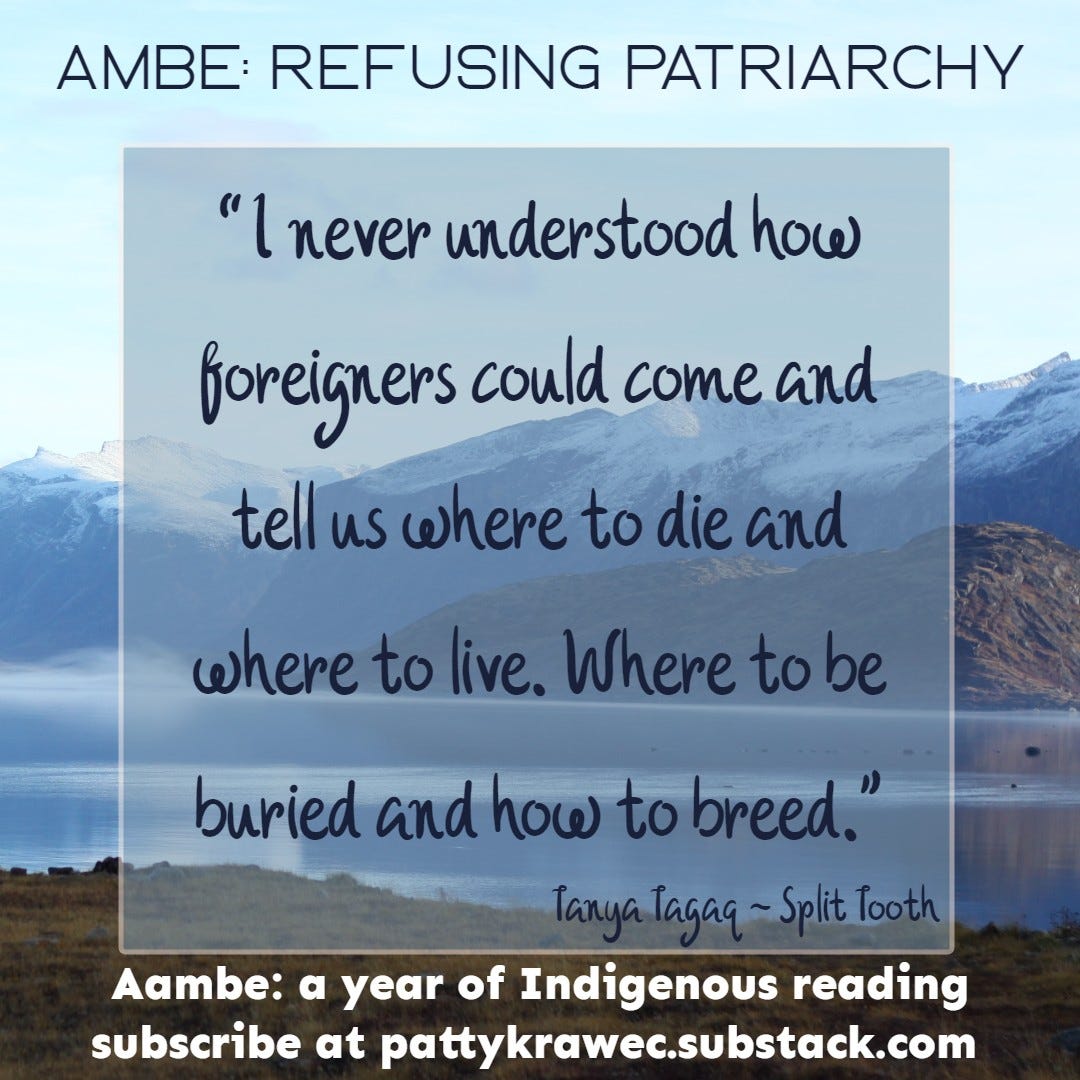
Refusing Patriarchy
Ambe Refusing PatriarchyI’m re-releasing this episode for a couple of reasons, the transcript is finally finished and the anti-trans directive in Texas has made parenting a trans child reportable. People have said that it is only the medical interventions that are reportable, but that’s not how mandated reporting works. Mandated reporting does not require you to know that abuse is taking place, it only requires a good faith belief or suspicion. And having framed medical interventions for trans children as child abuse, if the child you knew as Emma is now Ethan that’s all you need.And if you aren’t in Texas, you should consider how your state or province is watching this. How they define abuse and neglect in such malleable ways that allow for bigotry to result in reports to Child Welfare and to police. These reports, and the mandating of these reports, is violence.In this episode you will hear from Black, White, and Indigenous people. They are queer and straight, cis and trans. They are all talking about the various ways in which they refuse patriarchy and assert space, but also about the cost of that refusal. The violence, both emotional and physical, that happens and the concerns about how they are able to show up in places where they should feel safe.This is an important consideration for those of us who consider ourselves to be friends, allies, or accomplices. Are we willing to let them carry the entire burden of that cost just because it isn’t “our fight?” If they are our friends, it is our fight.You're listening to Aambe: a year of Indigenous ReadingAll right, so we are going to be talking about refusing the patriarchy today. Um, I started off thinking about Mother's Day, and thinking about mothers, and then thinking about, well, what does it mean to live in this world as a mother, when you don't necessarily fit that mold. Because lots of people take on mothering roles, right, without necessarily, you know, kind of being what we might think of as a conventional mother. You know, so lots of people taking on mothering roles, lots of people living outside of what we, you know, we would think of as a gender binary, you know, and so I'm, and we often talk that way about, you know, women and LGBTQ people, like we're all kind of lumped together into one group. And so then I started doing that, and I'm not sure that that's really okay, either.Then I started thinking, Okay, well, how are we all navigating the patriarchy, we're all kind of working our way through it. And then I didn't really like that, because that sounded too much like patriarchy is legitimately in charge of everything, and it really isn't. So, then I thought, okay, we're resisting the patriarchy. And still, that sounded wrong. That sounded like, they're still this big authority. And then I remembered a conversation I had with Brianna, Urena Revelo. We've had her on the pod a couple of times. And she talks about refusal and the politics of refusal. And that's how I landed on refusing the patriarchy.Because we are going to live our own lives, and our own terms, as mothers, as not mothers, as people who provide care in our communities. We're going to do that on our own terms, and the patriarchy can just do whatever it needs to do. So, yes, we’re smashing the patriarchy. Ernestine ended the Memoir conversation: “Decolonize and smash the patriarchy.”So I'm gonna kind of go around and have everybody introduce themselves, and we're gonna start with Jenssa because she's, gonna leave us shortly to manage a chat room, which will probably be quiet today, because I completely forgot that this was this week. I thought it was next week. Oops. Thanks, Nick. Nick sent me a message yesterday, saying, hey, so there a link. How's this gonna work? And I'm like, holy ** that’s tomorrow. But that's okay. It will live forever on twitch and be released as a podcast. Everybody had a chance to hear our genius.So JenessaJenessa:It's just gonna be me talking to myself in the chat room. That's great. So I am Jenessa. Hello. I feel like I should have like a fun fact. Every time I come on here, because I come on here. Every, every, every month. And I'm like, Hi, I'm Jenessa This is the book goodbye. I don't have a fun fact right now. But anyway. Oh, I met Patty on Twitter. Fun fact. I feel like a lot of you probably did, too. I read Tanya Tagaq book, Split Tooth. And it was it was really good. It was really hard to read. I remember I got it. And I was like, super pumped. And I told Patty, I got it. And she's like, Yeah, it'll be a heavy one. I was like, Okay. And it was it was really heavy.But it was it was really good. It was beautifully written. I'm really happy that I was able to read it. And some of the things that I was sort of, I guess, thinking about when I was reading it. Well, one thing is I feel like I need to reread it again to like fully like grasp. Like, I feel like there's some really deep themes in here that kind of maybe went over my head a little bit on the first read. But one of the things that I thought was like interesting was, well, there's two things. She has a poem in here that's written in her language. And I think it's really cool and powerful that she doesn't give, there's no translation for it. It's just there. And I'm like, that's, I was like, Oh, that's really neat. It's kind of like, I feel like when I read a book, I just want everything to be like, given to me, which is very selfish. Like I kind of center myself a little bit when I'm reading a book and I was like, oh, it's it's like, it's not about me. They're not giving me the translation. This is just here. It's beautiful.And, and then the main character in the book is, she becomes a mother. She's a girl who becomes a mother. And I remember I was reading through it and I actually went back and like reread, because I was like, who's the father? She never says who the father is. And I don't know why. But for some reason that was really unsettling for me. And I was like, why is why is this so why is this such a big deal for me? Why do I need to like know who the dad is? Like, it's like, Oh, yeah. Anyway, those are just two, two thoughts that I sort of had about the book. But I was like, I don't need to know everything. I don't need to know who the dad is, and why I don't even know why that's why that's such a big why why? Why is that important for me? Yeah, okay, I've talked enough. There's a lot of you here, and I'm sure you'll have many more cool and exciting things to say, here.Patty: Hey, Angela.Angela:Hi, this is new. I've never done anything like this before. But I've been on her show before. So I'm really, really pleased. I read everybody's bio. So I'm very excited about all of you. Getting to hear from all of you. The book that I have been reading, and it's called um How We Fight, White Supremacy. And I've been reading it on and off for a year. And be for two reasons. I've been reading a lot of other books, but I keep coming back to this book, because it's written from all Black writers from the United States. And they're just connecting points for me, and how I live my life and raising my son on my own who's Black Indigenous, and feeling isolated. And probably from my upbringing being raised in a white family to being here and not having a community. So I have felt in particularly this last year, that real need for community and this book has given me that.It there are there's points where I laugh, there's points where I cry. When this woman was describing her experience with a coach calling her Aunt Jemima, you know, I went back to my childhood and my white mother dressed me as Aunt Jemima for Halloween and just, you know, and feeling like, Okay, I'm not like the only one. And I think that with everything that's been going on this year and watching my son have some not great experiences with the police here in Vancouver. It's just allowed me to land in a place where a Black voice, it's Black art, like there's a really great comic strip in there, there's, you know, it talks about an all Black store that sells Black dolls, which I think and I had my first Black doll until I was like five or until I was 10 didn't even know they existed.And talking also about the connection of Black hair. From from an African standpoint where it was really you know, hair defined what tribe you came from, it defined status, it was a way a means of communication. And, you know, I held the inceptions of hair that I've had from you know, my Tina Turner look to, you know, now dreads and Grace Jones for a while and that I'm really dating myself, there. So, all of that. It really explored that idea of identity and then watching my son who's you know, had the big afro and has cornrows and trying to figure out his Black Indigenous identity through his hair and those connecting points. So I just keep going back to this book. For those reasons. I read it and keep reading it and keep reading it and it was just a lovely gift from somebody that really felt would be good for me and so I appreciate when people give you books because it's it really is an act of love.Patty:Well, gifts are the best giftsSeanTansi everyone. [Cree introduction] So I'm Sean Kinsella. And I just introduced my clan, which is Migizi. I'm also you can't really see my hair, but I'm wearing little migizi earrings on tonight. And that's my adopted Ojibwe clan. Because I'm actually plains Cree and Soto and Metis. And we didn't necessarily have clans in the same way, although I hear whisperings that when we're speaking about the sort of refusing patriarchy that, you know, there's like some some oral histories there about clans we may or may not have had. But I've been on this territory, which is sort of around .. and I was born in Toronto, my whole life. And so over time, I've developed relationships with folks here and, and developed enough that that was honored with an adoption. So that's important, I think, to introduce myself, because it tells you who I stand with on this territory. And it tells you a little bit about who my family are.My family is also folks who signed and relatives who signed Treaties four, six and eight. So that gives you some geographical representation, you know, where those treaties are just around sort of the Plains and the Battle River Cree, as well.So that the I've sort of read two books on this list, Half Breed, which is a seminal Metis work. And, and The Two Spirit Journey by Ma-Nee Chacaby. Both of them, I think are, you know, speaking of Split Tooth, so just sort of like an aside, I am also still reading Split Tooth, but Split Tooth is one of those books that is so beautiful, that I can't bear to finish it. And similarly, I know he's been on this program before, there's a fantasy trilogy by Daniel Heath Justice as well, that is the same that I just I read it so slow, because I don't want it to end because as a work, it's just so beautiful, and something that when I was younger, I really wished that I had more access to you in terms of that kind of literature and that kind of thinking and world building really.So I think within both Half Breed and Ma-Ne’s book, you know, they are difficult reads, they are folks who have experienced a tremendous amount of violence, due to patriarchy, and finding a place in the world. In a world that doesn't want them to exist, you know, and so for road allowance people, you know, for, for folks who have that history, and that's a pretty hidden history, like a lot of people, I think, when they read Half Breed, and Maria Campbell's work, you know, I mean, that's maybe the first time that they've ever even heard of the fact that, that that was a thing, that that was a policy, and then it hopefully makes you dig into some of the history there around what created sort of road allowance people and why, Metis, and you know, in our bigger kinship structure of like Metis Soto Cree, people were removed from our territories. So that's a piece of it.And I remember, I work at Centennial College, and I was part of a textbook that we put together like an Open Source Textbook. And one of the chapters that I wrote was a Two Spirit chapter. And we had the privilege of interviewing Ma-Ne as part of that chapter. And so I remember, you know, part of that interview was her really defining Two Spirit, which was really cool to be in the room for because I had read the book, right, so I'm like, Oh, this is really neat to see how that reflects. But I remember Ma-Ne’s words of just that have always stuck with me of, of her grandmother, you know, telling, telling her that, you know, this, this idea of being Two Spirited of not fitting into those very easy boxes and binaries, that, that it's going to be hard, it's going to be a hard life.And I think about particularly for myself, am I introduce myself, I told you that I was a agueo, which is a Cree way of saying sort of, one who kind of sits between those genders. You know, I can empathize with that idea that it is a hard, it is a hard life. And so I think it was really important for me, you know, and I also like, know Ma-Ne, from sort of, like, circles and sort of like in the Two Spirit community in Toronto, when she comes down to visit with us.So, you know, I think that as a representation is critically important. And as a book was, was really important, you know, and I think it's also recognizing to you that, you know, there aren't a lot of there aren't a lot of Two Spirit elders around or people who are talking about about that in that way. And I think so. So I think Ma-Ne is such a treasure and then I also think, you know, that what Ma-Ne talks about in your book because I know a little about about a her is a person like those things also have an ended, right. So it's not like the book ended and it's like a happy ending. It's also like, you know, Ma-Ne is a person who right now actually needs community support around that. medical stuff and we're seeing calls that go up for that. So I think, you know, it's also I think I think about, it's this interesting thing of getting to read these amazing Indigenous authors who are such pillars in our community, but then also recognizing that they're humans, you know, and they’re people who, who also have experienced a lot of a lot of, you know, refusal of patriarchy in lots of different ways. So, that's what I'll say about those for now. But yeah, those are, those are very, very powerful books.Patty:I haven't read, I haven't read Ma-Ne’s book yet. I shouldn't have to thank Nick for putting that one on the list. Nick is here because they kept recommending books. For the list that it was great because they recommended really good books, the recommended Ma-Ne’s book, and also Reproductive Justice, which is not written by an Indigenous woman, but is written by somebody who spent a lot of time on the Pine Ridge Reservation building relationships initially going to you know, uh, you know, to be a helper, the way a lot of church and academic university and college groups will go to be helpers, and she wound up forming relationships and going back again, and and again and again. And using her position and she actually she, you know, she is connected to them now, because her child is, the father of her child is from Pine Ridge. So, you know, she even has that connection there now. So she wrote this really good book called Reproductive Justice, which was the one that I read most recently. But yeah, so many Ma-Ne Chacaby's book is on my list. I'm really glad that you read that and can talk about it. So Nick, why don't you introduce yourself and talk about the books you read or partly red?Nick:Hey, my name is Nick, I use they them pronouns. And I am a white Jewish settler on Karankawa, Coahuiltecan, Atakapa-Ishak, and Sana land, which is Houston, Texas, and I am non binary, transgender, and I use they them pronouns, and I'm also bisexual, and in a queer marriage. So that's kind of where I, that's kind of where I come from, and where I, you know, my position in life, and a lot of the work I do is actually around abortion access specifically for transgender people, but just abortion access in general in Houston because it can be kind of hard to access.So that's kind of my connection to like refusing patriarchy, I read, Split Tooth, and I read part of Reproductive Justice. And what was interesting about reading them together, is that as Patty talked about reading books in conversation with one another, I kind of accidentally did that, because I was just kind of switching back and forth, because I have ADHD. And it actually ended up dovetailing really, really well. Because at the end of the Split Tooth near the end, you have the birth scene, which I thought was one of a just a really hauntingly beautifully written scene. And like that scene, like several scenes, but that scene in particular, like, I just could see it, you know, and like, so her birthing experience, like she called the shots, right, like she made a birthing experience for herself. That was, you know, that was right for her and for her children. And, you know, it was kind of the spiritual, traditional, you know, the spiritual traditional birthing experience she wanted. And she had both the emotional and familial support, but she also had like this supernatural support of like, the Northern Lights and like the supernatural element there.And I contrasted that with, I read the chapter in Reproductive Justice, about people talking about their birthing experiences. And, you know, like, people had different things to say. But, you know, one, one kind of theme was deprivation, with the Indian Health Service, cutting costs and frankly, cutting corners with what they weren't offering, like they weren't offering epidurals at their hospital. And so they didn't have all of the options and the the very nearest hospital didn't even have the ability to do a C section. Um, so you've got this you've got this issue where like, people are being prevented from doing the birthing experience that would be absolutely best for them by this government entity that, you know, this settler colonial government, that this kind of ongoing, you know, ongoing colonization and ongoing oppression.So, reading those two things in conversation with one another were were it was actually really powerful. Um, and now, one thing in that chapter in Reproductive Justice that I want to say is that a lot of people, like had some positive things to say about their birthing experience as well, it wasn't all negative. A lot of them referenced here, a lot of the people interviewed did feel like they got what they needed. But it's just the background of knowing, the background of knowing that they are prevented from, from some things that would be really beneficial to them.21:03So So reading those two things together was really cool. Going back to Split Tooth. So normally, I don't mind marking up books, but I actually put sticky notes in this instead, which I do sticky notes on books that I mark up as well. But I put sticky notes on here, because I want other people to read this. And I don't want my thoughts to be on the page for them to like, Oh, Nick thinks this is important. I'm going to focus on this thing that they underlined, I want people to approach this book for what it is on their own terms and kind of get what it from it what they need to. And I will probably reread this book, it was a very difficult read, because of some of the violence that the narrator goes through. And that is difficult to read. But it's just it's just such a beautiful book. And I've read a lot of books in my life and I don't think I've ever read anything quite like this. So I would definitely I would definitely recommend it.PattyYeah, that's crucial. There's a lot of very difficult, tragic stuff in Split Tooth, and yet just so poetically written that she just keeps pulling you along. It's a lovely book. And Tate who is the author of one of the essays in the book Fierce, and actually, I loved that essay so much because you go back to two beginnings, and the woman actually that I met on Pine Ridge, who took me to Wounded Knee. Her name is Pte San Win. So that's just kind of cool. If you could introduce, talk a little bit about yourself in that essay and whatever else you want,Tate sir, thanks for having me on. appreciate being here. [Introduction in Lakota] I introduce myself in Lakota. I am Mini Konju Lakota from Cheyenne River Sioux tribe in South Dakota, where I'm a citizen. But I live here in sunny Phoenix, where it's 100 something today I’ve been outside. I work for a local tribal school district. So we were out and about today, the last day of school and but in my spare time, I consider myself a storyteller. I should also note my pronouns are they them.But as we talk about some of this like disrupting of patriarchy, things like that I they them pronouns have been around for a while, but I've been, as I learned more about my Lakota foundations I have been reclaiming a lot of the feminine aspects that I kind of pushed aside for a long time as sort of like, trying to disrupt some of those cis heteronormative notions lots of folks have, and sort of claiming the two spirits and then saying, you know, “no femininity.” But like I said, as I been learning more about my Lakota foundations, been sort of coming back to my caretaker role as ina or mother, and have really loved that part of myself as I'm getting to know it better and better, especially as my own child is coming to understand their own identity, and recently came out as trans non binary, and how femininity sort of in sort of inspires I guess, a lot of those decisions we've made in our family about queerness and, and learning about Two Spiritedness. So, happy to be here. I apologize. I didn't read any of the books but you mentioned my essay.So, I, I've been a newspaper journalist for geez going on 17 years now, I guess, I feel old I have to keep adding numbers, but been more of a freelancer the last decade or so. And then, in addition to that been writing actual things in books, which is really exciting. And one of those was the essay that was was in Fierce and that was 2018 published. And we won several awards, it was pretty cool, very intersectional collection of writings, mine focused on Pte San Win, who is known as a White Buffalo Calf Woman, I think it's a story that's often told, by even non Lakota people. I've even met someone down here in the Phoenix Valley talking about how their southwest traditions have a similar deity. So that's interesting. But to Pte San Win, White Buffalo Calf Woman is somebody who I guess, inspired a lot of any success I would have in my life, whether it was storytelling, or just like overcoming challenges was from sort of those foundations. She's known in Lakota spirituality world more for the gifts she gave to, like our ceremonies. So like, the sacred pipe is a big one that a lot of folks know her for. Also, like the tossing of the ball or puberty ceremonies, wiping of the tears, things like that were lessons that she gave us a couple generations ago.But one thing that's often lost in those tales is sort of this innate matriarchal power that she's infused with. Her first foray into human world really is essentially smiting down, a warrior who is sent to sort of investigate who she is. She's naked. And he has impure thoughts. That's depending on the storyteller, it gets more detailed than that. But essentially, he's like, Oh, naked woman, let's get it. And she's like, F you and totally just like smites him. He's nothing but bones and dirt and bugs. And again, people embellish, it gets fun.And it was a story I heard when I was a troubled teen, if you will, I had just come out as, I didn't have language like non binary, or Two Spirit. I just knew I liked girls in addition to boys, but if you like girls in Bismarck, North Dakota, you were a lesbian capital L. And they put you into a religious camp to go hate yourself. Anyway, so I was in a group home, and they decided because we had a lot of native kids in this group home that we were, we should have native, native culture outings, if you will. So they brought us to a sweat lodge, none of us had really ever been to one in this story of Pte San Win was told. And that part was sort of brought out to the to, as highlighted, right. So guys, make sure you respect women because they'll just kill you one day. Not the right message. But it was funny and it lasted with me. And it's sort of just always stuck with me throughout my life. So that sort of feminist Foundation, if you will, is what sort of that's that's, that's I brought that with me through through my entire life. And Split Tooth is on my book list. So that's, I'm excited to hear more about it. Get all the spoilers.Patty:I think it's gonna be on everybody's book list. I see a couple few people in the chat commenting on that as well that they're gonna have to add it to their list. It is it is an extraordinary book. Finally, Robin, Dr. Robin.Robin: Tansi [Cree introduction] Thank you so much for having me back into space Patty. As you can see, this time I actually got dressed and didn't show up in my jammies like I did last time. So I'm just so glad to be on this panel with all of you. Where do I start? I am Cree from northern Alberta. My family is actually from Treaty eight territory. So Sean, as soon as you said that I knew where we're going. I have connection in a few different communities in that territory. I am also connected through my children to the Six Nations of the Grand River. So that is also a very important part of our family. I am by day, an associate professor in the Center for Women in Gender Studies at Brock but I recently was appointed our Acting Vice Provost of Indigenous engagement and so on I'm so glad to be talking about this.And Patty, I hope you don't mind. I mean, I've read so many of the books that we talked about earlier talking about. And you know, I spent a lot of time with The Beginning and The End of Rape by Sarah Deere, like, I've worked with Sarah and I could talk about that. But I've been when I came to this today was thinking about what it's like to refuse patriarchy and what the consequences look like for people. Because I've been experiencing that a lot lately. I wrote an article last April where I took a pretty big stand, and maybe talked about white male terrorism, and ended up having my life threatened having my kids’ life threatened, having my job threatened, you name it. And it's come back now to haunt me, as the Vice Provost. And I recently been targeted by Jonathan Kay for challenging colonial patriarchy.So, I've been thinking a lot about that, and what it takes, and you know, at an individual level, because, you know, I've done this, I've been an activist longer than I've been an academic, I started working on violence against Indigenous women and girls, like 20 plus years ago now, because I, myself am a survivor of the violence, I was sexually exploited in my late teens in Vancouver. And so I've been fighting this a long time on the ground, first of all, and now I'm in this weird academic institutional setting, where there's these big structural changes, and I'm facing off like I this is like, it just feels like a game, a constant game.And so when I was thinking about refusing patriarchy tonight, I was thinking about the consequences of that, which I think show up in the books. So when I think about Maria Campbell, and I think about her refusals of patriarchy at times and the consequences that comes with, its, you know, that's kind of what I've been thinking about a lot lately. And how do we, how do we resist that? And how do we do that together, so that we're not leaving people out by themselves to fight this horrible system that really does bite back in a big way, like I you know, and just vicious and cruel, and through technology and threatening every aspect of your life, like I never imagined that would ever happen to me.And so I've been thinking about that a lot, and how this connects and how brave we have to be as people to stand, take a stand. And, you know, for me, it's all about my Cree teachings, which actually say, you have to. Right? That if you see something that's wrong, and it's going to affect not only your children, but everyone's children. And it's going to affect us in a bad way, you have to take a stand. And so I'm always stuck in this limbo going, I have to take a stand. But also, you know, I'm going to get death threats, I'm going to be at a security level. So that's kind of what I've been thinking about, and what that means for disrupting all these systems of oppression. Because I just see so much how this keeps us all apart. Right? And how we don't link these things together and don't make those connections and then don't fight together. And so that's, that's where my head is tonight and thinking about the topic. And so I think I'll stop there, because I'm really eager to hear what other people have to say. Thank you.Patty:Yeah, I mean, we briefly shared a troll on on Twitter, but he did not target me the way he the way he targeted you. I hope it has a good resolution, because it really, when you take a stand, you know, like you had said it kind of reverberates through all of these books in terms of you know, sticking up for yourself and standing. There's a price to pay. There's a price and sometimes that price lands on lands on other people lands on our children, it lands on other relatives, it lands on partners.You know, I was just thinking, you know, there's, the three quotes that I pulled up from Sarah Deer, as I was looking for quotes coming up, where she talks about rape the lives of native women is not an epidemic of recent mysterious origin. It's a fundamental result of colonialism, a history of violence reaching back centuries. She says rape is a more fundamental threat to self determination of tribal nations than the drawbacks federal than than the drawbacks federal reform could ever be. You know, they trespassed her body like they trespass this land. She's quoting Ryan Redcorn in that,And, you know, sexual violence and the violence that we are threatened with, because even when we're not, you know, deliberate,, you know, kind of overtly experiencing that transgression that, yes, all women, you know, and, you know, also, you know, also Two Spirited non binary people are also targeted in much the same way. The threat of that is all, that can be enough. Oh, we don't need to actually physically experience it, the threats that land in our email boxes that land in our Twitter DMs, you know, it's a very convenient way to threaten and, you know, so it was just I found her book really really extraordinary.So what I know we've kind of talked about the books that we've read, but now that we've kind of heard what everybody has said, Is there anything in the you know, in the book that you read, or in what you've heard, that is striking you, as, you know, in maybe a different way, or that kind of surprised you something that was unexpected in in the book that you read, or what your, or, you know, the essay you wrote, as you approached to your essay and your thinking would go one way, you know, was it something that surprised you and what you read or what you. We’ll start with Sean, we're just gonna go clockwise around the new screen now that I've adjusted the size of my screen and rearranged you.Sean I don't think there was any, like, it was neat to see Ma-Ne’s story, I don't know that there was anything that surprised me in it. I think the I think the tenderness I think of her grandmother, I think, did. And I think in particular, like in the context of the story, and her life, her grandmother was a person who accepted her. And I will say, as a Two Spirit person, you know, that was actually quite heartwarming, because a lot of times, some of our most like, intimate rejections are from family members. And this was a grandmother and, and a knowledge keeper who, you know, just accepted Ma-Ne for who she was and how she was, and then tried to explain to her sort of like, what, what life was going to be like, and to prepare her.And so, you know, I think so much of the rhetoric of traditional people is around a gender binary, so much of that rhetoric is around very cis normative, and, and, you know, mono normative pieces. So, you know, I think, something that that I really admire about Ma-Ne, and I think it goes into this sort of refusing patriarchy is just that, that she's a human who just lives her life and kind of refuses to do what other people say, and so carries on in the relationships that that she wants, and has a relationship with a variety of people and is like very clear about and frank about what that looks like, and sort of those relationships.So I think that that was the thing that that that surprised me, and I think it reminded me, you know, because I think Ma-Ne is also someone who grew up with with folks who were quite isolated in the bush. So it reminds me of a little bit like how, you know, I think of folks in my own own family, like I have an ancestor whose name was a Ogimikwe, which translates basically, she was like a chief. And she was a self appointed Chief. So she just like, I want to be a leader now. And that's what she did. And her sons ended up being trading chiefs. And, you know, and I think there's this interesting sort of connection that I can talk about a little bit later to other other things that I'm thinking about. But I think, that notion of having relatives that accept you, of having a place, you know, I think, particularly for a Two Spirit narrative that that was not expected, because so many of the narratives that we have around Two Spirit identities, and I can think of other you know, even for lack of a better term, like younger, you know, Two Spirit authors that a theme often tends to be like rejection, and you have to create your own family, and, you know, no one on the reserves can accept you, like, no one a community can accept you.And so, you know, I think it is actually why I think for those of us who are like older, not that I'm old, but older Two Spirit people why we have to radically accept youth, because you can see that really, and I don't think this is overestimate, like over stating the point, you know, I think Ma-Ne’s grandmother, like really saved her life. And I think that's the role that we have is a responsibility for for folks who were, you know, non binary and gender non conforming. And, you know, as I said earlier, agueo was how I, I identify, because really, like when we can play that role in someone's life, like it really is saving them. And so that's, I think, something that surprised me.Patty: Angela, I know you didn't read one of the books on the list, but you read a book, you know, that speaks to you in terms of relationships, and, and safety. And as you're talking, Sean, I was thinking about something that came up in the Reproductive Justice book where she's talking about, I think it was in that book, I’m getting things mixed up. Tell because we often talk about cultural competency and it being contrasted with cultural safety. And, you know, a place where we can exist safely as opposed to around the experts that are competent and how to deal with that. So, as you were talking, that was kind of what I was thinking about. Creating these places of safety where we can be and Angela, you've talked a little bit about that with your son trying to create this place of safety. So what surprises you or tugs at you about about the book that you read?Angela: Just, I didn't say much about myself in the beginning. So I'm just going to briefly do that, that I grew up in Ontario, Belleville, Ontario, and was adopted into a white family with four other black kids, my twin brother being one, and we were a product of being taken from our mother, who was a non landed immigrant. And were a part of a social experiment that was happening in Toronto, particularly in the 1960s. That carried over into the early 70s.I'm now here in Vancouver, have been here for 22 years and have been had the pleasure of raising a beautiful boy who, who, who I see parallels in terms of our own struggle and isolation. So that has brought me to doing, I started out in human resources and now moving through, I studied addiction counseling and have decided I just want to write. So I think writing is an act of refusing the patriarchy. I really believe that and I think that this, and I think artists in general, and activism is that. And so this book speaks to me on that level, it surprised me in terms of the idea of writing as activism, because that's how I sort of I'm not I'm not necessarily somebody that goes out and, and protests. But I do. I think that what we're doing today, I think that, you know, speaking on a podcast, and and openly using the words white supremacy, is an act of refusing the patriarchy. So the title at first it that's spoke to me when it was given to me, but really, that is, it's about connecting with my people that I'm not necessarily connected to, who are fighting some of the things same things, even though they're in the States. We have been experiencing these things here, too, right?There's a collectiveness around around trauma and lack of safety, but also resiliency. So it was just really great to see the resiliency of Black folks in this book doing what they what they are inspired to do, to support all other and not just Black folks. So that I think that surprised me very much of the book that it's not. It's all facing, it's all emotional facing and I appreciate that because it brings that up for me and allows me to be it's allowed me to be more real about myself and my experience. And I think that's why I keep going back to it.Patty: What's the name of the book again?Angela: It's called How We Fight White Supremacy.Patty: I'm just gonna put it into the chat so that people can get it how we fight white supremacy. Yeah,Angela:and so there's the author, the people that put it together Akiba Solomon, and can Kenrea Rankin andPatty: you can send that to Janessa and she can get the author's and all that information. Absolutely. Briefly forgot that that's when we have Jenessa here.Nick, what surprised you about the books that you read?Nick: So um, I went into Split Tooth thinking that it was like a straight forward like memoir. And it was not um, it was really different from what I was expecting as far as like I wasn't really expecting like the supernatural element to it or not sure if supernatural is even the right term. But like kind of the other worldly sort of like, like communicating on you know, different planes with different you know, with with different aspects of the land in different you know, aspects of the environment.And so, I definitely wasn't expecting that and I read some articles about it to try to like understand a little bit more and people compared it to Daniel Heath Justice’s wonder works from Why Indigenous Literature's Matter, the concept of Wonder Work that kind of defies categorization in like a colonial sense. And that truly like, I read that and I was like, Oh, that really explains a lot to me as far as like, just, it was so completely different from anything I had read before. Um, I guess I, I don't, I'm hesitant to say exactly what, what surprised me because I'm kind of hesitant to spoil the book, I think part of the journey of the book is being surprised by what happens. Um, but I was surprised, by the way that the way that she approached motherhood, and her motherhood journey, that was all very surprising to me, and I'll leave it at that.Patty Thank you, thank you, I think Tanya's comfort with the unseen and just how that was just such a, just another character in the book. Like, there wasn't. Yeah, and I find that with some, I think I'm finding that more with more Native authors now that it's not approached as this kind of weird spooky thing. It's just another character in you know, it's just, it's just there. But I think Tanya weaves it in in a really beautiful way and then maybe opens the door for more authors to be able to do that in in their own writing as well. It's, I'm gonna have to go back and read it. It's been a while. So it's been a while since I read it. I've had a couple of people had mentioned to me that they were planning on reading it and, and like I said you know, to both of you, it's like, okay, it's really raw. something you enjoy doing planned around the same time? I remember I remember being ..Tate in your essay, what? What surprised you, as you as you wrote that, because we always have these ideas about the things that we're going to write, I'm in the midst of something myself. And really, it's kind of the book I picked. But now, there's a lot that changes.Tate: Well, and that, like I mentioned, that Fierce came out in 2018. And since then, I've been writing while I finished my first full length, Thunder Thighs and Trickster Vibes: Storied Advice From Your Two Spirited Auntie. And I finished that and it was supposed to come out November 2020, the publisher got COVID. And it just got pushed back. And to the point where though, so I finished it like last February, and had all my stuff in there. And I'm, you know, was in love with it, you know, baby push it out. Um, but the COVID happened. And then, you know, Black Lives Matter, which had been happening, but I mean, just really, here in Phoenix, we got really into it. Mascots had a whole different trajectory. And then, you know, our my own family having some issues.So like, several chapters in there were just, like, completely destroyed, and had to be like, reworked and I shouldn’t say destroyed, I think, you know, evolved, if you will, which, you know, is sort of life, right? We're sort of always in transition. And the book was just sort of more on that. So yeah, that's been rough. So with Fierce though. So I was asked to write on anything related to like Indigenous feminisms, or like, pick a, pick somebody you would you would you would claim, as you know, your hero who folks don't know about it sounds like well Pte San Win. And of course, the first thing was No, a real person. Like, well, they were, we have a pipe for proof of that one you gave us. And so that was that was kind of the first fight was like, she was real. Any questions?You know, so that that was interesting. And, you know, like, “we need citations.” You know, how many white people have seen Pte San Win? We like, Well, none, but I have citations from several elders across generations. But the the biggest one was, to me was the pushback I received from editors on the sections where I wrote about the harms, inherent within white feminism, which is, of course, white supremacy in action in so many ways. And there was just a lot of like, whoa, whoa, whoa, whoa, whoa, we gave you Pte San Win. We, you know, parentheses fake, but, um, you know, you were supposed to just talk about Indigenous feminism, we didn't want you to, you know, beat us all up, you know, I am a feminist and I am not, I'm white and I'm okay. And it'll became this sort of micro study of like, Well, what I'm talking about is actually what you're showcasing here and your editorial process, and so on.Thankfully, we had a really great publisher who always had my back. And we were able to push through all my sections without any editorializing there or censoring, but it took a long time to have, you know, these nice white ladies nice white liberal ladies. Okay, you know, the discussion of things like, you know, the notion that being outside or being a caregiver, or you know, these things that we hold sacred, within, like, our ancestral stories in relationship with things like land or, you know, child rearing or just ideas and concepts of gender expansiveness, and how much those often fly in the face of, of white feminism of, you know, I don't want to be home, I want to, I want half a share in the, in the, the plantation, right? Like, I mean, that's white feminism in a nutshell, is that capitalist drive to own, if you will.And that's just not, I mean, I'm preaching to the choir here. But so so my essay didn't, I wouldn't say it went super in depth into that stuff. But it was interesting to have the back, the back conversations with editors on, on how they were fitting into that model. And so then when we had like, the author readings and things like that, that conversation came up quite a bit, just in terms of, well, how does Indigenous feminism, you know, you know, isn't that an oxymoron, if you will? And no, I don't think it is. And I mean, I think maybe some people might start out with it being sort of, like, I'm an Indigenous person, and I'm a feminist, and I'm gonna, I don't know, advocate for, you know, corporations to hire more women in whatever, you know, and that's a bad example.But essentially, like where we don't look at as intersectional a’la Kimberly Crenshaw, and how that can still harm sort of these movements that we've started with things like, oh, like the conversations, for instance, with missing and murdered Indigenous women, like that's been really evolving to talk about, like, missing and murdered indigenous relatives, and how we're, you know, we're just, we keep trying, right. And I think that's sort of the point. And again, when I go back to say, Pte San Win, we, and a lot of those teachings, it's always about change. It's always about how things are seasonal and evolutionary, right? I mean, even our language.When I was a reporter, I did a story from Blackfoot scientist who was working on a Mars mission, and had his elder mother who was fluent in Blackfoot, Blackfoot create a dictionary of NASA terms. And it was really cool, because she was like, of course, we would have words for these, like, you know, people, like that's not traditional. You know, and we sort of get stuck in these like, has to be this way. And so anyway, going back to the Pte San Win teachings of just, you know, allow yourself to evolve and it happens. So, that essay, definitely, I think was a starting point to sort of my even own evolution of what it is to be Indigenous feminism, what that represents and how that changes and should change.Patty: Thankyou you. Yeah, that's, um, I'm old. I read the Hood Feminism recently. And she talks about one of the quotes from her was for women of color, the expectation is that we prioritize gender over race, that we treat the patriarchy as something that gives all men the same power and that leaves us feeling very isolated. Because white feminism is arguably the patriarchy. You know, like you said, it's the it's the drive to own it's the, you know, 500 CEOs control all the world's wealth. Well, half of those CEOs should be women. No, that's not gonna save the world. That's not the kind of feminism that we need. That's not the kind of things you know, you know, that's not you know, that. That's not the redemption we're looking for.Dr. Robin, what, in your research in your books because I think you said you've read we've read most of these and you've also done your own writing. What surprised you what what did you go into something expecting and then what gift did you get from it?Robin:I don't think I don't ever know like as a writer, I don't think every anything ever turns out the way I want. But it turns out the way it should be. Although I really am glad Tate that you raised this because I just went through this horrible thing with a journal article about decolonizing #MeToo where I took on white feminism in Canada. And after two years of negotiating with the journal, I finally pulled the article because I'm not willing to go there.And that's what I think, too, I want to share that same perspective, I'm always surprised by the backlash, even though I know it's probably like, every time, like, it's gonna be there, like, you can say anything about white folks, it's gonna come back at you. But I'm always surprised, and how virulent it is, and how forceful it is, and how, you know, vicious sometimes it can be. And that's always an interesting struggle when you're writing something like this, especially because I tend not to stray away from, I don't sugarcoat things. I don't have interest in that, you know, I've been really influenced by. I've worked with a lot of families of survivors, who've said, you know, we don't want you to exploit our story. But we also don't think people deserve like a sugar-coated version of what colonial violence is. Because we all have to live with it. So, so should everybody else and I find the resistance is stunning editors, publishers, audience, all of that students, faculty, you name it, is constant.And it actually led me back to thinking about revisiting Halfbreed. Because I don't know about all of you, but have read was one of those first books I read. In fact, I think I actually have a first edition. And then to come back and realize, you know, it took what, you know, many years for them to actually release the version that was supposed to happen. And it had me thinking about the problematics of writing, especially for marginalized scholars, like, you know, the whole reason Maria Campbell is forced into the genre of autobiography is because the time publishers wouldn't print anything else, they directed all Indigenous peoples towards that category. In fact, that's one of the things that Emma LaRocque has written quite a bit about, right? We're not good enough to write academic books. We're not good enough to write even nonfiction. We're stuck in this category of autobiography, which makes some sense as Indigenous peoples, because we're storytellers. But then what are the limits of that?So here's Mary Campbell telling this incredible story, and then ends up silenced for so long. And it's just like, you know, I, that's the kind of the challenge of this whole thing is what are the limits of what can be said? And what can't be said? And who gets to decide that? And then what are the punishments for the people who break those boundaries of what can and cannot be said? And you know, it that's I think that's really interesting. And it really revisiting Halfbreed made me think about that, how powerful that book was, but how it was also really, for so long, an incredible act of violence in many ways.Because, again, Indigenous women were silenced. I just think that's so profound. And it's still happening. I mean, there's two examples in this conversation right now, of folks who are experiencing that, and I'm sure many, many more. So it makes me think about, you know, what is the world still go like, what are we facing? You know, how are our words to get to audiences, if we're being surveilled and silenced and surpressed? I think that's, you know, I'd hoped by the time I was 43, that the world might have changed. Maybe that's hopeful Robyn, who is an optimist, but I feel like we're still fighting this and it's not changing, and I shouldn't be surprised. And yet it still is this kind of violent assault again, and just a constant ache, I think, in terms of, you know, where are we going and the manifestations and how this switches and there's just so much there. So that I think, is what, where I headed with this.Patty:I think you are referring to her story of sexual assault by the RCMP officer is because she, because she had her in her book, originally, the editors pulled it out. And then when she revisited it for the, for the 25th I think it's the 25th anniversary, or like, the most recent edition that came out, she's like, Hey, this is missing something this was this was supposed to be in there. And so she insisted to go back in. And that's it. That's the version that I have.But yeah, the thing because that's, like, Who Controls the story, even when they’re our stories, you know, beyond editors, like the power of the mob, you know, to to force our employers to control us. You know, for a long time I worked in child welfare, and there were a lot of things that I couldn't talk about. Not so much because it would you know, it was specific to certain clients and you know, I obviously know better than tell their stories, you know, but because it but most of the time I went to HR it was because something I had said on social media was reflecting badly on the organization. And that's a way of silencing people, you can't talk about these things, because we have this image, you know, where, you know, and you know, and all organizations operate that way they have this image.And, you know, I'm thinking of Nora Loreto, who got badly targeted, you know, by white supremacists, and is basically unhire-able as a journalist in Canada. And yet, she's done some extraordinary research on the COVID numbers, and where the outbreaks and now journalists are using her numbers, and they're making money off of it, but she's not. She's in Canada, in the US, you get some stuff, but she's a Canadian journalist, and all about Canadian politics.So all these different ways that we're controlled in terms of what we can say, and even, like, I can have my independent media, you know, my, you know, my little podcast, you know, my book club, these things that, you know, that I do, and the things that I do with Kerry, but our reach is controlled. They you know, whether it's on social media, or, you know, wherever there's always algorithms, controlling reach, and those things are. We can refuse patriarchy all day long, but they still own access to everything.So when we think about our communities, whether there our communities, you know, as Indigenous peoples, as you know, the places where we work our chosen communities, what do we want from them? What do we want from them that will help us, you know, to pick up on that idea of cultural safety and the ways in which we are silenced? What do we want from our communities? And maybe I'll start with Nick.Nick: Um, I think, um, I honestly think the most important thing in a community is I think space to allow people to, to grow and be themselves and also a space where we can hold each other accountable while still doing so in a nurturing way. Like, I think restorative and transformative justice movements are really important when we're talking about community building. Because I see a lot of really hurt traumatized people hurting each other because, you know, somebody does something wrong, and it triggers somebody's fight or flight response. And, you know, I think we need to allow, you know, allow ourselves space to grow, and the space to hold each other accountable, to, you know, keep each other to keep each other safe or as safe as we can. So, you know, holding people accountable for messing up, but also doing so in a nurturing way so that people can grow back together.Patty: Angela, what do you what do you need from your community?Angela: I certainly like what Nick had to say about space, because I'm having this challenge around inclusion. It seems to be a part of the you know, diversity, equity, inclusion stuff, and I hear it all the time in my workplace, and it's driving me insane. So, I like the idea of space. Thank you, Nick. I think that you know, there has to be, I think that we can be, I find people of color in general, very forgiving, I think we have to be as part of our spirit, our spirit, Indigenous, Black. I just that is my experience, because of all the resiliency. And I think that anybody has been in a place of other, we naturally I this is my belief, I don't know. But we naturally have it just an openness to the mistakes of other because we have been suppressed and oppressed for so long. So if we are given a place of, of space to be who we are, there is that opportunity for transformation. The problem is that a system doesn't want to give up that space. It's too threatening for them.And so what I what I would ask is along with space is is the opportunity for people just to be vulnerable? Just to say, you know what, I fucked up pardon my language I do that. So how do we work this out so that I'm not keeping I'm not continuing to do this and can continuing to activate your nervous system. I know that I have this in me I know you know, whatever it is, I know but let's let's have the space, the openness to to both be vulnerable in that. I think transformative transformation can happen in that space. And I, that's what I would like to see in all placesPatty I read one of the books that I've read recently We Do This Till We Free Us by Mariame Kaba, and one and she's an abolitionist. And one of the things that she talks about is getting away from this consequence mindset. Because if we're thinking about being accountable, when we think about being accountable, if there's always consequences and punishment, nobody's going to admit to doing anything, because why would I? I'm going to deflect as long as possible because I'm worried about losing my , losing my friend, losing access to something, you know, losing followers, you know, I'm worried about punishment. But if we're thinking about real accountability, which is what rebuilds relationships, that's when we can move forward, that's when people are free to admit things and to acknowledge that they screwed up. Because we screw up. We make when we make mistakesTate what do you what do you want or need from your community?Tate: I think the biggest thing that came to mind was a people need to listen. And that includes myself. We mentioned earlier, like young people, you know, they have so much to say. And beyond just like you know, our tick tock social media stuff. I think I think a lot of magic happens when we start letting them lead with these new ideas. And as a 40 something I would think I'm okay to say, you know, youngins have have something to say. But that includes, you know, folks that are often pushed aside and Two spirits, elderly, things like that, but I like this idea of space, and maybe want to incorporate that into, you know, the idea of land back. And how, you know, be unapologetic about the demanding of our Indigenous lands back. And what and however, that looks, there's been a lot of really successful initiatives to reclaim land, a lot of it has to deal with, you know, we're in a capitalistic society. So there's a lot of exchange of money for that land, but it's happening, and I just want to see it happen a lot more.And when when when that land back happens, right, when when when it's returned to Indigenous caretaking? Because I don't I think, you know, much like we talked about with white feminism and ownership, you know, this, this concept of, you know, what, what do you do with the land when we go back to and how does that look, when I when you say give me the land back? Like, it's pretty simple, I think. But there's this element of relationship that goes into our ideas of land back that lead to things like language reclamation, right, like, when we start recognizing land as a, as a relative, that language starts coming back to us. And I'm thinking of someone like Dr. Robin Wall Kimmerer in Breeding Sweetgrass, and how just, you know, the land has a language to it, and listening to that is there's often a lot of growth that happens.And then, you know, so So reclaiming that language, land and getting getting the language back leads us to, you know, other relatives, whether that's a, you know, non human relatives or your family too. I think there's a lot of really great things that are possible when we encompass, you know, the land with with our community. Stop there, because I'm going to wax romantic now. And my name means the wind. Just kidding.Patty: 1:09:05Land back, though, yes. Because if we're going to have space, we need space. And you have to have safe relationships includes the land, and I just finished so yeah, Robin Wall Kimmerer. Yes. But I just finished a really extraordinary book by Mary Jorstad. She's a Norwegian, Hebrew scholar. And she wrote a book about the Hebrew, what Christians will call the Old Testament about how the whole the world is alive. You know, about how, you know, just kind of the life and the agency of the land, the agency of the trees and all of that and, you know, kind of this completely other worldview that has really been stripped out of it. Anyway, it's just it was just an extraordinary, it was really beautiful. And I think you know, you know, Nick mentioned that they were Jewish and that there's a lot of Tribal thinking, I don't know, maybe that's not the right word. But you know, in terms in terms of talking about, you know, with some other Jewish people on Twitter that we have a lot in common in the way we do connect with land, which is not to go all Zionist on you because freedom for Palestine means freedom for everybody. Right? Just like land back for us does not mean bouncing everybody back to Europe with the exception of maybe a couple I can think of. But for the most part, it means about sharing the land in a good way, living together in a good way, if the Haudenosaunee and the Anishinaabeg can live together in a good way, anybody can live together. I'm gonna say about that.Dr. Robin, you have a lot of things you need from your community. Oh, my goodness.Robyn: Thank you for that. I think I you know, the best way for me to approach this actually. So think about violence, because that's what I think about every single day of my life. And in that regard, I need accountability. And let me let me unpack that for a minute. Um, you know, I still can't believe you know, what I'm thinking about Sarah Deer’s work. I’m thinking about what Maria Campbell goes through. I want people to believe survivors, I don't want to have to fight anymore to convince people that I've experienced violence enough, like enough. And then I want people to hear that, and I want them to be accountable. I don't want my community defending or protecting abusers, especially well known abusers. That is not acceptable. And it just perpetuates everything we're fighting against. It perpetuates patriarchy, it perpetuates colonialism, all of it.And I just, you know, when I'm looking at the the work we do around violence, and that we still have to convince people every single day that we're being raped, that we're being trafficked, that we're being murdered, that all of these things are happening, and they're still happening at this huge level. And then our communities are like, No, yeah, no, this is just, you know, somebody who made a really bad mistake. Okay. But I still want you to be accountable.And here's the thing though, I'm with Patty, I am not, you know, this is not the responses not the carceral system, like, at all, not even a little bit, you know, I really want us to think of new ways, because it is still true at the end of the day, that, you know, some of our Indigenous community who are inflicting violence on other people are is because of this history of colonial violence. And because of the way it's internalized, and the way it's manifested, and how, you know, violence at the end of the day gives us power, and when you're disempowered that sometimes can feel like power, right? And, and I struggle with that. And, you know, we're dealing with all kinds of problems.So we need something other than prison to be the answer to this, we need accountability. And we need to ensure that our communities are safe. But there has to be another solution other than locking somebody up. And that's where, you know, I think we need to really think seriously about how do we respond as a community to these situations? How can we respond in a good way that first of
The Stories We Tell
And they talk and laugh and have a great time. Back in the summer we talked about fiction and the stories we tell about our communities and ourselves. I was joined by Waubgeshig Rice, (an Anishinaabe storyteller and journalist) as well as Sonia Sulaiman (a keeper of Palestinian folktale) and Kesha Christie (an Afro-Caribbean storyteller). There’s just too much good fiction out there and it was hard to make a list of the books that people should read because there’s just so much that is excellent. And when I started thinking about Indigeneity as a global thing, well the amount of excellent fiction just exploded and then I had a thought. What if we talked about our stories, about recovering them and saving them and sharing them with others and so I gathered three storytellers and we shared our stories. We shared our stories of dislocation and trauma, our stories of Nakba and the Middle Passage and Residential Schools. We shared our stories of butts and babies that are little s***s and tricky spiders. We shared the stories that we saved from white anthropologists who had a single story about us. And it was magic.So please. listen and share widely. You can read the transcript here.And join us next month at www.twitch.tv/patty_wbk when we talk about Being Indigenous. This is a public episode. If you would like to discuss this with other subscribers or get access to bonus episodes, visit pattykrawec.substack.com

Ambe: All We Are is Story
I encountered Richard Wagamese ba shortly after I found my father, which was in my late 20s. My mother had moved us down south after they separated and I was raised with my maternal family, Ukranians who had come to Canada as refugees. They loved me, but I was the brown child in the white family. The fact that they loved me did not change the loss that I felt. I had no contact with my paternal family who lived, as I thought all Indians did, far away from me in the northwest. I had no idea that there were several reserves within just a few hours of me including Anishnaabe reserves. I thought I was all alone. I was alone. The first book I read was Keeper ‘n Me in which Garnet Raven is taken from his family at 3 years old and raised in foster care. There is one scene in which Garnet is playing cowboys and Indians with the other children and they want him to be the Indian and he becomes distraught because he doesn’t know how. I didn’t know how. Richard ba also found his family in his mid 20s, just as I did, and began that journey to find place and home and belonging that is anything but linear. It goes back and forth between connection and loss, between hope and grief, between belonging and being a tourist in your own community. The things we learned about native people were the same things that everyone else learned, all those stereotypes that are probably flooding your brain right now. The difference being that when we looked in the mirror we saw those things like tattoos. We saw them inscribed in our features, marks that wouldn’t wash off. His final books, Medicine Walk and Starlight, reveal a different man than his earlier works. One who has accepted himself and his relationship with the world around him and I feel that too. I feel that knowing, not all the time .. it’s still elusive and transitory but it is there and if I quiet myself I can feel the threads that tie me here. Whether you have read all of his books or just one, whether you know him only from the movie Indian Horse and wish you knew him better, I hope you enjoy this discussion.The panel: Jenessa Galenkamp is a citizen of the Métis Nation. Originally from Tiny, Ontario by the shores of Georgian Bay, She now lives and works in St. Catharines. She spends her 9-5 working as an executive administrative assistant, and her weekends in the summer are often spent photographing weddings. When not working, Jenessa loves hiking with her partner, playing cribbage, reading, chilling with their two cats, Eleanor Rigby and Penny Lane, or working out ways for her church community to become better relatives with the broader community and learning as she goes.Daniel Delgado is Quechua runa and Jewish. He is a writer with varied and overlapping interests in fantasy, journalism, deep ecology, and decolonization. Daniel was previously on the podcast I host, Medicine for the Resistance, where we talked about the Quechua and Jewish cosmologies and holding onto your histories while living in diaspora. One thing that stayed with me is the idea of multiple worlds and inevitable shifts in how the world is structured, these shifts are inevitable and it is our responsibility to be ready.Dalton Walker, Red Lake Anishinaabe, is an award-winning journalist based in Phoenix. He is the deputy managing editor at Indian Country Today. Before Indian Country Today, Dalton was the senior reporter at O’odham Action News in the Salt River Pima-Maricopa Indian Community in Arizona. Dalton has worked at The Gazette in Colorado Springs, Sioux Falls Argus Leader and Omaha World-Herald.Dalton is a speaker and presenter to various local academic institutions concerning journalism and Native youth empowerment. He served on the Native American Journalists Association board of directors from 2013-2016. Follow him on Twitter @daltonwalker Raven Sinclair is a member of Gordon First Nation of the Treaty #4 area of southern Saskatchewan. Raven has been with the faculty since July 2005. Raven was previously on faculty with the First Nations University of Canada, and has taught at Masckwacis Cultural College, and the access division of Calgary’s Faculty of Social Work. She is a founding editorial member of Indigenous Voices in Social Work (UHawaii), and a regional editor for AlterNative: An International Journal of Indigenous Peoples.Raven’s academic and research interests include Indigenous knowledge and research methodologies, the synthesis of traditional and contemporary healing theories and modalities, aboriginal cultural identity issues, adoption, colonial and decolonization theories, and mental health and wellness. She particularly enjoys facilitating workshops in interpersonal communication based on an accountability model.Raven owns Resonance Counselling, Coaching, and Consulting in Saskatoon.Shelagh Rogers is a broadcaster for more than 40 years, Shelagh has won the John Drainie Award for Significant Contribution to Canadian Broadcasting. She has worked on programs such as Morningside, The Arts Tonight and This Morning. She has been an advocate for people with mental illness for more than a decade, often speaking about her own depression. The Centre for Addictions and Mental Health (CAMH) presented her a Transforming Lives Award in 2008. She was named a Champion of Mental Health in 2009. In 2010, she received the Hero Award from the Mood Disorders Association of Ontario and the 2010 Voices of Mental Health Award from CMHA BC. In 2016, she was the inaugural recipient of the Margaret Trudeau Award for Mental Health Advocacy.In 2011, she was named an Officer of the Order of Canada for promoting Canadian culture, for advocacy in mental health, truth and reconciliation, and adult literacy. That same year, she was inducted as an Honorary Witness for the Truth and Reconciliation Commission, a role she committed to for the rest of her life. Shelagh is a co-editor of the series of the Speaking My Truth books about truth, justice and reconciliation published by the Aboriginal Healing Foundation. She has received the Achievement Award from Native Counselling Services of Alberta. She holds honorary doctorates from six universities, and is the Chancellor of the University of Victoria.Shelagh revels in stories and like Richard Wagamese, believes we can change the world, one story at a time. This is a public episode. If you would like to discuss this with other subscribers or get access to bonus episodes, visit pattykrawec.substack.com
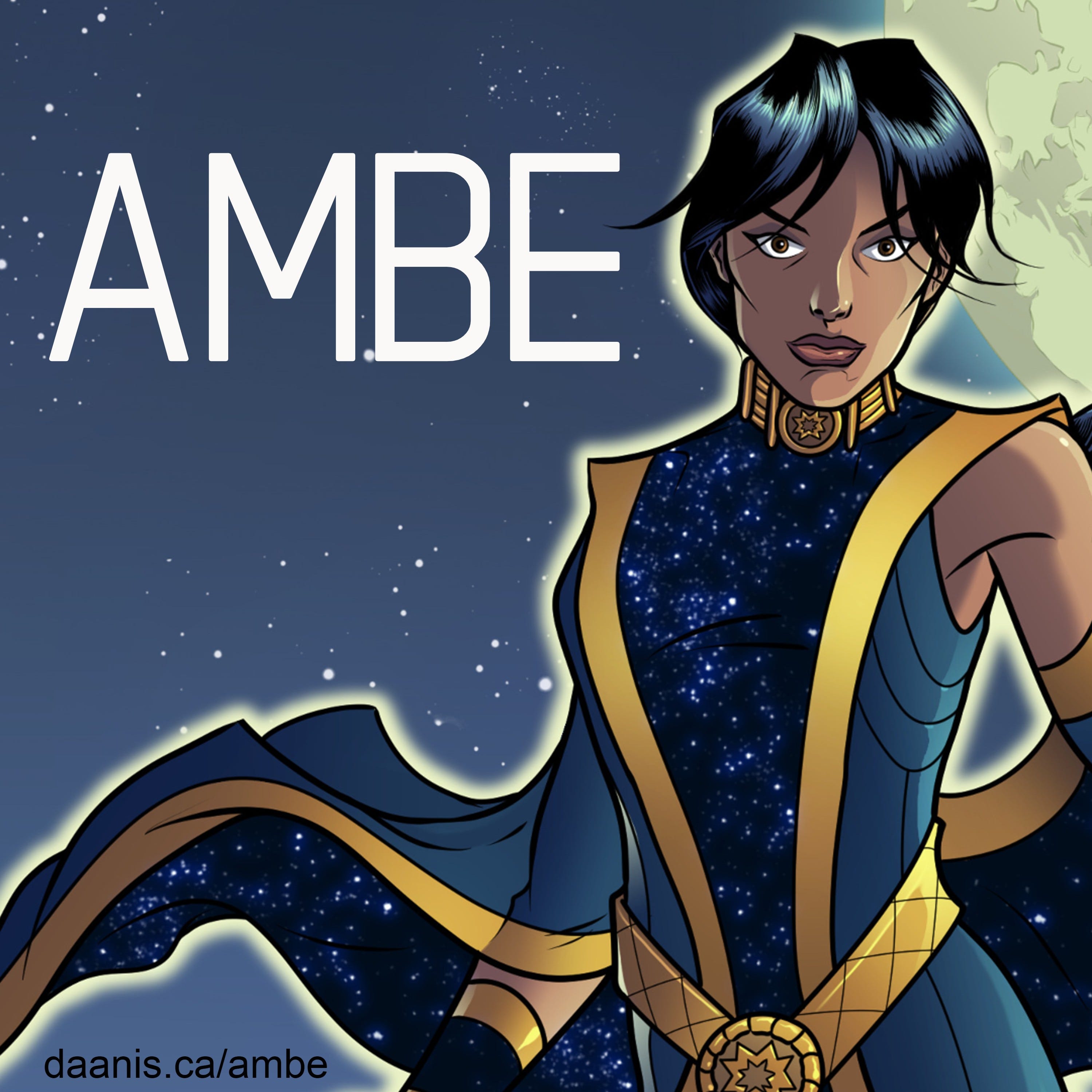
Ambe: Refusing Patriarchy
Refusing Patriarchy. The theme for this month went through several iterations, originally I was thinking about Mother’s Day and the various ways that we mother that go far beyond a binary that is so comforting to some and so alienating for others. Then I thought about the way that norms become so pervasive that we become defined by them, on one side are men and on the other women, 2SLGBTQIAA, and non binary people. So I thought about Navigating Patriarchy. But no, that wasn’t right. I landed on Resisting Patriarchy, because that’s closer to what we do, we push back against it. And then my brain latched onto Refusing Patriarchy. And that’s where it stayed because more than navigating or resisting, a politics of refusal simply refuses to engage. A politics of refusal turns it’s back on patriarchy and just goes on building something new, something different, something closer to what we had before. A politics of refusal does not seek inclusion because if what are we seeking inclusion into? The people on this panel have all refused: refused to let Patriarchy define the boundaries or decide when we have transgressed them. Refused to be defined and in that way have defined refusal. For racially marginalized people patriarchy is not always the final boss that needs to be dismantled, our men don’t benefit from it the same way that cis white men do, they don’t even benefit from it the same way that cis white women do. And Homonormativity means that queer white men often benefit from patriarchy as well. Refusing Patriarchy. The panel: Robyn Bourgeois (Laughing Otter Caring Woman, she/her) is a mixed-race Cree woman born and raised in Syilx and Splats’in territories of British Columbia, and connected through marriage and her three children to the Six Nations of the Grand River. She is an associate professor in the Centre for Women’s and Gender Studies at Brock, where her scholarly work focuses on indigenous feminisms, violence against indigenous women and girls, and indigenous women’s political activism and leadership. In addition to being an academic, Robyn is also as activist, author, and artist.Angela J. Gray (she/her) is an emerging writer and visual artist who has shared her writing and poetry on Vancouver Co-op Radio’s Storytelling Show. Angela has trained as a photographer and enjoys using photography and acrylic painting as means to enhance her writing endeavours. Her training as a community addictions counsellor is a valuable resource to her creative work.Nick (they/them) is a white Jewish settler living on Coahuiltecan, Karankawa, and Sana land in Houston, TX. They are a queer transgender abortion storyteller, and they focus on improving abortion care and support for queer and trans people and providing practical support for people seeking abortions in the Houston area. They are married and have two cats, and they spend a lot of their free time knitting and cross stitching.Seán Carson Kinsella is migizi dodem (Bald Eagle Clan) and also identifies as twospirit/queer/crip/aayahkwêw and is descended from signatories of Treaties 4, 6 and 8 (êkâ ê-akimiht nêhiyaw/otipemisiwak/Nakawé/Irish). They were born in Toronto, on Treaty 13 lands and grew up in Williams Treaty territory. A member of the Titiesg Wîcinímintôwak Bluejays Dancing Together Collective, Seán has been featured as a reader at both last year’s and this year’s Naked Heart festival. Their zine pîkiskiwewin sâkihtowin featuring poems of Indiqueer futurism, survival and getting hot and bothered was released last year. They are currently the Director, the Eighth Fire at Centennial College and have previously taught Indigenous Studies there as well. Taté Walker is a Lakota citizen of the Cheyenne River Sioux Tribe of South Dakota. They are a Two Spirit feminist, Indigenous rights activist, and a published and award-winning storyteller for outlets like “The Nation,” “Everyday Feminism,” “Native Peoples” magazine, and “Indian Country Today,” and “ANMLY.” They are also featured in several anthologies: FIERCE: Essays by and about Dauntless Women, South Dakota in Poems, and W.W. Norton’s Everyone’s an Author. Their first full-length book, Thunder Thighs & Trickster Vibes: Storied Advice from your Fat, Two Spirit Auntie, is set to publish in 2021. Taté uses their 15+ years of experience working for daily newspapers, social justice organizations, and tribal education systems to organize students and professionals around issues of critical cultural competency, anti-racism/anti-bias, and inclusive community building. This is a public episode. If you would like to discuss this with other subscribers or get access to bonus episodes, visit pattykrawec.substack.com





Get this podcast on your phone, Free


Create Your Podcast In Minutes
- Full-featured podcast site
- Unlimited storage and bandwidth
- Comprehensive podcast stats
- Distribute to Apple Podcasts, Spotify, and more
- Make money with your podcast