
Episode List
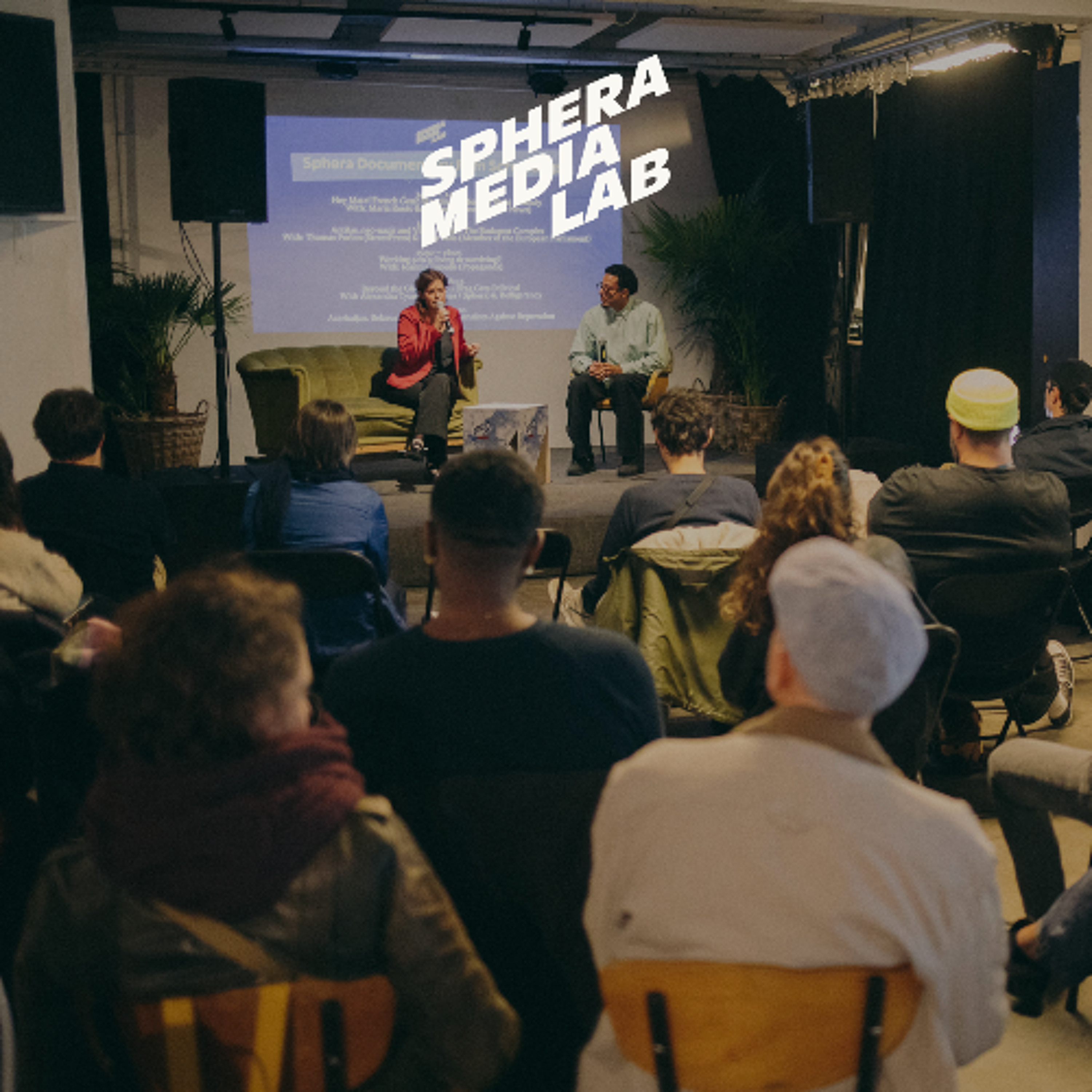
European Media Freedom Under Attack How Can We Resist the Foreign Agent Laws
A troubling trend is taking root across Europe. Inspired by a 2012 Russian law, several authoritarian regimes are now experimenting with so-called "foreign agent laws." In Russia, this legislation has severely weakened political opposition, civil society, and independent media. It asks organisations receiving more than 20% of their funding from abroad to register with the authorities as “foreign agents.” In his report Foreign Agent Laws: A Worrying Trend, Christian Holland notes that “The European Court of Human Rights (ECHR) has ruled that the archetypal foreign agent law violates fundamental rights and exhibits the “hallmarks of totalitarianism”, imposing punitive sanctions on NGOs and curtailing journalists’ ability to participate in public life.” In Georgia, a similar law was introduced in 2023 but was withdrawn after significant public and media resistance—only to be passed by the pro-Russian government in May 2024. Other countries are following. In May 2025, an EU member—Viktor Orbán’s Hungary—considered adopting such a law. Though it has been postponed, the threat still looms over the survival of Hungarian independent media. So, how can we resist the interference of regimes seeking to suppress independent journalism? Can pan-European solidarity movements and networks help push back against these authoritarian measures? And what lessons can be drawn from media organisations already operating under foreign agent laws—so we can better prepare for what may come? With:Gábor Kardos (444), Mariam Nikuradze (OC Media), Ena Bavčić (European Centre for Press and Media Freedom), Manon Moulin (Reset! network) Moderation: Alexandra Tyan (Sphera & Médianes)
AI, Algorithms, and the Threat to Media Independence
Artificial intelligence poses significant challenges to media independence through its dual role in content moderation and curation. Increasingly, content moderation on major platforms is handled by AI-driven systems, which are prone to errors and often shaped by commercial or political interests rather than journalistic or democratic values. This not only risks unjust censorship but also opens the door to AI-powered harassment campaigns against journalists, contributing to rising levels of self-censorship. At the same time, a handful of internet intermediaries, guided by profit rather than public interest, control the curation, distribution, and monetisation of news. AI systems tailor content to users based on surveillance of their online behaviour, reinforcing echo chambers and filter bubbles. This undermines access to diverse, high-quality information and shifts media consumption towards personalised, market-driven experiences, to the detriment of informed public debate. With: Moderation: Zoé Pasquier (K7 Technosensible), Francesco Marino (Pillole di Futuro Presente), Heritiana Ranaivoson (Vrije Universiteit Brussels) Moderation: Matéo Vigné (journalist)
Rethinking Funding Models for Independent Media
Perhaps more than ever, independent media are being challenged to rethink how they sustain themselves. Traditional revenue streams continue to weaken under growing market pressures and the consolidation of media ownership concentration. Public funding mechanisms, meanwhile, often remain outdated and poorly adapted to the realities of independent and multimedia formats. Participatory models have provided important alternatives, but they too are reaching their limits. The question now is: what new forms of support can help independent voices thrive? How can communities be more effectively engaged in fundraising, decision-making, and shared responsibility? This panel will explore creative pathways for ethical investment, cooperative ecosystems, and new models of solidarity that can secure the long-term future of independent media and cultural structures across Europe. With: Julie Majerczak (RSF), Patricia Reguero Ríos (El Salto), David Kardos (CSM) Moderation: Francesca Festa (Médianes)
Challenges and Opportunities of New Technologies for Reporting on Palestine
How do emerging technologies reshape the landscape of journalism in contexts of extreme violence? On the one hand, open-source tools, satellite imagery, and digital platforms have enabled unprecedented documentation and investigation of events in Gaza, offering new ways to expose truths and challenge dominant narratives, silences, and denials. Yet, these same technologies—surveillance systems, AI-driven targeting, algorithmic bias, and the weaponisation of social media—have facilitated mass violence, censorship, and disinformation, accelerating a genocide against Palestinians.While Gazan journalists are being killed by the Israeli army, and international journalists are being deny their right to cover the strip, how can technology be used to investigate, do justice for lost Gazan journalists, and make Israel accountable? This is about interrogating this double-edged role of technology: as both a tool for accountability and a mechanism of oppression. Gaza is not only a case study, it is a warning—and a call to rethink how we use and govern technology in the struggle for justice. With: James Kleinfeld (journalist), Marwa Fatafta (Access Now), Youssr Youssef (journalist, ex-Forbidden Stories) Moderation: Souria Cheurfi
Radio Lab with Mutant Radio
Leading Tbilisi-based webradio Mutant Radio stepped out of its famous carriage to broadcast from Lyon. A takeover punctuated by discussions, listening sessions and DJ sets focusing on Georgian culture. You can find here to the Listening Session with Mess_Montage (Musician, Artist, Educator | GE).








Get this podcast on your phone, Free


Create Your Podcast In Minutes
- Full-featured podcast site
- Unlimited storage and bandwidth
- Comprehensive podcast stats
- Distribute to Apple Podcasts, Spotify, and more
- Make money with your podcast