Science Facts & Fallacies
https://geneticliteracyproject.org/category/biotech-facts-fallacies/feed/Episode List

GLP podcast: Overdose crisis—Illicit opioids spread like drug-resistant bacteria?
The harder the government cracks down on a drug, the more deadly its illicit replacement that emerges from the black market. It’s a trend public health experts have watched for decades as overdose deaths continue to climb, driven by the introduction of illegal fentanyl and even more potent opioids in recent years. According to some scientists, the evolution of the black-market drug supply mirrors the spread of antibiotic-resistant microbes. The analogy works like this: law enforcement applies the same kind of selective pressure to the illicit drug market that antibiotics apply to bacteria. When we crack down on illegal drugs—seizing precursors, shutting down labs, tightening borders—the black market doesn’t surrender. Instead, it adapts. Clandestine chemists rapidly pivot to entirely new molecular scaffolds that are harder to detect and regulate. The latest example: an opioid called cychlorphine, first flagged in Europe in 2024 and now showing up in Toronto, southwest Ohio, eastern Tennessee, central Kentucky, and Chicago. On this understanding, the underground market functions as “a vast chemical Petri dish,” says one expert, where an almost unlimited menu of new, powerful molecules is synthesized and distributed to drug users around the world. Moral of the story? Prohibition doesn’t end the arms race—it accelerates it. Join Dr. Liza Lockwood and Cam English on this episode of Facts and Fallacies as they explain the science, trace the evolution of illicit opioid use and confront an uncomfortable policy question: is America’s prohibitionist approach to drug policy actually making the opioid crisis worse? If so, what do we do about it? Dr. Liza Lockwood is a medical toxicologist and the medical affairs lead at Bayer Crop Science. Follow her on X @DrLizaMD Cameron J. English is the director of bio-sciences at the American Council on Science and Health. Follow him on X @camjenglish
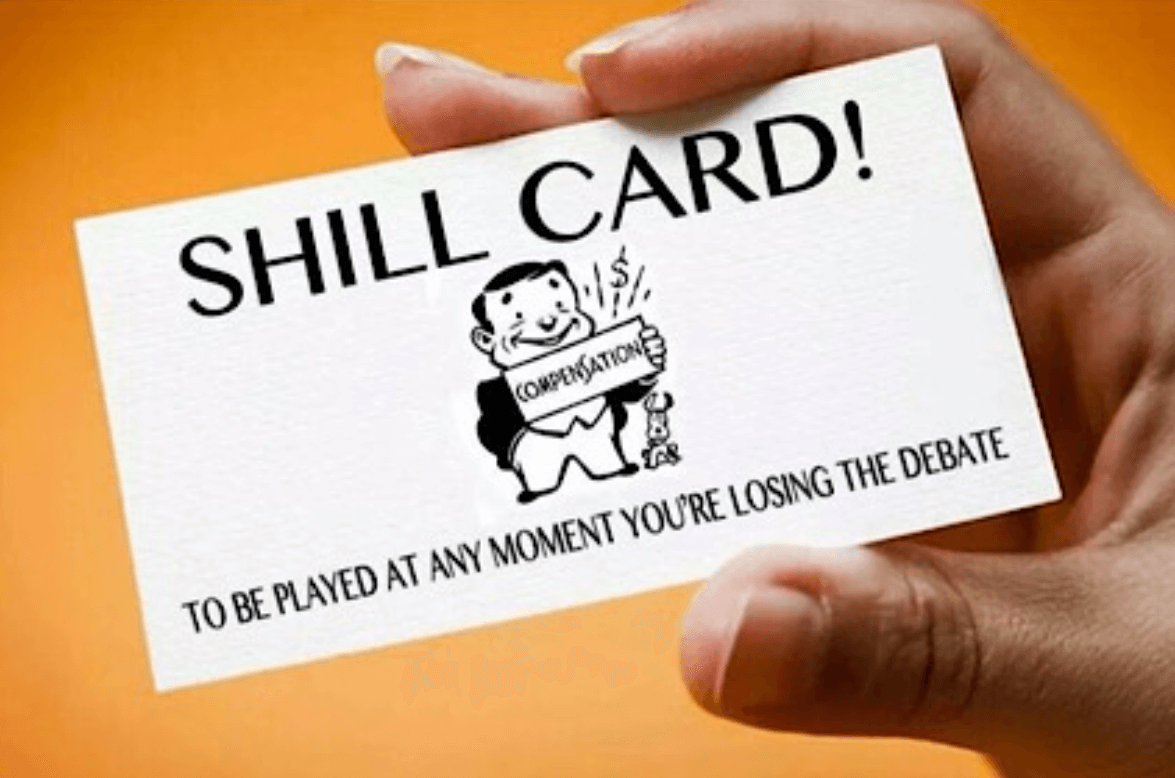
GLP podcast: Does industry funding corrupt science? The ‘shill gambit,’ debunked
It’s a charge many scientists face: they post a factual tweet refuting common misinfo about vaccines, pesticides or some other public health controversy and their replies are almost instantly flooded with accusations that they’ve been bought by industry. This is the infamous “shill gambit”—the reflexive dismissal of any scientist, doctor or commentator who has (or sometimes hasn’t) accepted industry funding. It’s intellectually bankrupt, a poor substitute for substantive engagement with evidence. The fallacy is clear to anyone paying attention. A claim is true if it corresponds to reality, not because of the person making the claim. As the economist Ludwig von Mises observed many years ago, “Arguments from authority are invalid; the proof of a theory is in its reasoning, not in its sponsorship.” Isaac Newton had patrons; today’s researchers secure grants from governments, universities, foundations or corporations. All carry potential biases, and singling out private industry reveals inconsistency: taxpayer-funded studies often align with regulatory agendas, while billionaire-funded NGOs bankroll research advancing predetermined conclusions on a wide variety of political issues. Why is industry money uniquely disqualifying but Greenpeace or NIH grants virtuous? Beyond the hypocrisy, the shill gambit’s real-world consequences can be dire. Dismissing industry experts impoverishes debate. Pharmaceutical breakthroughs—from antibiotics to HIV therapies—emerged from company labs. Tech giants fund AI and computing advances we all benefit from. The solution isn’t blanket disqualification but scrutiny of methods and replication of research. Bottom line? The shill gambit stifles innovation and empowers charlatans who claim “independence” while peddling dogma—often with opulent support from competing industries or billionaire donors. In our polarized public square, rejecting this fallacy fosters genuine scientific progress by prioritizing facts over personal insults. Join Dr. Liza Lockwood and Cam English on this episode of Facts and Fallacies as they break down the “shill gambit.” Dr. Liza Lockwood is a medical toxicologist and the medical affairs lead at Bayer Crop Science. Follow her on X @DrLizaMD Cameron J. English is the director of bio-sciences at the American Council on Science and Health. Follow him on X @camjenglish

GLP podcast: How the Green Revolution saved the world $83 trillion
Spearheaded by the Nobel Prize-winning scientist Norman Borlaug, the Green Revolution dramatically boosted food production in the middle of the 20th century—saving the world $83 trillion and perhaps a billion people from starvation. Initiated post-World War II, the effort gained momentum in the 1960s; key components included high-yielding variety (HYV) seeds for crops like wheat and rice, expanded irrigation, mechanization and expanded use of synthetic fertilizers and pesticides. These innovations dramatically increased yields. Cereal production in developing nations, for example, more than doubled between 1961 and 1985, averting widespread famine. Though still widely maligned today, pesticides played a pivotal role in this progression, enabling HYVs to thrive and contributing to yield surges of up to 44% from 1965 to 2010. The benefits were staggering in economic terms. A 2021 study in the Journal of Political Economy quantified that HYVs boosted incomes and curbed population growth via reduced fertility. Cumulatively, the Green Revolution saved the world trillions of dollars over 45 years—equivalent to one year of global GDP. In risk-benefit terms, the Green Revolution’s gains—saving multitudes from starvation, reducing poverty and sparing 18-27 million hectares from conversion to cropland, primarily in developing countries—far outweighed drawbacks, especially given the annual welfare gains from related technologies by 2020. Yet, Borlaug’s work remains controversial today, with many environmental activists and some scholars alleging that his work was harmful on balance, despite the documented increases in food production. Join Dr. Liza Lockwood and Cam English on this episode of Facts and Fallacies as they examine the Green Revolution and address criticisms of Borlaug’s work. Dr. Liza Lockwood is a medical toxicologist and the medical affairs lead at Bayer Crop Science. Follow her on X @DrLizaMD Cameron J. English is the director of bio-sciences at the American Council on Science and Health. Follow him on X @camjenglish

GLP podcast: In defense of DDT—the pesticide that saved half a billion lives
The insecticide DDT has prevented roughly half a billion deaths. A relatively low-toxic chemistry widely used to control disease-vectoring mosquitoes for decades (and still selectively employed today), DDT carries an undeserved reputation as a deadly chemical with devastating ecological consequences. This popular understanding originated in the 1962 book Silent Spring, authored by famed environmentalist Rachel Carson, whose description of the risk posed by pesticide use more broadly was truly alarming: “Along with the possibility of the extinction of mankind by nuclear war, the central problem of our age has therefore become the contamination of man’s total environment with such substances of incredible potential for harm … How could intelligent beings seek to control a few unwanted species by a method that contaminated the entire environment and brought the threat of disease and death even to their own kind? Yet this is precisely what we have done” (Silent Spring p 14-15 Kindle Edition). Although Carson is remembered fondly for her colorful prose that helped to launch the modern environmental movement, her criticisms of pesticides were flawed in important ways. “Silent Spring was replete with gross misrepresentations and atrocious scholarship,” says former FDA scientist Dr. Henry Miller. While she was broadly correct that pesticides can be harmful to off-target organisms (e.g. DDT causing eggshell thinning in some bird species), Carson’s claim that the insecticide was driving many birds to extinction was contradicted by multiple studies published before and after Silent Spring hit bookstores. Strikingly, annual data from the North American Breeding Bird Survey from 1966, a study launched in response to concerns Carson popularized, showed “through the end of the 1970s … no obvious pattern of overall increasing bird populations as would be expected to follow the 1972 banning of DDT if it were truly harming bird populations,” science writer Robert Zubrin noted in 2012. But of particular note was Carson’s allegation that DDT caused a variety of illnesses, including cancer: it was speculative at the time and subsequently refuted by additional research. “…[S]tudies in Europe, Canada, and the United States have since shown that DDT didn’t cause the human diseases Carson had claimed,” Dr. Paul Offit observed in 2017: “Indeed, the only type of cancer that had increased in the United States during the DDT era was lung cancer, which was caused by cigarette smoking. DDT was arguably one of the safer insect repellents ever invented—far safer than many of the pesticides that have taken its place.” But the story of highly toxic DDT persists to this day, and mainstream accounts of Carson’s work maintain that her claims about pesticides were vindicated. Join Dr. Liza Lockwood and Cam English on this episode of Facts and Fallacies as they take a closer look at the risks of benefits of DDT use, and challenge some common misunderstandings along the way. Dr. Liza Lockwood is a medical toxicologist and the medical affairs lead at Bayer Crop Science. Follow her on X @DrLizaMD Cameron J. English is the director of bio-sciences at the American Council on Science and Health. Follow him on X @camjenglish






Get this podcast on your phone, Free


Create Your Podcast In Minutes
- Full-featured podcast site
- Unlimited storage and bandwidth
- Comprehensive podcast stats
- Distribute to Apple Podcasts, Spotify, and more
- Make money with your podcast
