
The Jim Rutt Show
https://www.jimruttshow.com/feed/podcast/Episode List
EP 339 John Krakauer on Why Neuroscience Needs Behavior
Jim talks with John Krakauer—professor of neurology and neuroscience, director of the Center for Study of Motor Learning and Brain Repair at Johns Hopkins, and external faculty at SFI—about his 2017 paper "Neuroscience Needs Behavior: Correcting a Reductionist Bias." They discuss defining behavior as ecologically valid goal-directed action within an animal's umwelt, behavioral decomposition being epistemically prior to neural investigation, bipedal running and Sherrington's spinalized cat experiments as illustrations of that decomposition, what a satisfying neural explanation should actually look like, emergence and neuroscientists' resistance to it, the concept of explanatory autonomy and the "wings don't fly, birds do" framing, downward causality and the traffic jam analogy, Sherrington's own epistemic humility about understanding thought, whether consciousness will eventually be explained the way life was or remain permanently fuzzy, the three traditions of studying the nervous system and their persistent tensions, the problem of double-dipping with coarse-grained behavioral language in neural data, "filler verbs" like "involves" and "underlies" that add surplus meaning to a correlation without doing extra explanatory work, everyday pseudo-explanations like dopamine for unhappiness and oxytocin for love, the identity fallacy, LLMs as scientific sparring partners and critical reviewers, Krakauer's vertigo at the current moment and the possibility of retiring if AI generates better intuitions, interpretable AI as a new subject for neuroscience and psychology, Jim's own artificial consciousness project building a rudimentary white-tailed deer, distinguishing consciousness from cognition and sentience, separating the machinery of consciousness from its contents, Nagel's "What Is It Like to Be a Bat?" and echolocation as conscious content, multiple realizability and its being pervasive and fatal to naive reductionism, the mereological fallacy and mirror neurons as ground zero for multiple fallacies, Marr's three levels and the direction of the scientific project from behavioral goal to algorithm to neural implementation, the bradykinesia paper finding that Parkinson's patients move slowly because they want to move more slowly, the C. elegans connectome and the limits of that knowledge, the Jonas and Kording microprocessor paper, and much more. Episode Transcript "Neuroscience Needs Behavior: Correcting a Reductionist Bias", by John Krakauer "What Is It Like to Be a Bat?", by Thomas Nagel "Why Don't We Move Faster?", by Pietro Mazzoni, Anna Hristova, and John Krakauer "Could a Neuroscientist Understand a Microprocessor?", by Eric Jonas and Konrad Kording John Krakauer is currently John C. Malone Professor, Professor of Neurology, Neuroscience, and Physical Medicine and Rehabilitation, and Director of the Brain, Learning, Animation, and Movement Lab at The Johns Hopkins University School of Medicine. He is also an External Professor at the Santa Fe Institute and Director of the Centre for Restorative Neurotechnology at The Champalimaud Centre for the Unknown. His areas of research interest include experimental and computational studies of motor control and motor learning, long-term skill learning and its relation to higher cognitive processes, prediction and mechanisms of motor recovery after stroke, new neuro-rehabilitation approaches including immersive XR gaming with generative AI, robotics and invasive CNS stimulation, and philosophy of mind. He is slowly working on a new book on the mind, intelligence, and AI for Princeton University Press.
EP 338 Jeff Giesea on Dionysian Futurism, Reading Great Books in the AI Era, and Rebalancing Generational Power
Jim talks with Jeff Giesea, entrepreneur, writer, and founder of the Boyd Institute, about his essay "Dionysian Futurism" and the broader question of what's missing from our visions of the future. They discuss Nietzsche's Apollo/Dionysus framework from The Birth of Tragedy, the critique that techno-optimist futures are lifeless and sterile, Jim's extension of that critique to Game B and adjacent social change spaces, the distinction between positive Dionysian energy and mere degeneracy, Jim's concept of decadence as wire-heading on dopamine traps and gambling apps, generational decline in conviviality, Gen Z statistics on less sex and fewer dates, the structural economic pressures of student debt and housing unaffordability, the shift in college freshman values away from meaningful philosophy of life toward financial success, the dinner party versus restaurant ratio and what's been lost, the vanished culture of Georgetown dinner salons and political hostesses like Pamela Harriman, the trade-off between women entering the workforce and the loss of socially maintained conviviality infrastructure, the call to bring back the host or hostess curating eight to twelve people around a topic, Jeff's "The Humanities Revolution Has Already Begun" essay and the Kairos Project's decentralized open-source great-books discussion groups, Hannah Arendt's The Human Condition and its relevance to AI and what it means to be human, the tent-revival quality of the new bottom-up humanities movement, Homer and the bards as evidence that great books were never meant only for scholars, Substack as Renaissance Florence, self-gatekeeping around the humanities and the call to read great books at any phase of life, Jim's return to the Iliad and Odyssey and current reading of Zen and the Art of Motorcycle Maintenance, audiobooks and the opportunity to produce better audio versions of copyright-free great works, Foucault as a poisoner of two generations of scholars, the woke turn in university humanities departments and Jacob Savage's essay "The Lost Generation," three drivers of the humanities revolution in pushback against woke academia, digital technology, and AI, AI as a tool for reading difficult books versus the risk of delegating critical thinking, Pirsig's concept of quality as a North Star for deciding when to use AI, taste as the Silicon Valley word for quality, Jeff's "goddamn Boomers" trilogy on the Boomer reckoning and the long Boomer farewell, the Boomer paradox of holding society together while holding it back, the gerontocracy problem of spending six dollars on old people for every one dollar on young people, entitlement spending flowing to the wealthiest demographic, Social Security couples at the top receiving over a hundred thousand dollars a year, California's real estate tax caps and their effect on schools, the political power of older voters and the absence of an AARP for young people, Gen X's failure to produce a presidential contender, Don Draper in Mad Men as a hinge figure between Greatest Generation and Boomer values, Boomer narcissism versus Gen X grandiosity, Jim's reframe of the core Boomer failing as hyper-individualism rather than narcissism, and much more. Episode Transcript "Dionysian Futurism," by Jeff Giesea The Boyd Institute Jeff Giesea (Twitter) "The Lost Generation," by Jacob Savage "The Boomer Reckoning No One's Ready For," by Jeff Giesea "Boomer Caregiving Will Wreck Our Politics," by Jeff Giesea "The Long Boomer Farewell," by Jeff Giesea "The Broligarchy Will Either Save the World or Destroy It," by Jeff Giesea Jeff Giesea is an entrepreneur, investor, and writer. A Stanford graduate, he has built several successful businesses and recently founded the Boyd Institute, a policy lab for America's future. You can read his essays on his Substack.
EP 337 Worldviews: Philip Rosedale on Emergent Worlds, Localism, and What Building Second Life Taught Him About Humanity
Jim talks with Philip Rosedale, founder and CEO of Linden Lab and creator of the game Second Life, about the nature of self, society, and the design of virtual worlds. They discuss the phenomenology of waking up and coalescing into a self, the polycrisis and whether to work on AI or on software that helps people get along better, Philip's role-based sense of identity, his messianic feeling during Second Life's early days versus a more Zen perspective now, humanity's place in the cosmic timeline, resistance to the techie utopian view that humans are merely a stepping stone to AI, the duty to "think local" and align at the scale of immediate community, Doug Rushkoff's "team human" concept, shared objective reality as social glue, the danger that technology has reduced the coherence of our collective worldview, Jim's "minimum viable metaphysics" and the reality assumption as operationally necessary, overapplying quantum mechanics to produce anti-realist worldviews, Philip's founding vision for Second Life as an emergent system contrasted with Old Testament god-game design, Craig Reynolds' Boids flocking rules and the tattoo encoding cohesion, separation, and alignment, emergent currency as a feature rather than a bug, the demand for beautiful avatars and identity expression as the first break from the simulation dream, why low-fidelity text platforms became massive while Second Life became big but not huge, the uncanny valley problem and its origins, AI video generation as a potential breakthrough for real-time believable face animation in virtual worlds, the whites of human eyes as a social signaling adaptation, the topology of connectivity producing different social emergence, Second Life's local topology versus Twitter's power-law scale-free network, the Game B concept of the membrane and voluntary strong-sauce agreements within small groups, Facebook groups as an early moment of rightness before the bleaching phenomenon took hold, crypto's attraction of bad actors and Vitalik Buterin's recent admission that Ethereum didn't serve humanity as intended, anonymity as generally harmful and the need for identity through group belonging, the trillion-dollar opportunity of a personal agent as a defensive membrane, the mid-nineties fork in the road on micropayments versus free, neutral infrastructure decisions having massive emergent cultural effects, what Jim learned from the Santa Fe Institute about the limits of confident long-range prediction, Karl Friston's work on consciousness and the membrane around something alive, world-model building as fundamental to selfhood, consciousness as discovering the self inside the world model, lucid dreams as a visceral analogy for the strange loop, and much more. Episode Transcript Free, by Chris Anderson Gödel, Escher, Bach: An Eternal Golden Braid, by Douglas Hofstadter "What Is It Like to Be a Bat?", by Thomas Nagel Awakening the Angels", by Philip Rosedale Team Human, by Douglas Rushkoff Philip Rosedale is the founder of Second Life, where he served as CEO for a decade and recently rejoined as CTO. He previously created FreeVue, an early videoconferencing app acquired by RealNetworks, where he became CTO and led the creation of RealVideo. He later co-founded High Fidelity, an open-source VR platform that pivoted to spatial audio. His current projects include FairShare, a group-based digital currency aimed at reducing wealth inequality, and the California Institute of Machine Consciousness, a research initiative exploring consciousness in machines.
EP 336 Rufus Pollock on the Wisdom Gap and the Second Renaissance
Jim talks with Rufus Pollock—entrepreneur, activist, Zen practitioner, founder of Life Itself and the Open Knowledge Foundation, and author of Open Revolution—about the metacrisis, the wisdom gap, and what a Second Renaissance might look like. They discuss Jim's own early belief that accessible information would produce a renaissance of democracy, the realization that "open knowledge does not make open minds," the printing press and Gutenberg as a historical parallel to today's breakdown of sense-making, why today's epistemic crisis is exponentially harder than 1520 because any formulation you want is on offer, the breakdown of trust in science and rational bureaucracy as parallel to the collapse of Catholic epistemic authority, Christopher Alexander's work as the best analogy for wisdom and his claim that beauty and wholeness are real, Rufus's three elements of wisdom—"valuception," discernment, and the capacity to act—applied both individually and collectively, how humans have solved collective action problems by culturally hijacking kin-care genetics to imagine a larger we, culture as scaffolding for people who can't or won't do inner work themselves, Joseph Henrich's framing of humans as the imitation ape rather than the smart ape, the distinction between surface culture and deep civilizational paradigms, Life Itself's conscious co-livings as experiments in new cultural practices, the personal-institutional spiral and why retreat benefits evaporate without external scaffolding, the three layers of the metacrisis, distinguishing the polycrisis from the metacrisis using the HIV/AIDS analogy, modernity's core assumptions and how in the endgame the light becomes a shadow, the five features of a Second Renaissance worldview compared to modernity, technology as the de facto religion of modernity, the Buddhist distinction between waking up and growing up and the aspiration for an awakening society, AI as a case study in the multipolar trap at the company, capital, and geopolitical levels, the historical engine of group enlargement and why war can no longer serve that function, and much more. Episode Transcript Open Revolution, by Rufus Pollock Rufus Pollock's Website Life Itself Life Itself Hubs for Conscious Community A Pattern Language, by Christopher Alexander The Nature of Order, by Christopher Alexander The Timeless Way of Building, by Christopher Alexander Open Knowledge Foundation Second Renaissance Second Renaissance White Papers Introduction to Developmental Spaces (information and paper) Metacrisis: An Introduction Rufus Pollock is an entrepreneur, activist and author as well as a long-term zen practitioner. He is passionate about finding wiser, weller ways to live together. He has founded several for-profit and nonprofit initiatives including Life Itself, Open Knowledge Foundation, and Datopian. His book Open Revolution is about making a radically freer and fairer information age. Previously he has been the Mead Fellow in Economics at the University of Cambridge as well as a Shuttleworth and Ashoka Fellow. A recognized global expert on the information society, he has worked with G7 governments, IGOs like the UN, Fortune 500s as well as many civil society organizations. He holds a PhD in Economics and a double first in Mathematics from the University of Cambridge.
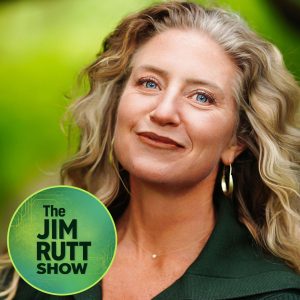
EP 335 Worldviews: Samantha Sweetwater
Jim talks with Samantha Sweetwater about her book True Human: Reimagining Ourselves at the End of Our World and the question of what it means to be human at this moment in planetary history. They discuss her verb-based rather than noun-based self-identity, Lisa Feldman Barrett's construction theory as a framework for understanding the entanglement of body, brain, mind, and relationship as the fabric of lived experience, Samantha's identity as a "Gaian" and humans as a creator-destroyer class of organism, the Fermi paradox and the gigantic moral freight of potentially being the only general intelligence in the universe, the meaning of the sacred and John Vervaeke's formulation that "sacred is how the world is to us when we see it through the eyes of love," Jim's own definition of the sacred as the appropriate stance toward things too complex for reductionist analysis, the metacrisis as fundamentally a crisis of separation, the four generator functions of separation including stories of separability, structures of separability, win-lose game-theoretic dynamics, and dominator ideologies, the forager operating system and Chris Boehm's account of how egalitarian societies historically defeated hierarchy, the hinge of agriculture and henchmen enabling dominator systems, Luke Kemp's Goliath's Curse and the contrast between fluid civilizations and Goliaths, role-based non-hierarchical leadership in forager societies and whether it can scale, Audrey Tang as an emergent archetype of life-centric coordination, psychedelics as allies and teachers rather than mere tools, Samantha's personal healing path through sacrament, community, and prayer, the neuroscience of heightened neural entropy and the brain's wash cycle, the ontological reframe of one's own importance, the hard problem of machine consciousness and the California Institute for Machine Consciousness, the space of minds and the n=1 problem of one planet and one biochemistry, the MoltBook experiment of AI inventing languages and religions, relationality as the core practice available to people in their actual lives, humans as a custodial species and co-orchestrators rather than dominion-holders, Tyson Yunkaporta's Sand Talk, and much more. Episode Transcript True Human: Reimagining Ourselves at the End of Our World, by Samantha Sweetwater Goliath's Curse, by Luke Kemp Sand Talk, by Tyson Yunkaporta JRS Currents 010: Tyson Yunkaporta on Humans as a Custodial Species Samantha Sweetwater is the author of True Human: Reimagining Ourselves at the End of Our World, a meta-relational educator, leadership mentor, and the founder of One Life Circle, a ministry of remembering. For over three decades, she has facilitated individual and collective transformational experiences across diverse cultures and communities on five continents. As the founder of Dancing Freedom and Peacebody Japan, she pioneered a global movement of embodied awakening and trained hundreds of facilitators worldwide. Her work bridges ecology, complexity, spirituality, and technology with lived experience, inviting a re-imagining of what it means to be human in a time of planetary techno-cultural transformation. Through teaching, writing, and attuned presence, she helps people restore relationship with their bodies, each other, and the living world as a foundation for wise action in uncertain times.




Get this podcast on your phone, Free


Create Your Podcast In Minutes
- Full-featured podcast site
- Unlimited storage and bandwidth
- Comprehensive podcast stats
- Distribute to Apple Podcasts, Spotify, and more
- Make money with your podcast