
Reliability Matters
https://www.spreaker.com/show/3242525/episodes/feedEpisode List
Predict, Prevent, Produce: RoviSys' Bryan DeBois on Manufacturing's Al Future Episode 190
What if your factory could predict failures before they happen, capture decades of human expertise, and make better decisions than ever before—without replacing the people who run it?Today’s guest sits right at the intersection of innovation and industry. Bryan DeBois, Director of Industrial AI at RoviSys, is helping reshape what manufacturing looks like in the age of intelligent machines.From predictive analytics that catch problems before they happen, to data-driven systems that optimize production in real time, Bryan’s work is transforming how factories think, learn, and produce. But this isn’t about replacing people, it’s about amplifying human expertise and capturing decades of industrial knowledge before it disappears.In this episode, we’ll explore how smart factories are changing the game, what it really takes to begin a digital transformation, and why trust and transparency are just as critical as algorithms and code.What stands out most is Bryan’s ability to make advanced technology practical. He’s not talking about theory, he’s helping real manufacturers integrate AI in ways that improve safety, efficiency, and sustainability.I speak with Bryan about how artificial intelligence is redefining manufacturing, the challenges of digital transformation, and the future of smart factories.RoviSyshttps://www.rovisys.com
From the Factory Floor to System Design: Why Women in STEM Matter with Kristen Eckart - Episode 189
When we talk about reliability, we usually focus on materials, processes, test methods, and standards. But what if one of the most overlooked reliability risks is who is not at the table when engineering decisions are made?Today’s episode focuses on women in STEM, Science technology engineering and mathematics, and why this conversation extends far beyond mere representation. It impacts how problems are defined, how risks are identified, and how resilient our technologies ultimately become. My guest is Kristen Eckart, an accomplished engineer whose career includes working in high-reliability environments at Lockheed Martin.While Kristen’s background includes complex systems where failure is not an option, this conversation is not about any specific product or program. Instead, it is about the broader experience of women in engineering, the barriers that still exist, and why attracting and retaining women in STEM is essential to the future of technology and manufacturing.For those of you working in electronics manufacturing, quality, reliability, or engineering leadership, this discussion connects directly to how teams make better decisions, reduce risk, and design systems that perform reliably in the real world.This is a conversation about engineering excellence, opportunity, and why who we include ultimately matters.
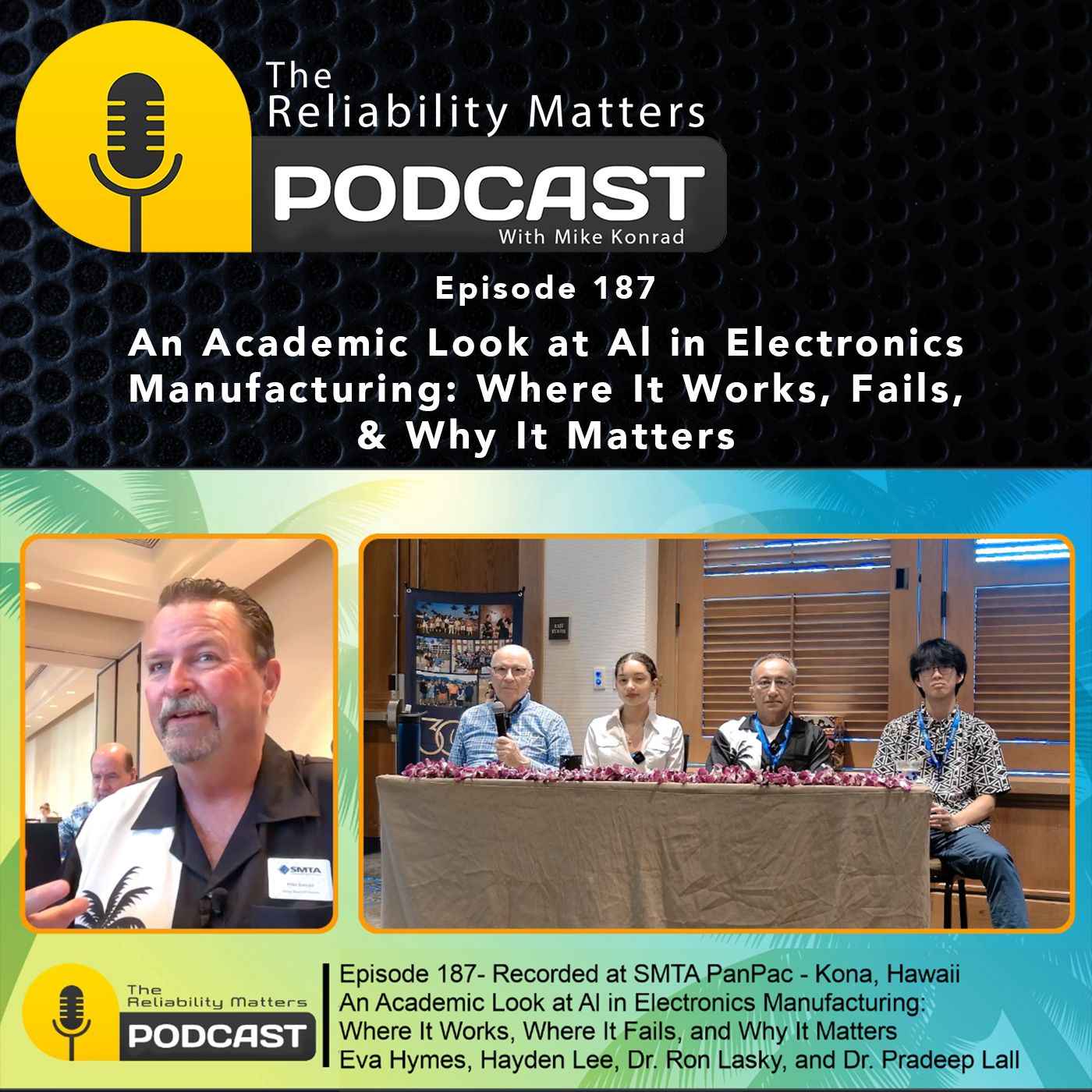
An Academic Look at Al in Electronics Manufacturing: Where It Works, Fails, & Why It Matters - # 187
Artificial intelligence is being promoted as the next revolution in electronics manufacturing, but what happens when the people evaluating it aren’t traditional AI experts, aren’t software vendors, and aren’t selling anything? Today’s conversation brings together engineers and professors who live at the intersection of education, reliability, and real-world manufacturing to separate meaningful progress from speculation.Each episode brings together engineers, researchers, and industry leaders to examine best practices, emerging technologies, and real-world lessons, always with a focus on data, physics, Best practices, and long-term performance.Today’s episode is a little different—and the setting couldn’t be better. I’m recording live from the Big Island of Hawaii, in Kona, at the SMTA Pan Pacific Strategic Electronics Symposium, better known as PanPac.At PanPac, academia meets industry in a way that’s truly unique. Leading international universities join forces with CEOs, inventors, senior engineers, and decision-makers from around the world. This is where the brightest research collides with the most pressing industry challenges — and sparks solutions that drive the future of electronics. I’m honored to be the conference chair, especially on this 30th anniversary of PanPac.This episode is all about “AI in Action: Progress, Pitfalls, and the Future of Electronics.”Artificial intelligence is becoming a frequent topic in electronics manufacturing—from inspection and process optimization to predictive maintenance and reliability modeling. But rather than approaching this conversation from the standpoint of AI evangelists or software developers, we’re taking a different path.My panelists are: Eva Hymes, Hayden Lee, Dr. Ron Lasky, Dr. John Evans, and Dr. Pradeep Lall. None of today’s panelists claim to be AI experts. Instead, they are engineers and professors who sit at the intersection of education, engineering, and real-world manufacturing challenges. Their perspective is grounded in physics, data, reliability science, and decades of experience teaching the next generation of engineers—many of whom will be working alongside AI-driven tools whether they choose to or not.Because all of our panelists come from academia, this conversation intentionally steps back from hype and buzzwords. We’ll focus on how AI is actually being used, where it shows promise, where it introduces risk, and where critical gaps still exist—especially in high-reliability electronics manufacturing. And because PanPac serves the electronics manufacturing community, we’ll keep this discussion connected to the factory floor, workforce readiness, education, and long-term product reliability. We’ll also touch on broader societal questions, including how AI is shaping engineering education and professional intuition.So if you’re looking for a grounded, thoughtful discussion on AI—one rooted in engineering reality rather than marketing claims—this episode is for you.
Readiness Through Repair: How the U.S Military is Strengthening Capabilities with Right to Repair - Episode 187
If a $26,000 drone repair can be done in the field—but policy says it has to be shipped back to the manufacturer, do you really have a reliability problem… or a repair access problem?Today on the show, I’m joined by William Santos, International Sales Manager at ABI Electronics and a global advocate for the Right to Repair movement.William recently wrote a compelling article titled “Readiness Through Repair: How the U.S. Military is Strengthening Capabilities with Right to Repair,” where he explores how repair access—or the lack of it—directly impacts mission readiness, lifecycle cost, and operational resilience within the U.S. military.For decades, highly trained military technicians have been prevented from repairing mission-critical equipment due to restricted access to diagnostic tools, software, and spare parts. That model is now being challenged. In April 2024, the U.S. Army announced plans to embed Right-to-Repair provisions into both new and existing contracts—a major shift with enormous implications for reliability, sustainment, and cost control.Today, we’ll unpack what this policy change really means, why repair capability is inseparable from readiness, and what lessons commercial industry can learn from the military’s pivot toward repair empowerment.Willian's Posts:Exposing the Myths and Truths of the Repair Industry!https://tinyurl.com/mr47r33pReadiness Through Repair: How the US Military is Strengthening Capabilities with Right to Repairhttps://tinyurl.com/4pytbvcsABI Electronicshttps://www.abielectronics.co.ukRepair Don't Waste Podcasthttps://tinyurl.com/du8skcxk
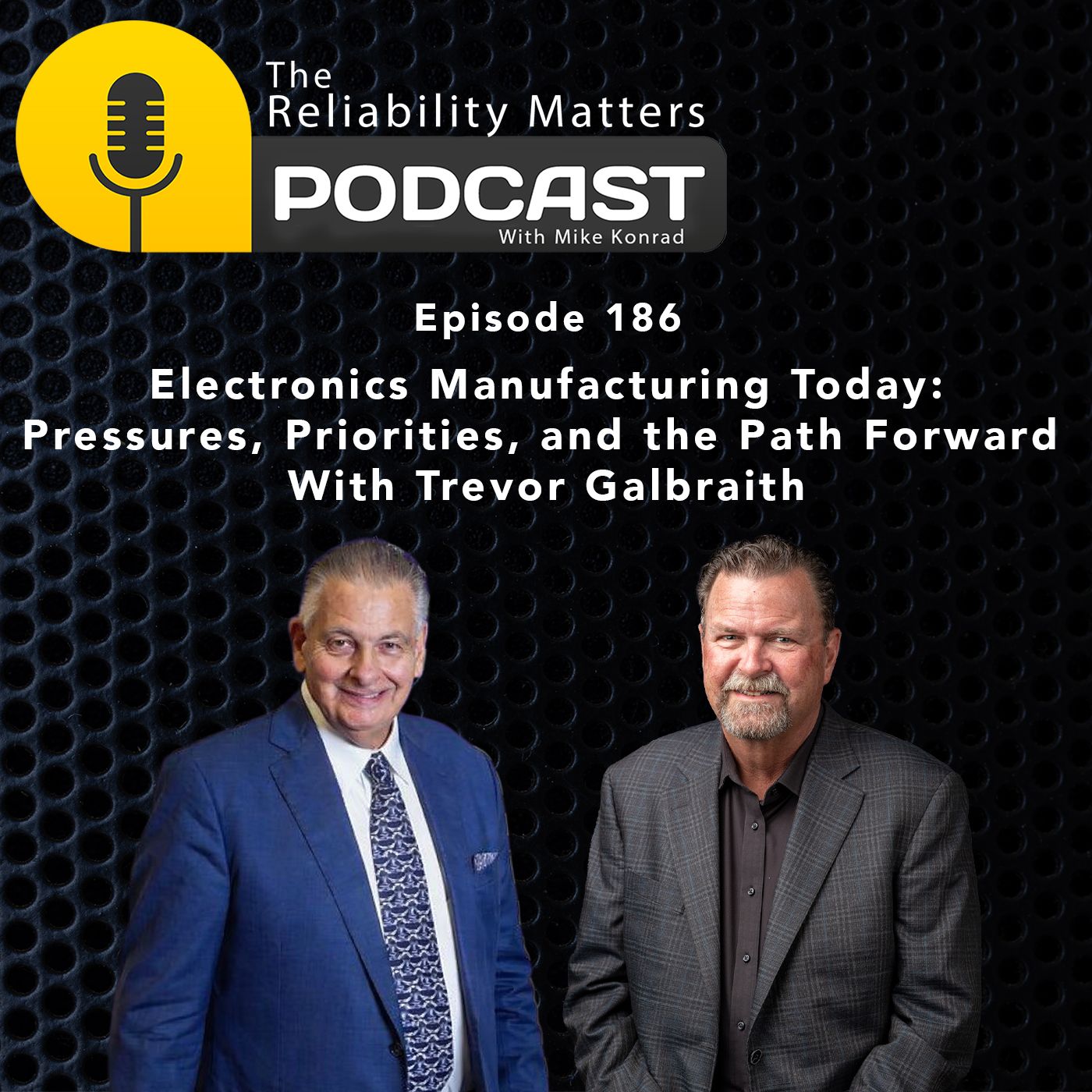
Electronics Manufacturing Today: Pressures, Priorities, and the Path Forward With Trevor Galbraith - Episode 186
When you talk to one manufacturer, you hear a story. When you talk to hundreds, patterns emerge. Today, we step back and examine what those patterns tell us about the real state of electronics manufacturing.Today’s episode takes a step back from individual processes and technologies to look at the electronics manufacturing industry through a broader, editorial lens. My guest is Trevor Galbraith, publisher of Global SMT & Packaging—one of the industry’s valuable trade publications.As a publisher, Trevor speaks with manufacturers, suppliers, technologists, and industry leaders from around the world. That gives him a unique vantage point—not just on where the industry is investing, but where it’s struggling, where expectations and reality diverge, and how issues like reliability, workforce challenges, supply chain pressure, automation, and standards are truly playing out on the factory floor.In this Meet-the-Press–style conversation, we’ll explore the current state of electronics manufacturing, how reliability is being prioritized—or deprioritized—amid cost and speed pressures, whether manufacturing processes are keeping pace with design complexity, and what Trevor sees ahead for the industry over the next five to ten years.This episode isn’t about promoting solutions. It’s about understanding the landscape, asking hard questions, and gaining perspective from someone who hears unfiltered voices across the entire electronics manufacturing ecosystem.Global SMT & Packaging Magazinehttps://www.globalsmt.net
You may also like










Get this podcast on your phone, Free


Create Your Podcast In Minutes
- Full-featured podcast site
- Unlimited storage and bandwidth
- Comprehensive podcast stats
- Distribute to Apple Podcasts, Spotify, and more
- Make money with your podcast
