Episode List
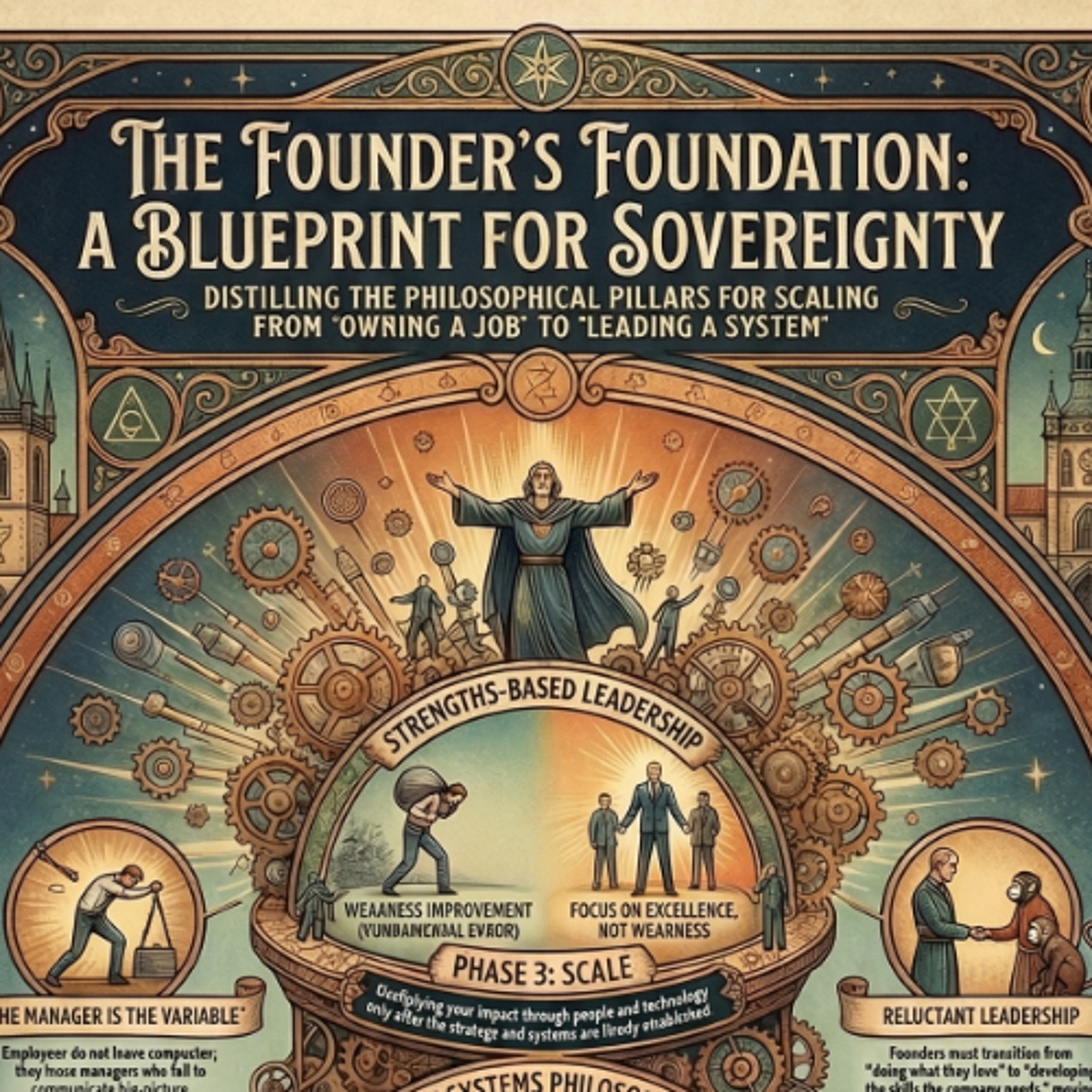
Stop being the bottleneck to scale your business
In this episode, we dive deep into the uncomfortable truth every entrepreneur eventually faces: you are the bottleneck in your business. If you find yourself jumping from one crisis to the next, putting out fires instead of planning for growth, or feeling like your business would grind to a halt the moment you stepped away, then you don’t own a business—you own a job. Host Steve Simonson challenges the common paradigms of leadership and management, offering a framework to transform from a "reluctant leader" into an intentional architect of your organization. We explore why the ceiling of your company is ultimately determined by the ceiling of your own leadership and how to break through it by prioritizing strategy and systems over sheer willpower. You’ll learn how to shift from a permission-based culture to one of ownership where team members take responsibility for results. Steve shares practical tactics for moving your team away from asking "What should I do?" to proposing their own solutions. We also discuss the "Frustration to System" process, which allows you to take any recurring headache in your business and turn it into a scalable, documented system. https://catalyst88.com https://parsimony.com https://stevensimonson.com https://symoglobal.com

Why Isolation is bad for Founders
Isolation is often described as the **"loneliness of command,"** where a founder feels like they are standing alone on the bridge of a ship in the middle of the ocean. While independence is part of an entrepreneur's DNA, it can quietly transform into a dangerous trap where the most important decisions of a company’s life are made in total isolation. The following points summarize why this state is so detrimental to both the founder and the business: * **The Danger of Blind Spots:** The biggest risks to a business are rarely external market forces; they are the internal blind spots in a founder's own leadership. Without a peer group or mentor to provide a high-level feedback loop, these flaws remain invisible to the founder until they cause significant damage. * **The "Slowest Way to Win":** Attempting to figure everything out alone is the least efficient path to success. Isolated founders learn every lesson through expensive, firsthand failure, effectively "paying retail" for wisdom. A mentor or advisory circle acts as a guide through a maze, pointing out "landmines" so the founder can compress ten years of trial and error into a single year of progress. * **The Psychological Weight of Leadership:** As a company scales, the decisions get heavier, the payroll gets bigger, and the consequences of a mistake become more expensive. Making these high-stakes choices without a trusted advisory environment leads to heightened stress and a feeling of being "stuck and secretly terrified." * **Becoming the Bottleneck:** Isolated founders often fall into the trap of "hustle culture," where they believe they must do everything themselves. This makes them the primary bottleneck of the company. Without external accountability and structured systems, they cannot transition from being a daily operator to a visionary architect. * **The Price of Ignorance:** Every mistake made in isolation burns capital and time. Founders who go it alone often burn more cash and take longer to reach scale because they lack the perspective to see more efficient routes already discovered by veteran operators. Ultimately, entrepreneurship is a team sport. Breaking isolation through forums like the Chairman's Circle allows founders to trade "heroics" for "systems," ensuring that the business can scale without the founder having to white-knuckle every decision. **Explore more from Steve Simonson and the Catalyst88 community:** * **Catalyst88:** [https://catalyst88.com](https://catalyst88.com) * **Awesomers Podcast:** [https://awesomers.com](https://awesomers.com) * **Parsimony:** [https://parsimony.com](https://parsimony.com) * **SymoGlobal:** [https://symoglobal.com](https://symoglobal.com) * **Best AI Agent:** [https://bestaiagent.com](https://bestaiagent.com) * **HumanityNow:** [https://humanitynow.com](https://humanitynow.com)

Transform Your Business From Chaos to Order
The Firefighter Trap — Moving From Chaos to Systemic Order Description: Are you spending your entire day putting out fires instead of building your empire? In this episode of the Founder Foundations Mini-Series, we dive deep into the "Paradigm of Normal" entrepreneurship—a state characterized by constant chaos, emotional decision-making, and the exhausting role of the "Founder Firefighter." If you find yourself stuck in the trenches, reacting to every daily blaze, you aren’t managing a business; you’re being managed by one. Host Steve Simonson breaks down why most entrepreneurs fall into the trap of becoming the ultimate problem-solver, or "Mr. Wizard," for their team. While it might feel good to save the day, this "permission-based" management style creates a massive bottleneck that kills scalability and steals your sanity. What you’ll learn in this episode: Breaking the Paradigm: Why "normal" business operations are actually chaotic and how to shift toward a rational, predictable model. The Anatomy of a System: How to view every function of your business as a flow chart with a clear Input, Process, and Completion point. System vs. Personality: Why you must stop relying on "magical unicorn" employees and start building systems that produce predictable results regardless of who is in the seat. Managing by Exception: How to set up your "control panel" so you only have to step in when a light turns red, leaving you free to focus on high-level strategy. The Golden Rule of Management: Why you should never manage what you can’t measure and why you should always "blame the system, not the person." Stop being the primary firefighter in your company. Learn how to engineer your business so the system runs the business, the people run the system, and you—the founder—finally get your freedom back. Subscribe and join the movement at Awesomers.com to replace your daily chaos with world-class order. https://awesomers.com https://catalyst88.com https://stevensimonson.com https://symoglobal.com https://parsimony.com https://ibamboo.com https://floorshop.com

MyMentorSteve.com
Steve_Simonson_s_Rare_Executive_Mentor_Profile by Awesomers.com

Poorly Made in China - Book Review Revisited
I released Episode 53 of the Awesomers.com podcast some time back, and it's a deep dive into a book that I consider absolutely essential for anyone involved in manufacturing or trade with China: Paul Midler's "Poorly Made in China." If you're doing business there, this isn't just a recommendation; it's a necessity. Paul Midler is a brilliant author who has genuinely lived the stories he outlines in this book. With over 15 years of my own experience trading with China, I can tell you that many of his anecdotes are eerily familiar – often both funny and tragically so. This book offers an extraordinary, in-depth look into how China's export industry truly operates, and indeed, how China itself works. In this episode, I break down some of the most critical concepts Paul discusses, which resonate strongly with my own observations: • Quality Fade (or Product Fade): This is real. Factories subtly reduce product quality over time—thinner shampoo bottles, changed formulas, subcontracting to cheaper facilities, or reducing material weight or thread count. These changes are often hard to detect visually, making vigilance crucial. • "Price Go Up": You've probably heard it. Factories frequently increase prices, citing labor, environmental controls, or raw material costs. Yet, they rarely, if ever, inform you when prices could go down due to currency shifts or other factors. Their objective, after all, is to maximize their own profit. • Counterfeit Culture & Intellectual Property (IP) Issues: The book highlights astonishing instances, like factories copying a customer's product formula and then audacious claiming it as their own intellectual property when asked for disclosure. • Profit Siphoning & Under-reporting: Paul details cases such as Chinese partners in joint ventures siphoning off all profits, and factories under-reporting production of patented goods to avoid paying rightful patent fees, even devising elaborate schemes to circumvent oversight programs. • Manipulation Tactics: I caution listeners about "guanxi" (long-term relationships), which, while valuable, can also be used as a manipulation tactic by factories. Understanding these strategies is paramount to maintaining an even playing field. I truly believe that "knowledge is power" when navigating relationships with Chinese factories. "Poorly Made in China" is one of the very best books I've seen on the subject—extraordinarily insightful and entertaining, despite the serious lessons it imparts. Honestly, I'd consider it "entrepreneurial malpractice" not to recommend it. If you trade with China, buy products from China, or develop products there, reading this book and understanding these dynamics will help you be better prepared and significantly minimize potential problems through proper management. Watch the full episode for a deeper dive: 👉 https://awesomers.com/53 You can also find more helpful processes and procedures on our mailing list at https://awesomers.com. For professional, Amazon-ready product photography for your China-manufactured goods, check out https://symoglobal.com. And for the business operating system for your marketplace business, visit https://parsimony.com. Let me know in the comments if you've read "Poorly Made in China" or experienced any of these situations! If you want to work with me check out https://catalyst88.com and https://humanitynow.com or our new chatbots at https://chat.parsimony.com #ManufacturingInChina #PoorlyMadeInChina #SteveSimonson #AwesomersPodcast #ChinaTrade #SupplyChain #QualityControl #IntellectualProperty #BusinessStrategy #GlobalTrade







Get this podcast on your phone, Free


Create Your Podcast In Minutes
- Full-featured podcast site
- Unlimited storage and bandwidth
- Comprehensive podcast stats
- Distribute to Apple Podcasts, Spotify, and more
- Make money with your podcast