Economics Explained
https://feeds.megaphone.fm/ARML8374689970Episode List

Is Degrowth the Only Answer?
📫 3,000+ read our free newsletter that has weekly original stories Sign up: → https://economics-explained-tv-program.beehiiv.com/ Learn more about your ad choices. Visit megaphone.fm/adchoices

Why $129,000 Is the New Poor
📫 3,100+ read our free newsletter that has weekly original stories Sign up: → https://economics-explained-tv-program.beehiiv.com/ This video was inspired by Michael Green's article "Part 1: My Life Is a Lie — How a Broken Benchmark Quietly Broke America - https://www.yesigiveafig.com/p/part-1-my-life-is-a-lie Learn more about your ad choices. Visit megaphone.fm/adchoices
The Rise Of The Middle Powers
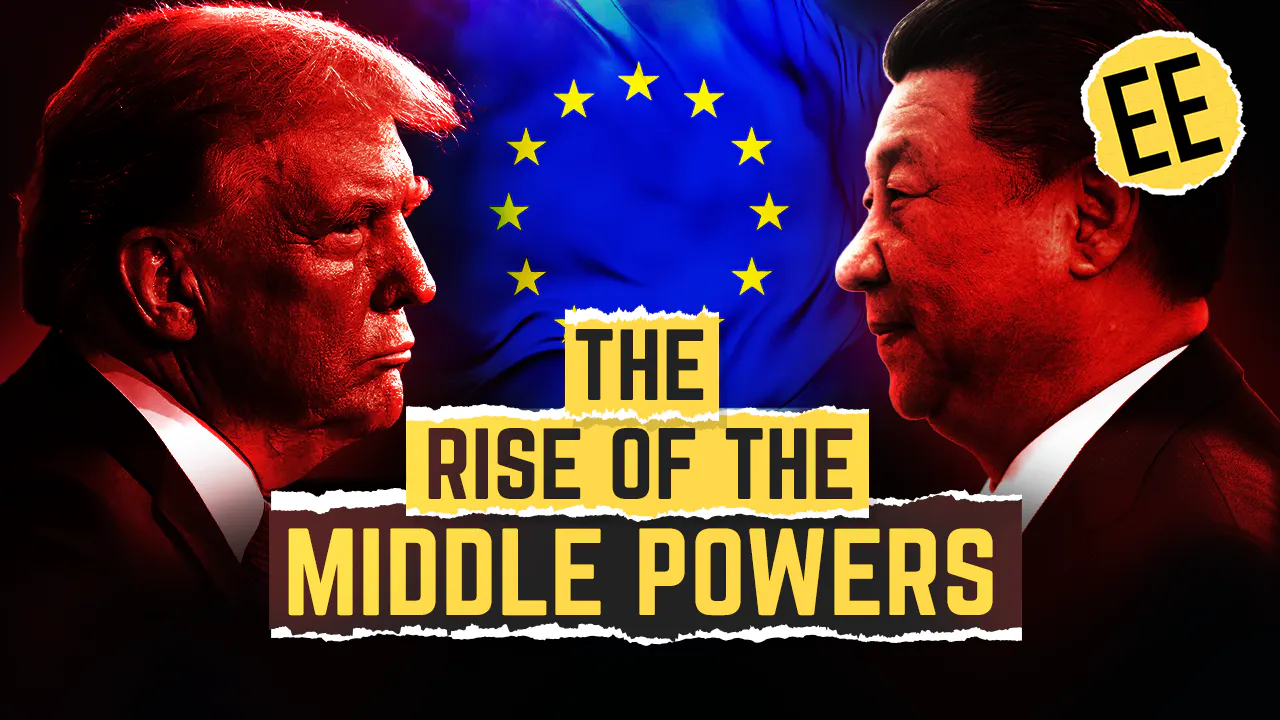
Europe and the United States share the largest trade relationship in the world, worth nearly 2 trillion dollars each year, but that partnership is starting to fracture. Beneath the surface, this relationship is built on deeply interconnected supply chains, financial systems, and mutual dependencies that extend far beyond simple trade numbers. While headlines focus on tariffs and political tension, the deeper issue is structural dependence and what happens if it begins to unravel. As the United States turns inward and Europe looks to new trade partners, the question arises whether Europe and other middle powers can realistically reduce their reliance on major economic powers. It examines why the trade relationship is more balanced than it appears how services reshape the deficit narrative, the risks facing economies like Germany and Ireland, and what a shift toward independence could mean for the future of global trade. https://economics-explained-tv-program.beehiiv.com/ Learn more about your ad choices. Visit megaphone.fm/adchoices Learn more about your ad choices. Visit megaphone.fm/adchoices
Did China Just Drop The Ball On Global Dominance?
China’s position as the world’s factory is shifting. Growth is slowing to approximately 4-5%, wages are rising, the workforce is shrinking due to an aging population, the property crisis is weighing on GDP, and Western tariffs are restricting exports. For decades, China produced goods at low cost, but a significant supply chain gap is now emerging. India is emerging as a leading contender, with a 6.4% growth forecast, production-linked incentives attracting companies such as Apple, Samsung, and Micron, and digital infrastructure like UPI and Aadhaar accelerating business. Vietnam, Mexico, and Indonesia are also competing for manufacturing investment. The key question is whether India can redefine manufacturing through scale, stability, and strong domestic demand, or if bureaucracy and inequality will impede its progress. Learn more about your ad choices. Visit megaphone.fm/adchoices
A Short Story About Why You Cannot Buy A House
Home ownership is now unattainable in every major city worldwide. For the first time, none of the 95 cities tracked by Demographia are considered affordable. In cities such as Hong Kong (14.4 times income), Sydney (13.8 times), Vancouver, London, and San Francisco, housing prices range from 9 to 30 times the average household income. Essential workers, including teachers and nurses, as well as young families, are being priced out of the cities they support. This raises critical questions about how housing became a leading investment asset, whether prices will continue to rise, and what measures are needed to address the global housing crisis. Learn more about your ad choices. Visit megaphone.fm/adchoices
You may also like










Get this podcast on your phone, Free


Create Your Podcast In Minutes
- Full-featured podcast site
- Unlimited storage and bandwidth
- Comprehensive podcast stats
- Distribute to Apple Podcasts, Spotify, and more
- Make money with your podcast