
Episode List
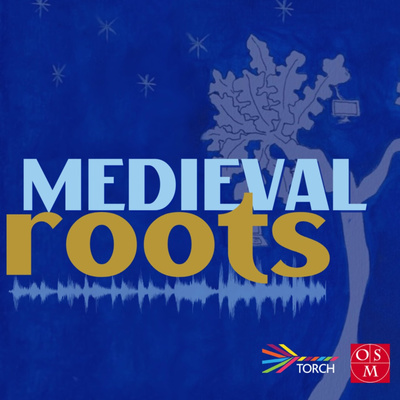
Holy Hauntings: Hair Raising Ghost Stories from Medieval Nun’s Biographies
In this special episode of Medieval Roots, Dr Godelinde Gertrude Perk, Marie Skłodowska-Curie Fellow in the Faculty of Modern and Medieval Languages (University of Oxford) reads four spine-chilling stories for Halloween. The first story is from the vita of Trude of Beveren (d.1428) ("Concerning Sister Trude van Beveren"), found in the sister book of Diepenveen. Godelinde is reading from the translation by David F. Johnson, kindly provided by Wybren Scheepsma. The translation will form part of Scheepsma's forthcoming edition of DV “Hier Beghint dat Leven en Starven Onses Eerwerdighen Vaders Heer Johan Brinckerinck” (Deventer, Athenaeumbiblotheek, 1524), https://athenaeumcollecties.nl/collecties/topstukken/detail/0be4351e-3487-11e6-9603-b3eb7ac8b442/media/e0f6a70b-de61-4fa7-d219-19639b351f07, Athenaeumbibliotheek, ms. 101 E 26 KL. Commonly referred to as DV, this manuscript witness was composed by sixteenth-century Sister Griete Essinches. Godelinde is deeply grateful to Wybren Scheepsma for his scholarly generosity providing to her with a transcript of DV, which will form the basis of his forthcoming edition and English translation. The second story is taken from the vita of Alijt Plagen (d.1428) from the Deventer sister-book. The Deventer sister-book recounts the lives of the sisters from the Master Geert’s House (†1428), a community of Sisters of the Common Life, laywomen living a nun-like life, freelance nuns). I rely on Dirk de Man’s early twentieth-century’s edition of the Deventer sister-book. Dirk de Man, ed., Hier Beginnen Sommige Stichtige Punten van Onsen Oelden Zusteren (’s-Gravenhage: Nijhoff, 1919). The translation is taken from the sister-book play by Lieke Smits, Marly Terwisscha van Scheltinga, and yours truly. See, Terwisscha van Scheltinga, Marly, Lieke Smits, and Godelinde Gertrude Perk. “Dead Sisters Do Tell Tales: A Theatrical Reading of Modern Devout Sisterbooks.” Presented at the Leeds International Medieval Congress, Leeds, July 4, 2018. The Third story is from the Diepenveen sister-book, from the narrative concerning Hilwartshausen ("How Hilwartshausen was first founded and the sisters of Diepenveen were sent there by Sister Stine des Groten"). Translation by David F. Johnson. The final story is from the vita of Daya Dierkens ("Concerning Sister DAYA DIERKENS") from the Diepenveen sister-book. Translation by David F. Johnson. Credits: "Dramatic Organ, B.wav" by Inspector
Troubadours and Modern Song
In this episode, Henry Carter takes us back to troubadours of the Middle Ages - people of song who bought about many of our modern ideas of love and desire. Henry takes us on a journey from traditions in Arabic to the influence of the troubadours on artists such as The Beatles, Bob Dylan, and Beyonce. This episode also features an original recording of a Geoffery Chaucer song by Henry. Henry Carter is an MPhil student in English (Medieval) at St Hilda’s College, Oxford. You can find him on Twitter here: @swiftfootedhar
Watching the Medieval on TV
In this episode, Tom Revell looks at the increasing presence of the Middle Ages TV. Arguing that there is a continued need for historical accuracy in medieval dramas, Tom also tracks themes and patterns across various shows watched by millions every year. Tom Revell is a DPhil student in English at Balliol College, Oxford. Music by Silvermansound
Educational Institutions in the Middle Ages
In this episode, Jasmine Jones discusses the medieval origins of educational institutions in 21st-century Britain. In response to coronavirus lockdowns which have disrupted the education of millions of people around the world, Jasmine looks at monasteries, universities, and schools which helped create the places we have missed so dearly during the past year. Jasmine Jones is a master's student in English at Lady Margaret Hall, University of Oxford. Music by Darren Curtis.
Medieval Script in Tourism
In this episode, Llewelyn Hopwood looks at the use of medieval script in the advertisements created by the Welsh tourist board, Visit Wales. Tracking the surprising and complicated story of the font that has greeted visitors to Wales since the 2015 rebrand, Llewelyn takes us from the Middle Ages to the present day. This episode finishes by exploring the relationship between font, language, and meaning. Llewelyn Hopwood is a DPhil student at the Faculty of English, University of Oxford.





Get this podcast on your phone, Free


Create Your Podcast In Minutes
- Full-featured podcast site
- Unlimited storage and bandwidth
- Comprehensive podcast stats
- Distribute to Apple Podcasts, Spotify, and more
- Make money with your podcast
