Episode List

Panic Button: Season 1 Behind the Scenes Promo
Attorneys Leslie Briggs and Colleen McCarty discuss what to expect on this season of Panic Button.

Listen to Panic Button
A short ad for our new true-crime-advocacy podcast, Panic Button: The April Wilkens Case. Listen along as we tell April’s story, uncover evidence never heard at trial, and try to bring April home after 25 years in prison.

You’ll Get to Hear What the Jury Couldn’t
We’re telling the story of April and Terry’s relationship, the murder, the mistakes at trial, and we’re covering the evidence the jury never got to hear. This season on Panic Button.
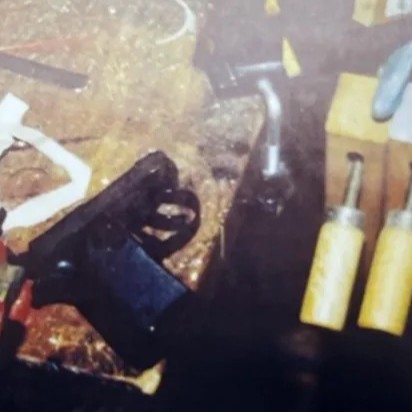
S1:E1 The Shooting
Terry Carlton is found shot dead in his basement in Tulsa, Oklahoma. When the police arrive, his long-time on-again-off-again fiance, April Wilkens, answers the door. "I shot him, he's in the basement," she says.But this wasn't exactly an open and shut case. Terry had raped April mere hours before the shooting. It was while he was violating her that he said he was going to kill her and twisted her neck to break it. During the life and death struggle for her life, April knows she had no options--it wasn't a feeling, she had no options.In 1999, Wilkens was tried by the state of Oklahoma and sentenced by a jury to LIFE. She's now 51-years-old, and 25 years into her sentence. Panic Button is the untold story of the escalating cycles of abuse that led to Terry Carlton's death, and the unthinkable ways survivors of violence get chewed up and spit out by Oklahoma's justice system.In this first episode, attorneys Colleen McCarty and Leslie Briggs tell the story of the night of the murder, the facts in the record, and April's testimony from the stand at trial. Resources:Detailed Timeline of Events in April's Case: https://aprilwilkensblog.wordpress.com/2022/02/12/timeline-of-events/Sign the Change.org petition to support April's release: https://www.change.org/p/oklahoma-pardon-parole-board-commute-the-life-sentence-of-abuse-survivor-april-wilkens?signed=trueSee pictures of April's and Terry's houses now and watch a video of host Colleen McCarty driving from April's to Terry's so you can see how close they lived at the time of the murder. https://okappleseed.org/episode-1-show-notesDonate to keep our work going!: neappleseed.org/okappleseedLearn more about Oklahoma Appleseed: okappleseed.orgIf you or someone you know is experiencing domestic abuse, use a safe computer and contact the National Domestic Violence Hotline at www.thehotline.org or call 1-800-799-7233. You can also search for a local domestic violence shelter at www.domesticshelters.org/.If you have experienced sexual assault and need support, visit the Rape, Abuse & Incest National Network (RAINN) at www.rainn.org or call 1-800-656-HOPE.Have questions about consent? Take a look at this guide from RAINN at www.rainn.org/articles/what-is-consent.Learn more about criminalized survival at www.survivedandpunishedny.org/.Learn more about the Domestic Violence Survivors Justice Act at www.nysda.org/page/DVSJA.Follow the #freeaprilwilkens campaign on Instagram at @freeaprilwilkens, and on their webpage at https://aprilwilkensblog.wordpress.com/.Colleen McCarty is one of the hosts, executive director of Oklahoma Appleseed, and producer. Leslie Briggs is the other host who is a civil rights and immigration attorney, and producer. Additional audio production by Rusty Rowe. Support from Amanda Ross and Ashlyn Faulkner. Our theme music is Velvet Rope by Gyom. Panic Button is created in partnership with Oklahoma Appleseed Center for Law and Justice and Leslie Briggs. Follow OK Appleseed on Twitter and Instagram at @ok_appleseed.If you want to continue the conversation with other listeners, please join our Panic Button podcast community on Bookclubz at bit.ly/3NRHO8C. Transcript: Before we get started, a content warning: this episode contains accounts of domestic and sexual violence.April Wilkens is a middle aged grandmother who would risk everything if it meant keeping her son Hunter from harm. She's a pacifist, a vegan, and she weighs 105 pounds. She's a health nut, leads Five K's in her spare time. In the early morning hours of April 28, 1998. She changed the course of her life and Hunter's life forever. And she did it to protect him and to save her own life.In 1998, Tulsa was a small-to-midsize city in the Midwest. It dots the northeast corner of Oklahoma. Scorching hot in the summers, below freezing in the winters, this city in the heart of tornado alley is often known as a city of dualities. Tulsa is largely sustained by the oil and airline industries with some other large-scale manufacturers across the landscape. It's not exactly the kind of place you could leave your doors unlocked in 1998, but go 20 minutes in either direction and you'd find yourself in cow country. The city is largely sprawled across several miles, and public transportation is abysmal. So, most people have to buy and own cars. This will become important shortly. When officer Laura Fadem, a patrol officer for the Tulsa police department, received a radio call to 2272 East 38th Street in Tulsa around 9am on April 28, 1998, she was not sure what to expect. Officer Fadem had been called to the residence several times before. All of them had been domestic violence calls. But this call was different. The radio code indicated it was a shooting call.She arrived at the scene to find two other officers already present. She saw movement in the house and the front door was opened by none other than April Wilkens. Remember the vegan grandmother we mentioned earlier? Yes, her. But at this time, she was a 28-year-old single mother who had just survived the most harrowing night of her life.Like, I knew that I was gonna die. You know? I had made - I just like - I was gonna die - and I did - I just knew I was gonna die. Like, you just get to the point. Okay, as long as my son is safe with his dad, you know?"I shot him. He's in the basement," April tells the officers at the door to officers go down into the basement. Officer Fadem stays with April. April tells officer Fadem that she came to the house on 38th Street to make peace. She wanted to make peace with a man who had made her life a living hell for the last three years, whom she had once loved. The man who lay dead in the basement, Terry Carlton.April keeps talking. She tells officer Fadem everything she can remember, all the while waiting for the other officers to return. April tells officer Fadem in a fast talking, high pitched voice that Terry had a box of douche in the bathroom. He had raped her violently with a gun to her head and then forced her to douche so there would be no evidence of his semen. She told officer Fadem that she would find the box in the upstairs bathroom trashcan. April says she was fighting for her life and she shot Terry eight times. She covered his body and held his hand. The other two officers return and remind officer Fadem to read April her Miranda Rights. Officer Fadem describes April as very excitable, quote, "She was excitable but yet she was somewhat you know, calm and was answering all the questions that were asked of her", end quote and April goes on.The officers who went down to the basement found a grisly scene. They're syringes littering the basement, drug residue and paraphernalia surround them. They find a loaded gun on the back of the rec room couch, ther are handcuffs covered in han - hand sanitizer, and there, in the center of the room, is Terry Carlton's body. A subsequent search of the basement revealed five hand grenades which later had to be destroyed by the Tulsa police department Bomb Squad. April has a bruise on her face. Her bike pants are ripped from where Terry yanked them down in order to rape her at gunpoint. Officer Fadem later testified that April told her that she wasn't sorry it happened. She felt like it was the right thing to do. But she wasn't upset that it happened. In truth,April's mind was reeling partly from the adrenaline and partly from the psychotropic drugs that had been administered less than 24 hours before in the mental institution where the police had had her involuntarily committed. "I was a basket case," April admits from the warden's conference area Mabel Bassett prison almost 25 years later.April thought the fight for her life was over that night. She maintained one shred of hope that the system that had failed her over and over again, would this time finally understand what she had been going through and afford her mercy. In fact, the system that abandoned April for three years prior begins to churn into motion. Because for all the times it failed to arrest and prosecute Terry Carlton, it only took one time for the system to arrest and prosecute April Wilkens for first-degree murder. This is Panic Button. I'm Colleen McCarty. And I'm Leslie Briggs. Chapter One: the shooting. This is a different kind of true crime story. This is the one where the woman survives against all odds. This is the one that wakes me up at night sweating. This is the one where the usual heroes we come to count on - the hardworking beat cops and the homicide detectives who always get it right -are nowhere to be found. This is the one where the system fails you so many times. And then for extra measure the system commits you and calls you psychotic, all while you're fighting for your life. This is the recurring nightmare you have where you're screaming as hard as you can. But no sound is coming out. I'm an attorney. I've been working in Oklahoma on criminal justice reform for four years. I've helped to commute over 100 low level drug crime sentences and worked on criminal legal legislation.I'm also an attorney. I spent the last few years working on federal civil rights litigation, mostly on the employment side of things. But I also got to witness a few cases of extreme police misconduct. Both of us work to uncover and justices in the system. In every case, there's a journey to uncover the truth, the truth should always be the goal. But in April's case, we see the truth obscured again, and again, by power, money in a midsize city's small town justice system. There was no combination to the lock of safety for April, she could not crack the code. Instead, the system cracked her. And she's the one - she's the one who has to pay the ultimate price. Sure, she may have been a battered woman, but she made the choice to pull the trigger. Sure, she may have been raped over and over and over, stocked to the point of not being able to return to her home. But she made the choice to go to Terry's that night. She knew what she was getting into. April's story will piss you off. It will wake you up. It will show you that even when you will do whatever it takes to survive, you will be shoved into another system where all your greatest fears, loss of freedom and control, surveillance, fear and violence are your everyday reality...The problem with a story like this is it's hard to know where to begin. There are a lot of twists and turns and rabbit holes. We want to take you down all of them but we want to avoid giving you tinfoil hat vibes. Sometimes, in order to understand what happened to April, you have to understand what was going on with the Carltons, what was going on in Tulsa, and the reality that April lived every day after she met Terry in September of 1995. We're going to start in the middle of the story and begin on April 27, 1998 - two days after April's 27th birthday. It's 2pm. And April has just been dropped off at a substance use program in Tulsa after serving two weeks of involuntary commitment at Eastern State Hospital in Vinita. She breaks out and runs from the program hitchhiking back to her house in the Brookside neighborhood of Tulsa.When she gets there, she finds her home totally destroyed. April hasn't been home in a little over two weeks. But there are sticky notes all over the house with disturbing and threatening messages. The only one that April can remember now is one that says, "April, It's been real." After April went to jail, her mom and her sister Mary had the unfortunate task of cleaning up her house. Here's Mary's description of what they found.They had made like bed on the floor with - with blankets and pillows and towels and - but everything was soiled. It was just disgusted. I've never seen anything like it my life. I mean, I had to ask mom "What has gone on here?" And my mom looked at me she says "I don't even want to know." You could not use the bed the bed was that soiled and that destroyed. And it was - you believe it was semen? Yes. Ah. And um - I don't know that for fact. You'd have, you know - But I don't know what else it could have been. I mean, it was just it was awful. She didn't have any pets. And I just know I've never seen anything like that in my life. Yeah. Never had I seen her home like that before, in the few times that I had been in it. Yeah, April didn't do this. I'm like, "I can't imagine her allowing this." My mother was a clean fiend. Absolutely. She felt dirty. She'd been abused as a child. And - and she was just - it was ridiculous how clean our home always was. And so April and I tended to be the same way and I'd never been in April's home when it wasn't immaculate. So this was just - I said, "What happened here?" That's all I kept saying. How could this have - I just couldn't - you couldn't, you know, I couldn't get over it. I'd never seen anything like that in my life. It didn't - I don't want to ever again. Alcohol bottles everywhere. Joints - ends of joints. Syringes. It was - this stuff was everywhere.When April described the home to us, she told us that it looked like Terry had poured liquid all over the floor and the furniture inside her house. Here's Mary's take on that.It looked like at the least urine. But I would - I would have thought it looked like semen. It didn't look like any liquid I've ever seen other than -Yeah. And I should - maybe, maybe I'm wrong. Maybe it was something else.Did it seem like -It looked like urine or semen. It didn't look like anything else other than that to me. We didn't touch any of that. We just didn't. I just - mom said "Be careful. Anything you touched for - for needles and stuff." We just collected her clothing so she - and pictures and things like that so she wouldn't lose everything....April's house has been ransacked. She's missing clothing and electronics and various other pieces of personal property. And April is scared. She knows who did this. She doesn't know what to do about it. She can't call the police, partly because she has in the past and it has never helped the situation. Partly because she literally can't. Her phone lines were cut a few weeks earlier by the same person who destroyed her home and took her stuff. April leaves the house as quickly as she can. She goes walking around Brookside and Riverside for hours. Eventually she stops at the Blue Rose Cafe and tries to page her friend Luke Draffin. He doesn't answer and doesn't call back. She eats fries, drinks a coke and she's out of there and a little under an hour. She keeps walking, trying to clear her head. But then dusk comes on. And April heads back to her house, which is, of course, still a very frightening scene. So, April changes clothes, puts on running pants, a biking vest and top and grabs her rollerblades. She rollerblades to her neighbour's, the Hugheses. And she visits with them for about an hour and a half to two hours, catching up on the neighborhood and trying to figure out if things have been relatively quiet, or if there have been more disturbances at her house.That's right, because leading up to the night of April 28, there had been a lot of disturbing things going on in and around April's home.Exactly. And we're going to get into each of those horrifying incidents throughout this podcast. But, so, April visits her neighbors and uses her phone, tries to page Luke again, no answer. She calls her friend Shannon Broyles and asks her to contact an ex-boyfriend, a former police officer, to see if he can help her get a guard dog. She's with the Hugheses until about 10pm. And after that she just rollerblades around for hours. She rollerblades back to the Blue Rose Cafe about midnight, has a pop, and watches the band for about an hour. She tries to page Luke again. He doesn't answer. She keeps rollerblading.Eventually, according to April, a cab passes by and asks her if she wants a ride. She accepts and asks the cab to take her to Luke's hotel. She has a key to his room, and she doesn't feel safe at home. It's dark. April remembers it being very dark, the middle of the night. She goes to Luke's Hotel, which is at about 11th and Mingo. He had previously given her a key. Even though she had a key, she didn't want to be rude and simply go up to his room. So she asks the front desk to page him. And they do. He won't see her.We're going to learn later - and Luke draft and actually testifies at trial - that Terry Carlton had offered him $5,000 to stay away from April at this point. There's also some question about whether or not Luke had been given Terry's Harley Davidson motorcycle, which April had heard that he'd been driving around town. Yeah, we're gonna learn just exactly what fucked up lengths this person is willing to go to to isolate and control April. But in any event, Luke refuses to talk to April or see her. She's upset. April will tell you that at that point, Luke was the only person who made her feel safe when dealing with her abusive ex, Terry.So, Luke. He's so integral to the story. I met him late summer, fall-ish or I dont know somewhere '97 in there. And he had told me as I get - got to know him that, um, because we - he told me that he was married - previously married - to someone that I grew up's with relative. A relative of someone I grew up with, Ed Willingham, the...
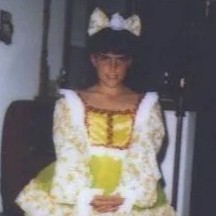
S1:E2 Small Town Girl Living in a Violent World
In this episode we go back in time to 1980's Kellyville, Oklahoma where April grew up. Then we follow her to the car lot where she met Terry. We will hear the tape that April recorded of a fight between she and Terry after their trip to Italy. On the trip he beat her threatened to and throw her out of their hotel room naked, only to be caught by one of his fellow travelers on the trip. We are trying to categorize the time and place of April and Terry's relationship, and look for patterns of abuse, which escalated as law enforcement continued to turn a blind eye.Resources:For pictures of April as a kid, her wedding, the early years with Hunter, and pictures introduced at trial of April and Terry's international trips, visit okappleseed.org/episode-2-show-notes LA Times article about Don Carlton's bribery scandal: https://web.archive.org/web/20211117194929/https://www.latimes.com/archives/la-xpm-1994-03-16-fi-34784-story.html%C2%A0TIME Magazine story on Honda scams: http://content.time.com/time/nation/article/0,8599,3976,00.htmlInstagram post containing the Affidavit of Federal Judge Claire Egan: https://www.instagram.com/p/CQWQJrUDy-m/Detailed Timeline of Events in April's Case: https://aprilwilkensblog.wordpress.com/2022/02/12/timeline-of-events/Sign the Change.org petition to support April's release: https://www.change.org/p/oklahoma-pardon-parole-board-commute-the-life-sentence-of-abuse-survivor-april-wilkens?signed=trueDonate to keep our work going!: neappleseed.org/okappleseedLearn more about Oklahoma Appleseed: okappleseed.orgIf you or someone you know is experiencing domestic abuse, use a safe computer and contact the National Domestic Violence Hotline at www.thehotline.org or call 1-800-799-7233. You can also search for a local domestic violence shelter at www.domesticshelters.org/.If you have experienced sexual assault and need support, visit the Rape, Abuse & Incest National Network (RAINN) at www.rainn.org or call 1-800-656-HOPE.Have questions about consent? Take a look at this guide from RAINN at www.rainn.org/articles/what-is-consent.Learn more about criminalized survival at www.survivedandpunishedny.org/.Learn more about the Domestic Violence Survivors Justice Act at www.nysda.org/page/DVSJA.Follow the #freeaprilwilkens campaign on Instagram at @freeaprilwilkens, on Twitter and on their webpage at https://aprilwilkensblog.wordpress.com/.Colleen McCarty is one of the hosts, executive director of Oklahoma Appleseed, and producer. Leslie Briggs is the other host who is a civil rights and immigration attorney, and producer. Rusty Rowe provides additional production support. We're recorded at Bison and Bean Studios in Tulsa. Additional support from Amanda Ross and Ashlyn Faulkner. Our theme music is Velvet Rope by Gyom. Panic Button is created in partnership with Oklahoma Appleseed Center for Law and Justice and Leslie Briggs. Follow OK Appleseed on Twitter and Instagram at @ok_appleseed.If you want to continue the conversation with other listeners, please join our Panic Button podcast community on Bookclubz at bit.ly/3NRHO8C. TRANSCRIPTLeslie Briggs 00:00Glenda McCarley had tried to get the badge number of Officer Aaron Tallman just a few months before the shooting of Terry Carlton. She said his response to April Wilkens, her neighbor across the street on Quincy, was, quote, "infuriating." Glenda had seen numerous times Terry stalking around April's house in the late winter of 1997 and early spring of 1998. She said quote, "it was almost a joke, I think, among the neighbors, how he had the timing down so that he could always just leave and two seconds later, they'd round the corner." The he that the neighbors joked about was of course the decedent in this case, Terry Carlton. Regardless, when Officer Tallman arrived to find April sitting on Glenda's porch in the spring of 1998, waiting for help from yet another violent encounter, he walked up to the porch, looked at April and said, "You're beginning to annoy me." This is Panic Button. I'm Leslie Briggs. Colleen McCarty 01:05And I'm Colleen McCarty. Leslie Briggs 01:06And this is episode 2: Small Town Girl Living in a Violent World. Colleen McCarty 01:14Many years before Glenda McCarley asked for Officer Tallman's badge number, April was just a kid from Kellyville, Oklahoma, a small town southwest of Tulsa on the I-44 Turnpike. The town had a population of 960 in 1980 when April was 10. Kellyville is on old route 66. Local landmarks include a cotton gin and oil derricks dotting the town's main street. The cotton gin has since been demolished. Local high schoolers would go out to Cry Baby Bridge, which was ironically rumored to be haunted by the ghosts of a woman who was fleeing her abusive husband and her baby. The two wrecked and the baby's body was never recovered. So the legend goes, you can hear the baby crying from the bridge late at night. April was an average teenager in Kellyville. Her parents worked at a local orthotics and prosthetics clinic. Her father, Rex, was an amputee himself and had learned the business due to necessity. April was a cheerleader. But even though everything looked perfect from the outside, like most Oklahoma homes during this period, there was strong discipline. And like any family, some dysfunction. April Wilkens 02:26My upbringing made me susceptible. And I know my parents just did what they knew. They grew up in abusive childhoods. So I know, my dad, he had a tough upbringing. You know, his dad - his dad used to beat his family. And, you know, he was a preacher and my dad felt that was very hypocritical. And, you know, my mom, dad leaving the family. And she grew up being abused. That influences children. And I want to honor their memory. Because even though, yes, there was violence and abuse, I know that they did what they knew. That's how it is. And my sister, she's always - she wanted to write a letter talking about the abuse and all of that. And my mom got mad, and then she didn't put it in there. But she's always encouraged me to talk about it. So, I'm really talking about it for the first time. Terry Carlton 03:23April and Mary are actually half sisters. They share the same mom and Mary spent a little bit of time talking with us about her mother's history of domestic abuse with her biological father. And then of course with Mary stepfather April's biological father, Rex. April and Mary's mother often played out these cycles of abuse that we see repeating themselves in April's relationship with Terry. She would leave and return and leave and return and get hooked in with an abusive partner until it got to be unbearable, and she would flee. Mary gave us a little glimpse into what it was like growing up with both her biological father and then with April and Rex and her mother. Mary 04:07He grabbed us and my grandmother - I did not know my grandmother called him at work. He worked right down from the house, and she called him. My mother was trying to leave with us. We lived with them. And he threw us in the bathroom. And he had a gun and he said he would shoot us before he'd let her have us. He didn't want us. I know that, you know, as an adult. He just thought she would stay if he did that. Leslie Briggs 04:29Eventually, Mary's mother left for good leaving her and her little brother behind with their biological father, who was an alcoholic, extremely physically and emotionally abusive. Mary didn't see her mom for about two years. When she did, she learned she had a little sister. April. Mary 04:46She was two, actually, when I met her. My mother had left my father again. I didn't even know I had a two-year-old sister. Like me having a live doll. Leslie Briggs 04:54Here's how Mary describes the car ride home after meeting her stepfather, Rex, for the first time. Mary 04:59He hit my brother in the mouth on the way to their home, in the car. They just showed up to pick us up. We didn't have any warning or anything whatsoever. And it was so cool to see my mom again. You know, I had nothing but good memories of my mother or love for my mother and I was just, like, so excited. Yes, he hit my brother in the mouth. My brother answered my mother. She asked him something and he simply answered her. I don't remember it being snarky or anything when he ?? He said, "Don't talk to your mother that way," turned around and smacked him in the mouth that made his lip - hit his lip up against his teeth, I guess, and because his mouth bled. I never stood up to him. I was too afraid of him. And he made me kind of crazy. And I stood up to him as an adult, but on the way home, I was just like, really, this cannot be happening again. But it was. Colleen McCarty 05:45Throughout the trial, April was hesitant to reveal her childhood. She didn't want to shame her parents. Even though her childhood had episodes of violence, there was a lot of happy memories too. She remembered both her parents standing by her throughout the entire trial and supporting her in the years afterwards. Even though her sister wanted to write a letter to the parole board much later detailing the family abuse, April refused. Leslie Briggs 06:11There's even a moment on the stand when the district attorney Tim Harris alleges that April was hospitalized for drug abuse when she was 15. April, in her testimony, does not do a good job of refuting this simply because she was balancing the fact that her parents were in the courtroom listening and she didn't want to make them look bad. The truth was, she had stayed out all night with her friends and her mother had dropped her off at St. John's to get a drug test. Her mother could only conclude that April must have used drugs with her friends. There were of course no drugs in her system. But the doctors asked to keep April overnight due to suspicions of anorexia. Here's how Mary remembers April's eating disorder. Mary 06:49No, we all knew something was going on. And I think it was something she could control. Forgive me, but I learned in psychology - now, remember I'm gone and I only come back and visit once in a while and why I can back to visit who knows - but she would go to the strangest phases, bless her heart. She would eat - buy a whole loaf of bread and eat the hearts out of the bread and leave the crust. And then the next week she might just eat the crust and not eat the hearts of the bread. It was just so - the things she would do are so strange, honey. But it was something I think that she could have control over. Leslie Briggs 07:20Now of course, April told us that the anorexia was really a function of her home life. Mary shared with us just a small story about how Rex, her stepfather and April's biological father, would speak to them about their eating habits. Mary 07:36I never hardly ever brought friends home. But I brought a friend home one time that down the road who was in an abused home just like I was. Some - we attracked each other you know how that is, I'm sure, somehow. But I went in the kitchen and made us some peanut butter and honey was - we were gonna eat it on crackers. And I made enough for two people because I had a friend there with me. And he came into the kitchen, and I was a pig and I was never going to get married. No man was ever going to look at me. How could I eat that much? And I was skinny - I mean, I was so skinny it was ridiculous. Because I could - I could eat whatever I wanted you know what I mean? And not get - Anyway, I stood there and took it. Went into the bedroom, sat down, ate that. She said, "So this is why you don't ever ask me over?" I said "Uhuh." I just didn't. Why would you? I was humiliated. You can only imagine - Leslie Briggs 08:25Ultimately, they diagnosed April as anorexic at 15 and sent her home with little information or treatment resources. But April was always incredibly intelligent. She graduated high school two years early, went on to Oklahoma State University for undergraduate studies, where she majored in clinical dietetics. She later attended an accelerated program in orthotics and prosthetics at Northwestern University in Chicago. She graduated with her Master's in 1991 when she was just 21 years old. Colleen McCarty 08:55In 1990, when she was 20, she met Eric Wilkens and got pregnant with Hunter. She was attending her Master's program in Chicago while Eric went to undergrad at the University of Oklahoma. They were married. Eric and April then divorced in 1993 after the long distance relationship had taken a toll. They'd grown apart. And April would later say that she was too young to appreciate a good man like Eric. We talked with Hunter, April's son, recently about the divorce and what he remembers about his mom in those early years. Hunter 09:28I was five years old. And you know, it was a clean split up. I think they had joint custody at the time. So I was spending a week at my dad's, a week at my mom's. Completely normal. My mom's house was awesome. I had the entire upstairs to myself. I had a TV hooked up to an N64. I had a computer in the mid 90s, which was awesome. I don't even think there was internet to it. It was just a computer that you could do things with. I think there was sometimes you'd get internet to it or not. I had a Batcave and I red racecar bed, which was super cool. The Batcave had a zipline, where Batman could slide through. Living at my mom's house was really nice. Like, it was really cool that she was - she was - she spoiled me rotten. My dad did not like it at all. The only thing I did not like about my mom's house is that she made me eat healthy and soy stuff. Colleen McCarty 10:48Hunter remembers that April was a good mom. Hunter 10:50She was a parents. She was good parents. She - she told me to do everything that I needed to do. I did everything she that she told me to do. And she you know she - we had a good time. She she took me out places and I mean we had a good time. It was it was it was great. Colleen McCarty 11:06During the early 1990s April was a working single mom with not too much drama in her life. As you can see, April is not the typical criminal defendant in a murder case. She's a woman. She's white, and she's highly educated. This demographic is not typically who you would see sitting behind the defendant's table. By the nature of the system, most defendants are impoverished with a high percentage being people of color. Most defendants have not completed any college, most prosecutors would not want to prosecute someone like April. She is what we would call sympathetic to an extreme degree. Leslie Briggs 11:44Which is a whole separate level of fucked up that we're going to get into throughout this podcast, but it's the truth. Interestingly enough, Terry was also growing up in Tulsa, about 20 miles away from Kellyville. In 1989, the year of his first stint in drug rehab, he was 31. And there's a 12-year age difference between Terry and April that doesn't get discussed much but it's certainly an element to issues of power and control and abuse in this relationship. Terry had gone to the University of Oklahoma, and he was described as a good athlete and a talented musician. Terry's father, Don Carlton gained some notoriety, or infamy depending on how you look at it, for offering a Honda executive and briefcase with $250,000 in cash in 1983 in order to secure the rights to his own dealership. Now ultimately, Don Carlton was not prosecuted in that matter, but the man who took the bribe was. And the scandal was profiled and Time Magazine as well as the LA Times and we're going to drop links to those articles in the show notes. So, from 1991 to 1995, April and Terry are just living their lives separately unaware of each other's existence. Also in the late 80s and early 90s, Terry's ex wife Sherry Blanton and another ex-girlfriend, Melinda Wallace, would go on to make police reports about Terry getting abusive with them toward the end of their relationships. Colleen McCarty 13:01In September ish of 1995, April goes shopping for a car. She winds up at Don Carlton Acura of Tulsa. This is at about 47th and memorial. She meets with the sales guy...








Get this podcast on your phone, Free


Create Your Podcast In Minutes
- Full-featured podcast site
- Unlimited storage and bandwidth
- Comprehensive podcast stats
- Distribute to Apple Podcasts, Spotify, and more
- Make money with your podcast