Episode List

TechBio Talks: Katie Couric and Najat Khan
Recursion CEO and President Najat Khan talks to award-winning journalist, filmmaker, podcaster, and co-founder of Stand Up to Cancer, Katie Couric about their personal motivations; the current state of AI drug discovery; and exciting proof points like Recursion’s potential first-in-disease treatment for the rare disease familial adenomatous polyposis (FAP).

TechBio Talks Episode 4: Highlander Health’s Amy Abernethy with Host Najat Khan
In this episode of TechBio Talks, host Najat Khan, PhD, incoming CEO and President of Recursion, talks to Amy Abernethy, MD, PhD, cofounder of Highlander Health, about how structured, analyzable, real-world data is transforming healthcare and medicine.Amy is a physician, innovator, and executive who has pioneered oncology real-world evidence generation to address gaps in patient care and access. They discuss the three “waves” of real-world data leading to today’s multimodal data; how that real-world data ties into patients’ longitudinal health story; and the difference between real-world data and real-world evidence. And they dive into how this data is driving major innovative shifts to improve clinical trials and drug discovery. ⏱️ TIMESTAMPS ⏱️ (00:00) Introduction.(01:47) Defining Real-World Data (RWD) & Real-World Evidence (RWE): The difference between data as a byproduct of care and analyzed evidence.(03:16) The Three Waves of RWD: From claims data to EHRs, and now multimodal, longitudinal data (genomics, imaging).(05:49) Use Cases for RWE: Telling the story of what happened (retrospective) vs. planning for the future (clinical trial design).(06:38) RWE in Drug Discovery: Combining deep biological data with clinical phenotypes to find new targets.(09:14) Strategic Shift in Pharma: Moving RWE from a "replacement product" to a core strategic asset across the entire R&D lifecycle.(11:06) Regulatory Evolution: How FDA guidance on data quality and curation is enabling broader RWE adoption.(14:25) The Evidence Accelerator: How rapid-cycle meetings with the FDA during COVID-19 built regulatory familiarity with RWE.(16:18) Introducing Highlander Health: A dual-model approach (non-profit institute + for-profit investment arm) to accelerate clinical research.(21:48) AI’s Role in Evidence Generation: Using AI for data curation, study design optimization, and patient recruitment.(24:41) The "Mantra": AI requires high-quality data; we must go back to the roots of getting the data right.(27:47) What to Watch For: Disciplined, LLM-enabled data curation and the rise of prospective-retrospective hybrid study designs.
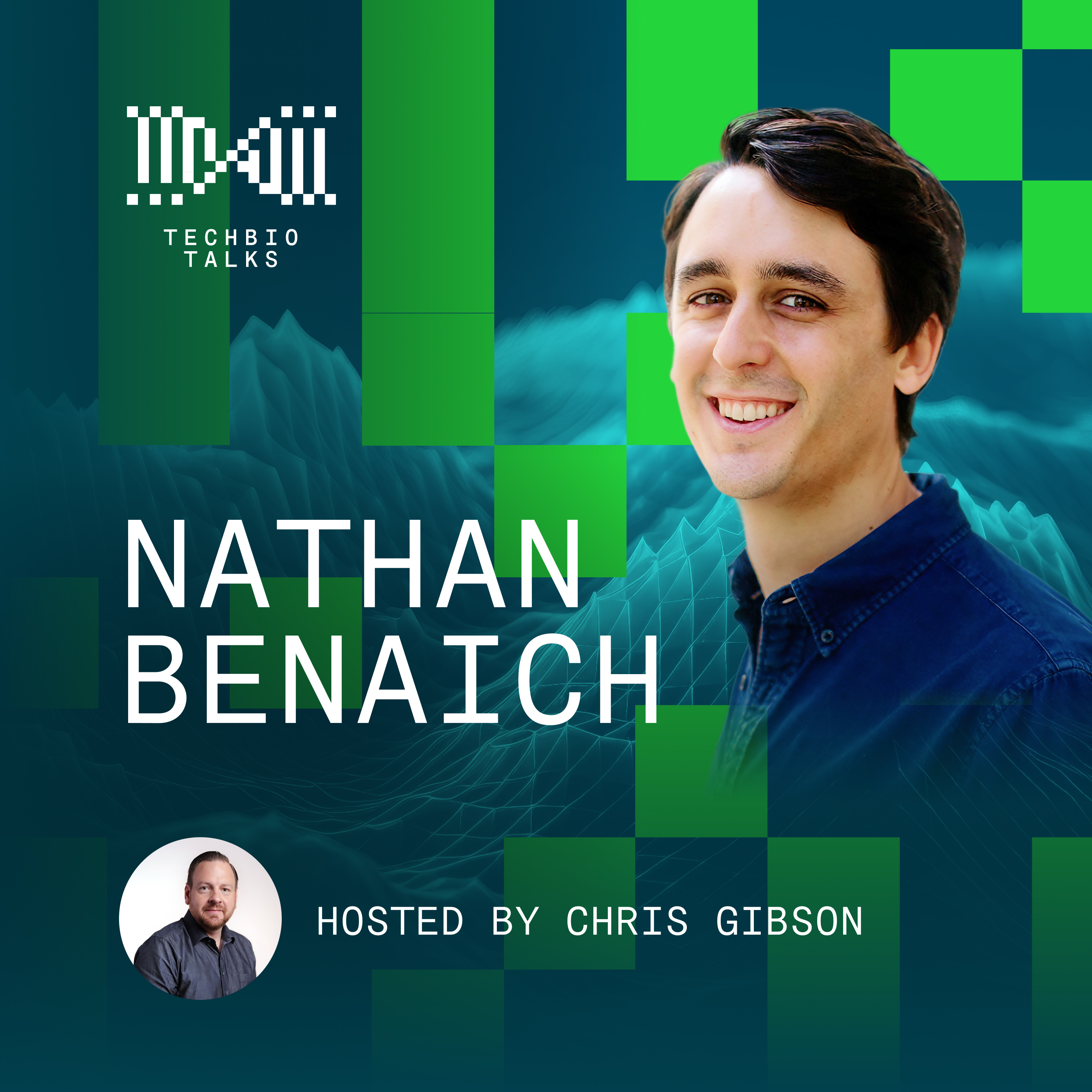
TechBio Talks Episode 3: Air Street's Nathan Benaich with Host Chris Gibson
The third episode of TechBio Talks features host Chris Gibson in conversation with leading AI investor Nathan Benaich of Air Street Capital. Learn about the evolving landscape of AI in drug discovery, the biggest trends identified in Nathan’s new State of AI Report, and what AI investors are looking for, now and in the future.
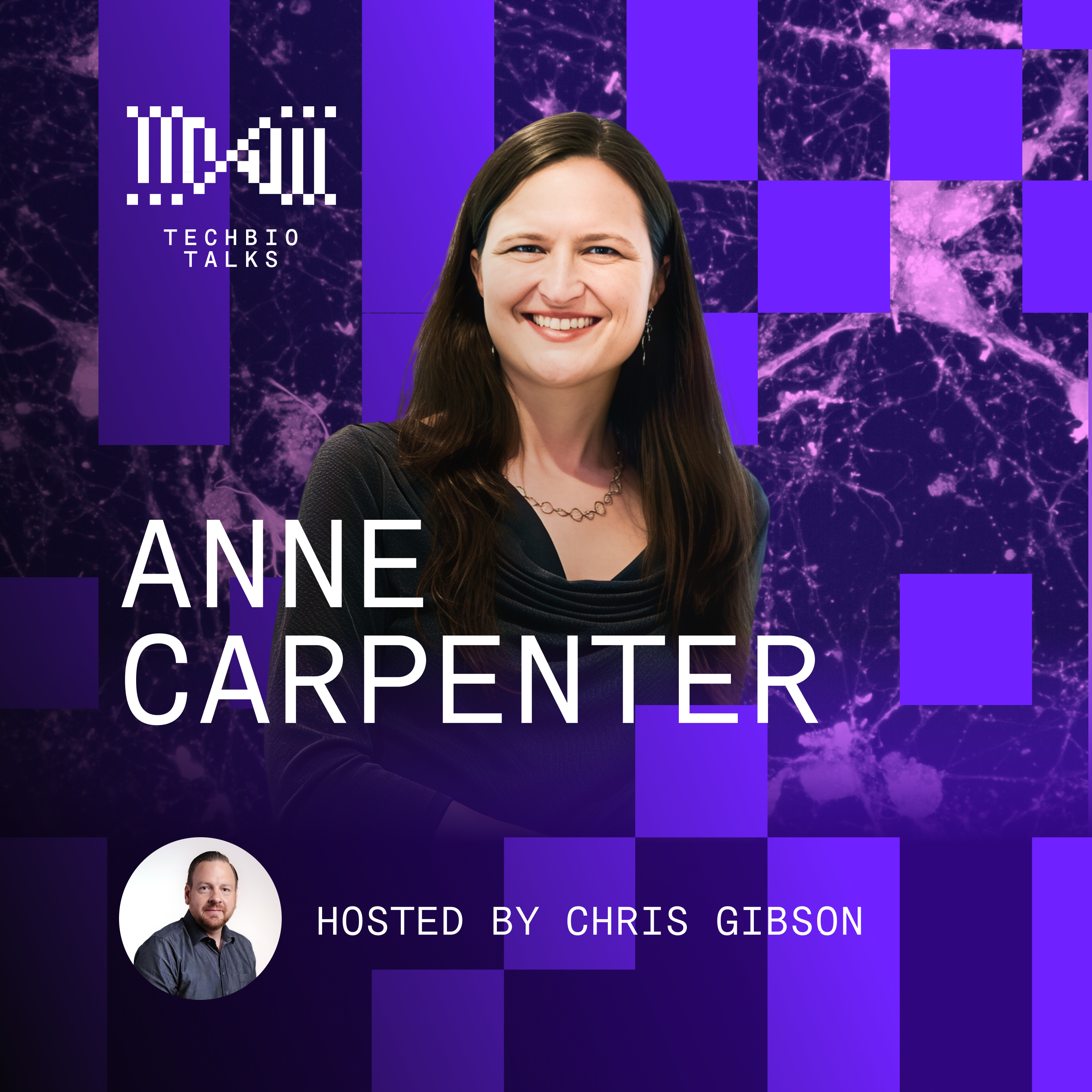
TechBio Talks Episode 2: Broad Institute's Anne Carpenter with Host Chris Gibson
In the second episode of TechBio Talks, host Chris Gibson talks to Anne Carpenter, Institute Scientist and Imaging Platform Senior Director at the Broad Institute of MIT and Harvard, a pioneer in image-based profiling, who played a key role in Recursion’s origin story. Anne talks about her early discovery that phenomics-based profiling could be as powerful as mRNA profiling; how she decides what data to make by determining the problems she can solve well; how these tools can be deployed to produce safer chemicals; the critical role of open science in advancing new technologies; and why the race to the virtual cell “is more like a mosh pit.” ⏱️ Timestamps:00:00: Welcome to TechBio Talks02:33: The dinner conversation that helped lay the foundation for Recursion03:06: Discovering that cell morphology could be as powerful as mRNA profiling05:32: Behind the open-source tool, CellProfiler06:21: The importance of relevant biology07:21: In drug discovery, framing the problem is the real bottleneck08:55: Which types of data are most important for drug discovery10:52: Why we need open data12:30: What it’s like to see others utilize and advance her technology14:02: How the virtual cell race is “more like a mosh pit”15:27: Evolving the definition of the virtual cell 17:38: From systemization to major industry shift18:51: Anne’s “big bold bet”20:48: The proposed cost to test existing medicines against rare diseases22:29: Parting thoughts: “If you are interested in data sciences and you're tired of mRNA profiles – check out image-based data”

TechBio Talks Episode 1: MIT's Regina Barzilay with Host Najat Khan
In the first episode of TechBio Talks, host Najat Khan talks to Regina Barzilay -- Distinguished Professor at Massachusetts Institute of Technology and AI faculty lead at MIT Jameel Clinic, MacArthur “Genius Grant” recipient and member of the National Academies of Medicine and Engineering. Regina and Najat discuss everything from Regina’s work on early cancer detection models to what sparked the collaboration behind Boltz-2, the first open-source AI model for highly accurate protein binding affinity predictions from MIT alongside Recursion – and how it’s already leading to new discoveries.⏱️ TIMESTAMPS:(00:00): Introducing MIT's Regina Barzilay(01:32): Early Detection of Breast Cancer(04:55): What Do You Do In the Clinic When You Discover High-Risk Patients?(06:00): Bringing the Algorithm to the Patient06:19: Ensuring Your Results Are Relevant(07:50): Slow Adoption of AI Tools in Clinical Protocols(08:43): Understanding the Mechanism of Action(10:49): The Origins of Boltz-2(14:06): Noise and Intelligent Data Curation(14:57): How Recursion Is Integrating Boltz-2(16:17): Applying Vision to Open Source Tools(17:24): The Next Frontier(18:38): New AI Tools for Metastatic Patients(21:41): Clinical Trials Underway at MD Anderson(25:08): Be Critical and Rely on Logic and Evidence
You may also like








Get this podcast on your phone, Free


Create Your Podcast In Minutes
- Full-featured podcast site
- Unlimited storage and bandwidth
- Comprehensive podcast stats
- Distribute to Apple Podcasts, Spotify, and more
- Make money with your podcast