Episode List
Unveiling Ozone
There is good ozone and bad ozone. We are discussing the bad ozone today, the one we breathe and can be harmful to our health. Daniel Mendoza, a research associate professor at the University of Utah, discusses the chemistry behind ozone formation, primarily from nitrogen oxides and volatile organic compounds intensified by sunlight. Daniel has started a project to measure air quality and heat in rural Utah communities, using both indoor and outdoor sensors. The discussion includes the challenges of ozone measurement, the role of vegetation like sagebrush in VOC emissions, and the potential benefits of using public cooling centers as environmental refuges. The episode underscores the need for more awareness and education about ozone's health impacts, especially for tourists in areas like Moab.
A Modern Wonder from Ancient Dunes: The Iconic Navajo Sandstone, Part 2
This episode of Science Moab continues the exploration of the Navajo sandstone with Marjorie Chan, Professor Emeritus at the University of Utah. The unique coloration of the sandstone is influenced by iron oxides that have analogies with the iron oxide 'blueberries' found on Mars and have implications for groundwater evidence on the planet. Margie elaborates on the concretions and weathering patterns within the Navajo sandstone and how these differ from the Wingate sandstone. We also discuss the challenges of geological research funding, the importance of fieldwork partnerships, and the significance of preserving natural geological features and educating the public on their value.
A Modern Wonder from Ancient Dunes: The Iconic Navajo Sandstone, Part 1
The majestic and iconic Navajo Sandstone has become ubiquitous in scenes from the Colorado Plateau. Margie Chan, Professor Emeritus at the University of Utah, has studied the Navajo Sandstone her entire career and we discuss the deposition and unique features of this Jurassic wind-blown sand. This ancient desert extended across much of Utah, Arizona, and Nevada, and combined different geological structures including dunes, lake deposits, and springs. In this first of a 2-part series, we talk about the key role that groundwater plays in the sediment deformation and coloring. The next episode delves into the role of iron in the Navajo sandstone and its connection to Mars.
PALEONTOLOGY PASSION: A School to Science Story
This show is part of a series exploring Science Moab’s School to Science Program, connecting students with scientists in the field, the lab, and beyond. This program began in 2021 and to date has mentored over 57 local students. In this episode, we talk with Chris Moriera, a recent graduate of the Grand County Student Career and Success Center and participant in the School to Science Program. Guest host Sasha Pereira explores Chris’s journey from high school to hands-on paleontology internships, his experiences with mentors and scientists, and the impact of these opportunities on his academic and career aspirations. Chris shares insights about the welcoming scientific community, the excitement of fieldwork, and the importance of mentorship. The episode also covers Chris’s achievements, including presenting research at a professional conference and earning a college scholarship. The conversation concludes with advice for students interested in science careers and Chris’s vision for making science accessible to future generations.
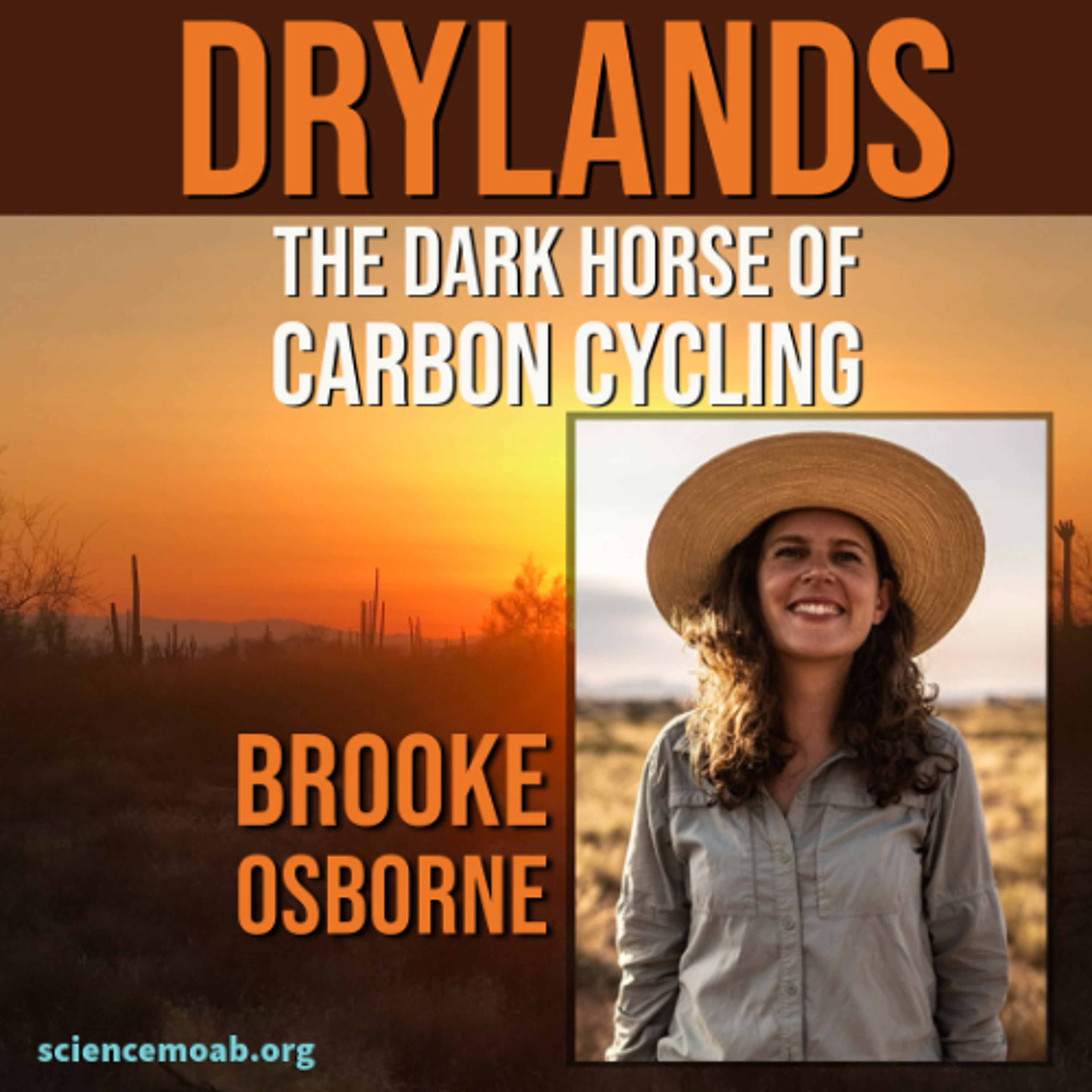
Drylands: The Dark Horse of Carbon Cycling
Drylands play a critical role in global ecosystems as well as the carbon cycle. We talk with ecologist Brooke Osborne about the fascinating world of biogeochemistry and dryland science. Covering 40% of the Earth's surface and hosting a third of the human population, heterogeneous drylands have low resource availability and therefore are highly sensitive to climatic changes. We discuss Brooke’s ongoing research into soil carbon storage and sequestration, particularly in the context of grazing practices and land management.





Get this podcast on your phone, Free


Create Your Podcast In Minutes
- Full-featured podcast site
- Unlimited storage and bandwidth
- Comprehensive podcast stats
- Distribute to Apple Podcasts, Spotify, and more
- Make money with your podcast