Episode List
Work-Life Balance
This week on ComicLab, veteran comic artists Brad Guigar and Dave Kellett kick things off a discussion about something every cartoonist wrestles with: work-life balance. If you’re juggling a day job, relationships, and your creative ambitions, Brad and Dave break down practical strategies that actually work — including: • Why consistency beats intensity • How to build a repeatable creative schedule • The power of small, daily wins • And why your health and relationships are just as critical as your drawing skills They also tackle a big-picture career question: What happens when a long-running comic ends? Dave shares his thoughts on winding down Drive, how to retain an audience, and the challenge of transitioning into your next project without losing momentum. Plus: • Smart ways to monetize short comics • Why finished is better than perfect • And how thinking long-term can transform your creative output Whether you’re just starting your first comic or planning your next big move, this episode is packed with actionable advice — and a few chaotic detours along the way. Key takeaway: Three years are going to pass anyway… you might as well have a finished comic at the end of them. Today's Show • UPDATE: Enshittification of Bluesky begins • Work-Life balance • UPDATE: NCS Conference and Reuben Awards • Monetizing short comics • What will Dave do when Drive is over? For more information about joining the National Cartoonists Society, go to https://nationalcartoonists.com/how-to-join/ • Get on the mailing list • More information on the 27 Club • 80th annual Reuben Awards and NCS Conference — August 6-8, 2026 You get great rewards when you join the ComicLab Community on Patreon$2 — Early access to episodes$5 — Submit a question for possible use on the show AND get the exclusive ProTips podcast. Plus $2-tier rewards.If you'd like a one-on-one consultation about your comic, book it now!Brad Guigar is the creator of Evil Inc and the author of The Webcomics Handbook. He is available for personal consultations. Dave Kellett is the creator of Sheldon and Drive. He is the co-director of the comics documentary, Stripped.
How to Start a Webring
In this episode of ComicLab, Brad and Dave tackle a surprisingly practical question: How do you start a web ring for comics creators? With social media platforms becoming less reliable for discovery, the classic web ring is making a comeback as a way for creators to promote each other directly. Along the way, the guys discuss audience targeting, technical setup, and why the success of a web ring depends more on community alignment than on code. Plus: tattoo debates, Tolkien romance arguments, and the eternal challenge of drawing the right amount of detail in your comics. Key topics How to start a web ring UPDATE: Dave should read Tolkein as a romance How much detail should we include in our drawings? Amazon plagiarism Paid setup Matt Sowers, who created the Hot Box web ring software can install and host the software for you. Contact him at hotbox@rcsipublishing.com $50 — install on your server $100 — hosted setup (includes one year hosting). After that, hosting is $75/year. $75/year — ongoing web hosting for your comic You get great rewards when you join the ComicLab Community on Patreon$2 — Early access to episodes$5 — Submit a question for possible use on the show AND get the exclusive ProTips podcast. Plus $2-tier rewards.If you'd like a one-on-one consultation about your comic, book it now!Brad Guigar is the creator of Evil Inc and the author of The Webcomics Handbook. He is available for personal consultations. Dave Kellett is the creator of Sheldon and Drive. He is the co-director of the comics documentary, Stripped.
How to Make Friends and Influence People. And Cartoonists.
Making friends in the comics community can be... complicated. After all, we're kind of an introverted bunch. When it comes to social interaction, Brad and Dave have made all the mistakes, so you don't have to! They'll talk about trying too hard, encountering hostility, and trying to fit into a community that's just not right for you. Speaking of realizing a community isn't a good fit, Dave just found out he was kicked off Amazon. And that's perfectly OK with him. Today's Show UPDATE: Dave has been kicked off Amazon! UPDATE: Our listeners recommend eBay for international shipping Making friends with other cartoonists What can a full-time self-published comic artist expect to earn? Summary In this engaging episode, cartoonists Brad Guigar and Dave Kellett explore the complexities of social interactions within the creative community, the challenges of online publishing, and the evolving role of AI in content moderation. They share personal stories, practical advice, and insights on navigating friendships, social media, and the digital landscape as artists and creators. They share personal stories, industry insights, and humorous banter that will inspire and inform creators at all levels. Key Topics Social interactions among artists and creators Challenges of online publishing and content moderation Strategies for building and maintaining friendships in creative communities The financial realities of full-time cartooning The importance of evolving creatively and professionally Understanding the influence of zeitgeist on comic success You get great rewards when you join the ComicLab Community on Patreon$2 — Early access to episodes$5 — Submit a question for possible use on the show AND get the exclusive ProTips podcast. Plus $2-tier rewards.If you'd like a one-on-one consultation about your comic, book it now!Brad Guigar is the creator of Evil Inc and the author of The Webcomics Handbook. He is available for personal consultations. Dave Kellett is the creator of Sheldon and Drive. He is the co-director of the comics documentary, Stripped.
Concept vs. Conceit — Why Some Comic Ideas Take Off (and Others Stall)
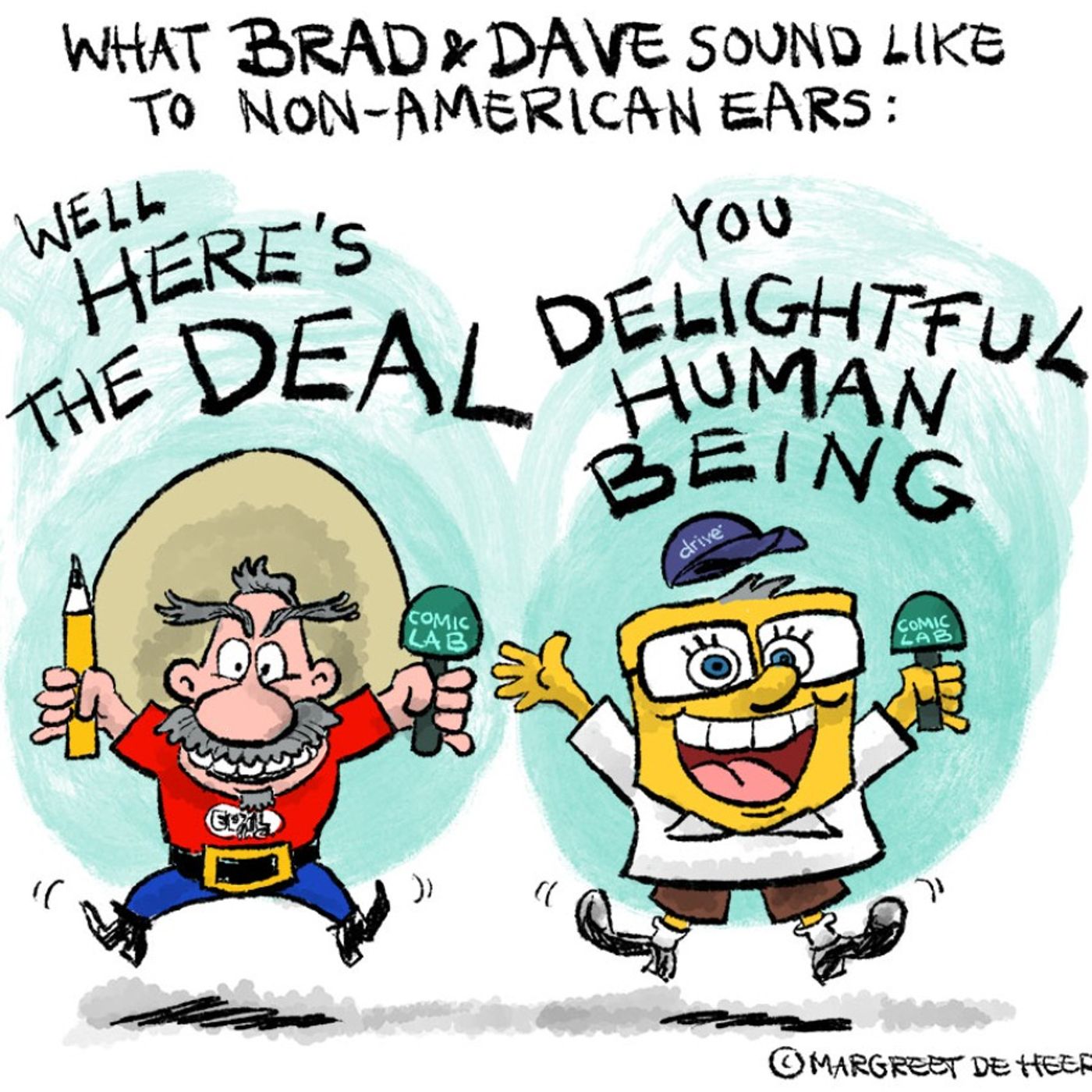
What’s the difference between a concept and a conceit — and why does confusing the two quietly sabotage so many comics? In this episode, Brad and Dave break down one of the most important (and misunderstood) distinctions in storytelling. A concept is the engine that drives your story forward. A conceit is a clever wrapper that might look great… but doesn’t go anywhere. If you’ve ever launched a comic that felt strong at first but ran out of momentum, this conversation will hit home. We talk about: Why constraints actually fuel creativity How to test whether your idea has real staying power The danger of building a comic around a gimmick And how to strengthen your story before you spend months drawing it Today's show: A comic without recurring characters UPDATE: ComicLab accent challenge UPDATE: Amazon Advantage UPDATE: DoubleDogBook.com How to do a sarcastic word balloon Takeaways Character design plays a crucial role in storytelling. Comics can thrive without a central protagonist. Idea-driven comics have historical precedence. Naming a comic can be a challenging but essential task. Feedback is vital in the creative process. Constraints can enhance creativity and focus. Monosyllabic titles are often more memorable. A good title can significantly impact a comic's success. The creative journey involves trial and error. Sharing ideas at smaller levels can reveal what resonates. Avoiding sunk cost fallacy is crucial in decision-making. Amazon Advantage can lead to unexpected losses. Understanding the costs of shipping is essential for profitability. Sarcasm in comics requires careful visual and textual cues. Bold lettering can enhance the impact of sarcasm. Walt Kelly's techniques in lettering were innovative but sometimes excessive. Comic creators should consider the visual presentation of dialogue. A well-crafted word balloon can convey emotion effectively. The legacy of past cartoonists informs current practices. You get great rewards when you join the ComicLab Community on Patreon$2 — Early access to episodes$5 — Submit a question for possible use on the show AND get the exclusive ProTips podcast. Plus $2-tier rewards.If you'd like a one-on-one consultation about your comic, book it now!Brad Guigar is the creator of Evil Inc and the author of The Webcomics Handbook. He is available for personal consultations. Dave Kellett is the creator of Sheldon and Drive. He is the co-director of the comics documentary, Stripped.
Special Guest Dylan Meconis — How to Color Comics with Physical Media
This week, we welcome the brilliant Dylan Meconis, creator of Queen of the Sea and Bite Me. Here’s what we cover: How most colorists actually break in (hint: it’s not by “murdering another colorist in single combat” — though that was discussed) What “flatting” is — and why it’s often your first step into paid coloring work Why networking is really just “being friends with cartoonists” Portfolio strategy: Why saying “I do everything” is less effective than saying “I do this brilliantly” Analog coloring techniques — watercolor paper, oil-based pencils, and why certain materials go extinct at the worst possible moment The realities of scanning physical art (and why scanners are basically cameras on an arm) How to handle black plates, rich black, and avoiding fuzzy type in print If you’ve ever wondered whether coloring could be an income stream for you — or how to level up your current process — this episode is a masterclass. Products and Programs mentioned on the show Note: Some of the links are affiliate links WildCraft Studio is in Portland, Oregon. PITT monochrome oil pencils by Faber-Castell Watercolor paints, Daniel Smith brand Watercolor paper (cold press) by Arches White watercolor paper, Dick Blick house brand Epson scanner, Perfection series Epson scanner, Workforce series Colored pencils, Caran d'Ache Summary In this engaging conversation, the hosts welcome cartoonist Dylan Meconis to explore various topics including coloring techniques, the integration of digital and traditional media, and the importance of choosing the right materials for comic creation. Dylan shares insights into her unique artistic process, the challenges of color printing, and the significance of lettering in comics. The discussion also highlights the value of collaboration and the joy of discovering new art supplies. Takeaways Dylan Meconis emphasizes the importance of using various mediums in art. The process of creating 'Queen of the Sea' involved unique coloring techniques. Dylan's artistic process includes both traditional and digital methods. Choosing the right materials can significantly impact the final artwork. Scanners play a crucial role in capturing traditional art for digital use. Lettering is an essential aspect of comic creation that requires careful consideration. Collaboration with other artists can enhance the creative process. Experimenting with different art supplies can lead to unexpected discoveries. Understanding color printing challenges is vital for comic artists. Dylan's approach to art is influenced by her background and experiences. You get great rewards when you join the ComicLab Community on Patreon$2 — Early access to episodes$5 — Submit a question for possible use on the show AND get the exclusive ProTips podcast. Plus $2-tier rewards.If you'd like a one-on-one consultation about your comic, book it now!Brad Guigar is the creator of Evil Inc and the author of The Webcomics Handbook. He is available for personal consultations. Dave Kellett is the creator of Sheldon and Drive. He is the co-director of the comics documentary, Stripped.







Get this podcast on your phone, Free


Create Your Podcast In Minutes
- Full-featured podcast site
- Unlimited storage and bandwidth
- Comprehensive podcast stats
- Distribute to Apple Podcasts, Spotify, and more
- Make money with your podcast