Space Nuts: Astronomy Insights & Cosmic Discoveries
https://www.spreaker.com/show/2631155/episodes/feedEpisode List
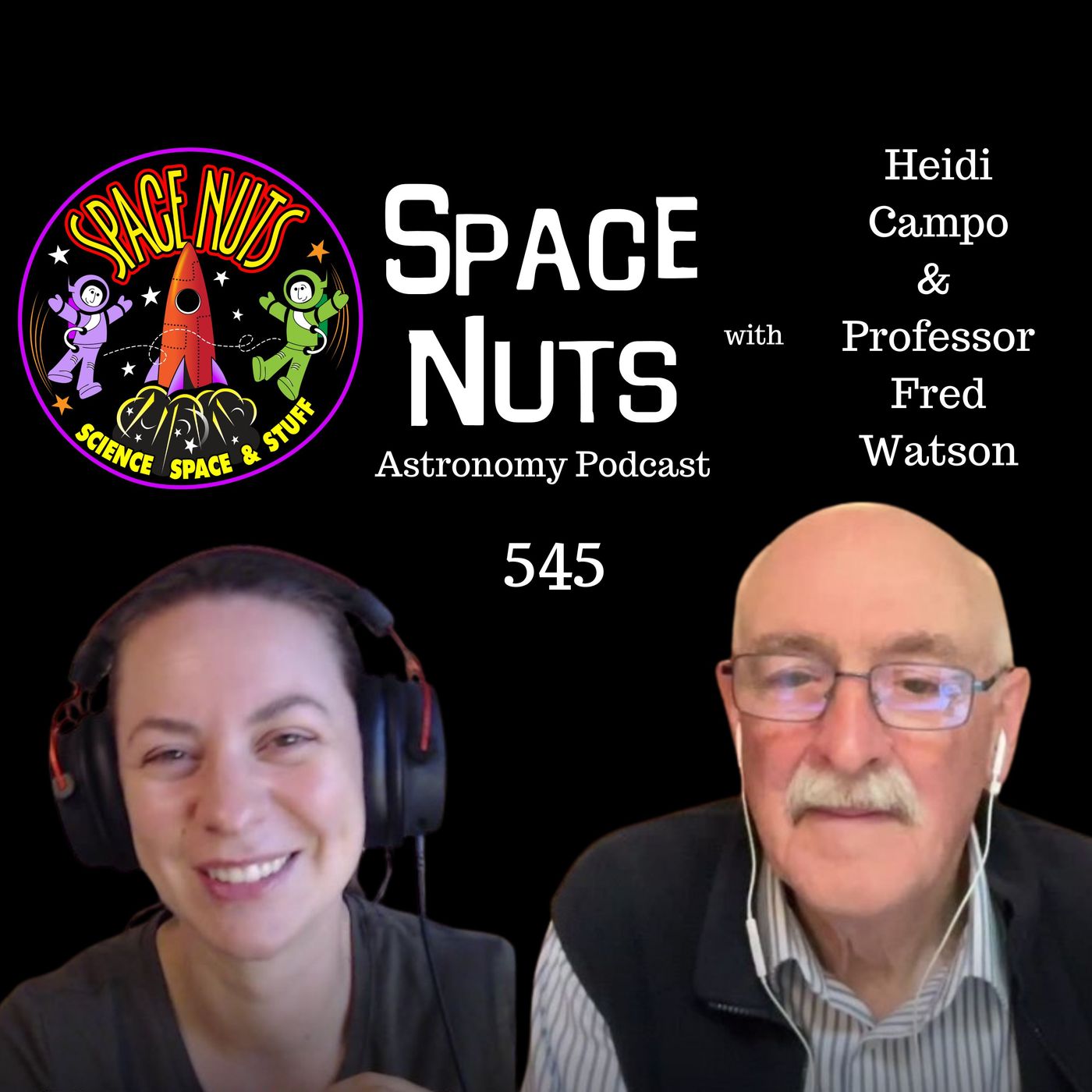
Cosmic Connections: The Search for Alien Life, Double Black Holes & Betelgeuse's Secrets
This episode of Space Nuts is brought to you with the support of NordVPN. When you're online privacy matters, you need NordVPN - the official VPN service of Space Nuts. To check out our special listenr offer, visit www.nordvpn.com/spacenuts and help support the show.Extraterrestrial Explorations: From Earthrise to Black HolesIn this exciting episode of Space Nuts, hosts Heidi Campo and Professor Fred Watson embark on a cosmic journey, exploring the search for extraterrestrial life and the wonders of black holes. From the iconic Earthrise image captured by Apollo 8 to the latest discoveries in astrophysics, this episode is filled with fascinating insights that will leave you pondering the mysteries of the universe.Episode Highlights:- The Search for Life on Europa: The episode kicks off with a discussion about the European Space Agency's JUICE mission, which aims to explore Jupiter's icy moons. Fred shares how the mission tested its radar instrument on the famous Anders Earthrise Crater, linking past and present in the quest for signs of life beneath the icy surfaces of moons like Europa.- The Enigma of Blazars: The conversation then shifts to the intriguing discovery of OJ287, an exotic double black hole known as a blazar. Fred explains the unique characteristics of this cosmic phenomenon, including its crooked jet of material and the implications of having two black holes interacting in such a dynamic way.- Betelgeuse and Its Potential Companion: The hosts delve into the latest findings regarding Betelgeuse, the famous red giant star in Orion. Fred discusses the discovery of a potential companion star using advanced speckle imaging techniques, raising questions about the dynamics of binary star systems and what this could mean for our understanding of stellar evolution.- Cultural Perspectives on Constellations: Throughout the episode, Heidi and Fred reflect on the diverse interpretations of constellations across cultures, highlighting how different societies perceive and name the stars, adding a rich layer of storytelling to our understanding of the night sky.For more Space Nuts, including our continuously updating newsfeed and to listen to all our episodes, visit our website. Follow us on social media at SpaceNutsPod on Facebook, X, YouTube Music Music, Tumblr, Instagram, and TikTok. We love engaging with our community, so be sure to drop us a message or comment on your favorite platform.If you’d like to help support Space Nuts and join our growing family of insiders for commercial-free episodes and more, visit spacenutspodcast.com/aboutStay curious, keep looking up, and join us next time for more stellar insights and cosmic wonders. Until then, clear skies and happy stargazing.Got a question for our Q&A episode? https://spacenutspodcast.com/amaBecome a supporter of this podcast: https://www.spreaker.com/podcast/space-nuts-astronomy-insights-cosmic-discoveries--2631155/support.
Stellar Questions: Captured Asteroids, Evaporating Black Holes & Dining with Aliens
Cosmic Queries: Exploring the Unknown in Our UniverseIn this engaging Q&A episode of Space Nuts, hosts Heidi Campo and Professor Fred Watson tackle a series of intriguing listener questions that delve into the mysteries of our universe. From the potential origins of solar system objects to the ethical dilemmas of encountering alien life, this episode is packed with thought-provoking insights that will spark your curiosity.Episode Highlights:- Captured Celestial Objects: The episode opens with a question from Patrick about the likelihood of objects orbiting our sun being captured from other star systems. Fred elaborates on how some asteroids and comets could have originated beyond our solar system, shedding light on the fascinating dynamics of celestial mechanics.- The Fate of Evaporating Black Holes: Next, an audio question from Frederick prompts a discussion on Hawking radiation and what remains after a black hole evaporates. Fred navigates through the complexities of this topic, addressing the ongoing mysteries surrounding black holes and their potential remnants.- Ethical Dilemmas of Alien Cuisine: James presents a unique ethical question regarding the consumption of alien food if humanity were to encounter advanced extraterrestrial life. Heidi and Fred engage in a lively debate about cultural differences and the moral implications of eating alien cuisine, providing a fun twist to the episode.- The Sun's Corona Mysteries: Finally, Dan's question about the temperature difference between the sun's corona and photosphere leads to an exploration of solar physics. Fred discusses the ongoing research related to solar activity and how it compares to other stars, highlighting the importance of the Parker Solar Probe in unraveling these cosmic secrets.For more Space Nuts, including our continuously updating newsfeed and to listen to all our episodes, visit our website. Follow us on social media at SpaceNutsPod on Facebook, X, YouTube Music Music, Tumblr, Instagram, and TikTok. We love engaging with our community, so be sure to drop us a message or comment on your favorite platform.If you’d like to help support Space Nuts and join our growing family of insiders for commercial-free episodes and more, visit spacenutspodcast.com/aboutStay curious, keep looking up, and join us next time for more stellar insights and cosmic wonders. Until then, clear skies and happy stargazing.Got a question for our Q&A episode? https://spacenutspodcast.com/amaBecome a supporter of this podcast: https://www.spreaker.com/podcast/space-nuts-astronomy-insights-cosmic-discoveries--2631155/support.
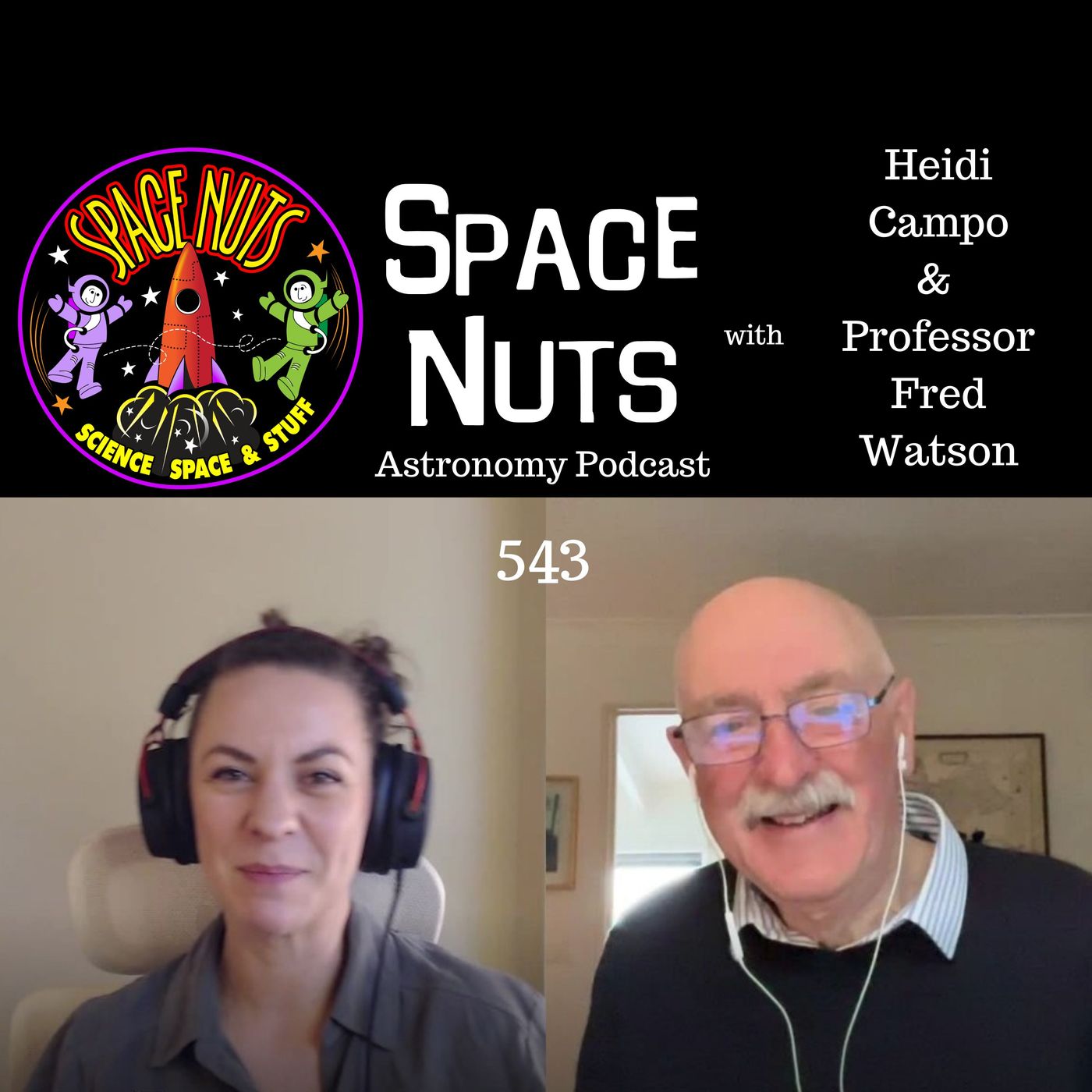
Interstellar Intrigue: 3I Atlas, Cosmic Probes & the Quest for Extraterrestrial Life
Interstellar Visitors and the Cosmic Connection: A Journey Through Space MysteriesIn this captivating episode of Space Nuts, hosts Heidi Campo and Professor Fred Watson explore the latest cosmic curiosities and fascinating astronomical phenomena. From the intriguing interstellar object 3I Atlas to the unexpected influences of space weather on ancient civilizations, this episode is filled with insights that will expand your understanding of the universe.Episode Highlights:- The Mystery of 3I Atlas: The episode kicks off with a discussion about the interstellar object 3I Atlas, which is hurtling through our solar system. Fred explains its origins, orbit, and the speculation surrounding its potential extraterrestrial origins, sparked by Harvard physicist Avi Loeb.- Space Weather and Human History: The conversation then shifts to how space weather impacts life on Earth. Fred shares insights from a recent interdisciplinary study that connects changes in the Earth's magnetic field with increased use of ochre by ancient peoples, suggesting a fascinating link between cosmic events and human behavior.- The Dramatic Fate of TOI 2108B: The hosts then discuss the dramatic fate of the exoplanet TOI 2108B, which is spiraling towards its parent star. Fred outlines the potential scenarios for its demise, including tidal disruption and atmospheric loss, highlighting the ongoing research surrounding this extreme world.- Interdisciplinary Connections: Throughout the episode, Heidi and Fred emphasize the importance of interdisciplinary research in understanding the cosmos and our place within it, showcasing how different fields of study can illuminate one another.For more Space Nuts, including our continuously updating newsfeed and to listen to all our episodes, visit our website. Follow us on social media at SpaceNutsPod on Facebook, X, YouTube Music Music, Tumblr, Instagram, and TikTok. We love engaging with our community, so be sure to drop us a message or comment on your favorite platform.If you’d like to help support Space Nuts and join our growing family of insiders for commercial-free episodes and more, visit spacenutspodcast.com/aboutStay curious, keep looking up, and join us next time for more stellar insights and cosmic wonders. Until then, clear skies and happy stargazing.Got a question for our Q&A episode? https://spacenutspodcast.com/amaBecome a supporter of this podcast: https://www.spreaker.com/podcast/space-nuts-astronomy-insights-cosmic-discoveries--2631155/support.
Cosmic Queries: White Holes, Dark Matter & the Universe's Mysteries
Sponsor Details:This episode of Space Nuts is brought to you with the support of NordVPN...our official VPN partner. We love and trust them and you will too. To check out our special listener deal, visit www.nordvpn.com/spacenuts - there's nothing to lose with Nord's famous 30 day money back guarantee!Cosmic Curiosities: Q&A on White Holes and Dark Matter MysteriesIn this engaging Q&A episode of Space Nuts, temporary host Heidi Campo and Professor Fred Watson dive into a series of thought-provoking listener questions that explore the enigmatic realms of astrophysics and cosmology. From the theoretical nature of white holes to the perplexities of dark matter, this episode is packed with insights that challenge our understanding of the universe.Episode Highlights:- Understanding White Holes: The episode kicks off with a question from Casey in Colorado about the theoretical existence of white holes. Fred explains the concept, discussing their potential properties and what might lie within them, while highlighting the lack of evidence for their existence in our universe.- Time Dilation and the Twins Paradox: Martin from an earlier episode prompts a discussion on time dilation and the implications of acceleration in the twins paradox scenario. Fred elaborates on the differences between special and general relativity and how acceleration plays a crucial role in understanding the phenomenon.- Cosmic Microwave Background and Black Holes: Ash from Brisbane asks about the connection between the observable universe and black holes, referencing Roger Penrose's theories. Fred shares insights from recent discussions at a conference, exploring the intriguing idea of whether the cosmic microwave background could represent the inside of an event horizon.- The Mystery of Dark Matter: Rennie from California poses a profound question about the nature of dark matter and its lack of interaction with light. Fred delves into the ongoing mysteries surrounding dark matter, discussing theories and the implications of its gravitational effects on the universe.For more Space Nuts, including our continuously updating newsfeed and to listen to all our episodes, visit our website. Follow us on social media at SpaceNutsPod on Facebook, X, YouTube Music Music Music, Tumblr, Instagram, and TikTok. We love engaging with our community, so be sure to drop us a message or comment on your favorite platform.If you’d like to help support Space Nuts and join our growing family of insiders for commercial-free episodes and more, visit spacenutspodcast.com/aboutStay curious, keep looking up, and join us next time for more stellar insights and cosmic wonders. Until then, clear skies and happy stargazing.Got a question for our Q&A episode? https://spacenutspodcast.com/amaBecome a supporter of this podcast: https://www.spreaker.com/podcast/space-nuts-astronomy-insights-cosmic-discoveries--2631155/support.
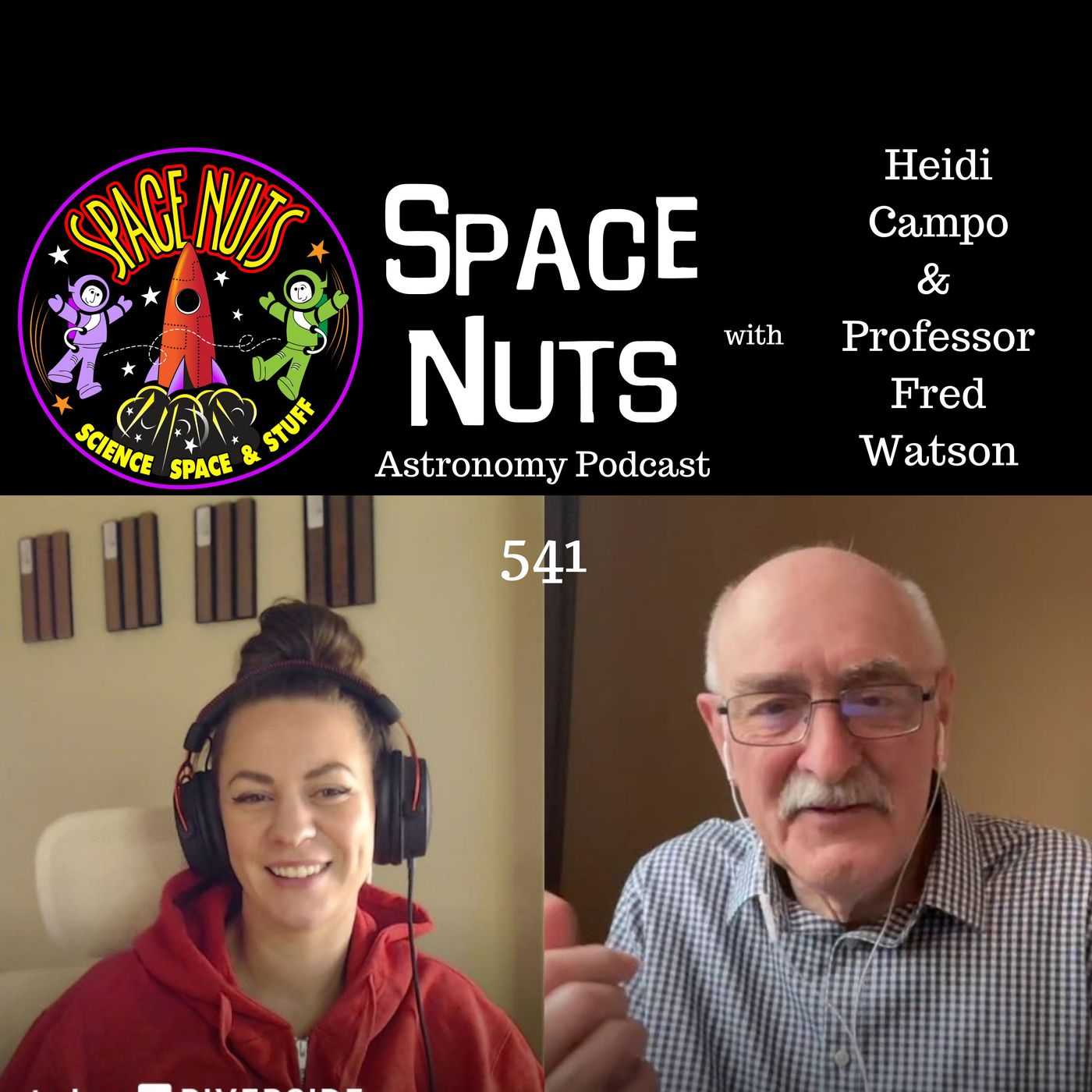
Galactic Mysteries: Fermi Bubbles, Saturn's Flash & High-Energy Life Forms
Milky Way Mysteries and Saturn's Secrets: A Cosmic ExplorationIn this exciting episode of Space Nuts, hosts Heidi Campo and Professor Fred Watson delve into the latest astronomical discoveries and cosmic curiosities. From the enigmatic Fermi bubbles in our Milky Way to a potential impact event on Saturn, this episode is brimming with fascinating insights that will leave you pondering the wonders of the universe.Episode Highlights:- Understanding Fermi Bubbles: The episode opens with a discussion about the newly observed Fermi bubbles, massive structures in the Milky Way. Fred explains their origins, linked to explosive activity from the supermassive black hole at the galaxy's center, and shares intriguing details about the hot gas and cooler gas clouds found within these bubbles.- The Mystery of Saturn's Flash: The hosts then explore a recently captured flash on Saturn, potentially indicating an impact event. Heidi and Fred discuss the implications of this discovery and the importance of citizen science in verifying the occurrence of such events.- Astrobiology: In a thought-provoking segment, the conversation shifts to the intersection of high energy astronomy and the search for extraterrestrial life. Fred highlights a new initiative that seeks to explore signals from advanced civilizations using high-energy emissions, challenging traditional notions of where life might thrive.- Reflections on Cosmic Discoveries: The episode wraps up with a recap of the discussions, emphasizing the ongoing quest for knowledge in astronomy and the importance of community engagement in scientific discovery.For more Space Nuts, including our continuously updating newsfeed and to listen to all our episodes, visit our website. Follow us on social media at SpaceNutsPod on Facebook, X, YouTube Music Music, Tumblr, Instagram, and TikTok. We love engaging with our community, so be sure to drop us a message or comment on your favorite platform.If you’d like to help support Space Nuts and join our growing family of insiders for commercial-free episodes and more, visit spacenutspodcast.com/aboutStay curious, keep looking up, and join us next time for more stellar insights and cosmic wonders. Until then, clear skies and happy stargazing.Got a question for our Q&A episode? https://spacenutspodcast.com/amaBecome a supporter of this podcast: https://www.spreaker.com/podcast/space-nuts-astronomy-insights-cosmic-discoveries--2631155/support.
You may also like






Get this podcast on your phone, Free


Create Your Podcast In Minutes
- Full-featured podcast site
- Unlimited storage and bandwidth
- Comprehensive podcast stats
- Distribute to Apple Podcasts, Spotify, and more
- Make money with your podcast