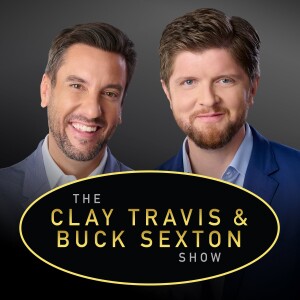
The Clay Travis and Buck Sexton Show
https://www.omnycontent.com/d/playlist/e73c998e-6e60-432f-8610-ae210140c5b1/57c236de-aec0-46c1-b141-ae3c00026d77/1776c4cc-50a1-410f-a2de-ae3c00026dfa/podcast.rssEpisode List

Daily Review with Clay and Buck - Jul 27 2026
Clay Travis and Buck Sexton talk about the newly released excerpts from Dr. Anthony Fauci’s reported 1,100-page personal diary ahead of a scheduled Senate hearing led by Senator Rand Paul. Clay and Buck argue that the diary entries provide insight into Fauci’s role during the COVID-19 pandemic, portraying him as deeply focused on media attention, public recognition, and celebrity interactions at the height of the coronavirus crisis. They discuss diary passages detailing Fauci’s relationships with prominent journalists, politicians, and celebrities, while contending that the documents raise new questions about his public statements regarding COVID origins, school closures, lockdown policies, and pandemic-era decision-making. An in-depth examination of the Democratic Socialists of America movement and its increasing success in local, state, and congressional races across the country. Clay and Buck discuss recent victories by DSA-backed candidates and argue that democratic socialism is becoming a more influential force within the Democratic Party. The hosts highlight emerging races in New York, Michigan, Colorado, Pennsylvania, Wisconsin, and Washington, D.C., framing these contests as evidence that socialist policies are gaining traction beyond traditional progressive strongholds. They pay particular attention to the upcoming Michigan Democratic Senate primary, debating whether a victory by progressive candidate Abdul El-Sayed would signal broader acceptance of socialism in battleground states and potentially reshape the 2026 election landscape. Clay and Buck also praise CNBC’s Joe Kernen for challenging defenders of Fauci and revisiting questions about media coverage of the pandemic. They contend that many journalists who promoted Fauci as a trusted public health authority have been unwilling to revisit controversial decisions made during the pandemic, despite growing evidence and public criticism. Clay and Buck argue that the diary entries reveal a striking contrast between Fauci’s public image and his private conduct, with both hosts describing the documents as further evidence of excessive media deference toward government officials during COVID-19. The conversation also turns to Florida Governor Ron DeSantis, whose opposition to many COVID mandates receives praise from the hosts. They discuss Fauci diary entries criticizing DeSantis for resisting mask requirements and limiting the ability of local governments to impose pandemic restrictions. Clay and Buck argue that Florida’s more open approach eventually proved more successful than many stricter lockdown states and frame DeSantis as one of the political leaders willing to challenge prevailing public health orthodoxy during the pandemic. The program then shifts into broader culture and media commentary. Buck reacts to past remarks by actress Anne Hathaway, criticizing what he views as Hollywood’s tendency toward political activism and ideological messaging. The hosts discuss celebrity culture, arguing that entertainers increasingly use public platforms to promote political viewpoints while often lacking expertise on the subjects they address. The discussion expands into broader criticism of Hollywood, media elites, and modern celebrity activism. A significant portion of Hour 3 focuses on Caitlin Clark, the WNBA, and the cultural controversies surrounding women’s basketball. Clay highlights remarks made by former President Barack Obama, who publicly encouraged Clark to ignore criticism and remain focused on her game. The hosts interpret Obama’s comments as recognition that some of the backlash against Clark has become excessive. They discuss what they see as tensions involving race, identity politics, and public perception within the WNBA, arguing that Clark’s popularity has exposed broader cultural divisions. The conversation includes discussion of media coverage surrounding Clark, debates over player treatment, and reactions to criticism directed at some athletes who have expressed conservative viewpoints. Make sure you never miss a second of the show by subscribing to the Clay Travis & Buck Sexton show podcast wherever you get your podcasts! ihr.fm/3InlkL8 For the latest updates from Clay & Buck, visit our website https://www.clayandbuck.com/ Connect with Clay Travis and Buck Sexton: X - https://x.com/clayandbuck FB - https://www.facebook.com/ClayandBuck/ IG - https://www.instagram.com/clayandbuck/ YouTube - https://www.youtube.com/c/clayandbuck Rumble - https://rumble.com/c/ClayandBuck TikTok - https://www.tiktok.com/@clayandbuckFollow Clay & Buck on YouTube: https://www.youtube.com/c/clayandbuckSee omnystudio.com/listener for privacy information.

Hour 1 - Fauci's Diary Dirt
In Hour 1 of The Clay Travis and Buck Sexton Show, the hosts focus extensively on newly released excerpts from Dr. Anthony Fauci’s reported 1,100-page personal diary ahead of a scheduled Senate hearing led by Senator Rand Paul. Clay and Buck argue that the diary entries provide insight into Fauci’s role during the COVID-19 pandemic, portraying him as deeply focused on media attention, public recognition, and celebrity interactions at the height of the coronavirus crisis. They discuss diary passages detailing Fauci’s relationships with prominent journalists, politicians, and celebrities, while contending that the documents raise new questions about his public statements regarding COVID origins, school closures, lockdown policies, and pandemic-era decision-making. The hosts devote significant time to examining diary entries they say indicate Fauci privately understood the likelihood of a COVID lab leak origin while publicly supporting alternative explanations. They also highlight passages discussing conversations with New York City Mayor Bill de Blasio and California officials regarding school closures, restaurant shutdowns, and broader pandemic restrictions. Clay and Buck argue that these entries contradict later claims that Fauci was not directly responsible for driving school shutdown policies. The discussion revisits debates surrounding COVID lockdowns, mask mandates, remote learning, economic disruption, and the long-term effects of pandemic restrictions on families, students, and businesses across the United States. Another major theme in Hour 1 is media coverage during the pandemic. The hosts point to diary references involving journalists and television personalities, arguing that portions of the national media treated Fauci more as an ally than as an objective subject of scrutiny. They discuss reported communications involving high-profile media figures and question whether major news organizations adequately challenged public health guidance during the COVID era. Clay and Buck also criticize what they describe as a current lack of mainstream media coverage surrounding the diary revelations and speculate about why many outlets have not prominently reported on the documents. The program further explores accountability for pandemic policies, with the hosts debating whether the diary entries could be used as evidence of contradictions between Fauci’s private writings and his sworn testimony before Congress. They discuss legal concepts including perjury, presidential pardons, congressional investigations, and potential future court challenges. Clay argues that the documents may provide insight into Fauci’s state of mind during key moments of the pandemic, while Buck questions the likelihood of any successful prosecution. The conversation expands into broader concerns about public trust in government health agencies, scientific institutions, and federal pandemic response officials.The hosts also revisit earlier controversies surrounding public health messaging, including discussions about HIV/AIDS education and what they describe as longstanding patterns of fear-based public health communication. They compare those experiences to the messaging used during COVID-19 and argue that many Americans have become increasingly skeptical of government health authorities. In addition to the Fauci discussion, Hour 1 previews an upcoming segment on the Democratic Socialists of America platform, with the hosts expressing interest in examining the organization’s policy goals and increasing political influence. They reference recent political developments involving Democratic Socialist candidates and suggest that the movement’s priorities deserve greater public attention. The hour concludes with listener interaction, including calls and talkbacks focused on possible legal consequences for Fauci, the scope of presidential pardons, potential class-action lawsuits related to pandemic policies, and continued public frustration over the lasting effects of COVID-era mandates and restrictions. Make sure you never miss a second of the show by subscribing to the Clay Travis & Buck Sexton show podcast wherever you get your podcasts! ihr.fm/3InlkL8 For the latest updates from Clay & Buck, visit our website https://www.clayandbuck.com/ Connect with Clay Travis and Buck Sexton: X - https://x.com/clayandbuck FB - https://www.facebook.com/ClayandBuck/ IG - https://www.instagram.com/clayandbuck/ YouTube - https://www.youtube.com/c/clayandbuck Rumble - https://rumble.com/c/ClayandBuck TikTok - https://www.tiktok.com/@clayandbuckFollow Clay & Buck on YouTube: https://www.youtube.com/c/clayandbuckSee omnystudio.com/listener for privacy information.

Hour 2 - Jake Tapper is a Fraud
In Hour 2 of The Clay Travis and Buck Sexton Show, Clay Travis and Buck Sexton focus heavily on the growing influence of Democratic Socialists of America (DSA) within the Democratic Party, while also returning to their ongoing discussion of newly released Anthony Fauci diary entries and the broader legacy of the COVID-19 pandemic. The hour explores the ideological battle inside the Democratic Party, the political rise of socialist candidates, media credibility, government power, and what the hosts see as the lasting consequences of pandemic-era policies. The hour begins with an in-depth examination of the Democratic Socialists of America movement and its increasing success in local, state, and congressional races across the country. Clay and Buck discuss recent victories by DSA-backed candidates and argue that democratic socialism is becoming a more influential force within the Democratic Party. The hosts highlight emerging races in New York, Michigan, Colorado, Pennsylvania, Wisconsin, and Washington, D.C., framing these contests as evidence that socialist policies are gaining traction beyond traditional progressive strongholds. They pay particular attention to the upcoming Michigan Democratic Senate primary, debating whether a victory by progressive candidate Abdul El-Sayed would signal broader acceptance of socialism in battleground states and potentially reshape the 2026 election landscape. A major segment centers on an interview featuring a DSA leader who outlines key organizational goals. The hosts react to support for policies including abolishing the Senate, eliminating ICE, reducing or eliminating borders, granting amnesty to illegal immigrants, defunding the Pentagon, shrinking the prison system, restructuring the presidency and Supreme Court, and expanding public ownership of major corporations. Clay and Buck argue that these positions represent traditional socialism rather than moderate progressivism and contend that Democratic leaders are increasingly reluctant to openly challenge these ideas because of growing support from the party’s activist base. The conversation then shifts to Pennsylvania Senator John Fetterman, who is praised for criticizing socialism and arguing that capitalism should remain the dominant economic model within the Democratic Party. The hosts debate whether Fetterman’s criticism reflects a larger ideological divide among Democrats or whether the party’s moderate wing lacks the political strength to stop its progressive faction from driving future policy decisions. They also discuss the political implications of impeachment, Senate rules, and the filibuster, arguing that future Democratic majorities would likely pursue more aggressive procedural changes if they regain unified control of Washington. Another major topic in Hour 2 is election integrity and voter identification laws. Clay highlights polling that shows broad public support for requiring photo identification to vote and argues that voter ID remains one of the most widely supported election reforms in the country. The hosts express frustration that legislation addressing these concerns remains stalled despite strong public backing and debate the future of Senate procedural rules that can prevent such legislation from moving forward. The show then returns to the rise of New York City Democratic Socialist leader Zohran Mamdani, focusing on his proposal for city-run grocery stores. Clay and Buck criticize the concept, arguing that taxpayer-subsidized grocery stores would distort markets, create shortages, and ultimately require large public subsidies. They contend that the grocery business operates on thin profit margins and argue that government-run alternatives would struggle with efficiency, staffing, inventory management, and long-term sustainability. The hosts further discuss concerns about higher taxes on wealthy residents and speculate that some business owners and investors could reduce their exposure to New York City if socialist policies continue to gain momentum. The second half of Hour 2 returns to the release of Anthony Fauci’s personal diary, which remains a dominant theme throughout the program. Clay and Buck continue reviewing diary entries that they believe reveal Fauci’s relationships with journalists, politicians, and public figures during the COVID-19 pandemic. Particular attention is given to entries describing social interactions with CNN anchor Jake Tapper during a period when public health officials were encouraging Americans to avoid gatherings and family celebrations. The hosts argue that these revelations undermine public trust in both media organizations and government health officials, while raising questions about journalistic objectivity and political bias. The discussion broadens into a critique of pandemic-era restrictions, including school closures, mask mandates, lockdowns, and social distancing requirements. Clay and Buck revisit the educational disruptions caused by prolonged school shutdowns and argue that Fauci’s diary entries provide additional evidence that he played a more direct role in promoting these policies than he has publicly acknowledged. They discuss lingering public skepticism toward health institutions and argue that insufficient accountability has followed what they view as major public policy failures during the COVID response. The hosts also praise CNBC’s Joe Kernen for challenging defenders of Fauci and revisiting questions about media coverage of the pandemic. They contend that many journalists who promoted Fauci as a trusted public health authority have been unwilling to revisit controversial decisions made during the pandemic, despite growing evidence and public criticism. Clay and Buck argue that the diary entries reveal a striking contrast between Fauci’s public image and his private conduct, with both hosts describing the documents as further evidence of excessive media deference toward government officials during COVID-19. Hour 2 concludes with previews of upcoming coverage, including President Donald Trump’s appearance at the White House Correspondents’ Dinner, continued discussion of Fauci’s scheduled testimony before Senator Rand Paul, and commentary on former President Barack Obama’s remarks concerning Caitlin Clark and the broader sports and culture debate surrounding her rise to prominence. Make sure you never miss a second of the show by subscribing to the Clay Travis & Buck Sexton show podcast wherever you get your podcasts! ihr.fm/3InlkL8 For the latest updates from Clay & Buck, visit our website https://www.clayandbuck.com/ Connect with Clay Travis and Buck Sexton: X - https://x.com/clayandbuck FB - https://www.facebook.com/ClayandBuck/ IG - https://www.instagram.com/clayandbuck/ YouTube - https://www.youtube.com/c/clayandbuck Rumble - https://rumble.com/c/ClayandBuck TikTok - https://www.tiktok.com/@clayandbuckFollow Clay & Buck on YouTube: https://www.youtube.com/c/clayandbuckSee omnystudio.com/listener for privacy information.

Hour 3 - Anti-White Racism
In Hour 3 of The Clay Travis and Buck Sexton Show, Clay Travis and Buck Sexton continue their extensive analysis of newly released Anthony Fauci diary entries, while also discussing the legacy of COVID-19 lockdown policies, media accountability, Florida Governor Ron DeSantis’s pandemic response, Barack Obama’s comments to WNBA star Caitlin Clark, cultural debates surrounding women’s sports, and media criticism involving ESPN and OutKick. The third hour is driven largely by what the hosts view as new evidence contradicting Fauci’s public statements during the coronavirus pandemic. The opening portion of Hour 3 revisits the release of Fauci’s reported 1,100-plus-page diary and focuses on entries concerning COVID-era school closures, business shutdowns, and interactions with major political leaders. Clay highlights diary passages in which Fauci describes conversations with New York City Mayor Bill de Blasio and California officials regarding decisions to close schools, bars, and restaurants. The hosts contrast those diary entries with Fauci’s later public comments in which he denied responsibility for shutting down schools. Clay and Buck argue that the documents reveal a significant gap between Fauci’s private acknowledgments and his public defense of pandemic policies, contending that the records further fuel debate over COVID accountability, government transparency, and the long-term consequences of lockdown decisions. The discussion expands into former President Donald Trump’s relationship with Fauci and Dr. Deborah Birx during the early months of the pandemic. Drawing on additional diary excerpts, the hosts focus on a reported incident in which Trump allegedly expressed frustration with Fauci and Birx over the economic and social impact of lockdown measures. Buck reflects on conversations and observations from 2020, discussing how political pressures, election-year concerns, media scrutiny, and bureaucratic inertia shaped pandemic decision-making. The hosts argue that many elected officials and institutions deferred responsibility to public health authorities while simultaneously avoiding accountability for the consequences of their own actions. A major theme throughout the hour is the lasting impact of COVID-19 restrictions, particularly school closures, mask mandates, and social distancing rules. Clay and Buck revisit debates that dominated the pandemic years and contend that many of the policies now broadly criticized were aggressively defended by public health officials and media organizations at the time. Listener calls and talkbacks contribute to the conversation, with audience members offering opinions on personal responsibility, legal liability concerns, and why so many businesses, schools, and governments embraced Fauci’s recommendations. The hosts argue that responsibility for controversial pandemic decisions became diffused among politicians, experts, bureaucracies, and institutions, making accountability difficult even years later. The conversation also turns to Florida Governor Ron DeSantis, whose opposition to many COVID mandates receives praise from the hosts. They discuss Fauci diary entries criticizing DeSantis for resisting mask requirements and limiting the ability of local governments to impose pandemic restrictions. Clay and Buck argue that Florida’s more open approach eventually proved more successful than many stricter lockdown states and frame DeSantis as one of the political leaders willing to challenge prevailing public health orthodoxy during the pandemic. The program then shifts into broader culture and media commentary. Buck reacts to past remarks by actress Anne Hathaway, criticizing what he views as Hollywood’s tendency toward political activism and ideological messaging. The hosts discuss celebrity culture, arguing that entertainers increasingly use public platforms to promote political viewpoints while often lacking expertise on the subjects they address. The discussion expands into broader criticism of Hollywood, media elites, and modern celebrity activism. A significant portion of Hour 3 focuses on Caitlin Clark, the WNBA, and the cultural controversies surrounding women’s basketball. Clay highlights remarks made by former President Barack Obama, who publicly encouraged Clark to ignore criticism and remain focused on her game. The hosts interpret Obama’s comments as recognition that some of the backlash against Clark has become excessive. They discuss what they see as tensions involving race, identity politics, and public perception within the WNBA, arguing that Clark’s popularity has exposed broader cultural divisions. The conversation includes discussion of media coverage surrounding Clark, debates over player treatment, and reactions to criticism directed at some athletes who have expressed conservative viewpoints. The hosts also examine comments from President Donald Trump at the White House Correspondents’ Dinner, particularly jokes involving CNN anchor Kaitlan Collins and transgender influencer Dylan Mulvaney. Clay and Buck debate why the joke generated controversy and argue that critics face difficulty responding because of broader debates over gender identity and transgender issues in media and politics. They frame the reaction as another example of ongoing cultural and political conflicts that increasingly extend into entertainment, sports, and journalism. Toward the end of the hour, Clay reacts to a CNN segment that referenced him and OutKick while discussing the departure of former ESPN personality Ryan Clark. The hosts discuss the role of media organizations in shaping sports commentary and political narratives, with Clay joking about being described on CNN as “not a bleeding-heart liberal.” The segment serves as a broader discussion of media influence, ideological battles in sports journalism, and the evolving relationship between politics and sports coverage. Hour 3 concludes with Clay and Buck returning to the central theme of the day: the ongoing fallout from Anthony Fauci’s diary entries. They argue that the documents offer a revealing look at how pandemic-era decisions were made, how media figures interacted with public health officials, and why debates over COVID-19 policies remain politically and culturally relevant years after the height of the pandemic. Make sure you never miss a second of the show by subscribing to the Clay Travis & Buck Sexton show podcast wherever you get your podcasts! ihr.fm/3InlkL8 For the latest updates from Clay & Buck, visit our website https://www.clayandbuck.com/ Connect with Clay Travis and Buck Sexton: X - https://x.com/clayandbuck FB - https://www.facebook.com/ClayandBuck/ IG - https://www.instagram.com/clayandbuck/ YouTube - https://www.youtube.com/c/clayandbuck Rumble - https://rumble.com/c/ClayandBuck TikTok - https://www.tiktok.com/@clayandbuckFollow Clay & Buck on YouTube: https://www.youtube.com/c/clayandbuckSee omnystudio.com/listener for privacy information.

It's a Numbers Game: The Untold Story of Trump's Second Term | Maggie Haberman & Jonathan Swan
What is President Donald Trump's second term really like behind closed doors? Ryan sits down with New York Times reporters Maggie Haberman and Jonathan Swan, authors of the bestselling book Regime Change, for an in-depth discussion on President Trump's leadership, decision-making process, inner circle, and the future of American politics. The conversation explores Trump's evolving mindset, his thoughts on legacy, the influence of JD Vance, Marco Rubio, Stephen Miller, AI policy, foreign affairs, and the growing role of influencers inside conservative politics. The authors also discuss the Iran conflict, the Federal Reserve, tariffs, and how Trump's second presidency is reshaping America's role in the world. EMAIL RYANFollow Clay & Buck on YouTube: https://www.youtube.com/c/clayandbuckSee omnystudio.com/listener for privacy information.


Get this podcast on your phone, Free


Create Your Podcast In Minutes
- Full-featured podcast site
- Unlimited storage and bandwidth
- Comprehensive podcast stats
- Distribute to Apple Podcasts, Spotify, and more
- Make money with your podcast
