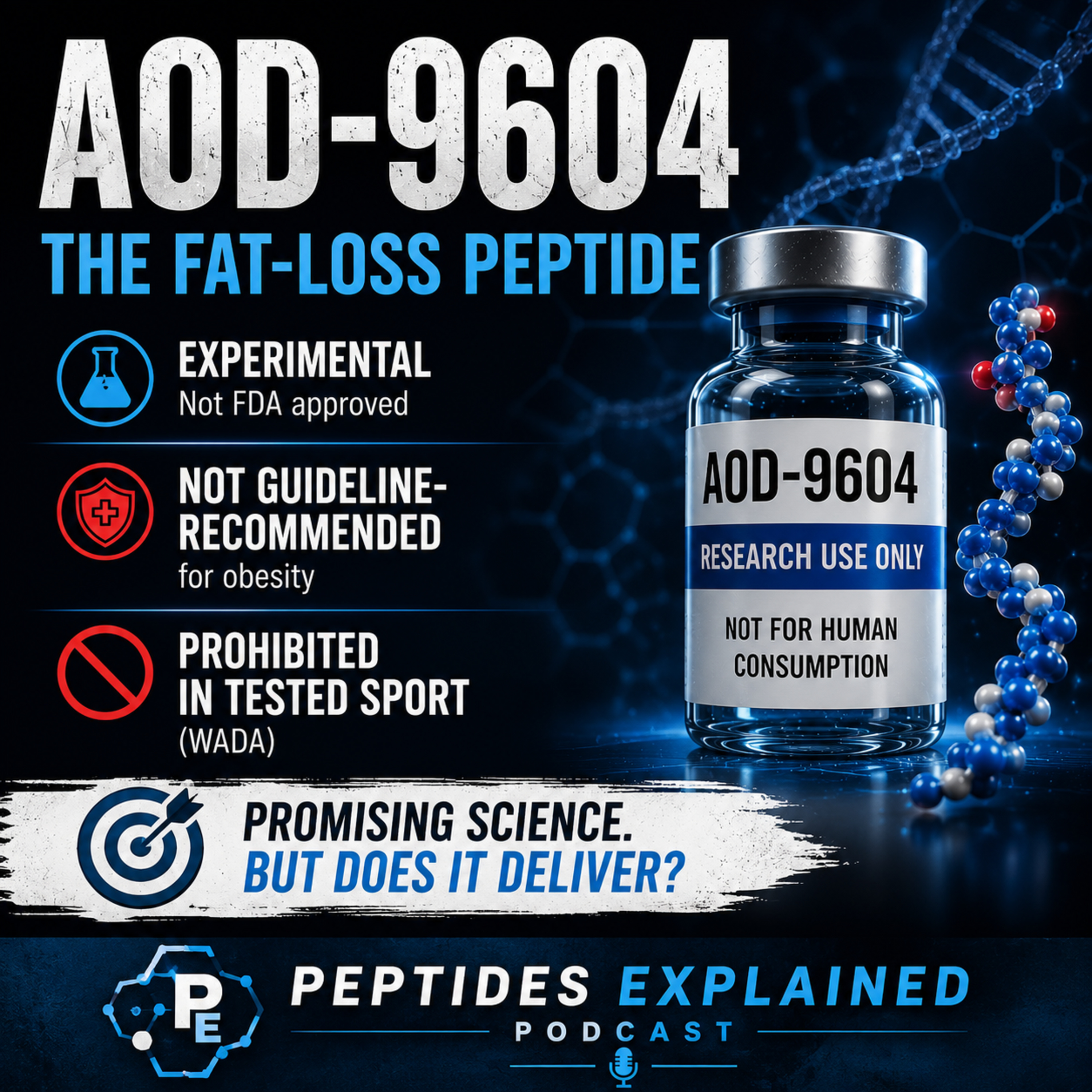
AOD-9604 is often marketed as the “fat-burning fragment” of human growth hormone. But what does it actually do, and did it work in human obesity trials?In this episode of Peptides Explained, John Garrett, RN, breaks down:• What AOD-9604 is and how it differs from full-length HGH• Lipolysis, lipogenesis, and beta-3 adrenergic signaling• Why animal studies looked promising• What the early human trials showed• Why the obesity-development program was discontinued• Whether AOD-9604 raises...
View more
Comments (3)
More Episodes
All Episodes>>You may also like








Get this podcast on your phone, Free


Create Your Podcast In Minutes
- Full-featured podcast site
- Unlimited storage and bandwidth
- Comprehensive podcast stats
- Distribute to Apple Podcasts, Spotify, and more
- Make money with your podcast
It is Free
