Barbell Medicine Podcast
https://feeds.redcircle.com/0cc66fc4-ccb8-4c60-8cc6-7367e52c4159Episode List
Lifting and longevity: is 1 hour a week really the limit? Plus GLP1s and mood, training with ME/CFS, and Protein vs. Calories
A popular paper claimed the longevity benefit of lifting disappears once you train more than an hour a week. It's a real paper, but the claim is a misread. This is the free cut of this month's Direct Line, where Drs. Feigenbaum and Baraki also take on whether GLP-1s affect your mood, the "same calories, more weight loss" protein argument, and what you can actually do in the gym when you have chronic fatigue syndrome. For education and infotainment, not medical advice.To become a member and have us answer YOUR questions, join today:https://www.barbellmedicine.com/shop/subscriptions/plus-podcast-subscription/Timestamps:0:00 Intro0:38 The paper: does lifting stop helping after an hour?3:19 The newer 147,000-person, 30-year study13:21 GLP-1s, mood, and motivation14:50 The FDA reverses the suicide warning19:29 What happened when they gave people a GLP-1 in a bar24:54 Is a calorie just a calorie?28:17 The "same calories, more weight loss" protein study30:48 Does keto break the laws of physics?34:56 Lifting with chronic fatigue syndrome36:14 The identical-twin experiment37:36 Can lifting in bed do anything?45:33 Get the full Direct LineBarbell Medicine coaching and templates: https://www.barbellmedicine.comBarbell Medicine Premium: https://www.barbellmedicine.com/shop/subscriptions/barbell-medicine-premium/Signal (pre-order)https://www.barbellmedicine.com/shop/learning/signal/ 1. Momma H, Kawakami R, Honda T, Sawada SS. Muscle-strengthening activities are associated with lower risk and mortality in major non-communicable diseases: a systematic review and meta-analysis of cohort studies. *Br J Sports Med*. 2022;56(13):755-763. doi:10.1136/bjsports-2021-1050612. Dankel SJ, Loenneke JP, Loprinzi PD. Dose-dependent association between muscle-strengthening activities and all-cause mortality: prospective cohort study among a national sample of adults in the USA. *Arch Cardiovasc Dis*. 2016;109(11):626-633. doi:10.1016/j.acvd.2016.04.0053. Zhang Y, Lee DH, Rezende LFM, Ma Y, Giovannucci E. Long-term resistance training with all-cause and cause-specific mortality: assessing dose-response and joint associations with aerobic physical activity. *Br J Sports Med*. Published online June 2, 2026. doi:10.1136/bjsports-2025-1105034. US Food and Drug Administration. FDA requests removal of suicidal behavior and ideation warning from glucagon-like peptide-1 receptor agonist (GLP-1 RA) medications. Drug Safety Communication. January 13, 2026. Accessed August 12, 2026. https://www.fda.gov/drugs/drug-safety-communications/fda-requests-removal-suicidal-behavior-and-ideation-warning-glucagon-peptide-1-receptor-agonist-glp5. Hendershot CS, Bremmer MP, Paladino MB, et al. Once-weekly semaglutide in adults with alcohol use disorder: a randomized clinical trial. *JAMA Psychiatry*. 2025;82(4):395-405. doi:10.1001/jamapsychiatry.2024.47896. Klausen MK, Justesen SK, Pedersen JN, et al. Once-weekly semaglutide versus placebo in patients with alcohol use disorder and comorbid obesity: a randomised, double-blind, placebo-controlled trial. *Lancet*. 2026;407(10540):1687-1698. doi:10.1016/S0140-6736(26)00305-37. Haghighat N, Ashtary-Larky D, Bagheri R, et al. The effect of 12 weeks of euenergetic high-protein diet in regulating appetite and body composition of women with normal-weight obesity: a randomised controlled trial. *Br J Nutr*. 2020;124(10):1044-1051. doi:10.1017/S00071145200020198. Committee on the Diagnostic Criteria for Myalgic Encephalomyelitis/Chronic Fatigue Syndrome, Board on the Health of Select Populations, Institute of Medicine. *Beyond Myalgic Encephalomyelitis/Chronic Fatigue Syndrome: Redefining an Illness*. National Academies Press; 2015. Accessed August 12, 2026. https://www.ncbi.nlm.nih.gov/books/NBK274235/9. Giloteaux L, Hanson MR, Keller BA. A pair of identical twins discordant for myalgic encephalomyelitis/chronic fatigue syndrome differ in physiological parameters and gut microbiome composition. *Am J Case Rep*. 2016;17:720-729. doi:10.12659/AJCR.90031410. Rangan A, Brealey SD, Keding A, et al. Management of adults with primary frozen shoulder in secondary care (UK FROST): a multicentre, pragmatic, three-arm, superiority randomised clinical trial. *Lancet*. 2020;396(10256):977-989. doi:10.1016/S0140-6736(20)31965-611. Millar NL, Meakins A, Struyf F, et al. Frozen shoulder. *Nat Rev Dis Primers*. 2022;8(1):59. doi:10.1038/s41572-022-00386-212. US Department of Agriculture, US Department of Health and Human Services. *Dietary Guidelines for Americans, 2025-2030*. January 2026. Accessed August 12, 2026. https://www.dietaryguidelines.gov/Our Sponsors:* Check out CovePure and use my code CovePure.com/bbm for a great deal: https://covepure.com* Check out FIGS: https://wearfigs.com* Check out Factor and use my code factormeals.com/bbm50off for a great deal: https://www.factor75.com* Check out Quince and use my code quince.com/BBM for a great deal: https://www.quince.comAdvertising Inquiries: https://redcircle.com/brands
The FDA Voted for 6 Peptides. Its Own Scientists Said No
An FDA advisory committee just voted to open a legal compounding supply line for six of seven peptides, including BPC-157 and TB-500, over the objection of the FDA's own scientists, who recommended against all seven. Dr. Jordan Feigenbaum walks through what the Pharmacy Compounding Advisory Committee actually voted on, why a vote about ulcerative colitis ends up governing tendon and joint use, what the single human BPC-157 trial does and doesn't show, and why "a pharmacy makes it safe" and "there's no money to study it" don't hold up. Evidence-based, no hype, no nocebo.Timestamps: | 00:00:00 | The FDA voted 8-6. What it actually means | 00:01:25 | What I am, and am not, claiming | 00:03:21 | How they got here: Category 2 and the paperwork | 00:07:17 | Who was in the room: the panel that flipped | 00:10:57 | What they voted on: compounding and the bulks list | 00:15:37 | "No money in it, you can't patent it" | 00:18:24 | The trials already run: Plevna and MK-677 | 00:22:55 | "I took it and it worked": placebo and fake surgery | 00:27:02 | The one human trial: Ruenzi 2005 | 00:32:28 | Is it natural? Is it even a drug? | 00:36:58 | Harm reduction, or follow the money? | 00:42:45 | Three times a missing trial went wrong | 00:50:58 | Safety: known, unknown, and unknowable | 00:55:22 | The other six peptides | 00:58:22 | What I'd actually tell you | 01:02:08 | What actually works, and what would change my mindResources:Barbell Medicine coaching and templates: https://www.barbellmedicine.comPlus podcast subscription: https://www.barbellmedicine.com/shop/subscriptions/plus-podcast-subscription/Barbell Medicine Premium: https://www.barbellmedicine.com/shop/subscriptions/barbell-medicine-premium/Signal (book pre-order): https://www.barbellmedicine.com/shop/learning/signal/1. US Food and Drug Administration. FDA Briefing Document: Pharmacy Compounding Advisory Committee Meeting. July 23-24, 2026. Silver Spring, MD: FDA; 2026.2. US Food and Drug Administration. FDA review of BPC-157-related bulk drug substances. PCAC Briefing Document. July 23-24, 2026. Media 193343. Accessed July 24, 2026. https://www.fda.gov/media/193343/download3. US Food and Drug Administration. FDA review of TB-500-related bulk drug substances. PCAC Briefing Document. July 23-24, 2026. Media 193349.4. US Food and Drug Administration. FDA review of KPV-, MOTS-c-, Semax-, Epitalon-, and Emideltide-related bulk drug substances. PCAC Briefing Documents. July 23-24, 2026.5. US Food and Drug Administration. Questions for the Pharmacy Compounding Advisory Committee. July 23-24, 2026.6. US Food and Drug Administration. Pharmacy Compounding Advisory Committee meeting roster. July 23-24, 2026. Media 193772.7. US Food and Drug Administration. Pharmacy Compounding Advisory Committee meeting roster. 2022. Media 159040.8. openFDA. FAERS adverse event reports for BPC-157. Accessed July 24, 2026. https://open.fda.gov9. Pharmacy compounding; 503A bulk drug substances. 21 CFR §216.23 (2026).10. Federal Food, Drug, and Cosmetic Act §503A, 21 USC §353a (pharmacy compounding).11. Abigail Alliance for Better Access to Developmental Drugs v von Eschenbach, 495 F3d 695 (DC Cir 2007).12. United States v Rutherford, 442 US 544 (1979).13. Trickett Wendler, Frank Mongiello, Jordan McLinn, and Matthew Bellina Right to Try Act of 2017, Pub L No. 115-176, 132 Stat 1372 (2018).14. US Food and Drug Administration. Regulatory considerations for human drug products containing peptides. Guidance for Industry (draft). 2020.15. Ruenzi M, Stolte M, Veljaca M, et al. Efficacy and safety of PL 14736 (BPC 157) in patients with active ulcerative colitis [abstract]. Gastroenterology. 2005. Meeting abstract; full study not published.16. Staresinic M, Petrovic I, Novinscak T, et al. Effective therapy of transected quadriceps muscle in rat: gastric pentadecapeptide BPC 157. J Orthop Res. 2006;24(5):1109-1117. doi:10.1002/jor.2008917. Gwyer D, Wragg NM, Wilson SL. Gastric pentadecapeptide body protection compound BPC 157 and its role in accelerating musculoskeletal soft tissue healing. Cell Tissue Res. 2019;377(2):153-159. doi:10.1007/s00441-019-03016-818. Sikiric P, Skrtic A, Gojkovic S, et al. Stable gastric pentadecapeptide BPC 157 and hemorrhage/thrombosis. Pharmaceuticals (Basel). 2026;19(3):463. doi:10.3390/ph1903046319. Stavchansky VV, Filippenkov IB, Dergunova LV, Limborska SA. The role of glyprolines in the regulation of gene expression: focus on Semax. Genes (Basel). 2022;13(12):2380. doi:10.3390/genes1312238020. Mendias CL, Awan TM. The safety and efficacy of approved and unapproved peptides. Sports Med. 2026. doi:10.1007/s40279-026-02437-021. Moseley JB, O'Malley K, Petersen NJ, et al. A controlled trial of arthroscopic surgery for osteoarthritis of the knee. N Engl J Med. 2002;347(2):81-88. doi:10.1056/NEJMoa01325922. Cobb LA, Thomas GI, Dillard DH, Merendino KA, Bruce RA. An evaluation of internal-mammary-artery ligation by a double-blind technic. N Engl J Med. 1959;260(22):1115-1118.23. Dimond EG, Kittle CF, Crockett JE. Comparison of internal mammary artery ligation and sham operation for angina pectoris. Am J Cardiol. 1960;5:483-486.24. Alfredson H, Pietila T, Jonsson P, Lorentzon R. Heavy-load eccentric calf muscle training for the treatment of chronic Achilles tendinosis. Am J Sports Med. 1998;26(3):360-366. doi:10.1177/0363546598026003030125. Kongsgaard M, Kovanen V, Aagaard P, et al. Corticosteroid injections, eccentric decline squat training and heavy slow resistance training in patellar tendinopathy. Scand J Med Sci Sports. 2009;19(6):790-802. doi:10.1111/j.1600-0838.2009.00949.x26. Langberg H, Skovgaard D, Karamouzis M, Bulow J, Kjaer M. Metabolism and inflammatory mediators in the peritendinous space measured by microdialysis during intermittent isometric exercise in humans. J Physiol. 1999;515(Pt 3):919-927. doi:10.1111/j.1469-7793.1999.919ab.x27. Coombes BK, Bisset L, Brooks P, Khan A, Vicenzino B. Effect of corticosteroid injection, physiotherapy, or both on clinical outcomes in patients with unilateral lateral epicondylalgia: a randomized controlled trial. JAMA. 2013;309(5):461-469. doi:10.1001/jama.2013.12928. Kearney RS, Ji C, Warwick J, et al. Effect of platelet-rich plasma injection vs sham injection on tendon dysfunction in chronic midportion Achilles tendinopathy: a randomized clinical trial. JAMA. 2021;326(2):137-144. doi:10.1001/jama.2021.698629. Pavlova AV, Shim JSC, Moss R, et al. Effect of resistance exercise dose components for tendinopathy management: a systematic review with meta-analysis. Br J Sports Med. 2023;57(20):1327-1334. doi:10.1136/bjsports-2022-10575430. Weintraub M, Sundaresan PR, Madan M, et al. Long-term weight control study I (weeks 0 to 34): fenfluramine plus phentermine versus placebo. Clin Pharmacol Ther. 1992;51(5):586-594. doi:10.1038/clpt.1992.6931. Connolly HM, Crary JL, McGoon MD, et al. Valvular heart disease associated with fenfluramine-phentermine. N Engl J Med. 1997;337(9):581-588. doi:10.1056/NEJM19970828337090132. Centers for Disease Control and Prevention. Cardiac valvulopathy associated with exposure to fenfluramine or dexfenfluramine: interim public health recommendations, 1997. MMWR Morb Mortal Wkly Rep. 1997;46(45):1061-1066.33. Bombardier C, Laine L, Reicin A, et al; VIGOR Study Group. Comparison of upper gastrointestinal toxicity of rofecoxib and naproxen in patients with rheumatoid arthritis. N Engl J Med. 2000;343(21):1520-1528. doi:10.1056/NEJM20001123343210334. Graham DJ, Campen D, Hui R, et al. Risk of acute myocardial infarction and sudden cardiac death in patients treated with cyclo-oxygenase 2 selective and non-selective non-steroidal anti-inflammatory drugs: nested case-control study. Lancet. 2005;365(9458):475-481. doi:10.1016/S0140-6736(05)17864-735. Smith RM, Schaefer MK, Kainer MA, et al; Multistate Fungal Infection Outbreak Response Team. Fungal infections associated with contaminated methylprednisolone injections. N Engl J Med. 2013;369(17):1598-1609. doi:10.1056/NEJMoa121397836. Adunsky A, Chandler J, Heyden N, et al. MK-0677 (ibutamoren mesylate) for the treatment of patients recovering from hip fracture: a multicenter, randomized, placebo-controlled phase IIb study. Arch Gerontol Geriatr. 2011;53(2):183-189. doi:10.1016/j.archger.2010.10.004 [Trial terminated early for a congestive-heart-failure safety signal.]37. Nass R, Pezzoli SS, Oliveri MC, et al. Effects of an oral ghrelin mimetic on body composition and clinical outcomes in healthy older adults: a randomized trial. Ann Intern Med. 2008;149(9):601-611. doi:10.7326/0003-4819-149-9-200811040-0000338. Van Wagoner RM, Eichner A, Bhasin S, Deuster PA, Eichner D. Chemical composition and labeling of substances marketed as selective androgen receptor modulators and sold via the internet. JAMA. 2017;318(20):2004-2010. doi:10.1001/jama.2017.1706939. ECRI and Institute for Safe Medication Practices. Unapproved peptide products: safety and quality concerns [white paper]. Plymouth Meeting, PA: ECRI; April 2026.40. Center for Science in the Public Interest. What are injectable peptides, and are they safe? Accessed July 24, 2026. https://www.cspinet.org41. World Anti-Doping Agency. The 2026 Prohibited List. Montreal, QC: WADA; 2026. Accessed July 24, 2026. https://www.wada-ama.org42. US Anti-Doping Agency. BPC-157: a prohibited peptide. Accessed July 24, 2026. https://www.usada.org43. FDA committee votes in favor of compounding several peptides. Time. July 23, 2026. Accessed July 24, 2026. https://time.com44. FDA advisory committee backs controversial peptides. Regulatory Affairs Professionals Society (RAPS). 2026. Accessed July 24, 2026. https://www.raps.org45. FDA panel okays peptides for compounding, including BPC-157 and KPV. STAT News. July 23, 2026. Accessed July 24, 2026. https://www.statnews.com46. FDA panel recommends easing peptide restrictions over agency scientists' objections. NBC News. 2026. Accessed July 24, 2026. https://www.nbcnews.com47. Associated Press. Financial ties reported among FDA peptide advisory panel members. 2026. Accessed July 24, 2026.48. Leerink Partners. Equity research note: PCAC peptide vote and the telehealth compounding market. 2026.49. Examine.com. BPC-157 research breakdown. Accessed July 24, 2026. https://examine.com/supplements/bpc-157/50. Jarry J. Body protection compound: no proof required. McGill Office for Science and Society. Accessed July 24, 2026. https://www.mcgill.ca/ossOur Sponsors:* Check out CovePure and use my code CovePure.com/bbm for a great deal: https://covepure.com* Check out FIGS: https://wearfigs.com* Check out Factor and use my code factormeals.com/bbm50off for a great deal: https://www.factor75.com* Check out Quince and use my code quince.com/BBM for a great deal: https://www.quince.comAdvertising Inquiries: https://redcircle.com/brands
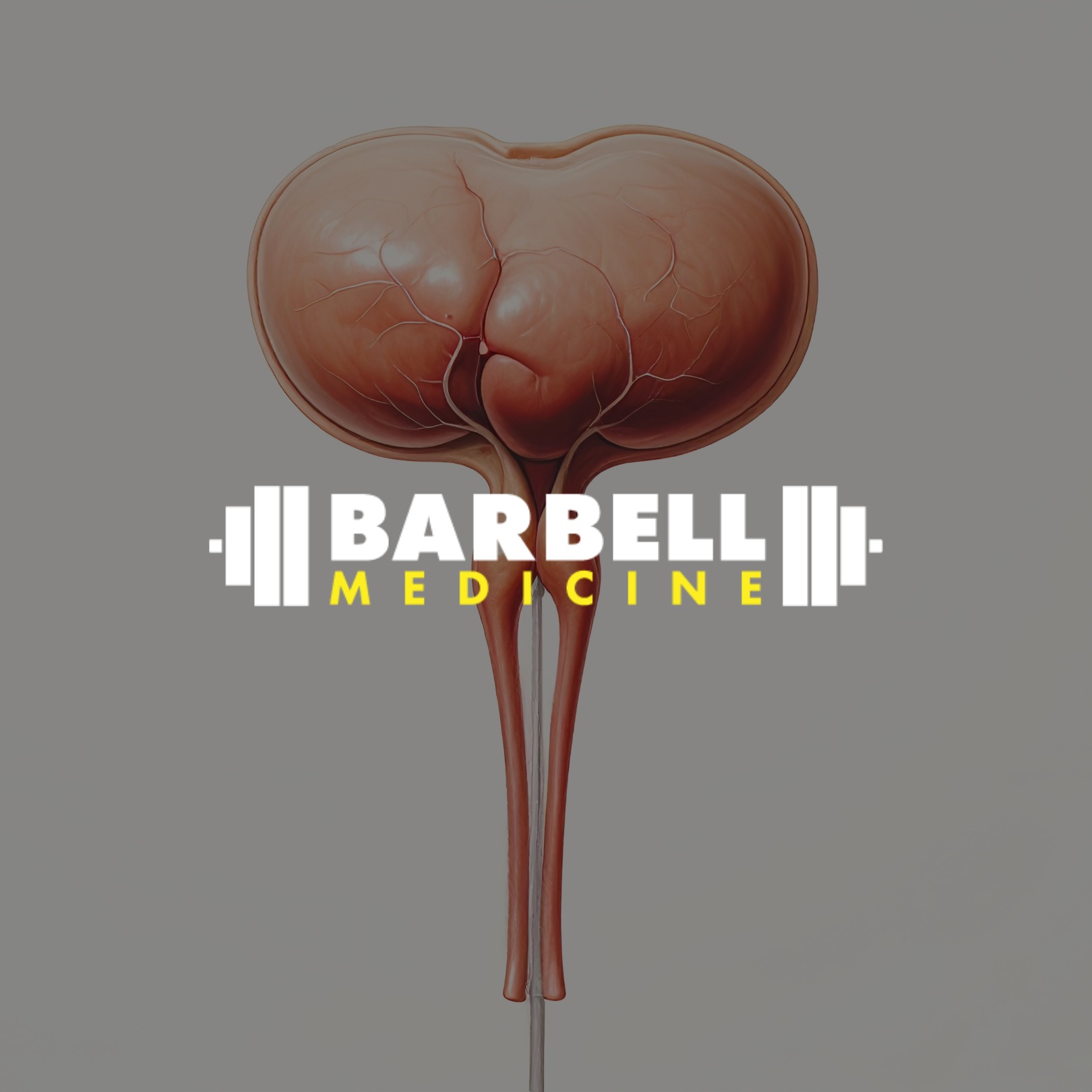
The Man Who Couldn’t Stop Gaining Weight | A Medical Mystery
A previously healthy 21-year-old shows up with seven months of headaches and 30-plus pounds of weight gain he can’t explain. He’s eating the same and training more, and the scale climbs anyway. We hand the case to Dr. Austin Baraki cold and work it in real time: the exam, the labs, the MRI, and two diagnoses that turn a headache workup into the clearest proof we’ve got that body weight is set by the brain, not by character. This is the capstone of our weight series (willpower, calories, protein), and it ends on the drug that, this year, did something for these patients that nothing had done before.Timestamps00:00:00 Cold open: the man who couldn’t stop gaining weight00:01:49 Meet the case (and the rules of the game)00:02:36 The presentation: 21, headaches, unexplained weight gain00:03:57 Austin’s one-liner and how a clinician builds a differential00:05:10 Secondary headaches: what raises the red flag00:13:12 The exam: vitals, and the eye findings that matter00:14:37 The labs, one number at a time00:16:08 Raised pressure and a visual-field clue (bitemporal hemianopia)00:20:45 The MRI00:21:54 First diagnosis: craniopharyngioma00:25:32 The name: a tumor built from tooth tissue00:25:50 Surgery, and what it costs00:27:43 The new mystery: gaining weight faster than ever00:33:41 Second diagnosis: acquired hypothalamic obesity00:39:17 How your brain sets your weight: the POMC brake and the AgRP accelerator00:42:07 What about leptin?00:45:46 Monogenic vs common obesity00:50:30 Why GLP-1 drugs still worked: the brainstem backdoor00:52:11 Responders and non-responders00:55:40 Setmelanotide: a drug for the broken circuit00:56:53 TRANSCEND, and the new FDA approval00:58:55 What it costs01:01:32 Why we care about body fat at all: the garage01:04:36 Flux: which fat is actually dangerous01:09:15 CloseResourcesBarbell Medicine coaching and templates: https://www.barbellmedicine.comPlus podcast subscription: https://www.barbellmedicine.com/shop/subscriptions/plus-podcast-subscription/Barbell Medicine Premium: https://www.barbellmedicine.com/shop/subscriptions/barbell-medicine-premium/Signal (book pre-order): https://www.barbellmedicine.com/shop/learning/signal/1. Brijmohan A, et al. Acquired hypothalamic obesity following craniopharyngioma resection in a young adult [case report]. 2025. PMCID: PMC12268545; PMID: 40677794. 2. Miller JL, et al; TRANSCEND investigators. Setmelanotide in acquired hypothalamic obesity: a phase 3 randomized trial. N Engl J Med. 2026. 3. Rhythm Pharmaceuticals. FDA approves IMCIVREE (setmelanotide) for acquired hypothalamic obesity. News release. March 19, 2026.4. US Food and Drug Administration. FDA approves first treatment for weight management for people with certain rare genetic conditions (setmelanotide). 2020.5. Montague CT, Farooqi IS, Whitehead JP, et al. Congenital leptin deficiency is associated with severe early-onset obesity in humans. Nature. 1997;387(6636):903-908.6. Farooqi IS, Jebb SA, Langmack G, et al. Effects of recombinant leptin therapy in a child with congenital leptin deficiency. N Engl J Med. 1999;341(12):879-884.7. Krude H, Biebermann H, Luck W, et al. Severe early-onset obesity, adrenal insufficiency and red hair pigmentation caused by POMC mutations in humans. Nat Genet. 1998;19(2):155-157.8. Farooqi IS, Keogh JM, Yeo GS, et al. Clinical spectrum of obesity and mutations in the melanocortin 4 receptor gene. N Engl J Med. 2003;348(12):1085-1095.9. Clément K, Vaisse C, Lahlou N, et al. A mutation in the human leptin receptor gene causes obesity and pituitary dysfunction. Nature. 1998;392(6674):398-401.10. Fabbrini E, Tamboli RA, Magkos F, et al. Surgical removal of omental fat does not improve insulin sensitivity and cardiovascular risk factors in obese adults. Gastroenterology. 2010;139(2):448-455.11. Klein S, Fontana L, Young VL, et al. Absence of an effect of liposuction on insulin action and risk factors for coronary heart disease. N Engl J Med. 2004;350(25):2549-2557.12. Guyenet SJ. The Hungry Brain: Outsmarting the Instincts That Make Us Overeat. Flatiron Books; 2017. Advertising Inquiries: https://redcircle.com/brands
The Protein Scaries: What the Research Says About Your Kidneys, Cancer, Bones, and Body Fat
Every couple of years a new headline warns that the protein you eat is quietly hurting you. This year the target is your kidneys. Before that it was cancer, then your bones, then the claim that your body can only use twenty or thirty grams of protein at a meal. In this episode, Dr. Jordan Feigenbaum goes through the actual studies behind each scare: the kidney trials, the 2014 IGF-1 and cancer paper that started the panic, the acid-ash bone hypothesis, and the per-meal "cap." Each fear starts from a real mechanism, and each one was run straight to a frightening conclusion the clinical outcomes never supported.The take home is simple. For a healthy adult, protein is not the lever people think it is, and where a real signal exists (processed and red meat, or a kidney that is already diseased) it tracks the whole dietary pattern more than the protein number. The two things that actually decide your health here are whether you eat mostly real food and whether you train.Timestamps00:00 The protein scare cycle 01:23 The four fears 01:59 Kidneys: healthy kidneys under higher protein 06:22 Kidney disease: does cutting protein help? 09:38 Red meat and the dietary pattern, not protein 12:00 Muscle, aging, and lifting on a restricted diet 13:54 Cancer: IGF-1 and the 2014 study everyone cites 16:22 The age reversal, and what travels with protein 18:48 Bigger data, processed meat, and the IGF-1 tell 22:15 Bones and the acid-ash myth 25:13 The 30-gram cap 27:17 What protein actually does, and how much you need 32:20 The two questions that matterResources:Barbell Medicine coaching and templates: https://www.barbellmedicine.comPlus podcast subscription: https://www.barbellmedicine.com/shop/subscriptions/plus-podcast-subscription/Barbell Medicine Premium: https://www.barbellmedicine.com/shop/subscriptions/barbell-medicine-premium/Signal (book pre-order): https://www.barbellmedicine.com/shop/learning/signal/Our Protein Content:https://www.barbellmedicine.com/blog/protein-and-weight-loss/https://www.barbellmedicine.com/blog/protein-on-ozempic/https://www.barbellmedicine.com/blog/barbell-medicine-protein-recommendations/StudiesLevine et al. Cell Metabolism 2014. doi:10.1016/j.cmet.2014.02.006Naghshi et al. BMJ 2020. doi:10.1136/bmj.m2412 Devries et al. J Nutr 2018. doi:10.1093/jn/nxy197 Antonio et al. J Nutr Metab 2016. doi:10.1155/2016/9104792 Knight et al. Ann Intern Med 2003. doi:10.7326/0003-4819-138-6-200303180-00009 Klahr et al. (MDRD). NEJM 1994. doi:10.1056/NEJM199403313301301 Hahn, Hodson & Fouque. Cochrane 2020. doi:10.1002/14651858.CD001892.pub5 Obeid, Hiremath & Topf. Kidney360 2022. doi:10.34067/KID.0001002022 Lew et al. J Am Soc Nephrol 2017. doi:10.1681/ASN.2016030248Castaneda et al. Ann Intern Med 2001. doi:10.7326/0003-4819-135-11-200112040-00008 Bauer et al. (PROT-AGE). JAMDA 2013. doi:10.1016/j.jamda.2013.05.021Fenton et al. Nutrition Journal 2011. doi:10.1186/1475-2891-10-41Shams-White et al. Am J Clin Nutr 2017. doi:10.3945/ajcn.116.145110Witard et al. Am J Clin Nutr 2013. doi:10.3945/ajcn.112.055517 Macnaughton et al. Physiol Rep 2016. doi:10.14814/phy2.12893Trommelen et al. Cell Reports Medicine 2023. doi:10.1016/j.xcrm.2023.101324 Wycherley et al. Am J Clin Nutr 2012. doi:10.3945/ajcn.112.044321 Moore et al. JAMA Intern Med 2016. doi:10.1001/jamainternmed.2016.1548 Larsson et al. Cancer Med 2020. doi:10.1002/cam4.3345 Brenner, Meyer & Hostetter. NEJM 1982. doi:10.1056/NEJM198209093071104 Chan et al. PLoS One 2011. doi:10.1371/journal.pone.0020456Berryman et al. Am J Clin Nutr 2018. doi:10.1093/ajcn/nqy088 Morton et al. Br J Sports Med 2018. doi:10.1136/bjsports-2017-097608Our Sponsors:* Check out Chilipad and use my code BBM for a great deal: https://sleep.me* Check out CovePure and use my code CovePure.com/bbm for a great deal: https://covepure.com* Check out Factor and use my code factormeals.com/bbm50off for a great deal: https://www.factor75.com* Check out Quince and use my code quince.com/bbm for a great deal: https://www.quince.comAdvertising Inquiries: https://redcircle.com/brands
Is It Really Just Calories In, Calories Out? Metabolism, Insulin, Hormones and Why Counting Fails
Is weight loss really just Calories in, Calories out? The equation is true, but "just count your Calories" is bad advice for most people, and almost every objection to it is pointing at something real. In part two of our energy balance series, Jordan Feigenbaum takes the biggest "it's not Calories, it's ___" claims (metabolism, thyroid, cortisol, PCOS, insulin, the type of food) and tests each against the best evidence. The verdict: none of them breaks the equation. Every one is a hand on a lever that moves Calories in or Calories out, not a hole in the math.In this episode: why your metabolism does not crash at 40, how small real metabolic adaptation actually is after weight loss, why hypothyroid weight is mostly water, what the cortisol and PCOS (now PMOS) data show, how absorption and cooking move Calories only at the edges, why even dietitians miscount their own intake, and why the carbohydrate-insulin model fails three tests, including the GLP-1 drugs that raise insulin and still produce the biggest weight loss we have ever approved.Part two of three: willpower, Calories in Calories out, then GLP-1 drugs. Next week: are GLP-1s cheating?Timestamps0:00 Is it really just calories in, calories out?0:18 The willpower episode and the through-line2:10 Thermodynamics: what sets both sides2:41 Your metabolism is three things4:05 Claim 1: my metabolism crashed4:24 No cliff at 40: the doubly labeled water study5:33 Real metabolic adaptation after weight loss6:56 Why your food diary lies7:49 Claim 2: it's my hormones8:07 Thyroid: mostly water9:36 Cortisol: explains about 1 percent11:12 PCOS is now PMOS13:06 Menopause14:18 Claim 3: a calorie isn't a calorie16:48 Absorption: nuts, cooking, eggs19:44 Why calorie counting fails21:12 Claim 4: it's not Calories, it's insulin22:02 Testing the carbohydrate-insulin model25:52 The GLP-1 drugs that should end it28:34 The whole list, claim by claim29:53 What to actually do30:42 Next week: are GLP-1s cheating?Resources:Barbell Medicine coaching and templates: https://www.barbellmedicine.comhttps://www.barbellmedicine.com/shop/subscriptions/plus-podcast-subscription/https://www.barbellmedicine.com/shop/subscriptions/barbell-medicine-premium/Signal book pre-order: https://www.barbellmedicine.com/shop/learning/signal/Pontzer et al., Science 2021. https://doi.org/10.1126/science.abe5017Muller et al., Am J Clin Nutr 2015. https://doi.org/10.3945/ajcn.115.109173Lichtman et al., N Engl J Med 1992. https://doi.org/10.1056/NEJM199212313272701Karmisholt et al., J Clin Endocrinol Metab 2011. https://doi.org/10.1210/jc.2010-1521Lee et al., Endocr Pract 2014. https://doi.org/10.4158/EP14072.ORvan der Valk et al., Obes Rev 2022. https://doi.org/10.1111/obr.13376Nikokavoura et al., Diabetes Metab Syndr Obes 2015. https://doi.org/10.2147/DMSO.S85134Greendale et al., JCI Insight 2019. https://doi.org/10.1172/jci.insight.124865Lejeune et al., Am J Clin Nutr 2006. https://doi.org/10.1093/ajcn/83.1.89Bray et al., JAMA 2012. https://doi.org/10.1001/jama.2011.1918Novotny et al., Am J Clin Nutr 2012. https://doi.org/10.3945/ajcn.112.035782Baer et al., J Nutr 2016. https://doi.org/10.3945/jn.115.217372Baer et al., Br J Nutr 2012. https://doi.org/10.1017/S0007114511002649Evenepoel et al., J Nutr 1998. https://doi.org/10.1093/jn/128.10.1716Hall et al., Cell Metabolism 2019. https://doi.org/10.1016/j.cmet.2019.05.008Champagne et al., J Am Diet Assoc 2002. https://doi.org/10.1016/S0002-8223(02)90316-0Hall et al., Cell Metabolism 2015. https://doi.org/10.1016/j.cmet.2015.07.021Wilding et al., N Engl J Med 2021. https://doi.org/10.1056/NEJMoa2032183Jastreboff et al., N Engl J Med 2022. https://doi.org/10.1056/NEJMoa2206038Our Sponsors:* Check out Chilipad and use my code BBM for a great deal: https://sleep.me* Check out CovePure and use my code CovePure.com/bbm for a great deal: https://covepure.com* Check out Factor and use my code factormeals.com/bbm50off for a great deal: https://www.factor75.com* Check out Quince and use my code quince.com/bbm for a great deal: https://www.quince.comAdvertising Inquiries: https://redcircle.com/brands



Get this podcast on your phone, Free


Create Your Podcast In Minutes
- Full-featured podcast site
- Unlimited storage and bandwidth
- Comprehensive podcast stats
- Distribute to Apple Podcasts, Spotify, and more
- Make money with your podcast
