Ask Kati Anything
https://feeds.megaphone.fm/TBIEA2181106623Episode List
Why Your Eating Disorder Is Never Actually About Food
In this episode of Ask Kati Anything, licensed therapist Kati Morton breaks down why eating disorders are rarely actually about the food or your body. We look at what’s really happening behind the strict rules, rituals, and need for control, and how these behaviors often show up as survival mechanisms to protect us from deeper stress, trauma, and overwhelm. Whether you’re struggling with restrictive eating, binging, purging, orthorexia, or just feel completely exhausted by your relationship with food, this conversation is here to give you clarity, reduce the shame, and help you understand what your brain is actually trying to tell you. REBOUND: visit www.hellorebound.com/askkatianything & check your insurance or get matched with a therapistONESKIN: Get 15% off OneSkin with the code KATI at www.oneskin.co/KATI 00:00 - Why eating disorders aren't actually about food 00:40 - Pica: Eating non-food items & nutrient deficiencies 05:41 - ARFID: Sensory food avoidance without body dysmorphia 11:13 - Rumination Disorder: Regurgitation & unspoken shame 14:13 - Anorexia Nervosa: Energy restriction & body checking 17:16 - Bulimia Nervosa: Binging, purging & compensatory rules 20:59 - Binge Eating Disorder: Rapid eating, guilt & secrecy 23:56 - Orthorexia: When clean eating & rules run your life 30:43 - Why eating disorders are actually survival mechanisms 49:35 - How loved ones can offer support without triggering shame MY BOOKS Why Do I Keep Doing This? https://geni.us/XoyLSQ Traumatized https://geni.us/Bfak0j Are u ok? https://geni.us/sva4iUY ONLINE THERAPY If you're looking for a therapist, BetterHelp can connect you with a licensed online professional: https://betterhelp.com/kati (enjoy 10% off your first month) This is an affiliate link, which means a portion of your signup helps support the podcast at no extra cost to you. PARTNERSHIPS Nick Freeman | nick@biglittlemedia.co Disclaimer: The information provided in this video is for educational and informational purposes only and is not intended as medical or mental health advice. It should not be used to diagnose or treat any health problem or disease. Always consult with a qualified healthcare professional for diagnosis and treatment. Viewing this content does not establish a therapist-client relationship. Learn more about your ad choices. Visit megaphone.fm/adchoices
Are You Too Attached to Your Therapist?
Do you think about your therapist between sessions? Check their social media? Spiral when they cancel? A licensed therapist explains why attachment to your therapist happens, why it's actually part of the process, and the exact signs that tell you when it's crossed into unhealthy territory. In this episode of Ask Kati Anything, licensed marriage and family therapist Kati Morton breaks down the therapeutic relationship: the single strongest predictor of whether therapy actually works. She answers listener questions about feeling "creepy" for looking up their therapist, why therapy can feel transactional and fake, and what therapists are really noticing about you in session. Then she walks through the attachment ladder, the four stages that explain why your therapist starts to feel like the only person who truly gets you, and closes with a complete checklist of healthy vs. unhealthy therapeutic relationship signs. TIMESTAMPS 0:00 What is the therapeutic relationship? 1:21 The #1 predictor of successful therapy 2:26 Q1: "I'm attached to my therapist and feel like a creep" 5:52 Attachment wounds: why your therapist fills the void 11:54 What your therapist is actually noticing in session 15:20 Q2: "I feel closer to my therapist than anyone in my life" 16:56 The attachment ladder: 4 stages of attaching to your therapist 23:13 Q3: "Therapy feels transactional and the care feels bought" 28:21 Why you need to put the phone down and just think 31:17 Q4: "My therapist rescheduled and I spiraled for days" 32:47 What a therapist's role actually is (and isn't) 35:25 Signs of a HEALTHY therapeutic relationship 42:17 Signs of an UNHEALTHY therapeutic relationship 49:08 Why boundaries in therapy matter so much 53:06 How to make sure therapy works for you THIS EPISODE IS SPONSORED BY REBOUND Rebound offers virtual, evidence-based treatment for PTSD with trauma-specialist therapists, in-network with most major insurance plans in all 50 states. Check your insurance or get matched: Head to https://hellorebound.com/askkatianything to check your insurance or get matched with a therapist. RESEARCH & RESOURCES Psychotherapy and Therapeutic Relationship https://www.ncbi.nlm.nih.gov/books/NBK608012/ Perceived therapist genuineness predicts therapeutic alliance in cognitive behavioural therapy for psychosis https://bpspsychub.onlinelibrary.wiley.com/doi/10.1111/bjc.12059 The Relationship Between Attachment Needs, Earned Secure https://psycnet.apa.org/fulltext/2025-18086-004.html Client and Therapist Attachment Styles and Working Alliance https://onlinelibrary.wiley.com/doi/10.1002/cpp.1944 The experience of closeness and distance in the therapeutic relationship of patients with different attachment classifications https://www.frontiersin.org/journals/psychiatry/articles/10.3389/fpsyt.2023.1029783/full ASK KATI YOUR QUESTION Leave your question in the comments below and it may be answered on an upcoming episode. MY BOOKS & WORKSHOPS https://katimorton.com THERAPY If you're looking for a therapist, BetterHelp can connect you with a licensed online professional: https://betterhelp.com/kati - Enjoy 10% off your first month! (this is an affiliate link, which means a portion of your signup helps support the podcast at no extra cost to you)SOCIALS X https://twitter.com/KatiMorton TikTok https://www.tiktok.com/@katimorton Facebook https://www.facebook.com/katimorton1/ Instagram https://www.instagram.com/katimorton Pinterest https://www.pinterest.com/katimorton1/ Patreon https://www.katimorton.com/kati-morton-patreon/ Main YouTube https://www.youtube.com/c/katimorton?sub_confirmation=1 Apple https://podcasts.apple.com/us/podcast/ask-kati-anything/id1502476673 Spotify https://open.spotify.com/show/7itqbvflj0Q9IUDqOF5NST Instagram https://www.instagram.com/katimorton PARTNERSHIPS Nick Freeman | nick@biglittlemedia.co DISCLAIMER The information provided in this video is for educational and informational purposes only and is not intended as medical or mental health advice. It should not be used to diagnose or treat any health problem or disease. Always consult with a qualified healthcare professional for diagnosis and treatment. Viewing this content does not establish a therapist-client relationship. #therapy #mentalhealth #katimorton Ask Kati Anything ep. 323 | Your mental health podcast, with Kati Morton, LMFT Learn more about your ad choices. Visit megaphone.fm/adchoices
Why You’re Exhausted Even When "Nothing" is Wrong
Do you sleep enough and live a balanced life on paper, yet still feel completely wiped out by Tuesday? You aren't "bad at adulting"—your nervous system is likely dealing with an invisible, compounded burden. In this episode, we break down the three overlapping systems that drive modern exhaustion: cognitive load from constant decision fatigue, emotional labor from managing the people around us, and threat system exhaustion caused by chronic hyper-vigilance. We also discuss why physical sleep cannot fix cognitive or emotional burnout, how perimenopause/menopause can stack onto these existing stressors, and why our modern "always-on" remote culture is making it harder to disconnect. Learn how to reclaim your energy by setting better boundaries, creating end-of-day rituals, and giving your brain the "boredom" it desperately needs to recover. Mentioned in this episode: • The impact of cognitive load and "context switching" • Why "people pleasing" is a form of exhausting emotional labor • Understanding threat system exhaustion and hyper-vigilance • The role of hormone changes (estrogen, progesterone, and testosterone) in energy levels • Tips for creating effective end-of-day work/life boundaries 3 Key Topics/Chapters: • 04:15: The Reality of Cognitive Load & Decision Fatigue • 10:30: Why Emotional Labor and People Pleasing Drains You • 19:14: Threat System Exhaustion: When Your Body Braces for Danger Support Our Sponsors • BiOptimizers - Heat and summer travel can deplete your body's magnesium, making it harder to recover and relax 👉 Get 15% off your entire order + a FREE travel-size bottle of Digestive Enzymes: https://bioptimizers.com/kati use code: KATI • Rebound - Trauma doesn’t just fade on its own. If you’ve been hitting a wall in your life or relationships, Rebound offers virtual, evidence-based treatment from trauma specialists who are in-network with most major insurance plans. 👉 Check your insurance or get matched with a specialist: http://hellorebound.com/askkatianything PARTNERSHIPS Nick Freeman | nick@biglittlemedia.co Disclaimer: This podcast is for educational purposes and is not a substitute for professional therapy or medical advice. Learn more about your ad choices. Visit megaphone.fm/adchoices
Why Your Attempts to Fix Your Relationships Are Making It Worse
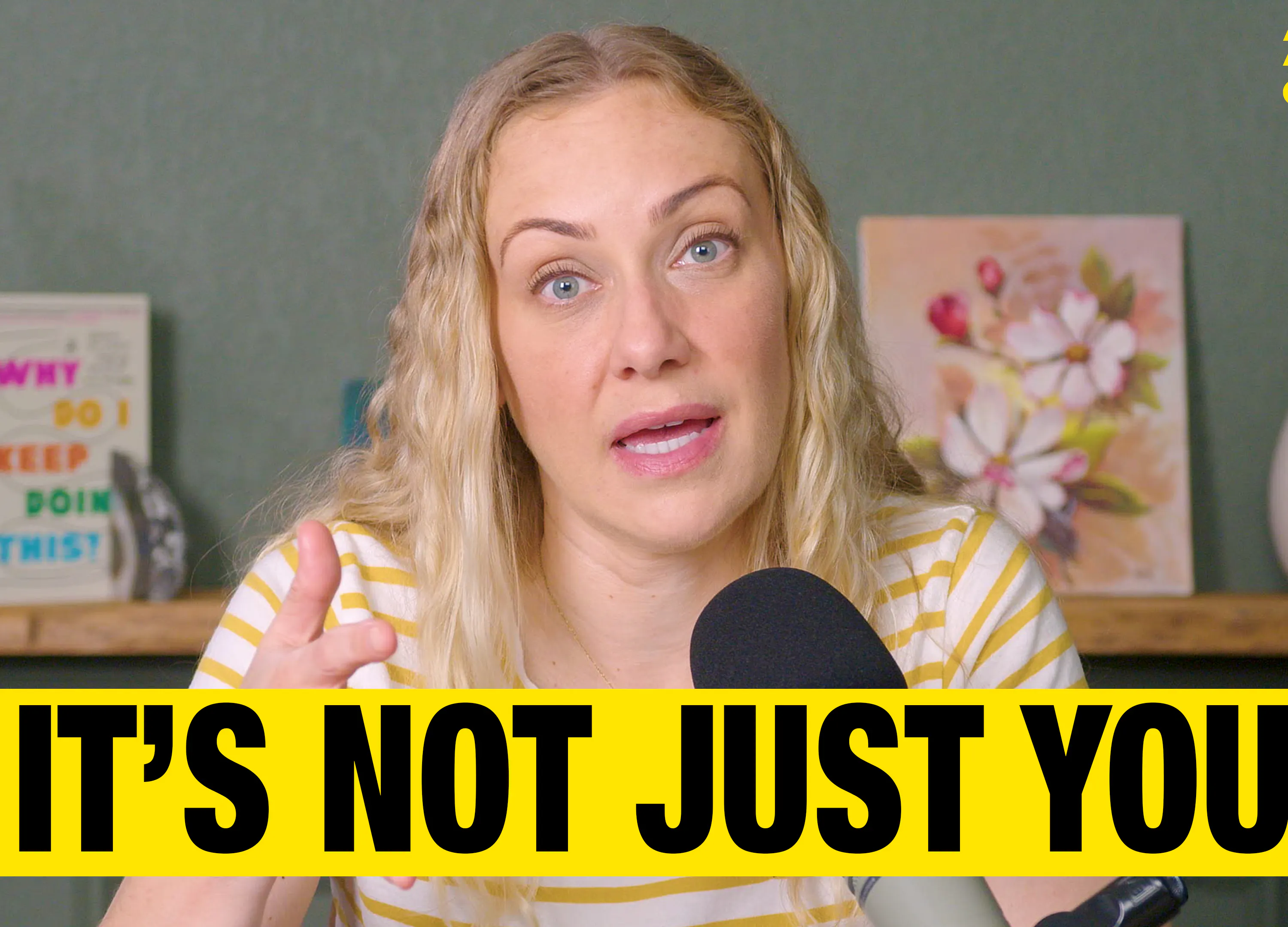
Have you ever felt like you’re trying so hard to communicate, but the harder you try, the more things seem to fall apart? Whether it’s that heavy feeling of being misunderstood, the exhausting cycle of the silent treatment, or the fear that you’re accidentally pushing the people you love away—I want you to know: you aren't broken. Most of us are just running on a communication "blueprint" we didn't choose. In today’s episode, we’re peeling back the layers of why we fall into these traps. We’re talking about: Why "stonewalling" and passive aggression are actually defense mechanisms (not just "bad behavior"). The difference between being "anxious" versus "avoidant" in a conflict. How to use the DEAR MAN technique to finally ask for what you need. Why "repairing" after a fight is actually more important than being perfect. You don't have to be perfect to have a healthy relationship. You just need to be willing to learn a different way. Episode Sponsor: Reddit - Interested in finding a community that you really love and can trust? Download the Reddit app today! Mentioned in this episode: Why Do I Keep Doing This? My Substack Gottman Institute Research on The Four Horsemen Learn more about your ad choices. Visit megaphone.fm/adchoices
The New Science of Depression: Brain Wiring, Inflammation, and Rewiring Your System
Why does your brain feel like it's working against you when you're depressed? In this episode, licensed marriage and family therapist Kati Morton answers deep viewer questions to unpack what is actively happening in the body and brain during depressive episodes and periods of suicidal ideation. We challenge the traditional "chemical imbalance" framework to look at the modern science of mental health: how different regions of the brain communicate, why your HPA axis can get stuck in a chronic stress response, and the clinical data pointing to systemic inflammation as a primary driver of depressive symptoms. Plus, Kati breaks down the absolute differences between clinical depression, situational sadness, grief, and passive vs. active suicidal thoughts. What We Cover: The DSM-5 Checklist: The 9 diagnostic criteria for Major Depressive Disorder. The Serotonin Myth: Why modern psychiatric research is moving away from looking at single chemical levels. The Inflammation Connection: Active clinical trials utilizing anti-inflammatory pathways to treat mental health. Your Audio Action Plan: How to implement behavioral activation, circadian light exposure protocols, and cognitive tools to stop internal negative loops. Special Thanks to Our Sponsor: Go to hellorebound.com/AskKatiAnything to check your insurance or get matched with a virtual trauma specialist today. Real, evidence-based trauma treatment is within reach. If you are in immediate danger or experiencing a mental health crisis, please call or text 988 (US) or contact the Crisis Text Line by texting HOME to 741741. In the UK, you can reach the Samaritans at 116 123. You do not have to fight this alone. Learn more about your ad choices. Visit megaphone.fm/adchoices









Get this podcast on your phone, Free


Create Your Podcast In Minutes
- Full-featured podcast site
- Unlimited storage and bandwidth
- Comprehensive podcast stats
- Distribute to Apple Podcasts, Spotify, and more
- Make money with your podcast
