Sustainable Clinical Medicine with The Charting Coach
https://app.kajabi.com/podcasts/2147511761/feedEpisode List
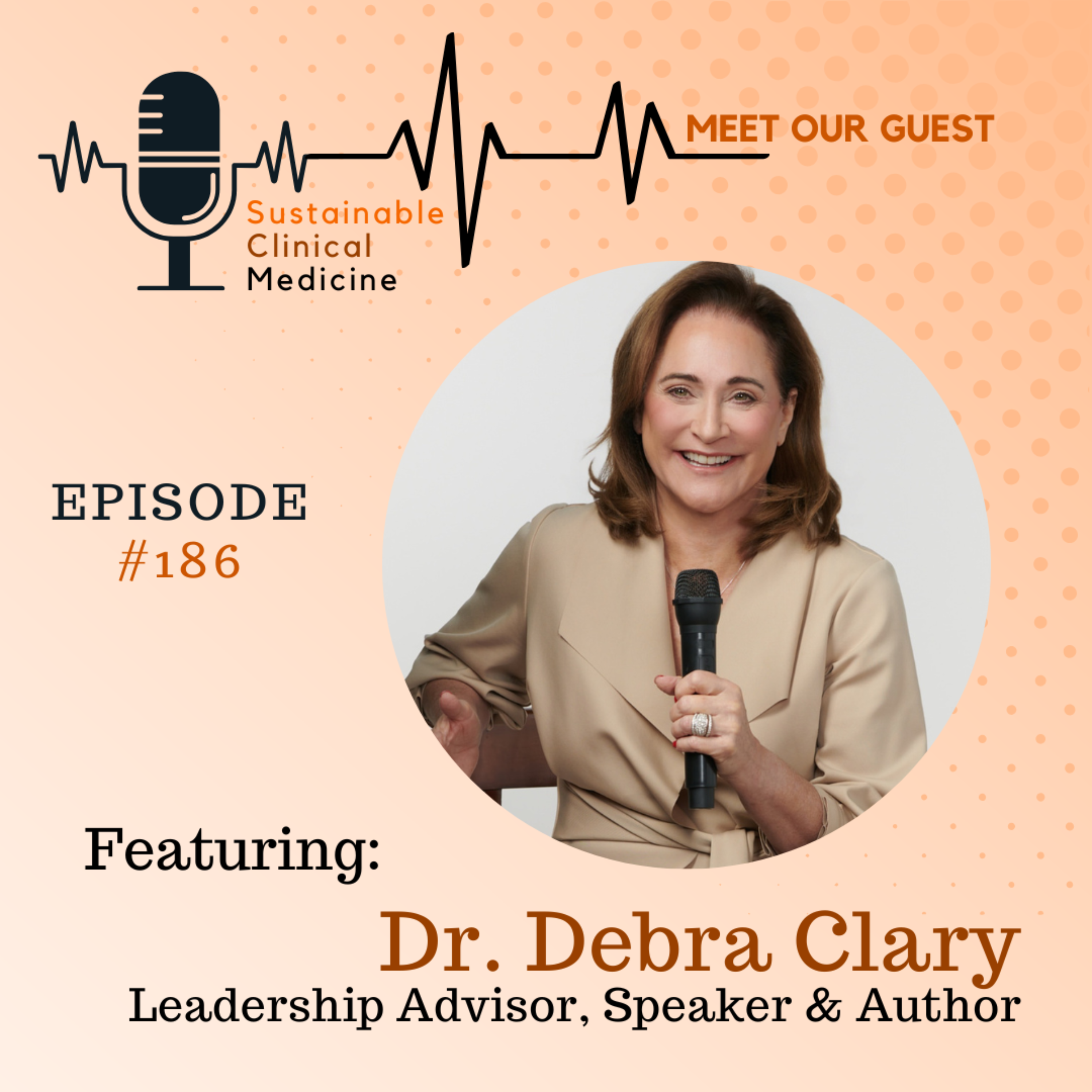
Curiosity in Medical Leadership: Why Asking Questions Outperforms Having Answers | Episode 186
Most doctors are trained to have answers. The higher the stakes, the more certainty is rewarded. But when those same doctors step into leadership roles, that certainty becomes the very thing that gets in their way. Dr. Debra Clary has spent nearly two decades developing leaders inside healthcare organizations, and what her research keeps showing is that the leaders with the highest curiosity have the highest performing teams. In this episode, she talks about what curiosity actually looks like in clinical environments, why resistance to change is biological rather than personal, and what happens when doctors who have spent careers being the expert in the room are suddenly asked to lead people who need to be heard. Timestamped Highlights [04:00]: Dr. Clary shares the research behind The Curiosity Curve, and why the data connecting leader curiosity to team performance surprised even the researchers who set out to find it. [08:00]: She describes the single most powerful thing a leader can say to create a culture where people feel safe to speak up, and it is three words most high-achieving people rarely use. [12:00]: The balance between certainty and curiosity in clinical medicine, and why the same trait that makes a doctor exceptional in an emergency can become an obstacle the moment they step into a leadership role. [16:00]: Why resistance to change is not a character flaw but a biological response, and what leaders need to say before rolling out any new system or technology if they want it to actually work. [20:00]: What AI can and cannot do, and why the differentiator that keeps doctors irreplaceable is not clinical knowledge but something more fundamental. [25:00]: What happens when patients arrive armed with data from their own research, and how a doctor's relationship with curiosity determines everything about how that encounter goes. Three Key Takeaways 1. Certainty narrows curiosity, and that is where dangerous things happen. Dr. Clary's research found that leaders who created environments where questions were welcomed and the status quo could be challenged consistently outperformed those who did not. The same principle applies inside clinical environments. The doctor who is certain about how an encounter should go, how a system should work, or how a team should function stops asking questions, and the moment questions stop, so does learning. She is not arguing against clinical confidence. She is arguing that certainty and curiosity need to coexist, and that most leaders lean too heavily on one at the expense of the other. 2. Change resistance is biological, not personal, and leaders who understand that roll it out differently. When something new arrives, the brain's first job is to assess threat. It is not interested in efficiency or innovation. It is interested in whether this is safe. Dr. Clary coaches leaders to work with that biology rather than against it, which means being transparent about the reason for a change, showing people how they fit into the future, and inviting them to help solve the implementation rather than handing them a directive. The organizations that skip that step, she says, pay for it in resistance, delay, and disengagement. The ones that do not skip it tend to move faster than they expected. 3. Leadership and culture are synonymous. Dr. Clary's closing message is direct: so goes the top of the house, so goes the organization. A C-suite that does not model curiosity, collaboration, and psychological safety will not produce teams that offer those things either. For doctors moving into leadership roles, this reframe matters because it shifts the question from how do I get my team to perform differently to how do I need to show up differently first. The answer almost always involves asking more questions, saying I do not know more often, and being genuinely interested in what the person in front of you thinks. None of that is complicated. Most of it is just unfamiliar. Guest Bio Dr. Debra Clary is a leadership consultant, executive coach, and author based in the United States. With a doctorate in human behavior and organizational design and 18 years at Humana developing healthcare leaders, she works primarily with C-suite leaders and executive teams. She is the author of The Curiosity Curve, published in 2025. Find her at debraclary.com. Would you like to view a transcript of this episode? Click Here Charting Champions is a premiere, lifetime access Physician only program that is helping Physicians get home with today's work done. All the proven tools, support and community you need to create time for your life outside of medicine. Learn more at https://www.chartingcoach.ca Enjoying this podcast? Please share it with someone who would benefit. Also, don’t forget to hit “follow” so you get all the new episodes as soon as they are released. Come hang out with me on Facebook or Instagram. Follow me @thechartingcoach to get more practical tools to help you create sustainable clinical medicine in your life. Questions? Comments? Want to share how this podcast has helped you? Shoot me an email at admin@reachcareercoaching.ca. I would love to hear from you.
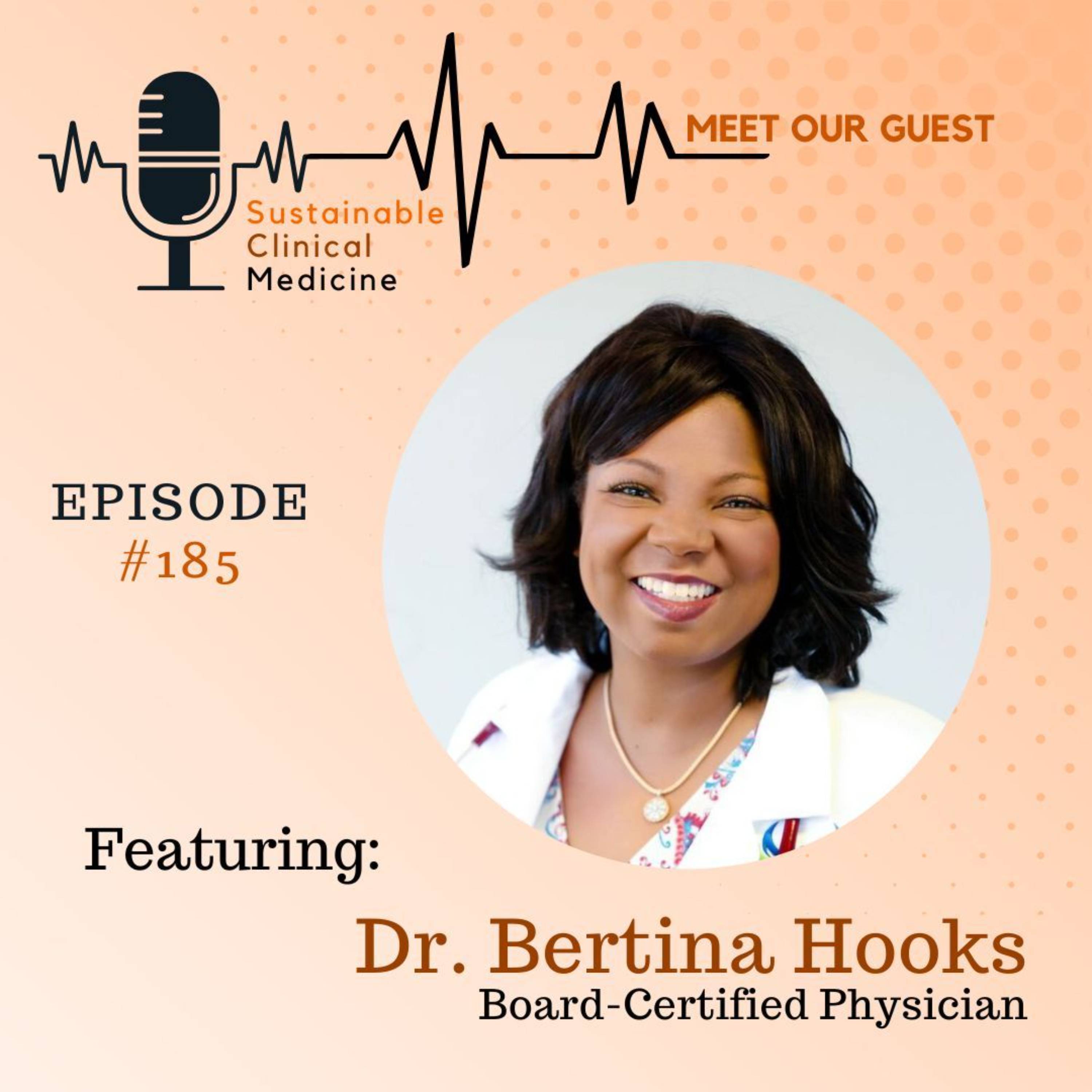
How to Design a Clinical Day That Works: Intentional Systems With Dr. Bertina Hooks | Episode 185
Dr. Bertina Hooks has been a hospitalist, a locums doctor, a private practice owner across three locations, a utilization management reviewer, a medical expert witness, and a physician coach. She built all of that intentionally, piece by piece, while raising a daughter and running a business with no roadmap. Then in December 2022, she was hospitalized with necrotizing fasciitis and woke up without her right leg below the knee. In this episode, she talks about burnout recovery, career reinvention, and the non-clinical pathways most doctors do not know exist until they are desperate enough to start looking. Her message to every doctor who feels trapped is the same: you are not stuck, you are not broken, you just need clarity about what you are actually looking for. Timestamped Highlights [06:00]: Dr. Hooks describes how she set up her own outpatient practice from scratch, and the specific systems she built before she saw her first patient that kept charting inside clinic hours from day one. [09:00]: She explains where she learned the delegation and workflow skills that most doctors never develop, and why hospitalist medicine was the unexpected training ground for running a sustainable practice. [21:00]: The hybrid approach she used to start her private practice without financial risk, running hospitalist shifts alongside building her own panel, and why it allowed her to ramp up slowly and intentionally. [22:00]: Dr. Hooks describes the health emergency that changed everything, and what it forced her to ask herself about medicine, identity, and what she actually wanted. [25:00]: She maps out the three non-clinical career paths she coaches doctors through most often, including one that most physicians misunderstand entirely. [33:00]: The values energy audit she uses with every coaching client, and why she believes alignment between values and career is the foundation of burnout recovery. Three Key Takeaways 1. Sustainable practice requires intentional systems, not just goodwill. Dr. Hooks did not stumble into an efficient clinical day. She designed it, deliberately, before she opened her doors. Pre-visit labs ordered a week in advance. Huddles with staff before morning and afternoon sessions. Templates for normal inbox results handled by the nurse, with anything flagged coming directly to her. Scribes from early on. Delegation structured around scope of practice. She knew what had made her exhausted as a resident and as a hospitalist, and she made different decisions. The lesson is not that her system is the right one. It is that she had one, and most doctors never build theirs. 2. Your medical degree is portable in more directions than you think. Dr. Hooks has built income streams across clinical medicine, utilization management, medical expert work, and physician coaching. None of the non-clinical work required an additional degree. What it required was a willingness to see her existing skills differently, and a mindset shift around what counts as using her training. She coaches doctors who are considering a pivot and consistently finds the same thing: the barrier is almost never competence. It is imagination. The belief that there is only one way to be a doctor, and that stepping outside it means starting from scratch. 3. Burnout recovery starts with recognizing the signals before they become a crisis. Dr. Hooks describes burnout as a spectrum, and the early signals are easy to miss or explain away. The clearest early sign she names: coming back from a break and not feeling the return of motivation that used to be automatic. She teaches a values energy audit as one of her foundational coaching tools, built on a simple question: when you look at where your energy is going, how much of it is actually aligned with what you care about? That audit, she says, is often the first time a doctor has been asked that question. And the answer is almost always the beginning of everything that needs to change. Guest Bio Dr. Bertina Hooks is a board-certified internal medicine physician, entrepreneur, and physician coach based in Texas. After building a multi-location private practice, navigating a serious health emergency that resulted in a below-knee amputation, and exploring careers across utilization management, medical expert work, and telemedicine, she founded Pinnacle Business Academy to help doctors navigate burnout recovery and career reinvention. Her memoir, From Fire to Freedom: A Memoir of Transformation, Renewal, and Resilience, launches September 23rd, 2026. Find her at pinnaclebusinessacademy.org and bertinamhooksmd.org. Would you like to view a transcript of this episode? Click Here Charting Champions is a premiere, lifetime access Physician only program that is helping Physicians get home with today's work done. All the proven tools, support and community you need to create time for your life outside of medicine. Learn more at https://www.chartingcoach.ca Enjoying this podcast? Please share it with someone who would benefit. Also, don’t forget to hit “follow” so you get all the new episodes as soon as they are released. Come hang out with me on Facebook or Instagram. Follow me @thechartingcoach to get more practical tools to help you create sustainable clinical medicine in your life. Questions? Comments? Want to share how this podcast has helped you? Shoot me an email at admin@reachcareercoaching.ca. I would love to hear from you.
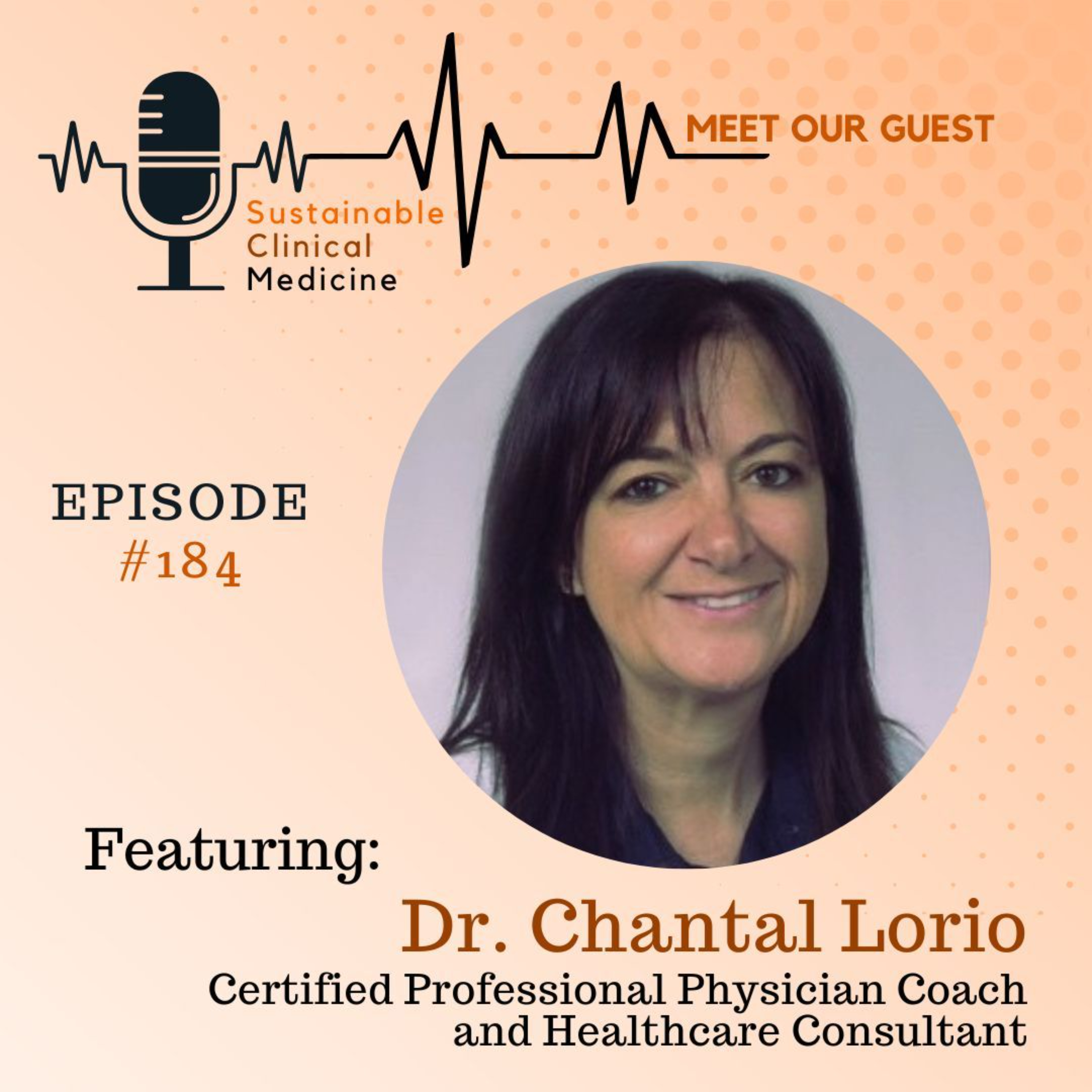
Why Better Patient Communication Takes Less Time, Not More With Dr. Chantal Lorio
Most doctors believe they are good communicators. Most of them are right. But there is a difference between compassion, doing everything in your power to help someone, and empathy, letting them know for one moment that you genuinely understand what they are going through. Dr. Chantal Lorio spent seven years as medical director of patient experience at Ochsner Health, has observed hundreds of clinical encounters firsthand, and has coached physicians on the specific connection between how they communicate with patients and how they feel at the end of the day. In this episode, she makes a case that most doctors find counterintuitive: a five-second moment of empathy does not add time to a consultation. Done right, it actually shortens it. Timestamped Highlights [03:00]: Dr. Lorio describes the moment she first saw her own patient survey data and what she noticed that convinced her better communication was not about being nicer. It was about outcomes. [11:00]: She introduces the concept of the bubble, the one thing a patient keeps repeating until someone acknowledges it, and explains exactly what it costs when a doctor tries to redirect past it instead. [13:00]: A neighbor versus a doctor. Dr. Lorio uses a simple example to demonstrate the difference between compassion and empathy, and why patients can feel the difference even when both are present. [20:00]: The retreat exercise that revealed to her how she was showing up at home versus at work, and why showing up in body is not the same as being present. [27:00]: She describes pajama time, the data healthcare systems can now access showing which doctors are charting at 3AM, and what she believes organizations should do with that information rather than ignore it. [33:00]: What Ochsner invested a million dollars in that had nothing to do with training or wellness programs, and why it saved doctors more time than almost anything else. Three Key Takeaways 1. Empathy and compassion are not the same thing, and patients know the difference. Dr. Lorio draws a distinction that most medical training never makes explicit. Compassion is wanting to help and acting on it. Empathy is stepping into someone's shoes for a moment and letting them know you did. Doctors are typically excellent at compassion. They ask the right questions, order the right tests, and do everything clinically necessary. But when a patient feels like the doctor did not quite get them, it is usually because the empathy moment was skipped. That moment, she argues, does not require extra time. It requires a single sentence, delivered once, at the right moment. 2. Acknowledging the bubble is faster than working around it. Every consultation has one. A patient says something unrelated to the chief complaint, and keeps saying it, slightly louder and with more detail each time, until someone acknowledges it. Dr. Lorio calls it the bubble. The doctor who tries to redirect past it will spend more time on the visit than the doctor who pauses for five seconds and says you must be exhausted or things must be really tough right now. The acknowledgment puts it to rest. The patient feels heard. The conversation moves forward. What sounds like an extra step is actually a shortcut, and she has watched it play out in hundreds of observed encounters. 3. Sense of control is the most common thing doctors come to coaching for. Dr. Lorio has worked with doctors across private practice and large health systems, and the theme that comes up most consistently is not workload or communication. It is a feeling of having no control over the clinic, the career, or life at home. She coaches around all three areas, helping doctors identify where they actually do have agency, exploring career possibilities beyond the current role even if they never act on them, and working on presence at home rather than just hours spent there. The shift from I am stuck to I have options, she says, is often the single most powerful thing coaching produces. Guest Bio Dr. Chantal Lorio is a podiatric surgeon, executive coach, and patient experience consultant based in New Orleans. After 16 years in private practice and 12 years as department chair at Ochsner Health, she served as medical director of patient experience for seven years before moving into independent coaching and consulting. She works with doctors and healthcare organizations on the connection between patient communication, physician wellbeing, and clinical outcomes, and is the author of I Get You, I Got You, available on Amazon. Explore her website here. Would you like to view a transcript of this episode? Click Here Charting Champions is a premiere, lifetime access Physician only program that is helping Physicians get home with today's work done. All the proven tools, support and community you need to create time for your life outside of medicine. Learn more at https://www.chartingcoach.ca Enjoying this podcast? Please share it with someone who would benefit. Also, don’t forget to hit “follow” so you get all the new episodes as soon as they are released. Come hang out with me on Facebook or Instagram. Follow me @thechartingcoach to get more practical tools to help you create sustainable clinical medicine in your life. Questions? Comments? Want to share how this podcast has helped you? Shoot me an email at admin@reachcareercoaching.ca. I would love to hear from you.
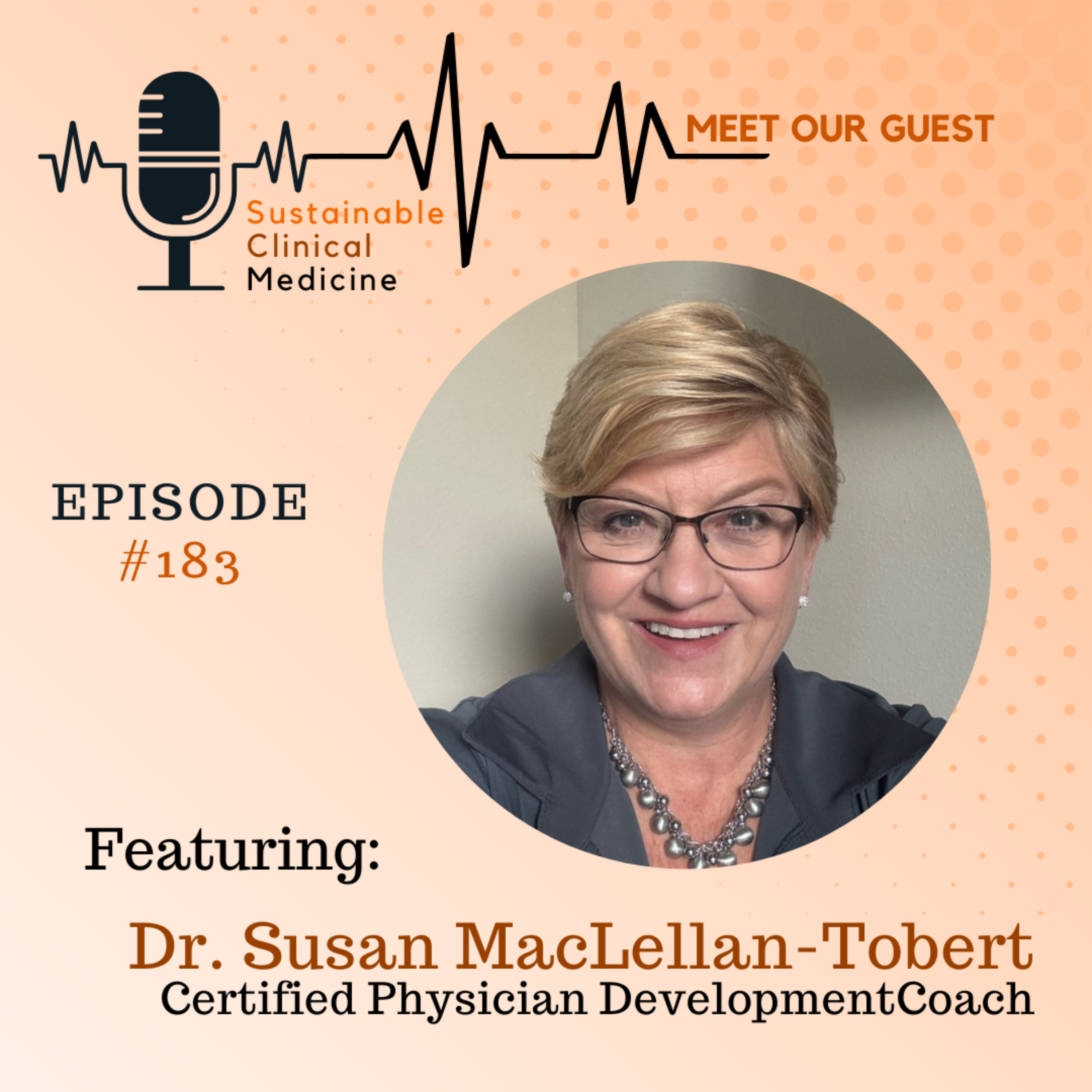
Doctor Coaching From the Inside: What Happens When the System Invests in Its Own People | Episode 183
The data couldn't be ignored, and it was so shocking it stopped her in her tracks. When burnout data came back showing 53% of providers in her institution were burned out, Dr. Susan MacLellan-Tobert did not wait for someone else to fix it. She flew to Denver for a weekend coaching course, came back with a business plan, and helped build an internal coaching program that served over 300 staff members in two years, right in the middle of a pandemic. In this episode, the retired pediatric cardiologist talks about what coaching actually does for doctors inside systems that are not changing anytime soon, why some doctors chose to leave after completing the program rather than stay, and what any clinician can take from coaching even if their organization never invests a single dollar in it. Timestamped Highlights [03:00]: Dr. MacLellan-Tobert describes what it felt like to watch medicine shift from team-based care where everyone contributed to a system of standardization and efficiency targets, and why that shift was the beginning of the end of her clinical career. [12:00]: A burnout survey came back at 53%. She describes what happened next, including a weekend in Denver that changed the direction of her remaining years in medicine. [16:00]: She explains what she had to fight to establish before the internal coaching program could even get started, and it was not funding or time. It was the perception of what coaching actually is. [18:00]: Why some doctors who completed the coaching program chose to leave medicine rather than stay, and why she considers that a success rather than a failure of the program. [22:00]: The difference between a coaching client who is paying for the program and one who receives it for free through their institution, and what that difference reveals about commitment and change. [33:00]: A short list of the most common reasons doctors come to coaching, including one that surprises people who assume coaching is only for those in crisis. Three Key Takeaways 1. Coaching does not fix the system. It changes what you can see inside it. Dr. MacLellan-Tobert is clear about what coaching can and cannot do. It does not change the appointment template, the staffing ratios, or the corporate directives. What it does is shift the question a doctor is asking from why is this happening to me to what do I actually have agency over here. For some doctors that leads to a way of staying that feels more sustainable. For others it clarifies that the fit is no longer right. Both outcomes, she argues, are exactly what the program is supposed to produce. 2. Internal coaching programs work when they are protected, not bolted on. When Dr. MacLellan-Tobert built the program at her institution, coaches were given 0.1 FTE each, and the institution accommodated scheduling so that providers could access coaching during the working day without it simply becoming another drain on their time. She has seen what happens when that structure is not in place, and the results are predictable: participation drops, commitment wavers, and the program becomes another initiative nobody has time for. The logistics matter as much as the intention. 3. You do not need to become a certified coach to use coaching skills. Dr. MacLellan-Tobert now teaches with the Physician Coaching Institute, and one of the things she is most direct about is this: learning to listen fully, ask better questions, and be genuinely present with a colleague for 10 minutes is a coaching skill. It does not require a program, a credential, or a formal role. In a system where time and energy are in short supply, those skills are among the most valuable things a clinician can develop, both for the people they lead and for the patients sitting in front of them. Guest Bio Dr. Susan MacLellan-Tobert is a retired pediatric cardiologist, certified coach, and faculty member with the Physician Coaching Institute based in the United States. After nearly 30 years of clinical practice, she co-built an internal coaching program that served over 300 providers at her institution and now works as an independent coaching contractor with organizations and individuals across healthcare. She can be found at healingedgecoaching.com and on LinkedIn. Would you like to view a transcript of this episode? Click Here Charting Champions is a premiere, lifetime access Physician only program that is helping Physicians get home with today's work done. All the proven tools, support and community you need to create time for your life outside of medicine. Learn more at https://www.chartingcoach.ca Enjoying this podcast? Please share it with someone who would benefit. Also, don’t forget to hit “follow” so you get all the new episodes as soon as they are released. Come hang out with me on Facebook or Instagram. Follow me @thechartingcoach to get more practical tools to help you create sustainable clinical medicine in your life. Questions? Comments? Want to share how this podcast has helped you? Shoot me an email at admin@reachcareercoaching.ca. I would love to hear from you.
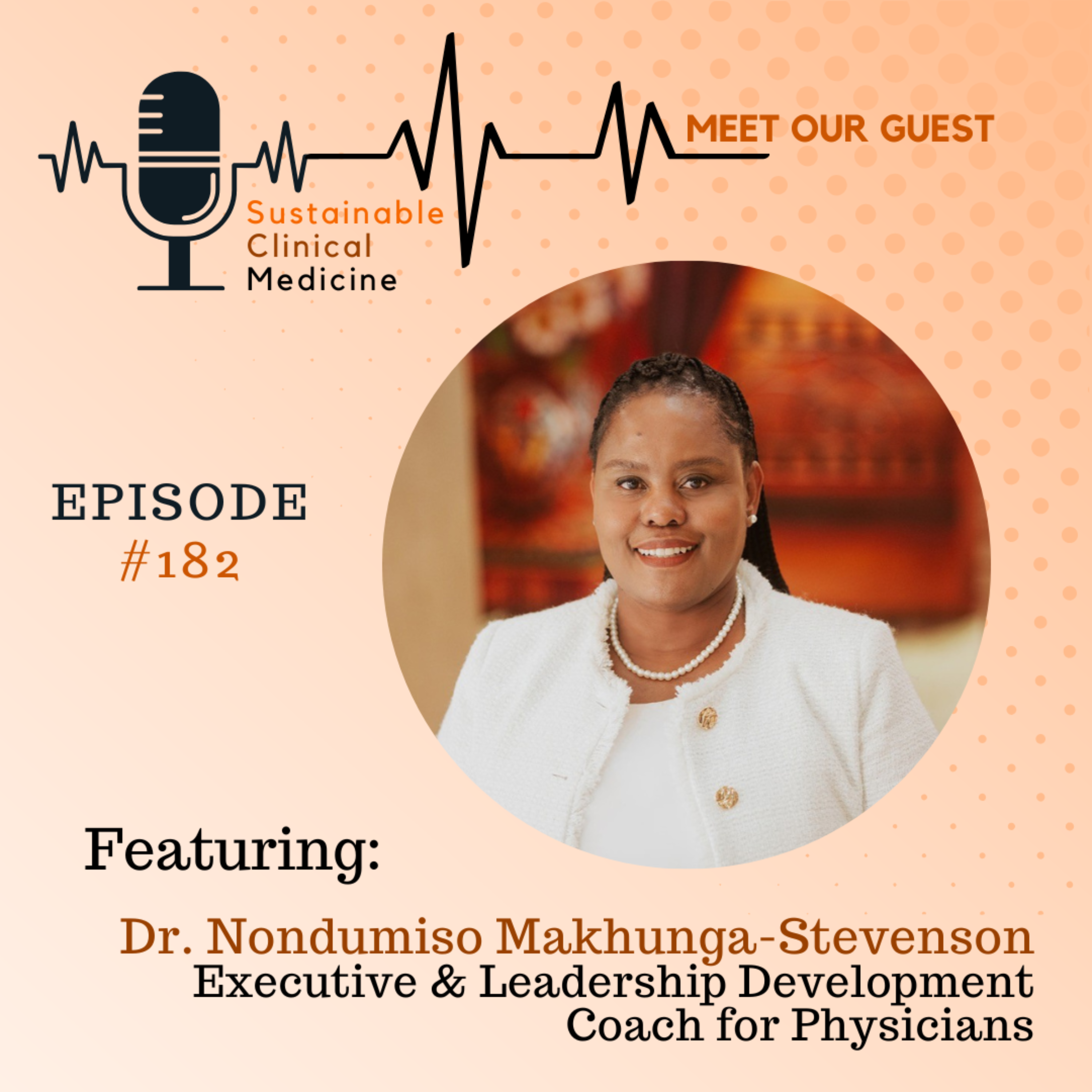
What Medical Training Gets Wrong About Identity, Leadership, and Burnout With Dr. Nondumiso Makhunga-Stevenson
Medical training produces a particular kind of identity. Responsible, accountable, self-sufficient, always proving competence. Those traits are useful in the clinic. They are quietly destructive everywhere else. Dr. Nondumiso Makhunga-Stevenson is a doctor with 25 years of experience across clinical medicine, public health, nonprofit leadership, and pharma who now coaches doctors through career transitions and leadership challenges. In this episode, she introduces the African philosophy of Ubuntu as a lens for sustainable medical careers, and asks a question most doctors have never been given space to consider: what would it look like to measure your success not by what you personally can do, but by what your team can do together? Timestamped Highlights [06:00]: Dr. Makhunga-Stevenson describes the moment she told her sister she had made a mistake joining her dream job in pharma, and what her sister said that changed everything. [12:00]: She unpacks the specific friction she experienced moving from mission-driven nonprofit work into a for-profit pharmaceutical company, and why it forced her to examine whether her values were actually incompatible with the sector or whether her thinking about the sector needed to change. [20:00]: Three things medical training instils that serve doctors well in clinical roles and create significant problems everywhere else, including leadership and charting. [22:00]: Dr. Makhunga-Stevenson makes an observation about charting that connects documentation avoidance directly to professional identity and the need to prove competence, and it reframes the charting problem in a way that is hard to unsee. [30:00]: She introduces Ubuntu, the African relational philosophy, as a framework for medical leadership, and explains why the shift from what can I do to what can we do is not just a mindset change but an unlearning. [35:00]: Her closing message on relational wholeness as the foundation of a sustainable medical career, and why connection with patients, colleagues, and yourself is not a soft extra but the core of what keeps doctors in medicine. Three Key Takeaways 1. The traits that make great clinicians make difficult leaders. Dr. Makhunga-Stevenson identifies three qualities that medical training reliably produces: putting work first, personal responsibility and accountability, and a constant drive to prove competence through external validation. In clinical roles, these traits are functional. In leadership, they become obstacles. The doctor who cannot delegate because they feel personally responsible for every outcome, or who measures their worth by how much work they personally complete rather than how much the team achieves, is living out their clinical training in an environment where it no longer serves them. Awareness of that pattern, she argues, is where change begins. 2. Charting avoidance is often about identity, not complexity. This is one of the most precise observations in the episode. Dr. Makhunga-Stevenson draws a direct line between the need to prove competence, which is baked into medical training, and the way some doctors approach their notes. The chart becomes a place to demonstrate how thorough, how careful, how clinically excellent they are, not because the clinical or legal record requires it, but because somewhere along the way it became a proxy for proving themselves. She uses her own experience of a routine travel expense form to show how the same pattern plays out beyond clinical settings, and why coaching is often the only thing that makes the blind spot visible. 3. Ubuntu reframes what sustainable medical leadership actually looks like. The philosophy of Ubuntu, often translated as I am because we are, sits at the heart of Dr. Makhunga-Stevenson's coaching practice. She applies it specifically to the transition from clinician to leader, arguing that a doctor who leads through a relational lens understands that their growth as a leader is inseparable from the growth of their team. The question shifts from what can I do to what can we do together, and that shift, she says, is not just a strategy. It is a form of relational wholeness that makes sustainable careers in medicine possible. Guest Bio Dr. Nondumiso Makhunga-Stevenson is a South African-trained doctor and ICF PCC-accredited coach who works with doctors navigating career transitions, leadership, and burnout through her practice Ubuntu Doctor Coaching at ubuntudoctorcoaching.com. Would you like to view a transcript of this episode? Click Here Charting Champions is a premiere, lifetime access Physician only program that is helping Physicians get home with today's work done. All the proven tools, support and community you need to create time for your life outside of medicine. Learn more at https://www.chartingcoach.ca Enjoying this podcast? Please share it with someone who would benefit. Also, don’t forget to hit “follow” so you get all the new episodes as soon as they are released. Come hang out with me on Facebook or Instagram. Follow me @thechartingcoach to get more practical tools to help you create sustainable clinical medicine in your life. Questions? Comments? Want to share how this podcast has helped you? Shoot me an email at admin@reachcareercoaching.ca. I would love to hear from you.








Get this podcast on your phone, Free


Create Your Podcast In Minutes
- Full-featured podcast site
- Unlimited storage and bandwidth
- Comprehensive podcast stats
- Distribute to Apple Podcasts, Spotify, and more
- Make money with your podcast
