
Episode List

How Financial Success Can Lead to Spiritual Failure with John Rinehart
“For what will it profit a man if he gains the whole world and forfeits his soul? Or what shall a man give in return for his soul?” — Matthew 16:26 Those words from Jesus confront one of the deepest questions we can ask about money and success. Jesus spoke them to His disciples as He taught about the cost of following Him. In that moment, He contrasted two pursuits: gaining the world and preserving the soul. The question still echoes today: Is there a spiritual cost to financial success? On today’s episode of Faith & Finance, John Rinehart, founder and CEO of Gospel Patrons, joined the show to explore that very question and what Scripture teaches about wealth, work, and spiritual health. The Bible’s Honest Warnings About Wealth Financial success itself is not condemned in Scripture. In fact, the Bible includes many faithful believers who possessed great wealth—Abraham, Job, and Lydia among them. Yet Scripture also carries repeated warnings about the spiritual dangers that prosperity can create. As John explained on the show, wealth can be both a blessing and a temptation. The danger arises when our hearts begin to trust money instead of God. Jesus addressed this tension directly in Matthew 6:24: “No one can serve two masters… You cannot serve God and money.” The issue is not the possession of wealth but the mastery of wealth over the human heart. And in a culture that celebrates success, possessions, and financial independence, those warnings are easy to overlook. The Cycle of Success That Can Lead to Spiritual Failure John describes a pattern many people fall into—a cycle of success that can quietly lead to spiritual drift. It often begins with a view of work that centers on earning money so we can eventually rest. We work hard, pursue success, and over time, our effort produces prosperity. Hard work and prosperity themselves are not wrong. In fact, Scripture often affirms diligence. But prosperity introduces a new danger. As John noted during the conversation, success can gradually lead us to forget the God who provided it in the first place. When we begin to see wealth as the product of our own ability rather than God’s provision, our dependence on Him begins to fade. Before long, success that once felt like a blessing can become a spiritual trap. The Warning of the Rich Fool Jesus illustrates this danger in the Parable of the Rich Fool in Luke 12:16–21. In the story, a farmer experiences an abundant harvest. Faced with overflowing crops, he decides to tear down his barns and build bigger ones to store them all. From a purely financial perspective, his plan sounds wise. But Jesus reveals the deeper problem. The man begins speaking to himself as though his wealth guarantees security and ease: “Soul, you have ample goods laid up for many years; relax, eat, drink, be merry.” — Luke 12:19 Then comes the shocking turn. “But God said to him, ‘Fool! This night your soul is required of you.’” — Luke 12:20 The problem wasn’t the harvest—it was forgetting God. This story hits close to home in a culture that often equates success with building bigger barns. The Danger of Forgetting the Source This warning appears long before Jesus told that parable. As Israel prepared to enter the Promised Land, Moses cautioned them about the spiritual risks that accompany prosperity. In Deuteronomy 8:17–18, he warned: “Beware lest you say in your heart, ‘My power and the might of my hand have gotten me this wealth.’ You shall remember the Lord your God, for it is he who gives you power to get wealth.” John highlighted this verse as a key reminder: even the ability to create wealth is a gift from God. When we forget that truth, wealth easily shifts from blessing to idol. When Wealth Chokes Out Spiritual Fruit Jesus also warned that wealth can quietly interfere with spiritual growth. In the Parable of the Sower, He describes seeds that begin growing but are eventually overwhelmed by thorns. He explains the meaning in Mark 4:19: “The cares of the world and the deceitfulness of riches and the desires for other things enter in and choke the word, and it proves unfruitful.” John also noted how startling that statement is. The Word of God is powerful, yet Jesus says the deceitfulness of riches can still choke its fruitfulness in a person’s life. Wealth promises security and satisfaction—but it often delivers anxiety and distraction instead. God’s Better Rhythm for Life Thankfully, Scripture offers a healthier path. John explained that instead of structuring life around work and wealth, God invites us into a different rhythm—one that begins with rest. The Sabbath command in Exodus 20:8–10 reminds us that our lives are not sustained by constant productivity. Rest re-centers our hearts. It draws our attention back to God through worship, Scripture, and time with the community of faith. From that place of rest, work becomes something different. Instead of merely trading time for money, work becomes an act of service and worship—an opportunity to use the gifts God has given us to bless others. When prosperity comes from that posture, it is received differently. Instead of assuming ownership, we begin to recognize stewardship. As Deuteronomy 8:18 reminds us, God is the one who provides the power to create wealth. That truth reshapes how we think about money. Our resources are no longer simply tools for personal comfort—they become opportunities to participate in God’s work. And that leads naturally to generosity. The Role of “Gospel Patrons” John’s ministry, Gospel Patrons, highlights a powerful biblical pattern. Throughout Scripture and church history, movements of God have often been supported by generous believers whose financial resources helped fuel gospel work. Even during Jesus’ ministry, Luke 8:3 tells us that several women helped support Him and His disciples “out of their means.” These supporters—often business leaders, entrepreneurs, and professionals—play a vital role in advancing the mission of God. They may not always preach sermons or travel as missionaries, but their faithful stewardship enables those ministries to flourish. Your Work Can Matter for Eternity One of the most encouraging points Reinhardt shared on the program is that believers working in business or professional careers are not second-class participants in God’s Kingdom. Your daily work matters. When your work is offered to God, your resources stewarded faithfully, and your generosity directed toward His mission, your life becomes part of something eternal. Financial success does not have to lead to spiritual failure. When we remember the source of our wealth and steward it with humility and generosity, our work can become a powerful instrument in advancing God’s Kingdom. On Today’s Program, Rob Answers Listener Questions: I’m 68 and recently retired. With a home for sale and significant cash on hand, I’m trying to determine the best way to begin withdrawing from my 401(k) without pushing myself into a higher tax bracket before RMDs begin. What’s the best strategy? My husband and I are doing Roth conversions, and our CPA suggested funding a charitable giving account to offset the taxes and then using it for our regular tithe. Is it biblically and ethically appropriate to tithe from a charitable account like that? Resources Mentioned: Faithful Steward: FaithFi’s Quarterly Magazine (Become a FaithFi Partner) Gospel Patrons Gospel Patrons: People Whose Generosity Changed The World by John Rinehart Breaking the Cycle (Article by John Rinehart in Faithful Steward Magazine, Issue 1) An Uncommon Guide to Retirement: Finding God's Purpose for the Next Season of Life by Jeff Haanen Our Ultimate Treasure: A 21-Day Journey to Faithful Stewardship Wisdom Over Wealth: 12 Lessons from Ecclesiastes on Money Look At The Sparrows: A 21-Day Devotional on Financial Fear and Anxiety Rich Toward God: A Study on the Parable of the Rich Fool Find a Certified Kingdom Advisor (CKA) FaithFi App Remember, you can call in to ask your questions every workday at (800) 525-7000. Faith & Finance is also available on Moody Radio Network and American Family Radio. You can also visit FaithFi.com to connect with our online community and partner with us as we help more people live as faithful stewards of God’s resources. Hosted by Simplecast, an AdsWizz company. See pcm.adswizz.com for information about our collection and use of personal data for advertising.

Our Ultimate Treasure: A Thankful Approach to Taxes
It’s one thing to thank God before a meal. It’s another thing entirely to thank Him before sending off a tax payment. For many Christians, taxes are rarely associated with gratitude. They often feel like a burden—an interruption to our financial plans or resources we’d rather use elsewhere. But Scripture invites us to view taxes through a very different lens. Instead of seeing them merely as a loss, believers can see them as a reminder of God’s provision and His sovereignty, and as an opportunity to live with integrity. Why Taxes Stir Frustration Few topics unite people quite like a shared dislike of paying taxes. It’s easy to think, if I could just keep that money, I could do something better with it. And when government policies conflict with our convictions—or headlines highlight waste or corruption—resentment can grow even stronger. Yet Scripture calls us to approach the issue differently. Instead of responding with frustration alone, the Bible encourages gratitude, humility, and trust in God’s sovereign rule. In Matthew 22:17, the Pharisees tried to trap Jesus with a political question: “Is it lawful to pay taxes to Caesar, or not?” Jesus responded by asking for a coin and pointing to the image stamped on it. His reply has echoed through history: “Render to Caesar the things that are Caesar’s, and to God the things that are God’s.” (Matthew 22:21) This answer was remarkable. Taxes under Rome were deeply unpopular. Rome was an occupying force, and tax revenue helped sustain a system that oppressed God’s people. Yet Jesus did not call for revolt or avoidance. Instead, He acknowledged that paying taxes fits within God’s ordering of society while making it clear that our ultimate allegiance belongs to God. Coins may bear Caesar’s image, but our lives bear God’s image—and they belong fully to Him. Trusting God’s Sovereignty The apostle Paul reinforced this principle in Romans 13:6–7, writing during the reign of Nero—hardly a model of righteous leadership: “Because of this you also pay taxes, for the authorities are ministers of God… Pay to all what is owed to them: taxes to whom taxes are owed, revenue to whom revenue is owed, respect to whom respect is owed, honor to whom honor is owed.” Notice what Paul does not say. He doesn’t ground obedience in the goodness of government. Instead, he points to the sovereignty of God. Paying taxes, then, is not primarily an expression of confidence in a human system. It is a recognition that God ultimately rules over nations, leaders, and history itself. Taxes Reveal God’s Provision There is another perspective on taxes that believers often overlook. Before you pay a single dollar in taxes, something has already happened: God has provided. A mentor of mine, Ron Blue, often says around tax time, “Taxes represent God’s provision.” If God had not provided income, there would be no taxes to pay. Think about it. Taxes imply that: Work was available. Income was earned. Needs were met. Daily bread was provided. In other words, taxes—uncomfortable as they may feel—are evidence that God has supplied what we need. Gratitude allows us to see provision before we see loss. Instead of asking only, How much am I paying? We can ask, What does this reveal about God’s faithfulness? Integrity in a Culture of Loopholes This perspective also shapes how Christians respond during tax season. In a world full of shortcuts, loopholes, and justifications, believers are called to something different: integrity. Honesty in financial matters—especially the ones no one else sees—forms Christlike character. Filing accurately, reporting honestly, and paying what is owed becomes an act of discipleship. It’s a quiet but powerful testimony of a life shaped by trust in God rather than self-protection. Turning Taxes into a Spiritual Discipline Finally, paying taxes can even become a spiritual discipline. Each time you write that check or submit that payment, let it prompt you to pray. Pray that God would guide leaders with wisdom, justice, and humility. Pray for policies that protect the vulnerable and promote the common good. Pray for leaders who recognize their need for God’s guidance. You may disagree with those leaders. You may even oppose their policies. But Scripture reminds us they are still people made in God’s image—people who need God’s help just like the rest of us. In a culture eager to complain, believers have the opportunity to respond differently. When tax season arrives: Remember the Owner: God owns everything, including the income from which taxes are paid (Psalm 24:1). Recognize the Provider: Taxes remind us that God has provided resources in the first place. Respond with Integrity: Honesty reflects a heart that seeks to honor Christ. Reframe with Gratitude: Thank God for His provision rather than focusing only on what is owed. Respond with Prayer: Let taxes prompt intercession for leaders and systems of government. When viewed through the lens of Scripture, even something as mundane—and often frustrating—as taxes can remind us of deeper truths: God provides, God rules, and God calls His people to live with gratitude and integrity. Go Deeper: Our Ultimate Treasure If you’d like to explore these themes of stewardship, gratitude, and God’s ownership more deeply, consider reading Our Ultimate Treasure: A 21-Day Devotional to Faithful Stewardship. This devotional walks through the biblical foundations of money and stewardship, helping readers see that financial decisions are ultimately spiritual decisions. Over 21 days, you’ll discover how Scripture reshapes the way we think about earning, spending, saving, giving—and even paying taxes. You can learn more or order your copy at FaithFi.com/Shop. On Today’s Program, Rob Answers Listener Questions: I’ve inherited about $100,000 and don’t know how to invest it. I’m 75, retired, debt-free, and living on a pension and Social Security. What are some safe options—like CDs or high-yield savings—that still give me access to the money if needed? My husband and I are separated. He’s retired and receiving Social Security and a pension, while I’m still working. Can I claim spousal Social Security benefits on his record while we’re separated, and would that reduce his benefit? I’m 56 and have about $310,000 in an old 401(k) and $268,000 in my current one. With market volatility, I’m considering moving the old account into a 10-year fixed annuity for safety. Is that a wise move? Resources Mentioned: Faithful Steward: FaithFi’s Quarterly Magazine (Become a FaithFi Partner) Christian Community Credit Union | AdelFi Our Ultimate Treasure: A 21-Day Journey to Faithful Stewardship Wisdom Over Wealth: 12 Lessons from Ecclesiastes on Money Look At The Sparrows: A 21-Day Devotional on Financial Fear and Anxiety Rich Toward God: A Study on the Parable of the Rich Fool Find a Certified Kingdom Advisor (CKA) FaithFi App Remember, you can call in to ask your questions every workday at (800) 525-7000. Faith & Finance is also available on Moody Radio Network and American Family Radio. You can also visit FaithFi.com to connect with our online community and partner with us as we help more people live as faithful stewards of God’s resources. Hosted by Simplecast, an AdsWizz company. See pcm.adswizz.com for information about our collection and use of personal data for advertising.

One More: The Power of Personal Financial Discipleship with Brian Holtz
Discipleship often sounds like something that requires a large program, a curriculum, or a major church initiative. But what if it’s far simpler than that? What if discipleship often begins with just one intentional relationship? Sometimes a single faithful conversation—repeated over time—can shape how we follow Christ in every area of life, including our finances. Today, we spoke with Brian Holtz, CEO of Compass Financial Ministry, about a simple discipleship model that has quietly transformed lives for decades. And it all begins with one person investing in another. The Power of One-to-One Discipleship The vision began with Howard Dayton, the founder of Compass. Many people know Howard from his years teaching about biblical stewardship, but at the heart of his ministry has always been personal discipleship. Years ago, Howard made a simple commitment: each year, he would intentionally walk alongside one person. They would read Scripture together, discuss what God was teaching them, and reflect on how those truths applied to their lives. Alongside Scripture, they would read a few formative Christian books and meet regularly to talk through what they were learning. But there was one small request. At the end of the year, the person being discipled would commit to doing the same thing with someone else. That simple multiplication strategy became known as the “One More” program—disciple one person each year and invite them to do the same. Books That Shape the Heart Over time, the reading list has evolved, but the goal has always remained the same: to encourage deep spiritual formation. Some of the books commonly used in the process include: Humility by Andrew Murray Trusting God by Jerry Bridges Financial Discipleship by Peter Briscoe The Master Plan of Evangelism by Robert Coleman Each of these works invites believers to reflect deeply on their relationship with God. But as Brian Holtz explained, the real power isn’t in the book list. It’s in the relationship. The conversations that happen as we discuss what God is teaching—how Scripture shapes decisions, priorities, and daily life—become the true treasure of the process. A Life-Shaping Year For Brian, this model of discipleship became deeply personal. Nearly a decade ago, his family had just relocated across state lines for work. Everything felt unsettled—his job, church, and even family rhythms. Nothing seemed to be falling into place. Then a friend invited him into this simple discipleship process: reading Scripture and a few books together over the course of a year. What began as a small commitment ended up transforming nearly every area of his life. His view of money changed. His relationship with the Lord deepened. His marriage and parenting were shaped in new ways. Eventually, that same relationship even influenced his career, leading him to join Compass Financial Ministry itself. What started as one faithful investment became a turning point in Brian’s life—and he has since walked many others through the same journey. Where Discipleship Begins For many believers, the idea of discipling someone else can feel intimidating. We imagine complicated programs or advanced theological training. But Brian offers a far simpler starting point. Don’t read books alone anymore. Invite someone to read with you—whether it’s Scripture, a devotional, or a Christian book. Meet regularly, talk about what you’re learning, and discuss how those truths apply to your life. That’s it. One conversation at a time. For those who want to follow the same approach used by Howard Dayton, Compass offers free study guides through its “One More” initiative, designed to help people disciple one person each year. One Faithful Relationship at a Time Discipleship rarely begins with a platform or a program. More often, it starts with a single faithful relationship—two people opening Scripture together, asking honest questions, and encouraging one another to follow Christ more closely. And when that investment is repeated again and again, the impact multiplies in ways we may never fully see. One conversation. One relationship. One more life shaped for eternity. On Today’s Program, Rob Answers Listener Questions: My 19-year-old daughter still lives at home, and we want to help her learn good money habits before she moves out. Should we charge her rent and save it for her? What percentage makes sense, where should we keep it, and is it wise for her to get a credit card to start building credit? We lived in a home for 20 years, then turned it into a rental five years ago. It hasn’t been rented for about a year due to renovations. If we sell now, can we avoid capital gains taxes, and how should we handle tithing from the sale in the most tax-efficient way? My daughter is listed on my bank accounts, but her struggling business could lead to bankruptcy. Could that put my money at risk, and should I remove her from the accounts to protect it? Resources Mentioned: Faithful Steward: FaithFi’s Quarterly Magazine (Become a FaithFi Partner) National Christian Foundation (NCF) Compass Financial Ministry | One More Program Our Ultimate Treasure: A 21-Day Journey to Faithful Stewardship Wisdom Over Wealth: 12 Lessons from Ecclesiastes on Money Look At The Sparrows: A 21-Day Devotional on Financial Fear and Anxiety Rich Toward God: A Study on the Parable of the Rich Fool Find a Certified Kingdom Advisor (CKA) FaithFi App Remember, you can call in to ask your questions every workday at (800) 525-7000. Faith & Finance is also available on Moody Radio Network and American Family Radio. You can also visit FaithFi.com to connect with our online community and partner with us as we help more people live as faithful stewards of God’s resources. Hosted by Simplecast, an AdsWizz company. See pcm.adswizz.com for information about our collection and use of personal data for advertising.
Treasure that Lasts
“Where your treasure is, there your heart will be also.” — Matthew 6:21 Long before Scripture speaks about budgets, investments, or generosity, it asks a deeper question: What do we truly value? Jesus’ words in Matthew 6:21 aren’t merely financial advice. They reveal a profound spiritual reality. Our treasures—what we prioritize, pursue, and protect—reveal the direction of our hearts. Understanding this truth reshapes the way we think about money, wealth, and ultimately, life itself. Everyone Is Chasing a Treasure Step into any office, business, or marketplace, and you’ll see it quickly: everyone is pursuing something. For some, the pursuit is wealth. For others, it’s freedom, comfort, reputation, or security. When you peel it back, treasure shows up in the things we sacrifice for, dream about, and worry over. Money often sits at the center of this pursuit because it seems to promise everything we desire. If we have enough, we imagine we’ll finally feel secure, prepared, and in control. But there’s a paradox. The more we accumulate, the more we fear losing it. The more we protect it, the more anxious we become. What once promised freedom slowly begins to feel like slavery. The problem isn’t that money is bad. Scripture never teaches that. Money is simply a tool. The problem is that our hearts quietly ask money to do what only God can do: save us, secure us, and satisfy us. That’s why Jesus spoke about treasure so often. Not because He opposed wealth, but because wealth competes for what belongs to God alone—our trust. Generosity Reveals the Heart Many people assume the solution to the love of money is simply to give more. And generosity is certainly celebrated throughout Scripture. Giving frees us to participate in God’s work and bless others. But Jesus never treated giving like a formula. Instead, He treated it like a diagnosis. In Mark 12:41–44, Jesus watched as wealthy donors placed large gifts into the temple treasury. It must have looked impressive to everyone watching. But His attention turned to a poor widow who quietly dropped in two small coins. To most observers, her gift seemed insignificant. But Jesus saw something different. The wealthy gave from their surplus. The widow gave from trust. Her offering wasn’t about optics or recognition. It was worship. She treasured God more than financial security. When Giving Isn’t Enough Jesus reinforced this idea when He rebuked the Pharisees in Matthew 23:23. They carefully tithed even their smallest herbs—mint, dill, and cumin—yet neglected “the weightier matters of the law: justice and mercy and faithfulness.” Their giving was meticulous. But their hearts were misplaced. If the act of giving alone could break the love of money, the Pharisees would have been the freest people in Israel. But they weren’t. True freedom doesn’t come from giving more. It comes from loving Christ most. The Treasure Worth Everything Jesus tells another story in Matthew 13:44 about a man who discovers a treasure hidden in a field. When he realizes what he has found, he joyfully sells everything he owns to buy the field. Notice what’s remarkable about this story: the man isn’t grieving his loss. He’s thrilled. Why? Because he finally sees clearly what is truly valuable. He isn’t losing—he’s gaining. That’s what happens when Christ becomes our treasure. Everything else falls into its proper place. Wealth becomes a tool instead of a master. Enjoyment becomes gratitude rather than entitlement. Generosity flows from joy instead of guilt. Stewardship becomes participation in God’s work instead of anxiety about our own future. The Treasure That Came Looking for Us But the story of treasure doesn’t end there. While humanity was searching for treasure, the greatest treasure came searching for us. Jesus didn’t simply teach about treasure—He became the treasure who gave everything to redeem us. Hebrews 12:2 tells us that Christ endured the cross “for the joy that was set before him.” That joy was redeeming us. The gospel isn’t ultimately a call to give up treasure. It’s an invitation to receive a greater one. The Question That Matters Most The real question isn’t whether you treasure something. You do. The question is who. Earthly treasures always demand protection. Christ alone protects us. And when Christ becomes our treasure, we gain something the world can never provide: a confidence no market can shake and a wealth no thief can steal. So today, pause and ask yourself the question Jesus raised long ago: Where is your treasure? Because wherever it is, that’s where your heart will be also. On Today’s Program, Rob Answers Listener Questions: I started a construction business about a year and a half ago, and it’s growing. How can I pursue growth faithfully without crossing the line from building wealth to pursuing greed? I’m overwhelmed by high-interest loans and paying $1,200–$1,500 every two weeks. Trinity Debt Management may be able to help, but the lenders won’t negotiate. What’s the best way to get out from under these loans? My husband normally manages our finances, but after his recent injury, I realized how unprepared I’d be to handle things on my own. With everything online—bills, investments, and passwords—how can I start getting organized and up to speed? Resources Mentioned: Faithful Steward: FaithFi’s Quarterly Magazine (Become a FaithFi Partner) God and Money: How We Discovered True Riches at Harvard Business School by John Cortines and Gregory Baumer Set Your House in Order (Compass Financial Ministry Study) Cross International Christian Credit Counselors Our Ultimate Treasure: A 21-Day Journey to Faithful Stewardship Wisdom Over Wealth: 12 Lessons from Ecclesiastes on Money Look At The Sparrows: A 21-Day Devotional on Financial Fear and Anxiety Rich Toward God: A Study on the Parable of the Rich Fool Find a Certified Kingdom Advisor (CKA) FaithFi App Remember, you can call in to ask your questions every workday at (800) 525-7000. Faith & Finance is also available on Moody Radio Network and American Family Radio. You can also visit FaithFi.com to connect with our online community and partner with us as we help more people live as faithful stewards of God’s resources. Hosted by Simplecast, an AdsWizz company. See pcm.adswizz.com for information about our collection and use of personal data for advertising.
Top Credit Report Myths with Neile Simon
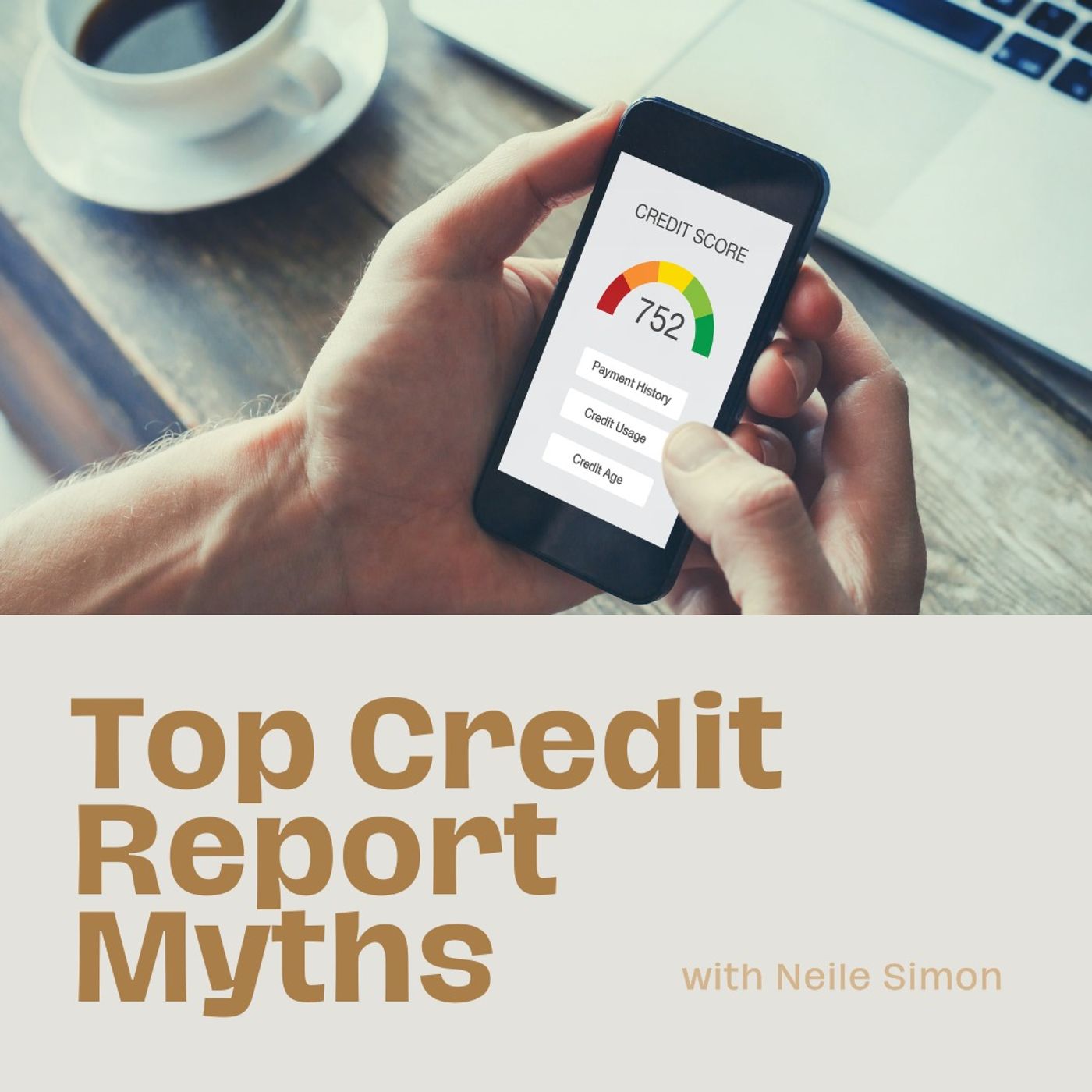
What do Bigfoot and credit reports have in common? They’re both surrounded by myths. While we may never settle the question of an eight-foot-tall creature wandering the woods, we can clear up the confusion around credit reports. On this episode of Faith & Finance, Neile Simon, a Certified Credit Counselor with Christian Credit Counselors, stops by to clear up some of the most common misconceptions about credit reports and credit scores. Understanding how credit really works can help you avoid costly mistakes and make wiser financial decisions. Myth #1: Paying Off Debt Instantly Fixes Your Credit Paying down debt is always a good step—but it doesn’t instantly produce a perfect credit score. A credit score reflects your history of borrowing and repayment. Lenders use it as a snapshot of how responsibly you’ve managed credit over time. That means improvement takes patience. The most important habit is simple: consistently pay your bills on time. Over time, that steady pattern will strengthen your credit profile. And beware of anyone claiming they can “fix your credit overnight.” Building good credit always takes time. Myth #2: Credit Counseling Ruins Your Credit Score Many people fear that seeking help will damage their credit—but that’s not true. Participating in a credit counseling program is considered a neutral mark on your credit report. What can affect your score is closing accounts, not the counseling itself. In fact, nonprofit credit counseling agencies often help people regain control of their finances through structured debt management plans. If you seek help, make sure the organization is accredited and nonprofit. That’s why Christian Credit Counselors is the only organization we recommend for credit counseling and debt management. Myth #3: Canceling Credit Cards Boosts Your Score Closing credit cards may seem responsible, but it can actually lower your credit score. Why? Because it reduces your available credit, which increases your credit utilization ratio—a key factor in credit scoring. If you have credit cards with zero balances and no annual fees, keeping them open can actually help your score. If you must close accounts, do it gradually—perhaps one every six months—to minimize the impact. Myth #4: Too Many Inquiries Hurt Your Score This myth was once more accurate than it is today. Credit bureaus now recognize that consumers shop for loans. If you’re applying for a mortgage or car loan, multiple inquiries within a short window—typically about 45 days—are counted as a single inquiry. That means you can compare offers without damaging your credit score. And when it comes to checking your own credit report, that’s considered a soft inquiry, which does not affect your score at all. In fact, it’s wise to check your credit regularly to monitor for fraud or mistakes. Myth #5: You Don’t Need to Check Your Credit If You Pay Bills on Time Even responsible borrowers should check their credit reports. Studies suggest that a large percentage of credit reports contain errors. Reviewing your report once or twice a year allows you to catch mistakes or fraudulent activity early. You can obtain free reports from all three major bureaus at AnnualCreditReport.com. Correcting errors can take time—sometimes up to 90 days—so staying proactive is important. Myth #6: All Credit Reports Are the Same There are three major credit bureaus: Equifax, Experian, and TransUnion. Each may contain slightly different information because creditors don’t always report to all three bureaus, and updates may occur at different times. Different lenders may also use different scoring models depending on the type of loan—auto, mortgage, or credit card. For the most complete picture, it’s wise to review all three reports. Myth #7: Divorce Automatically Removes Joint Debt Divorce agreements may divide debts between spouses—but they don’t change the original credit contract. If your name remains on a joint account, you’re still legally responsible for the debt. If the other person misses payments, your credit score can suffer too. That’s why it’s important to close joint accounts or refinance debts into one person’s name whenever possible. Myth #8: All Negative Marks Disappear After Seven Years Some negative items disappear after seven years—but not all. For example: Chapter 13 bankruptcy: up to 7 years Chapter 7 bankruptcy: up to 10 years Positive closed accounts: can remain for 10 years The good news is that positive information usually stays longer than negative information, helping your score recover over time. Myth #9: You Can Pay Someone to “Fix” Your Credit Many companies promise fast credit repair—but most simply send dispute letters to creditors. If the information on your credit report is accurate, it cannot be removed. That means many consumers pay fees without seeing real results. The truth is, you can dispute errors yourself for free. Christian Credit Counselors provides free resources and sample dispute letters to help you correct inaccuracies. The Bottom Line Understanding how credit works empowers you to use it wisely. Credit reports aren’t mysterious or magical—they simply reflect how consistently and responsibly you’ve handled debt over time. With accurate information, good habits, and a little patience, you can build a strong credit profile that supports your financial goals. And when challenges arise, seeking wise counsel and staying informed can help you move toward greater financial freedom. If you're struggling with credit card debt, Christian Credit Counselors can help. They’ve helped thousands of people get out of debt 80% faster while honoring their financial obligations. Visit ChristianCreditCounselors.org or call 800-557-1985 to learn more. On Today’s Program, Rob Answers Listener Questions: My small retail business in a local mall is struggling as other stores close and sales decline. We’re starting to lose money and take on debt. Should I consider closing the business and pursuing a new venture or a job to stabilize our family's finances? We’ve always tithed on our gross income. After selling our previous home, we made a non-taxable profit but used it to buy another home that still needs repairs and has a small mortgage. Should we tithe on that profit, or focus on maintaining the home and paying down the mortgage? Resources Mentioned: Faithful Steward: FaithFi’s Quarterly Magazine (Become a FaithFi Partner) Christian Credit Counselors AnnualCreditReport.com Our Ultimate Treasure: A 21-Day Journey to Faithful Stewardship Wisdom Over Wealth: 12 Lessons from Ecclesiastes on Money Look At The Sparrows: A 21-Day Devotional on Financial Fear and Anxiety Rich Toward God: A Study on the Parable of the Rich Fool Find a Certified Kingdom Advisor (CKA) FaithFi App Remember, you can call in to ask your questions every workday at (800) 525-7000. Faith & Finance is also available on Moody Radio Network and American Family Radio. You can also visit FaithFi.com to connect with our online community and partner with us as we help more people live as faithful stewards of God’s resources. Hosted by Simplecast, an AdsWizz company. See pcm.adswizz.com for information about our collection and use of personal data for advertising.










Get this podcast on your phone, Free


Create Your Podcast In Minutes
- Full-featured podcast site
- Unlimited storage and bandwidth
- Comprehensive podcast stats
- Distribute to Apple Podcasts, Spotify, and more
- Make money with your podcast