
Ralph Nader Radio Hour
https://api.substack.com/feed/podcast/1047405.rssEpisode List
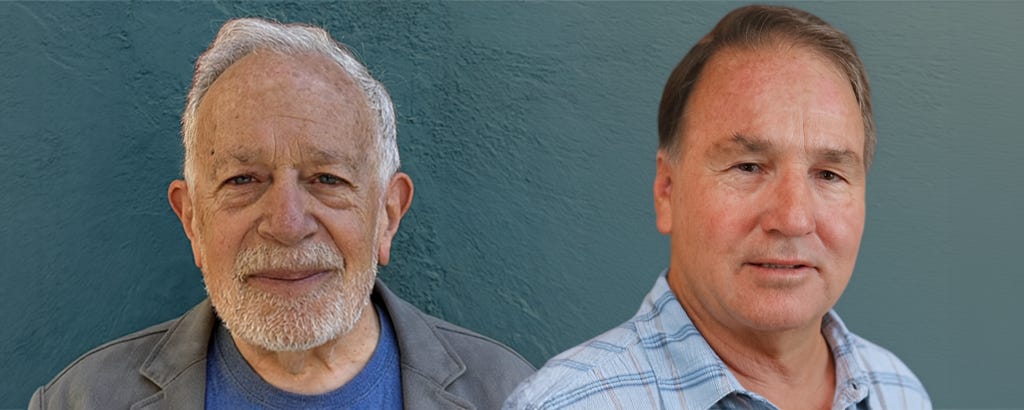
Bold Plans for a More Affordable America
Ralph welcomes Robert Reich (professor of Public Policy and former Secretary of Labor) to discuss his "Pledge to Make America Affordable Again." Then, Ralph speaks to Derek Shearer (former economic policy adviser and US Ambassador to Finland) about his recent work, "A Bold Economic Program for America."Robert Reich is Emeritus Professor of Public Policy at UC Berkeley. He has served in three national administrations, including as secretary of labor under President Bill Clinton. Mr Reich has written eighteen books, including The System: Who Rigged It, How We Fix It, The Common Good, Supercapitalism, and Coming up Short: A Memoir of My America. He is co-founder of Inequality Media, co-founder of the Economic Policy Institute, and co-founding editor of The American Prospect.Democrats have an opportunity now to talk to the working class about—and not just the working class, the middle class too—about prices, about affordability in ways that are terribly important and meaningful and that really could get prices down or at least stop the onslaught of inflation. And also that are very, very consistent with what we believe as Democrats, as progressives, as people who want to see the nation move back toward its pursuit of social justice.Robert ReichYou can bet that the right, the apologists for wealth in this country are going to say, “Oh, no, no, no, don’t do that because wealthy people will leave the country!” I mean, what they always do reflexively is say, “If you do that, we’ll leave.” And I say in California the same thing I would say about a national wealth tax—if they want to leave, let them leave. But they’re not going to leave because there are so many advantages to staying in California in terms of: this is where a lot of the high tech talent actually is. This is where the infrastructure for high tech is already. The climate, as I talk to you, I’m looking at a beautiful day out here. You know, who wants to leave California? And if you are a billionaire, and you are just so intent on leaving California because of this one very, very minor tax, then frankly, goodbye.Robert ReichI am a believer, though, in the common sense of the American people. Now, if that makes me naive, if that makes me gullible, so be it. But I think at the end of the line, the bottom line here is that the American people will make a decision starting with the midterm elections coming up in just 96 days (something like that). And those elections are going to be critical in terms of trying to constrain Trump and the people, the sycophants and lapdogs behind him and Hegseth and Robert F. Kennedy Jr. and all these people who are ripping the social contract to shreds. And I think that the one way that (this brings us back to my pledge, my affordability pledge for Democrats), I think one way the Democrats can be sure to get the House back and maybe even possibly the Senate in 96, 97 days, is to pledge to make America affordable again. And using these 10 particular steps that are widely, widely supported.Robert ReichDerek Shearer served as the US Ambassador to Finland from 1994 to 1997. Previously, he worked in government at the national, state, and local levels, including the founding board of directors of the National Consumer Cooperative Bank in 1978 and Deputy Under Secretary of Commerce for Economic Affairs in 1993. During the 1992 presidential campaign, Ambassador Shearer was a senior policy adviser to Bill Clinton and helped to write the campaign’s economic program, Putting People First.The point of our program is not that it should be endorsed in its entirety. It’s almost meant to be a discussion document to show what is possible—that this can be done. It doesn’t require some dramatic change in the way the government operates. It just demands a change in priorities and some new lawsDerek ShearerYou can’t get to those issues until you are actually in the government. And if we don’t win back the House and at least have a shot at winning back the Senate, talking about these issues while Trump and the MAGA Republican Party controls the government (and might continue to control it), makes us feel good, but it doesn’t change anything. What I’ve learned about the so-called leaders of the party is you don’t really expect them to lead. They will follow when they see where the voters are going. And they’ll also follow when they see if there is a Presidential candidate who takes off on these kinds of issues…I don’t expect the leadership to lead on these issues. So I don’t rail against them. Because what I’m doing (and I’m doing it with a lot of different people out there, including a lot of young people) is trying to find good candidates, provide them with economic ideas to run on, and then hope that we win back the House and that these kinds of then-elected officials who share our viewpoint become the Democratic Party. I mean, that’s how you do these things. If we don’t win these elections, then we’re just kind of crying in the wilderness.Derek ShearerLet’s Start the RevolutionTools for Displacing the Corporate State and Building a Country that Works for the PeopleIn his latest eye-opening exploration, political maverick Ralph Nader dissects the astonishing twists and turns of the 2020 presidential election, a race that left the nation on the edge of its seat. Although Joe Biden clinched victory with a substantial popular vote lead, Nader unveils the precarious nature of the outcome, where a mere 100,000 votes in key swing states could have catapulted Donald Trump back to the presidency. Get your copy here.News 8/7/26* This week, a new wave of Democratic primaries were held, most notably in the state of Michigan. In the closely watched Senate primary, which came down to a two-way race, Bernie Sanders-backed progressive Dr. Abdul El-Sayed emerged triumphant. Some have played up the fact that his opponent, Congresswoman Haley Stevens, overperformed relative to her polling in an attempt to downplay the significance of El-Sayed’s victory. Yet, this narrative ignores the fact that Stevens enjoyed the backing of the Democratic Establishment and AIPAC, which gave her an 12-to-1 spending advantage according to Axios, and that she ran misleading ads that made it seem as though former President Barack Obama had endorsed her campaign. Viewed in this light, it is clear just how impressive El-Sayed’s victory – statewide, in a must-win swing state for Democrats – is. El-Sayed will now face off against former Republican Congressman Mike Rogers in the general election.* In Detroit, the left scored another major win with the victory of Donavan McKinney. McKinney, a DSA member and Michigan state representative, won his primary race against incumbent Congressman Shri Thanedar in Michigan’s 13th congressional district, the Detroit Free Press reports. Thanedar, a millionaire businessman, was a DSA member but left over disagreements over Israel. Thanedar fought hard to keep this seat, which he won in 2022, and was supported by Minority Leader Hakeem Jeffries despite many members of the Congressional Black Caucus supporting McKinney. Given that this is a heavily Democratic district, McKinney is essentially guaranteed a seat in the next Congress, bringing the number of DSA-backed House Members to an unprecedented high of seven. Moreover, between McKinney and Congresswoman Rashida Tlaib, the city of Detroit will now enjoy all DSA representation in Congress.* In Michigan’s seventh congressional district, progressive climate activist and co-founder of the Sunrise Movement William Lawrence pulled out a win in his primary as well. NBC notes that Lawrence defeated his two more moderate opponents, retired Navy SEAL Matt Maasdam and former Ambassador to Slovakia Bridget Brink, in part by aggressively criticizing the construction of new AI data centers. Some have alleged that Lawrence received support from Republicans using dark money to boost his campaign because they believe him to be an easier candidate to defeat in the general election. However, the Hillary Clinton campaign’s “pied piper” strategy to boost Donald Trump in 2016 proves that this is ever a risky strategy. Michigan’s seventh district is seen as a critical battleground seat. Donald Trump won the district by just one single percentage point in 2024.* In more data center news from the Midwest, Hell Gate reports former New York City Mayor Eric Adams was in “Wisconsin Rapids—population 18,654—trying to convince residents that they should allow a real estate developer to build a data center in the heart of their town.” In a video of his pitch, the townspeople can be seen heckling, booing and shouting down the former Mayor, with attendees saying “You belong in prison!” and “You’re here to steal our water!” Community activist Kaitlyn Federwitz is quoted in this piece saying “Our whole town does not want him here at all,” adding “We want our resources to be properly safeguarded, our farmers to be protected, our waterways protected.” The Wisconsin Rapids economy had been largely dependent on a local mill, which closed its doors in 2020; Federwitz spoke to this, arguing that “When the mill closed, we lost 900 jobs. We’re aware we need jobs and industry in our city.” However, she added that the people of Wisconsin Rapids are “not willing to accept that a data center is the answer to that problem.”* In more news from the midwest, United Auto Workers President Shawn Fain has published a new op-ed in Newsweek contending that “Democrats Must Pick a Side: Billionaires or Working-Class.” Fain cited numerous examples of Democrats in powers betraying their working class supporters, from NAFTA to modern governors like Abigail Spanberger of Virginia vetoing collective bargaining rights for public-sector workers. He criticized Michigan Governor Gretchen Whitmer in particular for vetoing “nine bills restoring pensions, lowering health care costs, and restoring bargaining rights for public-sector workers,” after “Michigan Democrats fought an 18-month legal battle to force the bills to the governor’s desk.” He claims that “When the courts finally ordered [the bills] delivered, Whitmer vetoed all nine the same day—without so much as a phone call to legislative leaders or the unions that helped elect her.” He ends this piece with a call for “every elected official and candidate to…[reject] corporate PAC money,” and “adopt a platform that addresses the needs of working-class people.” This clear-eyed, laser focus on the working class is what has put Fain into conversation for a 2028 presidential run by some on the populist left, particularly if Alexandria Ocasio-Cortez ultimately declines to run. A recent article in POLITICO quotes Bhaskar Sunkara, the 2020 Sanders surrogate and former vice chair of the Democratic Socialists of America, saying “If he’s willing to run, [Fain] might be the best candidate for the left…Since he’s progressive but very much says his egalitarian value system comes from his Christianity, [he] can speak in a moral language that can reach more independents than other candidates, and I think it would set a good precedent for labor.”* For the DSA left, all eyes now turn to Wisconsin, where Francesca Hong’s campaign for the gubernatorial nomination continues to pick up steam. Just this week, per Wis Politics, Hong picked up the endorsement of the SEIU Wisconsin Healthcare and Service Workers. In their endorsement statement, SEIU Wisconsin called Hong “a longtime advocate and fighter for the working class,” who is “committed to building back strong labor protections by overturning Act 10 and so-called ‘Right-to-Work’ laws, expanding Badgercare, and abolishing poverty wages in Wisconsin.” The union added that Hong’s “support for a $20 minimum wage, adopting family-centered policies such as paid family leave and affordable child care, and enacting much-needed regulations on corporate monopolies make her the clear choice for all Wisconsinites, not just the wealthy.” Hong currently leads in the polls, despite the sitting Democratic Governor’s attempts to boost her primary rival, David Crowley. Both Hong and Crowley have racked up labor support, though Crowley decidedly leads among the building trades and firefighter unions.* In St. Louis, the left experienced its biggest setback this cycle, with former Congresswoman Cori Bush losing her comeback bid against Congressman Wesley Bell by a large margin. Bush was ousted in 2024 as part of “a broader strategy by AIPAC to unseat Israel’s sharpest critics in Congress, including the ‘Squad,’ which Bush was a part of,” per the Missouri Independent. This piece notes that AIPAC spent over $8 million to oust Bush in that cycle and outside groups spent $7.2 million on Bell’s behalf this year. Bell’s official campaign outspent Bush’s by a margin well over 10 to 1. Bush is the first candidate backed by National DSA to lose their race in 2026, which, while disappointing in this case, is a stunning testament to the track record of the group.* In a totally different part of the country, this week Julian Beaudion, the Democratic nominee for Senate in South Dakota, dropped out of the race. Beaudion cited personal hardships for himself and his family in his statement of withdrawal citing a recent house fire. However, many see this as an acknowledgement that the independent candidate in this race, veteran and former park ranger Brian Bengs, has a better chance of defeating incumbent Republican Senator Mike Rounds in a head-to-head matchup. This dynamic has been playing out in other states; Democratic Senate candidates have dropped out to clear the way for independents in Nebraska and Idaho already and there is immense pressure on the Democratic nominee in Montana to do the same. For his part, Beaudion will not endorse either candidate in South Dakota, according to KELOLAND News, but South Dakota Searchlight reports the South Dakota Democratic Party will not replace Beaudion on the ballot, giving the greenlight for Democrats to coalesce around Bengs in the general election.* In another primary election story, Lehigh Valley Public Media is out with a story on the strange dynamic emerging in Pennsylvania’s 7th congressional district. According to this story, this race – between incumbent Republican Ryan Mackenzie and his Democratic challenger Bob Brooks, who seems to have done the impossible by getting Bernie Sanders and Josh Shapiro on the same side in a primary – has been upended by the entry of one Andrew Tupone. Mr. Tupone, a former Republican candidate, is running on the Green Party ballot line and claims to have “joined the Green Party this spring, drawn by its environmental policies on water conservancy and opposition to data centers, after growing disillusioned with both major parties.” Yet, apparently, “Green Party leaders warned in a statement this month that a wave of candidates may be posing as party members across the state.” Chris Robinson, a Green party spokesman, claims that “The party hasn’t endorsed any congressional candidates in Pennsylvania and has never heard from Tupone.” Robinson adds that he “looked at [Tupone’s] Facebook page, and he seems like he’s a nice Republican.” According to LVPM, “a third-party candidate wouldn’t need to move the needle much,” to influence the outcome of the election, noting that the current Congressman defeated the Democratic incumbent, Rep. Susan Wild by just 1 percentage point, in 2024, while “Tim Silfies, the last third-party congressional candidate to appear on a Lehigh Valley ballot, earned 8,011 votes, or 3 percent of the vote, in 2018.”* Finally, in more third party news, POLITICO reports several leading figures on the anti-MAGA right – including Congressman Thomas Massie, former Congresswoman Marjorie Taylor Greene, and commentator Tucker Carlson – convened last weekend to “[sow] the seeds for a future third-party political organization…aimed at undercutting the Republican establishment.” This gang of three, joined by former Trump national security official Joe Kent, are particularly incensed by the president’s intervention in Iran, with Greene writing “We said no more foreign wars and we meant it and supported Donald Trump because he made that promise. But he’s betrayed us all.” This group is reportedly mulling a right-wing, third-party presidential campaign in 2028. While Carlson has declined to launch a presidential bid in the past, despite urging from within his circle, a sprawling new “10-point vision for America” he debuted during a recent stream implies that he is increasingly interested in articulating an alternative vision of right-wing politics from those espoused by Trump. This manifesto, as reported by Axios, includes everything from declassifying records on the JFK assasination and 9/11 to enforcing universal sobriety to “halting immigration until the effects of AI become clearer.” We will be watching closely to see if this effort moves forward or peters out as has been the pattern with other recent third party attempts.This has been Francesco DeSantis, with In Case You Haven’t Heard. Get full access to Ralph Nader Radio Hour at www.ralphnaderradiohour.com/subscribe

Impeachment Symposium
Last week, Ralph, along with our constitutional law expert, Bruce Fein, organized another symposium in Washington DC on impeaching Donald Trump. On today’s program, we play you highlights from that symposium with eight of the participants, each of whom are going to give listeners their perspective on why Donald Trump should be impeached even before the midterm elections.The rhetoric from many Democratic leaders has not kept up with the horror and the urgency of what [Donald Trump] is inflicting on America and the American people. He has moved very, very quickly to develop a fascist dictatorship embodying a kleptocratic corporate state that is marked by non-regulation, tax cuts for the wealthy, and tax escapes for the wealthy and major corporations, as well as expanded corporate welfare in the midst of personal and institutional two-way bribery and extortion. It’s very important to punctuate the seriousness of what he’s already done.Ralph NaderCelinda Lake is a political strategist and president of Lake Research Partners.What I love about polling is: conventional wisdom is wrong about 90% of the time, plus or minus 5%. Beltway conventional wisdom is wrong about 100% of the time, plus or minus 5%. So, “Everybody knows impeachment is unpopular.” No, it’s not. It’s very popular. A majority of people support it. “Everyone knows that it’ll energize the other side.” No. The other side, to the extent they’re going to be energized, they’re already energized. We need to energize our side. We need to get our people out to vote… “Everyone knows it’s very volatile.” No, it’s not. Attitudes about impeachment track with job performance… And finally, “Everybody knows that nobody understands impeachment.” Well, frankly, voters understand it better than a lot of elected officials.Celinda LakeSuparna Reddy is the Senior Counsel for Free Speech For People.Let us be clear: Congress should impeach and remove Trump for each and every one of these hundreds of offenses. And we have a duty to record his every abuse of power. But in the process, we should not miss the forest for the trees— Trump is intentionally and systematically dismantling our democratic institutions to consolidate his own power and line his own pockets.Suparna ReddyRichard Painter is the S. Walter Richey professor of corporate law at the University of Minnesota Law School and was the chief White House ethics lawyer from 2005 to 2007.We have seen serious, indeed, tragic financial conflicts of interest in the executive branch never before seen in the history of our country—unless we look at our very early Presidents who held vast plantations with slave labor, a clear economic conflict of interest with their official duties. A conflict of interest shared by many Senators and Representatives and Justices of the Supreme Court, and indeed a tragic conflict of interest for the first eighty years of our history that ended only with a bloody civil war. But since then, we have not had at least a President who is embroiled in financial conflicts of interest with his official duties.Richard PainterDoug Bandow is a senior fellow at the Cato Institute, specializing in foreign policy and civil liberties.We need to make a persuasive argument for people, whether they like Donald Trump or not, to understand the Constitution transcends this President. The Constitution transcends future Presidents and future crises. We need to convince Americans across the political spectrum to stand with the rule of law, to stand with accountable government, to stand with an accountable executive, responsible legislatures. History tells us that one person making these decisions is not good. Plenty of authoritarians in the past have made these decisions and brought their countries to disaster.Douglas BandowErwin Chemerinsky is the Dean and Jesse H. Choper Distinguished Professor of Law at the University of California, Berkeley School of Law.We’re now at a moment when the federal government is a threat to our rights. The actions of the Trump administration are unprecedented in the violations of the Constitution. And so I think it’s crucial that state and local governments step in so as to protect rights. It’s interesting that through American history, Federalism has always been equated, states’ rights have always been equated with regressive policies… But now it’s time for progressives to use states’ rights and look for the opportunities for states to safeguard our constitutionErwin ChemerinskyKeira Havens is a United States Air Force veteran, a former scientist, and a longtime political activist. She is the executive director of Citizens’ Impeachment.Everybody has agency. Everybody has a role that they can play. Everybody can take action. As a private citizen, I can say, “Man, there are a lot of things wrong with what’s happening.” In fact, I wrote several articles of impeachment: tyranny, treason, obstruction of justice, and of course, corruption, right? Members of Congress have more power than that. They need to do more than say things. They have to take action. Courage is an action. It’s what you do after you say the words that really matters. And every single member of Congress is able to take action. They are able to introduce articles of impeachment, and they are refusing.Keira HavensJessica Denson is a former Trump staffer and founder of the Removal Coalition.The American people (and particularly Democratic primary voters) are looking for fighters. For God’s sake, what could you do better than to exert the power that you have—this one privilege in the House, Rule 9, that gives any member of the Congress, including the minority, the ability to force a vote any time. Why would you sit on that? Why would you wait? Instead, in my activism, I’ve had to resort to relying on literally one Congressman. This is so pathetic. He is a dear friend, and I am so grateful for him. But to this day, I think it is pathetic that I have to rely on one Congressman to bring forth articles of impeachment and force votes, and that’s Representative Green.Jessica DensonNews 7/31/26* Our top stories this week have to do with the Democratic National Committee. Several stories have recently come out about DNC Chair Ken Martin, ranging from interpersonal issues to his utter failure to raise money for the Democratic Party. The most stunning example of this comes from NOTUS, which reports that Martin “put [the DNC’s] physical headquarters up for collateral last year in order to obtain a $15 million line of credit to help invest in off-year elections.” While the party has used this mechanism before, it underlines the gaping disparity between the DNC, which is currently over $2 million in debt compared to the Republican National Committee (RNC), which can boast $128.5 million cash on-hand.* Compounding the issues of the already cash-strapped DNC, the New Republic reports the Democratic National Committee was scammed out of nearly $29,000 by an email from someone pretending to be Chair Ken Martin last year. DNC spokesperson Mia Ehrenberg is quoted saying “The DNC takes seriously our duty to protect the funds provided to us by millions of patriotic Americans chipping in to fund our mission…this was a one-off mistake that was promptly caught and addressed, and no similar issues have occurred since.” That said, only $7,000 worth of this money has been recovered. As TNR puts it, “This has all been very embarrassing. Martin can’t raise money, can’t keep money, and can’t unite the base under the big tent’ he likes to talk about.” Martin may also be facing an outright rebellion led by party insiders.* One surprising proposal to this effect is coming from a very unlikely source. The Hill reports veteran Democratic strategist James Carville, while tearing into Martin, opened the door to former DNC Vice-Chair David Hogg taking the reins. Carville said the DNC appears “dysfunctional” and that the committee needs to “figure out a way maybe they could be somewhat relevant,” adding that “If David Hogg wants to take it over, I ain’t stopping you…Go ahead, man, I don’t really care.” This is a stark turnabout from Carville’s position on Hogg when the latter was in DNC leadership; back then, Carville dismissed him as “a contemptible little twerp.” In an interview, Hogg highlighted this exact reversal, while simultaneously saying that he did not want to lead the crumbling Democratic Party organization. Ben Wikler, the former Wisconsin Democratic Party Chair who challenged Ken Martin in 2025 has also resisted calls to take over the DNC, with rumors circulating that he is gearing up to run for Senate in the Badger State next cycle. While pressure continues to mount on Martin, alternative leadership remains elusive.* Speaking of lackluster leadership, Sources Say News reports Capitol CNCT has launched The Scoop which they describe as “a confidential rating system that lets current and former Hill staffers weigh in on the members and offices they have worked for.” As one might imagine, some reviews are extremely scathing. This piece cites one that reads, “Leadership is abusive. Lies about promotions and bonuses…This place will leach at your mental health like a vampire…Beware.” Sources Say highlights the fact that “Unlike most workplaces, Congress has no HR department, which means bad behavior by members and senior staff can go unreported and unchecked for years.” The new site verifies that the posters are or were real employees of these offices, but keeps their names anonymous to protect them from retaliation.* In more news from Congress, POLITICO reports Maryland Representative and House Judiciary Committee ranking member Jamie Raskin is launching a new investigation into Jeffrey Epstein, this time focusing on whether the deceased sex offender and financier acted as an unregistered foreign agent. In a letter to Acting Attorney General Todd Blanche, Secretary of State Marco Rubio, and Director of National Intelligence Jay Clayton, Raskin writes that “Jeffrey Epstein never registered as a foreign agent…Yet numerous recently released documents now show he acted aggressively on behalf of multiple foreign governments, including several with interests adverse to the United States, in order to influence policies of the first Trump Administration.” The declassified files reveal that Epstein “offered to serve as a conduit between Saudi Arabia and members of the Trump administration, consulted with Russian officials on engaging with the president and advised former Israeli Prime Minister Ehud Barak.” This inquiry is likely to raise fresh questions about not only Epstein’s role working on behalf of foreign governments, but his possible connections with intelligence and espionage organizations including the CIA and Mossad.* Other progressive members of Congress, led by Congresswoman Ilhan Omar, have issued a formal response to a new Trump administration report on Cuba. These members interpret this report – which claims that the tiny Caribbean nation of 10 million people has “waged a sustained campaign” to “conquer” the United States and is backing “left-wing terrorism on American soil” – is in fact an instrument the administration plans to use to persecute “Trump’s perceived political enemies.” Omar, joined by Representatives Jim McGovern, Delia Ramirez, Rashida Tlaib, AOC and more, contend that Trump is “hell-bent on taking America back 70 years to the height of Cold War McCarthyism, when hawkish foreign policy was paired with unsubstantiated accusations of communist subversion and political repression against dissidents at home.” The administration report singled out several organizations and activists, including the National Lawyers Guild, Hasan Piker, and campus activist Isra Hirsi, daughter of Congresswoman Omar. This from Common Dreams.* In more news from the left, POLITICO reports Donavan McKinney – who is challenging incumbent Congressman Shri Thanedar in Detroit – picked up a major batch of endorsements this week from members of the Congressional Black Caucus. These new endorsers include Representatives Steven Horsford, the former chair of the CBC, along with Lateefah Simon and Ayanna Pressley. These endorsements, particularly that of Congressman Horsford, are notable because Thanedar retains the support of House Minority Leader Hakeem Jeffries and his deputies, Representatives Pete Aguilar and Katherine Clark. McKinney said he was “honored” by these endorsements, adding that he “[looks] forward to working alongside these incredible leaders to pass critical legislation to protect voting rights, get big money out of our politics, and ensure all families have access to the resources they need to not just survive, but to truly thrive.” McKinney’s primary will be held on August 4th, along with the more closely watched Senate primary between progressive Abdul El-Sayed and his moderate, establishment-backed opponent Haley Stevens.* Meanwhile, in New York City, Mayor Zohran Mamdani continues to fulfill campaign promises at an astonishing rate. First, Forbes reports that Mamdani has officially introduced a $124.7 billion city budget which includes funding for five city-run grocery stores which will sell staple foods at a 30% discount compared to private grocery stores. These staples are set to include produce, dairy, bread, select meat and seafood, and approximately 20 other products. Being city-owned, these stores will not have to pay rent or property taxes, ensuring they can operate more cheaply than their competitors in the private sector. This piece notes that similar experiments in smaller cities like Baldwin, Florida, and Erie, Kansas proved unsustainable financially, while proposals in Chicago and Kansas City struggled to get off the ground. There is reason to believe New York will prove a different matter entirely, but that remains to be seen. At the same time, Jacobin reports Mamdani is launching a new initiative called “Talk to Tenants,” which will “send volunteers door-to-door in buildings with chronic housing code violations, connecting renters with organizing resources, neighborhood organizations, and training on tenants’ rights and how to build tenant associations.” This effort will be led by the Office of Mass Engagement in partnership with the Office to Protect Tenants. It is extremely encouraging to see Mamdani utilizing a varied array of tools at his disposal – including both direct action by the city as on grocery stores or using city resources to promote the formation of non-governmental organizing efforts – in order to achieve his vision of a just and affordable American metropolis.* In more troubling, if not surprising, news, the Wall Street Journal is out with a new report finding that the Department of Justice is giving a green light to corporate criminals. The Journal cites examples ranging from Alibaba to Boeing and EagleBank to Abbott Laboratories where the Trump DOJ “declined to charge companies even when prosecutors thought executives or managers were involved in the wrongdoing.” This follows from directives given by Acting Attorney General Todd Blanche, who has “said prosecutors shouldn’t view prosecuting companies as their goal and should instead focus on holding individual wrongdoers accountable.” This piece cites a December speech by Blanche in which he stated that “Companies don’t go to jail, people do.” Yet, it seems that under the Trump Justice Department, neither do.* Finally, in more corporate news, the antitrust lawsuit filed by over a dozen state attorneys general has at least temporarily succeeded in halting the mega-merger between Warner Bros. Discovery and the Ellisons’ media conglomerate, Paramount Skydance. After the lawsuit was filed, a federal judge in Oakland ordered a pause on the deal, and since then, the Ellisons themselves have agreed to put the merger “on ice” pending the outcome of the trial, Variety reports. This piece also highlights the private sentiments of anonymous Warner Bros. executives who apparently hope that the deal hits a “legal landmine” and is ultimately “nixed.” However, in an internal memo, David Ellison maintained that “the facts and the law are on our side, and a full hearing will demonstrate why the plaintiffs’ arguments should not prevail.”This has been Francesco DeSantis, with In Case You Haven’t Heard. Get full access to Ralph Nader Radio Hour at www.ralphnaderradiohour.com/subscribe
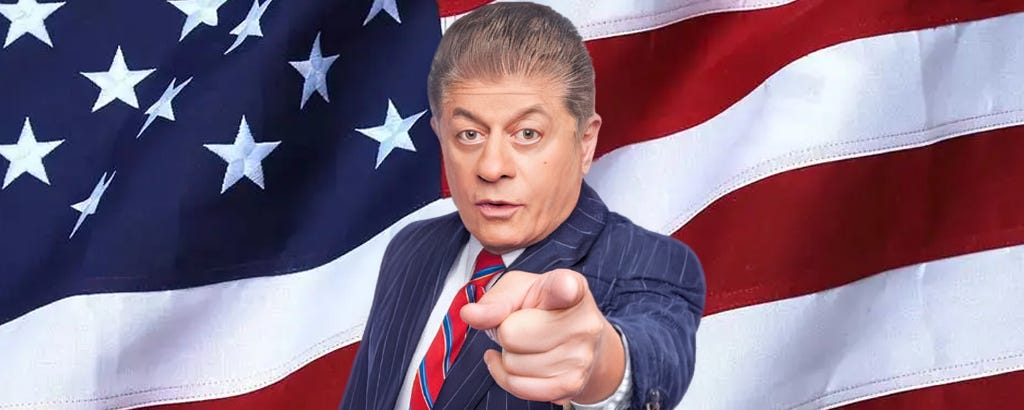
Judge Napolitano/ Listener Feedback
Ralph speaks to Judge Andrew Napolitano about two of Ralph’s abiding concerns: the death undercount in Gaza and the impeachment of Donald Trump. Then, Ralph responds to some of your listener feedback.Judge Andrew Napolitano is a former Superior Court Judge, a syndicated columnist, and host of the Judging Freedom podcast. Judge Napolitano has taught constitutional law and jurisprudence at Delaware Law School and Seton Hall Law School, and he was Fox News’ Senior Judicial Analyst from 1997 to 2021. He is the author of several books on the U.S. Constitution, including Freedom’s Anchor: An Introduction to Natural Law Jurisprudence in American Constitutional History.Amongst the mainstream media, with respect to the Netanyahu regime and what it has been doing, there is no intellectual honesty. The mainstream media in the United States is controlled by the lobby. And the lobby, of course, is the Israeli and American donors who control the media and control the government. Our friend Pat Buchanan famously referred to the Congress as “Israeli-occupied territory”. The same may be said about the mainstream media… Don’t expect intellectual honesty from the mainstream media, because anybody who tries it will be looking for a job.Judge Andrew Napolitano[Donald Trump’s] behavior has simply been tyrannical to the nth degree. Look, he’s been impeached twice—both times for, compared to what he’s done in the second term, a pittance. What he’s done in the second term is absolutely and utterly profound. He has failed to take care that the laws be enforced. He has failed to abide due process. He has failed to protect the right to free speech. He has failed to protect the right to privacy. He has failed to seek Congressional approval before starting wars. He has ordered murders on the high seas. This is a long litany.Judge Andrew Napolitano Get full access to Ralph Nader Radio Hour at www.ralphnaderradiohour.com/subscribe

Hemp: The New Green Revolution
Ralph welcomes back his old running mate, Native American activist, Winona LaDuke, who has devoted her life to advocating for Indigenous control of their homelands, natural resources, and cultural practices to talk about her latest incarnation: hemp farmer. Then, we’ll speak to Hal Weitzman, from the University of Chicago’s Booth School of Business, about how Elon Musk’s feud with Delaware may transform corporate America. Plus, we tick off Robert Reich’s ten policy prescriptions the Democratic Party should fight for to beat the GOP in the upcoming midterms.Winona LaDuke is an activist, economist, and author, who has devoted her life to advocating for Indigenous control of their homelands, natural resources, and cultural practices. She is also a two-time vice-presidential candidate with Ralph Nader. Ms. LaDuke lives and works on the White Earth Ojibwe reservation in northern Minnesota, where she runs Winona’s Hemp & Heritage Farm. She is also a member of the Indigenous Hemp & Cannabis Farmer’s Cooperative.I’m looking first at seed sovereignty. We’re growing [European hemp] varieties and then we’re growing these feral hemp varieties. They’re called feral varieties (which of course, that’s something that I love) which means that when they eradicated hemp in the 1930s with the Marijuana Prohibition Act—well, they missed some spots. And those guys kept growing. And so 80 years of being illegal—isn’t that great? Something that’s illegal for 80 years is still with us, rocking out. And so I figure if you grew illegally for 80 years, you are really a tough hemp plant…And so we are growing out these hemp varieties and built a cooperative because we want to own the seeds and we want to own the technology (the value-added processing), and we want to use this hemp as a part of our future as tribes.Winona LaDukeMy grandsons are farming. I don’t know who else can say their grandchildren are farming—let me know. My grandchildren are farming. They’re running the horses. They’re running the farms. You know, that’s a retirement plan. My 401k will be worth nothing, but my grandchildren will feed me. This is my strategy.Winona LaDukeHal Weitzman is Executive Director for Intellectual Capital at the University of Chicago Booth School of Business, editor-in-chief of Chicago Booth Review, and host of The Chicago Booth Review podcast. A former Financial Times editor and foreign correspondent, he is the author of Latin Lessons: How South America Stopped Listening to the United States and Started Prospering and What’s the Matter with Delaware?: How the First State Has Favored the Rich, Powerful, and Criminal—and How It Costs Us All.There is a race to the bottom. There’s been a race to the bottom for many decades. That’s not new. I think it’s accelerated somewhat. Delaware has joined that race from having been something of a “premium product” in terms of incorporating companies—Delaware has become a bit more “cut-price” I would say, and in that sense has followed Texas and Nevada. So the conclusion that we have a race to the bottom and it may be worse than Delaware—actually I think Delaware’s already there. So it’s not that it’s getting worse outside of Delaware, it’s getting worse including Delaware.Hal WeitzmanThe trend I think we’re seeing is the exclusion of small shareholders completely—regardless of the status of your shares, this is about how big you are. And if you’re a small shareholder there is no corporate democracy for you… It was practice in the past for activist groups, campaigning groups, to buy one share of a company and then to go to the shareholder meeting so they could make the point that they wanted to make. Now that kind of shareholder democracy is being encroached on. And the extent now is to say: unless you have a large position (regardless of the size of the company and the cost of the shares), you will not be allowed to bring suits against the executives for the correct running of the company.Hal WeitzmanNews 7/17/26* Our top story this week is New York Governor Kathy Hochul’s decision to impose a one-year “pause” on the construction of AI data centers across the state. ABC7 reports that this is the first such moratorium in the nation, despite similar attempts in several states, most notably Maine where Governor Janet Mills vetoed a bill to this effect. Hochul argues that the pause is necessary so lawmakers and regulators can formulate “Guardrails to reduce the risk to our energy grid, minimize land disruption, noise pollution, and protect our natural resources, especially our water supply.” Hochul’s move comes amidst a broader push against AI data centers from the left. Semafor reports Senator Bernie Sanders proposed a nationwide ban in March and many progressives running for state and local office in the midterms have made this a cornerstone of their campaigns. According to this piece, “In February, polling from Marquette Law School found 70% of all Wisconsinites agreeing that ‘the costs of the data centers outweigh the benefits.’ Among Democrats, the number was 85%.”* Another progressive Member of Congress quite literally stepped into another hot-button political issue this week. While visiting a Palestinian village in the occupied West Bank Wednesday, Al Jazeera reports armed settlers stopped the van of Representative Ro Khanna and were “later joined by Israeli soldiers who continued to block the road.” In a video, Khanna points out, settlers can be seen “brandishing M4s [rifles], kicking the tyres of our van, laughing at us, mocking at us, videotaping us.” This continued for over an hour and was only resolved when he reached out to the American Embassy, according to Khanna. Israel has responded to this fiasco by blaming Khanna, accusing the congressman of failing to coordinate his trip with the Israeli government; Khanna retorted that “The [Israeli military] is lying” and called for the arrest of the violent settlers. Conservative political commentator Tucker Carlson excoriated U.S. Ambassador to Israel Mike Huckabee, writing “An American member of congress is threatened by foreign terrorists carrying American rifles, backed by a foreign military paid for by American taxpayers, and the US ambassador to that country says not a word in defense of his own countryman…It’s too much, too insulting and humiliating to America.”* Following his return from occupied Palestine, Khanna again teamed up with Republican Congressman Thomas Massie of Kentucky to sponsor an amendment to the National Defense Authorization Act (NDAA) which would have removed the “United States-Israel Defense Technology Cooperation Initiative” from the must-pass legislation. Responsible Statecraft describes the initiative as “an unprecedented integration of the U.S. and Israeli military industrial complexes,” by creating “an executive agent within the Department of Defense whose sole responsibility is furthering U.S. and Israeli military tech integration across nearly every facet of the defense process.” This article also notes that “Israeli Prime Minister Benjamin Netanyahu has described this shift in the U.S.-Israel relationship as ‘my plan.’” However, House leadership is not backing this commonsense, bipartisan amendment. In a letter, Minority Leader Hakeem Jeffries said he would vote against the amendment, calling it “overly broad” and claiming the amendment would “restrict our country’s ability to confront Hamas, Hezbollah and other terrorist organizations in the region who are sworn enemies of both the United States and Israel,” per the Times of Israel. However, Jeffries pledged not to whip votes against the amendment and indeed the House Minority Whip, Congresswoman Katherine Clark, voted for the amendment as did Speaker Emerita Nancy Pelosi, despite the opposition of Jeffries and House Democratic Caucus Chair Pete Aguilar. The Congressional Progressive Caucus reportedly whipped votes in favor of the amendment.* In more Israel-related news, this week Marco Rubio – who serves as Secretary of State as well as the acting National Security Advisor – announced that the State Department will launch a “sweeping campaign to dismantle…the International Criminal Court.” CNN observes that “The administration’s ire against the ICC goes back to President Donald Trump’s first term, when it targeted the ICC for seeking to investigate alleged war crimes committed by US forces in Afghanistan,” and that since taking office for the second time, the Trump administration has “imposed a slew of sanctions against ICC officials for their attempts to investigate the US and Israel.” CNN also quotes a State Department official who said that top officials, including Secretary Rubio and US ambassadors, “are calling countries as part of a campaign to diplomatically isolate the International Criminal Court.” It is worth noting that “all American presidents since the ICC’s ratification have maintained that the ICC does not have jurisdiction over Americans,” and that Congress even passed a law calling for an invasion and occupation of the Hague if any American serviceman was ever prosecuted by the ICC, implying that this crackdown on the court is not about American sovereignty at all but rather the prosecution of Israeli officials for their war crimes in Gaza.* In another stunning story starring Marco Rubio, the New York Times reports the Secretary of State is functionally “running Venezuela from afar.” The Times story characterizes Rubio’s position as the “de facto viceroy of Venezuela,” effectively controlling the country’s “finances, the distribution of its natural resources and its government.” This story makes clear that while Delcy Rodríguez, the former Vice President of Venezuela under Nicolás Maduro, nominally occupies the presidency, Rubio is the one really calling the shots, with Rubio setting the conditions on what Venezuela’s export revenue “can be spent on, and by whom,” and having the authority to approve or deny key governmental appointments in the country, such as the minister of defense. In short, the United States has established a shocking explicitly neo-colonial regime in the country, fulfilling the gravest prognostications of anti-imperialist critics of American intervention in the Bolivarian Republic.* Closer to home, Bloomberg reports the federal government has officially launched a grand jury investigation into the United Auto Workers and the union’s outspoken president, Shawn Fain. The investigation stems from accusations made by the union’s Vice President, Rich Boyer, who alleged that Fain used his position to secure benefits for his fiancée and her sister – and when Boyer refused to approve the benefits, Fain retaliated by stripping Boyer of his duties as chief negotiator with Stellantis NV. Fain has called the allegations “false” and is accusing Boyer of seeking to influence the upcoming UAW leadership election. Fain also claims that Boyer is the one retaliating after Fain “refused the vice president’s request to hire family members to positions in the union.” Fain has long maintained that the Justice Department, and specifically the DOJ-appointed monitor, Neil Barofsky, has a political grudge against him because “the UAW took an anti-war stance about what was happening in Gaza.” According to Bloomberg, “Both Fain and Boyer have slates running and each is accusing the other of attempting to abuse their positions to benefit family.”* This week, another victim of harassment by the federal government, student activist Mahmoud Khalil, filed a landmark civil rights suit alleging that the government conspired with a number of private groups – including the Heritage Foundation, Betar, and Canary Mission – to “suppress criticism of Israel through a coordinated campaign to dox, jail and ultimately deport student activists.” According to the lawsuit, said activists were “nearly automatically targeted by the Federal Defendants for arrest and removal.” Khalil’s lawyers argue that this “public-private partnership” could violate the “Ku Klux Klan Act, a Reconstruction-era law that sought to restrict government coordination with vigilante groups.” The suit is led by the Center for Constitutional Rights. The AP reports “Soon after his arrest, both Canary Mission and Betar boasted of their role in flagging Khalil’s noncitizen status to the government.” Since Khalil’s arrest, Betar has agreed to “dissolve its nonprofit status,” following a lawsuit filed by New York Attorney General Letitia James accusing Betar’s members of harassing Palestinians.* Turning to the state level, this week 12 state attorneys general, led by California’s Rob Bonta, filed an antitrust lawsuit seeking to block the acquisition of Warner Bros. Discovery by Paramount Skydance, controlled by the Trump-aligned David Ellison. The proposed, $110 billion merger was approved by the Antitrust Division of the Justice Department last month, which reached the dubious conclusion that the merger is “not likely to result in harm to competition or American consumers.” In the filing, Bonta and the state AGs for Arizona, Colorado, Connecticut, Massachusetts, Minnesota, Nevada, New Jersey, New Mexico, New York, Oregon, and Washington allege that the merger “would extinguish competition between Paramount and Warner Bros. and inflict substantial harm on movie theatres, basic cable distributors, and, ultimately, audiences nationwide.” This from Reason.* In the world of philanthropy, CNBC reports Warren Buffett, the billionaire chairman of Berkshire Hathaway, has “excluded the Gates Foundation from his sizable annual charitable donations.” As this report notes, the Gates Foundation has been among the top recipients of his annual Berkshire donations, totaling $47 billion worth of Berkshire stock since 2006. The reason for the exclusion of the Gates Foundation has been much speculated upon, in particular, whether it was due to the recent revelations about Gates’ relationship with Jeffrey Epstein. Asked about this, Buffett said that he had “read a great deal…in terms of what happened, with Bill and Epstein,” calling their relationship “distasteful,” but also saying that he “found nothing in there that was beyond what [he] could picture [himself] doing.” Instead of the Gates Foundation, all of this year’s donations will go to foundations linked to the Buffett family.* Finally, British multinational diamond conglomerate De Beers, famous for coining the “A Diamond is Forever” tagline in 1947, reported this week that they plan to halt work at their “flagship” Venetia mine in South Africa as demand for the stones wanes. The BBC highlights both slackening consumer demand as well as competition from lab-grown diamonds, particularly those produced in China. That said, the closing of the Venetia mine – the biggest in South Africa, accounting for over 40% of the country’s diamond production – will send shockwaves through that country’s already shaky economy. That mine alone employs more than 4,000 people, while the mining sector employs nearly half a million. De Beers said they plan to reopen the mine in two years; in the meantime, they are looking to expand copper mining to keep up with demand from AI data centers.This has been Francesco DeSantis, with In Case You Haven’t Heard. Get full access to Ralph Nader Radio Hour at www.ralphnaderradiohour.com/subscribe
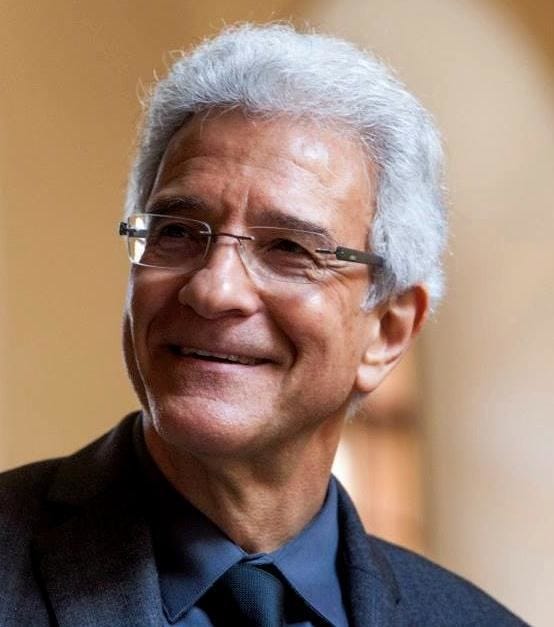
Israel: What Went Wrong?
Ralph speaks to historian Omer Bartov about his new book “Israel: What Went Wrong?” with special guest, international law expert Bruce Fein.Bruce Fein is a Constitutional scholar and an expert on international law. Mr. Fein was Associate Deputy Attorney General under Ronald Reagan and he is the author of Constitutional Peril: The Life and Death Struggle for Our Constitution and Democracy, and American Empire: Before the Fall.Many of the things that you describe in Israel apply in spades in the United States. We also have an administration that says we’re being invaded militarily by Venezuela gangs, so we have to go kidnap their president and annex Venezuela. We’ve stated that Iran is an existential threat to the United States because at some future time, it’s conceivable they may get one nuclear weapon. We have 5,000, Israel probably has 300 or 400. Or make the argument that we are being invaded by defenseless immigrants across the southern border. And it does seem to me that all countries—I don’t think it’s unique anyway to the United States or Israel, but it’s generally true those in power are there to manufacture fear, to inflate fleas into elephants and say “My gosh, tomorrow the sky is falling down. We need to have national emergencies, rule by decree.” Everything is “an imminent danger”, the Communist domino theory. It’s a very challenging issue. I say what you’ve described in Israel is not unique to Israel. We confront it every day right in the United States. And it works.Bruce FeinOmer Bartov is the Dean’s Professor of Holocaust and Genocide Studies at Brown University. A historian, Professor Bartov was born on a kibbutz, grew up in Tel Aviv, and served in the Israel Defense Forces during the Yom Kippur War. He went on to become a leading scholar of the German army and the Holocaust, before turning his attention to his native country. His early research concerned the Nazi indoctrination of the Wehrmacht and the crimes it committed in World War II. He then turned to the links between total war and genocide and interethnic relations in the borderlands of Eastern Europe. His current interest is reflected in his recent books, Genocide, the Holocaust and Israel-Palestine: First-Person History in Times of Crisis, Israel: What Went Wrong?, and the forthcoming The Broken Promise: A Personal Political History of Israel and Palestine. The whole idea of creating a Jewish state (and it says so in the Proclamation of the State from May 1948) is that it would be a state for Jews—that it would be both Jewish and democratic. And that has proven to be not possible. A Jewish state can be both Jewish and democratic only if the overwhelming majority (if not all) of its citizens are Jews.Omer Bartov[Zionist zealots] believe that history is on their side—so in that sense, they are similar to Communists they’re similar to Fascists they’re similar to Nazis in that they believe that they can see the way forward, they know the logic of history, and the logic of history as they see it is on their side.Omer BartovIn Israel, since the 1980s (really since after the War of 1973, with the rise of the right wing in Israel in particular) the Holocaust has come to serve a particular purpose. Instead of being commemorated as an event that happened in the past that we should remember and commemorate and research, it’s become a kind of image of an imminent danger to Israel. And the farther Israel has moved from the actual event of the Holocaust, and the more the Israeli army has become the military hegemon in its region, the more this alleged threat of an “Auschwitz around the corner” has been used by Israeli governments. Why has it been used? Because Israel actually needs to explain to itself and to its citizens: Why is it bossing it over millions of Palestinians? Half of the population under Israeli control are Palestinians. Two million are citizens, but they don’t have equal rights, and the others have no rights at all (they’re simply under arbitrary military rule). So how do you explain that? You explain that by telling your population and the rest of the world that those Palestinians—who have no power, who can never pose a threat to you—are an existential threat. And in Israel, that has worked quite well.Omer BartovBecause of the focus on Hebrew—to create Hebrew as a mother tongue for children whose mothers didn’t speak Hebrew—because of that, there was a great antagonism towards speaking any other language. And the notion of having bilingual schools (that is, of having schools in Palestine where people would learn both Hebrew and Arabic, the language of the place) is not entertained by the vast majority of educators. Now, if you think about what would have been the result of having bilingual schools already in the 1920s and 30s, that children could speak each other’s language and recognize each other’s culture—that could have had a huge effect on how Zionism developed and how the state would have developed. But in today’s Israel, the only bilingual population are the Palestinians. Palestinian citizens of Israel speak Arabic and Hebrew. Most Israelis don’t speak Arabic. And most Israelis who trace themselves (quite large numbers) not to Europe, but to North Africa and the Middle East, where their parents and grandparents spoke Arabic (this was their language) have forgotten that language and were ashamed of their parents speaking it because it associated them with the Arabs. So the loss in this kind of creation of a nation around one language was the ability to imagine yourself as sharing the space with another group.Omer Bartov * Our top story concerns a progressive insurgent running in a must-win Senate race – and not the one you’re thinking of. Late last week, Senate candidate Abdul El-Sayed won the endorsement of Congresswoman Alexandria Ocasio-Cortez. The New York Times notes that this is AOC’s first Senate endorsement of this cycle, coming just about a month ahead of the August 4th Michigan primary. El-Sayed is quoted saying that he is “honored for what her support says about what this campaign is building and what we’re fighting for,” adding that he thinks that “too many establishment Democrats are…afraid that I will win.” He pointedly attacked Senator Chuck Schumer, charging that the Minority Leader “doesn’t want to see me on the inside of the U.S. Senate,” because El-Sayed would “call out the kind of politics where we take money from corporations and AIPAC to run milquetoast campaigns and don’t say anything about the problems that everyday people are facing.” El-Sayed has announced that he will campaign with AOC and Senator Bernie Sanders in Detroit, Lansing and Grand Rapids on July 18th and 19th, per MLive.* Another earthquake occurred in the Michigan Senate race on July 5th, when State Senator Mallory McMorrow announced that she would be withdrawing from the race – turning what was a competitive three-way race into a head-to-head between El-Sayed and the Democratic establishment pick, Congresswoman Haley Stevens. The Detroit Free Press notes that this announcement “comes after absentee ballots have already been mailed out to some voters and too late to remove her name from the primary ballot,” though voters are able to rescind their absentee votes and submit new ones up through Friday, July 24th. In a video statement, McMorrow maintained that “People are crying out for change and we need to listen.” McMorrow once led her opponents in this race but saw her support collapse and was trailing in a distant third place in recent polls. Rumor also had it that outgoing Senator Gary Peters was privately calling for her to exit the race so centrists could consolidate around Stevens. While many of her supporters are expected to go to Stevens, El-Sayed is energetically courting McMorrow’s voters as well. The Detroit News reports McMorrow herself has announced that she will remain neutral in the remaining days of the primary, leaving her voters to vote their own consciences.* In more Michigan news, DSA-backed congressional candidate Donavan McKinney is running strong in his primary campaign against incumbent Congressman Shri Thanedar, whom McKinney has labeled “Detroit’s own Elon Musk,” according to the New York Post. If McKinney pulls it off, he will join the growing group of DSA members in the House, along with Claire Valdez, Darializa Avila Chevalier and AOC from New York, Chris Rabb and Melat Kiros from Pennsylvania and Colorado respectively, and Rashida Tlaib from Michigan. Another candidate endorsed by his local DSA chapter, Kyle Blomquist, is running for Congress in Michigan but even if he wins his primary he is not expected to flip the deep red 1st congressional district.* In Missouri, Cori Bush has also won the support of DSA for her comeback congressional run against Wesley Bell, who defeated her in the 2024 primary, Andrew Solender reports. Bush had already won the support of her local DSA chapter, along with many other progressive organizations, and has been endorsed by Senator Bernie Sanders, Congresswoman Rashida Tlaib, and former Congressman Jamaal Bowman. This week though, she won the support of the national DSA. In a statement, Bush wrote “I am honored to be once again endorsed by the Democratic [Socialists] of America as I campaign to return to Congress and keep building our movement to fight for economic justice, Medicare for All, abolishing ICE, and a world where everyday people have a real voice in our workplace’s neighborhoods and society.” Bush also praised DSA for its “decades of organizing…[mobilizing] thousands of people across the country to demand an economy that works for all of us…[and] take on war profiteers, the for-profit healthcare industry, and the billionaire funded lobbies that subvert our democracy.” There has been little polling of this race, but what there has been appears to show the race in a statistical dead heat. One sign that Bush is being taken seriously is the new $865,000 ad buy taken out by the United Democracy Project, an AIPAC cutout.* Ironically, it would seem that American Jews have a more favorable view of the progressive left than Israel. According to the Forward, a new AP poll found that “44% of American Jews hold a favorable opinion of Zohran Mamdani, compared with 39% who view him unfavorably.” This is in contrast to the 32% of respondents who said they have a favorable opinion of Netanyahu and 59% who said they have a negative view of the Israeli PM. Perhaps more surprisingly, Pennsylvania Governor Josh Shapiro, a “staunch supporter of Israel,” garnered only a 41% favorability rating, though far more respondents said they don’t know enough about him to have an opinion than said they have a negative view.* Turning back to the Senate, the other major story this week of course is the fall of Graham Platner. Accusations of sexual assault, detailed in a POLITICO article, resulted in a deluge of opprobrium that cascaded upwards culminating in Platner’s earliest and highest profile supporter, Senator Bernie Sanders, calling on him to drop out of the Senate race in Maine. In a video message released Wednesday, Platner stated that he would be suspending his campaign effective immediately, later telling staff that he plans to wait until Monday, the final possible day, to formally withdraw from the race, Axios reports. In the same video, Platner categorically denied the accusations calling them “all false,” and maintaining that the “things that have been claimed did not happen.” He implied that the scandal was orchestrated by “those in power“ who would “rather see Susan Collins win than have me be the next Senator from Maine.”* Platner’s impending, late-stage withdrawal from the race has set off a chaotic blitz primary to replace him as the Democratic nominee. Numerous candidates have announced they are running including former Maine Senate president Troy Jackson, former Director of Maine’s Center for Disease, Control and Prevention Nirav Shah, co-founder of Maine beer company Dan Kleban, Maine Secretary of State Shenna Bellows and state lawmaker Valli Geiger, along with Jordan Wood and Paige Loud, both of whom ran in the Maine second congressional district Democratic primary. The actual process for selecting a nominee has been the subject of debate – with many progressives arguing for caucuses – but POLITICO reports that by July 27th, “600 delegates must be selected,” including 500 from the state’s 16 county parties, and these delegates will decide on a candidate to replace Platner via “an unprecedented nominating convention,” wherein all delegates come in unpledged to any candidate setting the stage for “what could be a raucous and unpredictable free-for-all.” It remains to be seen how this will all shake out, but it is notable that almost all of these candidates poll very strongly against Senator Susan Collins, with many polling higher than Platner ever did, while the Democratic Party’s handpicked primary candidate, sitting Governor Janet Mills, still polls lower than Platner even since the scandal broke.* For our final Senate story, we turn to the senior Senator from Kentucky, Mitch McConnell. McConnell was recently found unconscious in his Washington, DC home and has been hospitalized since, and while Republican Senators and media figures like Scott Jennings claim to have spoken with him directly, his being sequestered away from the public has fueled rampant speculation about the severity of his condition and why it is being kept so secretive. Forbes reports that some figures on the right, including Steve Bannon, are “suggesting the Republican establishment is shielding the state of McConnell’s health from the public to allow him to remain in office long enough to avoid [Kentucky Congressman Thomas] Massie running for his seat.” Former Congresswoman Marjorie Taylor Greene told TMZ, “Thomas Massie would make a great senator.” The Hill reports that Andy Beshear, the Democratic Governor of Kentucky, sent a letter to McConnell’s Senate office strongly requesting an update on the Senator’s health, noting that “Over the last several weeks, Kentuckians have grown increasingly concerned about the health and well-being of Sen. McConnell,” and that “Allowing speculation to continue in the media is not fair to the Senator or to Kentuckians, and my hope is that this provides him the opportunity to share the information in a transparent manner, direct from the source.”* In more positive news, AP reports former Wisconsin judge Hannah Dugan, who helped an immigrant escape ICE by ushering him through her jury room door was spared prison time in her sentencing this week. After the incident in her court room, Dugan was convicted of felony obstruction in what was widely seen as a political trial designed to exact retribution on behalf of the Trump administration. Dugan resigned her circuit judgeship under this assault; in her resignation letter, she warned that this prosecution threatened “the independence of our judiciary.” Dugan was fined $5,000.* Finally, in spiritual news, a story in the National Catholic Reporter recounts how Pope Leo XIV excommunicated thousands of clergy and followers of the far right, schismatic group, the Society of St. Pius X. While bishops and priests are judged prima facie schismatic for their consecration in the Society, lay followers of the sect will be judged schismatic if they consciously choose “adherence to the society over obedience to the pope,” and “exclusive participation in Lefebvrian ‘ecclesial’ acts, without taking part in the acts of the Catholic Church,” a reference to the group’s founder, Archbishop Marcel Lefebvre. The proximate cause of this excommunication was the Society creating four new bishops in open defiance of Pope Leo, essentially daring the Church to act. This piece notes that the Society “has long been a thorn in the side of Rome,” and notes that the new papal decree rolls back privileges granted to the sect under Pope Francis, including administering the sacrament of penance and solemnizing marriages.This has been Francesco DeSantis, with In Case You Haven’t Heard. Get full access to Ralph Nader Radio Hour at www.ralphnaderradiohour.com/subscribe






Get this podcast on your phone, Free


Create Your Podcast In Minutes
- Full-featured podcast site
- Unlimited storage and bandwidth
- Comprehensive podcast stats
- Distribute to Apple Podcasts, Spotify, and more
- Make money with your podcast
