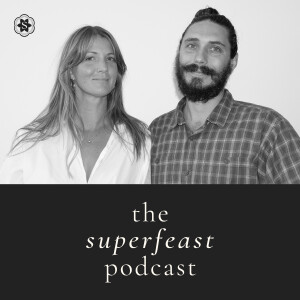
Ian Ferguson from Jaiya Inc. joins Mason today for a juicy chat about relationships, intimacy and sexuality. Ian works with his partner Jaiya to empower people to own their desires and express their true sexual nature. Ian believes an individual's relationship to their sexuality reveals how they live every aspect of their life. Tune in for a truly fascinating and grounded chat about the things many of us don't often address let alone talk about!
"having sex is natural, but making love is an art." - Ian Ferguson
Mason and Ian explore:
The challenges couple's face postpartum, how having a child can interfere with intimacy and sex drive and what to do about it. The erotic language of arousal, discovering what turns you and your partner on and learning how to communicate it. The limerence period. The lack of communication and awareness around sexuality in general. The five sexual blueprint types - the energetic, the sensual, the sexual, the kinky, and the shapeshifter. The Erotic Breakthrough Course; how to embody, heal and expand your sexual blueprint type. Sexuality as a common thread amongst us all - "Where did we all come from... We all came from sex." Ian Ferguson
Who is Ian Ferguso ?
The consummate Renaissance Man and a lifelong student of Human Potential, Ian Ferguson has been featured on Good Morning America, Anderson Live, VH1, and in Details magazine.
From his youth as tap dance king of Ohio to directing and performing in Off-Broadway theatre in New York; from building a seven-figure design business serving celebrity clients like Drew Barrymore, Ashton Kutcher and Michelle Pfieffer to co-creating Jaiya Inc., an international company with the mission of uplifting sexuality as something to be openly and honestly discussed, celebrated and enjoyed, Ian has been driven by his desire to create a world with freedom of expression for all, a world where people are more connected to the truth of their bodies and each other through authentic, honest communication, and love.
In 2007, Ian partnered with Jaiya, an internationally recognized, award-winning sexologist and best-selling author to co-found Jaiya, Inc., spreading the word about Jaiya’s revolutionary framework, the Erotic Blueprint Breakthrough™, designed to radically transform how we talk about and experience sex.
Resources:
Ian's Website
Erotic Breakthrough Quiz
Ian's Facebook
Youtube
Q: How Can I Support The SuperFeast Podcast?
A: Tell all your friends and family and share online! We’d also love it if you could subscribe and review this podcast on iTunes. Or check us out on Stitcher :)! Plus we're on Spotify!
Check Out The Transcript Here:
Mason: (00:00)
Ian, thanks so much for being on with me, man.
Ian Ferguson: (00:02)
I'm excited. This is good. Good thing we have a bit of an Australian crew down there from some other podcasters, we've got some coaches down in Australia.
Mason: (00:12)
Cool.
Ian Ferguson: (00:12)
So the people who know the work that we're up to, it's the U.S., Canada and Australia is third on the list of the most people who have taken our quiz and dropped into what we're up to.
Mason: (00:24)
Yeah, I can imagine. It's interesting because Jaiya, your partner... And it's been interesting because I didn't realise when I heard about her back when that you were working side by side, or just how intimately your working and partnering side by side, which is cool because I want to ask a couple of questions in terms of working together that intimately because Tahnee and I, I feel like we do a really good job. Tahnee's the GM of SuperFeast and we're working like every day. You've got a kid as well. How old is your...
Ian Ferguson: (00:57)
10.
Mason: (01:00)
Wow, you've got a proper child, not just a three-year-old wobbly child.
Ian Ferguson: (01:06)
You're in a three year old zone?
Mason: (01:09)
I'm in it. I'm bloody in it, man.
Ian Ferguson: (01:12)
Well you're, you're starting to hit that place where it's... Well, in my experience it started to get a little bit easier. The first two years? Whew.
Mason: (01:21)
Yeah, it's going like in both directions. It's a tonne of fun. It's really getting interesting and it's wild having all these conversations, but no, I don't doubt that there's a lot of people following both of your guys' work and like a lot of Jaiya's work, which is, we're realising now, is a lot of your work as well, which is fun.
Ian Ferguson: (01:44)
Right. I didn't really start taking on more of the front face role until about five years ago. I partnered with Jaiya just romantically and was supporting the work in some ways financially, producing some of the film work, and also being a test subject because everything that we talk about is stuff that has either played a really fundamental role in our life, in terms of improving our sex life and our connection. After our child was born, we had a major crash in our relationship. We had about a year and a half of the blissful limerence stage, we're in love just can't keep our hands off of each other, all the passion is alive. We had a child, the economy crashed and I moved from a place that I had become really entrenched into, into this cohabiting domestic lifestyle.
Ian Ferguson: (02:41)
From stress and just total hormone imbalance I crashed, my libido tanked, my confidence in the relationship started tanking. Jaiya is a sex educator, our sex life falls off the map from going from like 100% down to 10%. So she's a sex ed educator, has all the sex techniques in the world at our disposal and we can't figure it out, like many couples who are in that situation of either just that period after you've been really deeply connected and all of a sudden it's not working the same or these big life circumstances come up and it's all different.
Ian Ferguson: (03:17)
So we had a three year period where we were deeply, deeply struggling and in that period and our commitment to each other, we just started to really reconfigure how we were relating to each other because it wasn't working. So we went through an intense experimentation stage and that's where I really started to get much more deeply invested in the work because I saw the turnaround in our relationship and I'd always wanted to dive more deeply into the work of helping people live their fully expressed lives, feeling fully alive, and it just seemed like a complete perfect dovetail and a new transition for me. So three, four years into the relationship, I really took a deep dive into it. Then the last five years I've been basically just on the front lines with her in terms of everything from teaching, enhancing the models and frameworks that we're working with, and then building our coach community and just getting the word out there.
Mason: (04:20)
And going through those three years to get there and sticking it out obviously then... Because that's all with like you know, when you're going through something, when you're really going through it and you're like you're kinda like... It's like, "All right, cool." A lot of people just don't hold on or a lot of people just won't go deeper in order to find their way out of that maze. Obviously for you guys that period would have created a knowing and loving of each other that's allowed you to work together I assume, but was it so... So was it... Because you're not running off endorphins anymore, you've got a child in the house. I was talking to Tahnee about how she heard Jaiya's, like a bit of her postpartum, what was going on, like having a tear and needing the internal massage, which Tahnee asked me to ask you if there are any details on that, because we've got a lot of mumma's that tune into the podcast who might be interested on that level.
Mason: (05:15)
So maybe we should stop there and just talk about that, but what I was just wanting to know is was it that experimentation and looking in for different shades that you could bring into the relationship? Was it trying to get to know yourself and then you couldn't just take for granted that, "Oh yeah, I know myself on more of a surface level and that's enough," but "Holy shit, if I'm going to have this deep a relationship and this new life that's seemingly domestic... As you say, which seems like there's shackles, which it's just an external thing to rebel against. It's nothing... You don't really know yourself and know what you want it's not going to be that satisfying.
Mason: (05:56)
So I just want know more of the details of postpartum and for you as well, what you went through during that time to really keep you bolstered and then coming out of it, was it that that experimentation and really getting to know yourself that led the way?
Ian Ferguson: (06:12)
So there was the perfect confluence of events, working both angles here. One was the perfect confluence of events that was leading us down the dark tunnel, which was at the edge of us separating our relationship and figuring out how to co-parent as separately and then riding and in tandem with that was our dedication also to, "That's not how we want things to go. We know we love each other. It's just the passion is not there, the connection has dropped off," and being committed to figuring out how to reinvigorate that and along that line, Jaiya in her work as a sexological body worker and at that point, being fully in this work for over 12 years working with thousands of clients, she started to recognise the patterns in people's sexuality where she would be working with one client and she would get turn-on with a certain kind of technique or a certain kind of approach to their arousal or the way that they could drop in with someone.
Ian Ferguson: (07:19)
Then she would use that same technique on another person and it'd just be a flat line, there'd be nothing. This is where the Erotic Blueprints really started to crystallize for her and start to download. So he started to see these patterns and then she started to experiment in her client sessions with these ways of approaching people in the arousal patterns and the sexuality and their ways of bonding with someone else, and it started to crystallize and form into the framework that has now become the Erotic Blueprints. Part of the experimentation that I talk about, it was us experimenting in our own sex life with each other, and what we discovered, and I'm sure we can drop into the blueprints and really dial that in for your audience of what the hell I'm talking about, but it's basically your erotic language of arousal.
Ian Ferguson: (08:11)
Once you understand what you're turned on by, how you're turned on and what you're not turned on by and what turns you off, then you start to be able to have this language of articulation, of being able to share with your partner and know. What we discovered was, at the time, Jaiya was primarily sexual, partially because that was very front and center in her biochemical makeup, in her desire pattern was her sexual blueprint and secondary was energetic. So sexual, she was craving sex, was starving for sex. My libido had tanked on a biochemical front, testosterone was down, we were doing co-sleeping with our child, which was also boosting oxytocin and bonding chemical, which is just like bonding but not sex drive and sexual, as we discovered later, was basically zero on my blueprint map. So she's a sexual energetic, I'm a sensual kinky.
Ian Ferguson: (09:13)
So she was coming to bed at night and she was grabbing my crotch and she was trying to seduce me by going and taking strip classes and coming home and getting in a g-string and doing sexual moves in front of me and trying to get me turned on that way. At one point that's exactly what she did, and my comment to her was, "You don't need to do that. That's so obvious," and that was not the right thing to say, and it spoke to a truth for me, which at the time that was not something that was going to get to my arousal. I was coming to bed at night and I would slide up next to her and I would start to cuddle and want to relax and have this transition moment and then discover what unfolded in our eroticism through that connection and bonding.
Ian Ferguson: (10:03)
When I came in and cuddled with her, she was like, "Oh great, another night we're going to roll over, we're going to go to sleep. I'm not going to get laid tonight." So she's just like moving into depression, rolling over, crying herself to sleep. I want to connect. I want to have that kind of intimacy with her. I had already been married once and our sex life was one of the fail points in that relationship. So I started to spin and go into like, "Okay, here we go again. I don't know what to do. I don't have the confidence to step up and be present with my partner in a way that's going to satisfy her." So it was like Jaiya was speaking American English and I'm over here trying to speak French, and we think because we speak this different language that, "Oh, we must not be in love with each other."
Ian Ferguson: (10:54)
Once we started to discover the blueprints, then we can start to actually communicate to each other in the way that the other was going to be turned on. That's when the deeper experimentation in our own relationship started to move into our own expansion of, "Okay, how can I expand and meet my partner in her sexual and her energetic approach to sexuality and how can she start to discover more about the sensual and the kinky approach to sex?" That's where that started to come together. The whole piece around the vaginal tear and the biochemistry end, we can talk about that in a minute, but that's where the blueprints started to take formation.
Mason: (11:33)
What's it's really interesting in that there's this obviousness, in say, in certain instances where someone just wants on, and the other is feeling like they need a little bit more, like they need some cuddling and then going in many different directions. However, it's so blatantly obvious to you a lot of the time, which is one of the... When it's happened to me I know that Tahnee would want something else and I'd theoretically know how to approach it, but just have this block of languaging and just couldn't do it, which it feels sadistic in the sense of like, "Who am I? I know that I need to just approach it in a little bit of a different way. Why aren't I doing it? Why can't I do it?" There's that huge block.
Mason: (12:27)
The blueprints I actually heard about probably about five years ago when Tahns and I were first starting out and we'd just have these conversations. Obviously, just early on in the relationship it's just like, "Oh that's interesting, and that's interesting." It's not like.. There wasn't too much on the line then because it was just flowing up, moving into when there is a child in the mix, all of a sudden, I think what becomes really highlighted, as you said, is like jewel blueprints that come up, which is something that happens in relationships, just like, "Hang on, you are super sexual and now you need something else, like energetic. What is that?" and there's no... All of a sudden it's like, "Why aren't you the same," and, "What's wrong with me? What's happened here?"
Mason: (13:16)
So that's one thing I really, really, like it's always stuck with me about the blueprints and I've got to get in again and take the... Is it a quiz because we got a [inaudible 00:13:29] book.
Ian Ferguson: (13:29)
There's an assessment. There's a full assessment. So you take the quiz and then the quiz kicks out what type you are. It also gives you a rating of percentages. So it's not just your primary because you use secondary, tertiary, your quaternary, I don't know what that is, and your fifth because there's five of them all together.
Mason: (13:46)
I've had a bunch of friends really sing its praises and I dialed in. Without doing the quiz I just dialed into knowing myself because I always have a hard time doing quizzes and things. Even though there's no problem like, "Don't label me," I'm always worried that I'll change my mind and that it won't get reflected in the quiz results.
Mason: (14:06)
Anyway, it's kind of... I've known a bunch of people who are grounded and know their shit who have really just... it's made for a really good talking point and understanding of themselves. Therefore a way to communicate with their lovers.
Ian Ferguson: (14:20)
For sure. There's several threads coming up from me as we talk about just this, the context here. One is the piece of new to relationship, most people revert to the sexual way of relating. You're in that limerence phase, there's all this turn on, your hormones are pumping and we revert to sexual. So then we abandoned or just forget about those aspects of our sexuality, which may actually be more our primary drivers.
Ian Ferguson: (14:50)
So as the limerence period, which is that first flush of romance zone, which lasts six months to two years fades, it's just like what most of us do in so many other aspects of entering into a romantic relationship. Let's say you're the type who was going to yoga five times a week and you have your dance thing on Thursday nights and you hang out with your buddies on Saturdays. You're now in your relationship and a lot of time and dedication and focus goes into this new romance, you drop away, maybe you get to yoga once a week and you hang out with your buddies every four weeks and all these elements that were really nurturing to you start to drop away. Then six months, two years in, you start to go, "Well wait, where am I in this relationship?"
Ian Ferguson: (15:38)
So we've set up this expectation with each other that this is how it is. We're sexual, we get together all the time, we're spending all of our time together, and then the satisfaction of that, the intimacy gets too close and then it becomes the sort of like sense of a trap. That's where starting to utilize the language of the blueprints gives you the empowerment and the language to bridge the gap.
Ian Ferguson: (16:02)
So the other aspect of this, which the thread that popped to me when you're talking about your progression in your relationship is this problem with sexuality in general, which is people don't talk about it. Like we do to some degree in our intimate relationships. I know people, because of our clients, who have been in relationship for 20 years and they never talked about sex. It's supposed to be automatic, it's supposed to be natural. Yes, it's natural. So having sex is natural, but making love is an art.
Ian Ferguson: (16:35)
So being able to articulate how you make love gets into all the fine detail of what pencil you're using or brush you're using or the type of paint or the way you're mixing the colors together, and you don't have the facility in any Western culture that I'm aware of where you're given a deep language of how to express and articulate needs, desires, hopes, wishes, turn-ons, turn-offs in a way that is rich and actually truly descriptive and or not triggering.
Ian Ferguson: (17:13)
So if I'm a sexual and I'm used to speaking overtly sexually about how I like my partner's breasts and her ass and my language, that's the limit of my language, and then my partner turns out to be an energetic sensual or kinky and that's my language, it's very likely just to shut that person's system down and just cut, cut off the communication.
Mason: (17:42)
Well, I relate exactly to that scenario and at times obviously it changes, and that's where I think it's going to be, I'd like to jump in a little bit more in and do some of the blueprints because it's like, "All right, great, we know that at times your energetic and what that means. However, I'm over here sexual," because I feel like that's like the quagmire.
Mason: (18:06)
That's why I love how thoroughly you and Jaiya are going through this. It's not just like, "Here's your sexual blueprint. Now have fun everyone." It's like, "Well now what? I've got my needs over here, saying I'm feeling really sexual and you've got your needs. I just want to pull some hair and go for it and you need to energetically feel me." It's like how do we bridge that? So is it as simple, in your approach, is it just like, "Let's communicate. Let's talk about our needs?"
Ian Ferguson: (18:49)
So the blueprints are the introduction to a pretty broad framework. It that has the blueprints, it has your stages of sexuality and it also has the four pathways or blocks to sexual health and vitality. So there's an ecosystem that's working here and just like anything that is really rewarding, it's a 360 degree panoramic, full spectrum look at who we are and to add another complexity, our sexuality is shifting. You're without a kid, without your domestic needs and all those things weighing on you, your sexuality may be in a very different place than when you've got a newborn and you're dealing with all of the things that come up there or aging or an accident or a breakup in a relationship. There's so many things that can affect our stage of sexuality.
Ian Ferguson: (19:54)
One of the routes to this, to you, anybody listening, is a willingness, right? So if there's a willingness to start to get into the other person's world, then there's a deep hope that you can really start to expand into that person's blueprint and feel it and understand it. So it's the ability, more than communication, to get to this empathetic convergence where you can really start to, even if it's not your turn-on, you can start to feel the person's turn-on through that approach and give spaciousness to it. I feel like it'd probably be better for everybody listening for us to dive into just articulating what the blueprints are at this point a little bit.
Mason: (20:42)
Yeah, it sounds good.
Ian Ferguson: (20:43)
Great. So there's five blueprint types. There's the energetic, the sensual, the sexual, the kinky, and the shapeshifter.
Ian Ferguson: (20:52)
The energetic really thrives and tends to get turned on by anticipation and tease and distance. They tend to also look at sexuality in more of a spiritual or transcendent way of connecting with another person. So those are some of the positives and the superpowers of the energetic. They could orgasm by not being even touched, by me standing across the room from Jaiya 20 feet away, I can play with her energetically and she can start moving into orgasmic experience. Really a mind bender for somebody who's not energetic, "What's going on? I don't even know how to relate to that." So those are the superpowers of the energetic and the shadow of the energetic can be too much closeness, too fast, can completely shut the energetic down. So you move into the collapsing of the space ends their arousal. The anticipation of the kiss of like I'm inches away and we're holding that space is where the juice is, and then when I move in for the kiss, perhaps an energetic might be like, "Oh, fuck. It all just went away."
Ian Ferguson: (22:12)
This is a generality, not always true, but often an energetic can have a history with sexual trauma and that is where that collapse of space and where that breaking of the boundary is the thing that shuts down their sexuality. An energetic may also give over their boundaries too quickly. They may have very little sense of their own container and what they need. So they'll acquiesce to their lover and that will just reinforce their shutdown and their lack of boundary and they'll do this because they're so energetically connected to their lover that if they disappoint them, they'll feel that disappointment deeply. So that can be some of the things that can be challenging for the energetic type.
Ian Ferguson: (23:00)
Essential type.
Mason: (23:01)
Makes sense.
Ian Ferguson: (23:03)
Yeah, and if you have any questions about it, just interrupt me.
Mason: (23:06)
No, like it's so on. Honestly I know it's just on point. Anyway...
Ian Ferguson: (23:14)
Perfect, and the thing about when people hear about the energetic, we get a lot of commentary is like, "Oh my god, I didn't even know this existed. I've been feeling broken, wrong, like I don't even know who I am," their entire life and then they hear this spoken and they're like, "Oh my god, that's me. I had no idea."
Mason: (23:33)
That's so full on. We haven't really brought it up, but a huge context of just us having this conversation is seeing within the flow of your life, seeing your libido in a level where you can be like almost, I don't know, yourself, proud of yourself. The libido is who you are and your sexuality as a part of who you are. We go into that conversation with the herbs consistently. That's why, when you want to have conversations like these, to see like how do we actually... Yes, you've got like good herbs in like the Jing herbs in there, but that's just starting or just helping something along, but this, it's quite often a... And that was what it was like for me, the biggest penny dropping. I haven't really gone and done my blueprint yet.
Mason: (24:26)
I feel like I've been, I don't know, a little bit apprehensive, it's probably... And to know myself but I don't feel that at all anymore in that area. I'm really, really happy to go there, but just in that nature of that energetic, that existing and that possibly that could come forth rather than another blueprint could come forward, this is very game changing stuff. This is what I like. As you said, and then that leads to you being able to have a smooth lifestyle where libido can actually flourish rather than trying to like, "If I take his herb, I'll have a libido. If I get rid of my estrogen dominance, then I'll have libido." It's like that's going to get so far, but you need a dialogue going forth, right?
Ian Ferguson: (25:07)
For sure. Yeah. Yeah. My mind starts to go off into all the places I could go on that, on a tangent.
Mason: (25:14)
I know and then I'm taking you off course. Let's stop with a distracted, we'll go back to the blueprint.
Ian Ferguson: (25:19)
Cool, and out of that I think we'll be able to touch on some of the things that you're addressing there. So the sensual blueprint, they bring the artistry to sexuality. Their sensual is all about the senses being ignited. So sensual could have a strawberry and eat that strawberry and go into orgasmic states. Sensual is the kind of person when they're eating, you just hear them like, "Hmm, Oh." They like the textures of the clothes, they need the environment to be really dialed in for their system to relax and for them to open. So a sensual type needs the... We talked about an energetic already. So the sensual type typically needs to relax to open to their sexuality. So they can get down regulated and then they can connect. Superpowers of the sensual is they can have full body orgasms, like when they're in their body, they're connected fully.
Ian Ferguson: (26:19)
The challenges or the shadows for the sensual are when the environment or the atmosphere is off, music is too loud, the lights aren't right, they've got the interior brain chatter of, "Oh my god, I didn't return that call. There's a sock on the floor. Oh, that means I got to do the laundry. I got to do this thing." So the disconnect goes into the brain and completely disassociating from their environment. Smells, in terms of receiving from a lover and they can be like, "Oh, they're down there so long, their neck must be getting uncomfortable. Do I smell down there? I don't know if bathed." So they just get lost in all of that minutia and then they can't connect and they can't drop in.
Mason: (27:01)
It's one obvious shadow for sensual, for me anyway, in thinking about it. That's super interesting.
Ian Ferguson: (27:10)
It's not an obvious shadow.
Mason: (27:11)
No, not for me, not in my perspective on that. I'm like, "Oh wow." I just like, "Yeah," but it makes sense that it's like that, "Brrr," chatter is in stark contrast from the sensuality. I guess it's like the balancing act of that blueprint.
Ian Ferguson: (27:26)
For sure.
Mason: (27:27)
So it makes sense on that level.
Ian Ferguson: (27:29)
Yeah, and then a comparative between energetic and sensual would be the type of touch that they enjoy. I know some people may be watching this and some people may be listening, so the energetic, again in that spaciousness, they can feel those energies off the body. So the hairs on the skin, the very edge of the fascia, just like that outer layer of the epidermis, that can be a total turn on with very light and very slow touch. They can feel that energy six inches, 20 feet away. For the sensual, the touch tends to be contouring, more like massage into the tissue. Also still slow and really feeling, feeling everything deeply, but much more physically connected. So the sensual really likes to collapse that space, get into the cuddling and the nuzzling and the deep connection.
Mason: (28:24)
All right, yeah.
Ian Ferguson: (28:27)
All making sense is it?
Mason: (28:28)
Yeah, it's definitely crystal when can... Hey, I just started thinking because I'm an overthinker, so it's just got me thinking as well.
Ian Ferguson: (28:39)
Cool. Then the sexual is what the Western stereotype is about sex and sexuality. They love genitals, they love nudity, they love getting right to business. Sexual superpowers, they can go from zero to 60 in one second flat. It's just like, "Oh we're on, this is sex, we're going to have an orgasm." They want everybody who's involved in the situation typically to have an orgasm, that means success, "We've had a sexual encounter I've had an orgasm, we're good." In opposition to like the sensual, the sexual needs to have sex to relax. Sex is like life itself. If I'm not having sex, I'm not living, I'm don't feel fulfilled.
Ian Ferguson: (29:26)
The sexual who's really sexually fulfilled tends to feel really empowered in work, really feels bold and emboldened and seen. They really need to be seen for their eroticism and accepted for their high libido, for their high desire to just have sex to feel accepted, to feel wanted. So those are superpowers for the sexual and they bring the fun to sex. Like there's not all the story, there's not all the busy work, there's not all the confusion. It doesn't matter if the lights are too bright or the music is, "We're going to fuck, this is good." So they're just like all in.
Mason: (29:59)
And that's super like it's perpetuated... Is it like in the West, teenage boys, that's like you click into the association of that because we've all got an element of these blueprints inside of us and so that either brings like you're a dominant alpha because that is where you thrive and that's just commonly like, "Well that's what sex is in the West." Then there's the other part of it, just like you're a male especially, , just from my perspective and you're energetic and those sensual aspects of yourself are not quite up there, that's very confusing, right? That's like, "Well, I'm just no good at sex."
Ian Ferguson: (30:46)
Right.
Mason: (30:47)
But then that's also what's present at the beginning of relationships, as you were saying, right, that sensual nature, it's a little bit easier for everyone to connect on that level because it's a common commentary on sex and then boom, all of a sudden things change. That must be one of the most common things I'm assuming, but that must be one of the most common things that occur, is a relationship six months in or a year in, and then all of a sudden you almost need to enter into a completely new relationship and it creates these hectic speed-bumps trying to just move past just that whole expectation and just be like, "Oh great. Yeah, cool. Let's do it as we always did, let's just fuck. What happened? Why don't we do that anymore?"
Ian Ferguson: (31:27)
"What happened. Why is it not working?" It's like driving blind, right? Again, back to that language piece, it's not something that people talk openly about, it's not something people... Usually our mentors are anything from our peers, parents, porn, religion, the mentorship that is available to anyone around this realm of sexuality is not only often full of shame and suppression, but sometimes it's downright full of misinformation.
Mason: (32:02)
Yeah.
Ian Ferguson: (32:02)
You're given some tools and you're given a hammer to do something that you need to accomplish with a screwdriver, and it's just because there hasn't been this open dialogue and even with people who have an open dialogue, they don't have the distinctions to really dive in to the full range of human sexuality. It even happens within the communities that congregate around sex and sexuality.
Ian Ferguson: (32:28)
So one of the things that I'm most proud of about what we offer in our community, in our courses, is this full range of sexual expression and acceptance. Nobody listening is broken, wrong in your sexuality. We walk around, many of us, feeling broken, wrong, unseen, ashamed of who we are and this creates more of this hiding, more of this separating and silo-ing and, "I'm just going to suffer here alone in my silence." And back to the community thing, it's like there are great tantra communities, there are great BDSM, kink communities, they're great swinger communities and they also tend to silo. They also tend to be like, "We're this type of person and we're going to hang and we don't understand the kink person over there."
Ian Ferguson: (33:27)
So what happens is the people who've got a kinky person and an energetic person, the energetics typically going to be more guided towards like a tantra community, the kink person's going to be walking into the tantra community and go like, "What is this weird stuff? I'm not into this. No turn on here from me." More disharmony within the relationship and the connection, the kinky is going to take the energetic to the kink environment and they're going to be horrified, likely full of judgment of like, "Wait, sex is supposed to be spiritual and connecting and slow and full of this energetic connection to God," and they're going to look at the kink community and think, "What are these people doing?"
Ian Ferguson: (34:10)
This is what happened with Jaiya and I. I haven't talked about kinky yet, but because of her tantra and energetic background, had really big misconceptions and judgments about the kink community. She had 15 years of being immersed in the tantra community. and sex was about enlightenment and spiritual connection, and this is another shadow of the energetic, where they can be judgmental or have a sense of superiority about their sexuality versus all the other types of sexuality. So that that can then cut them off from this wider expression and wider acceptance of all that's out there to play with.
Ian Ferguson: (34:52)
So the silo-ing of communities goes to reinforce this disconnection between people because they're not seeing, they're not having other people representing in their relationship, these other blueprint types. So that's one of the things I'm most proud about with our community is that we're speaking to everybody's sexuality under one roof, right? We all be all get to play.
Mason: (35:17)
And in a way that isn't... Because I think another common thread if you're just watching Western culture, like media and that kind of thing, the next flow is when it stagnates, "Let's go try something. Let's go out and try some kink. I want to.. I brought home a tantra book," or maybe it's like, "Okay, oh, we're going to go to a swingers party." It's a little bit shooting in the dark, which sometimes gets you there, but when you don't know about the thing that might tickle you in the right place, I really like that, "Well let's just... Those things are all well and good then let's go and do them. They're at our disposal," but you start a little bit closer to home and get a little bit of light on the situation so then you can make... You don't need to seek as much.
Mason: (36:05)
You can like know a little bit more. I really appreciate that because-
Ian Ferguson: (36:09)
Yeah, that's good. I like that too. Not throwing spaghetti at the wall, but yeah-
Mason: (36:14)
Because that's stressful. If you have a kid and you have a job and all these things and maybe a hobby or whatever it is, and your own health stuff going on, you don't have that much time. Maybe in early 20s it's just like, "Hey, cool, I'm going to go try this style of tantra. Then I'm going to do a bit of Taoist sexuality. I'm going to try this. I'll be poly.. Polyamorous for a little bit now." It's just like there's so much time and that's not realistic on a broad scale and you just said, as having these kinds of conversations, it doesn't really happen too much.
Mason: (36:49)
We have like the talk, the sexual talk, which I don't know if that happens. I think it's more of an American thing, like having the talk around sexuality, but we definitely are the same here in Australia. It's definitely an uncomfortable conversation, which is interesting to be like, what we're really uncomfortable with is exploring the fact that we have nuance because these blueprints are going to show, not just being relating to sexuality, right? It's just relating to different other aspects of ourselves that lead to our happiness and our ability to connect. What's so taboo about that? It's hard to admit that this is a new area for us.
Ian Ferguson: (37:36)
For sure. What we've found now that the blueprints have been out there and with a massively expanding community and more people being exposed to the blueprints, is people are finding that this stuff translates into all the aspects of their life, right? How they set their environment, how they relate to their kids, to the people in their workspace and gives them more empowerment, not just in sexuality, but to really own who they are and what they need to thrive any situation. So that's, that's an unintended consequence of this.
Mason: (38:15)
Happy accident.
Ian Ferguson: (38:17)
People who've talked about how they now get to understand their children better because they got one kid who's highly energetic and they've been forcing hugs on them for 10 years and they realise this and they go, "Oh my god, what have I done? I've been invading my child's boundaries and their sense of autonomy." Now they're able to create a relationship of respect and say, "Would you like a hug?" and when the kids says, "No," they say, "Great, thank you." And they've got the sensual kid who just really needs to be held and needs their room in a delicious, beautiful designs so that they really feel like they have their space.
Ian Ferguson: (39:02)
So they do translate all throughout the threads of life.
Mason: (39:07)
So good.
Ian Ferguson: (39:07)
Where were we?
Mason: (39:08)
On set rule?
Ian Ferguson: (39:09)
Yeah.
Mason: (39:09)
I think we're finishing the-
Ian Ferguson: (39:10)
The sexual.
Mason: (39:11)
Sexual, yeah.
Ian Ferguson: (39:13)
So the shadow sides of the sexual, one, especially if you're a vulva bodied person, can be the sense of shame because the typical is that the man is the sexual, that's the stereotype and that the penis body people are the sexual and they're overt about it and always driven by it and that the vulva bodied folks are more going to be sensuals or maybe energetics. So a sexual-
Mason: (39:41)
We need to think about penis bodied and vulva bodied?
Ian Ferguson: (39:46)
Yeah.
Mason: (39:46)
What do you mean by that?
Ian Ferguson: (39:48)
So we're taking genitals away from gender and we're taking genitals away from your sexual identification.
Mason: (39:56)
Yeah.
Ian Ferguson: (39:57)
So this is for anybody who's trans, bi, non-binary, there's I think... I get this number wrong frequently, but it's somewhere between 63 and 67 gender identifications currently out there. So one of the things also in our community that we're working to do is obviously make it open and accepting to the multitude of consensual relationship styles, your sexual identity and your gender identity. So that when I speak to the penis bodied, let's say there's a bisexual person who's got a penis, they identify as feminine in their energy, they don't really relate to being called a man, but maybe they're going non-binary, but I can speak to the genitals and I can speak to the stereotype that's usually associated with those genitals, right?
Ian Ferguson: (40:55)
So a person with a cock is going to be typically identified as male. They may not present as male or they may present as male, but identify as female or identify as a trans or whatever. Wherever you find yourself we are here to honor you in that place of self identification. So I choose to say penis bodied or vulva bodied simply to speak to the genitals and the stereotypes associated to them.
Mason: (41:28)
I didn't realise it was a literal penis bodied. I didn't realise that or if it was just like a body shape kind of thing. Anyway, I got it. I love it. So the shadow side of the sexual self...
Ian Ferguson: (41:49)
So for the vulva bodied, typically a highly sexual vulva bodied person will come up against being slut shamed. It's just not acceptable, right? So shame can be an aspect of it. Another version, which I didn't realise until about two and a half years ago when we were doing some of our own work around erotic personas, was the layers of sexual shame that I was dealing with. So for the vulva bodied and this thing of being overtly sexual can end up in a place of shame, slut-shaming, being shamed for their overt sexuality. On the opposite, I just realised about two and a half years ago, this was running for me, as a penis bodied person, I identified basically a cisgendered male, my is with my genitals, I had the good boy complex, right?
Ian Ferguson: (42:49)
So in relationship to women, if I presented my desire for them, that was me being a jerk. This is how I associated to it. I associated the guys who are the alpha male as dangerous, threatening. So there was a different layer of shame for me being a cock bodied person that then had me shut down those energies in myself and not be able to put them out in the world. So that's a really interesting growth edge for me, in how I relate to my sexuality and being able to, once I got a handle on this and I played with an erotic persona that was overtly sexual, I started to be able to re-own aspects of my sexuality and my sexual started to go up in my blueprint percentages.
Mason: (43:40)
Right. So you can see you're tuning in like on a yearly level and just seeing these alterations. It makes sense. You've got this garden of sexuality and you've got to start somewhere in watering some of the pioneer sexual plants for you and then that's going to help everything else grow.
Ian Ferguson: (44:00)
For sure. That's the zone we call expansion, and that's where you start to be able to get the turn-ons of your lovers or other blueprint types and actually integrate them. So you're not just doing something in service to somebody, but you actually can like tune in to that aspect of your sexuality.
Mason: (44:20)
Cool. Yeah, and that's a nice little caveat that I want to talk about, because that's what quite often what stops me, just I think more as an excuse rather than anything, is that I don't want to be pigeonholed. I don't want to completely go, "This is who I am and this is what I want to try," and then now realise, "Actually no, it's something else." I don't like being pegged down, but which is just a silly little bypass of...
Ian Ferguson: (44:43)
I think it's the common thing for people. An example and we'll talk about it next is the kinky blueprint. So I think a lot of people who will take the assessment, it's your mind answering the questions and the circumstance of the quiz. So you're reading these questions, there may be a lack of relatedness to say like the kinky frame or there may be some kind of subconscious shame running around, "Oh well, that's wrong," or, "I shouldn't be turned on by that," or, "That's strange and I'm not going to answer that question with my true response to it," or "I don't even know what that feels like in my body.
Mason: (45:22)
Yeah, right.
Ian Ferguson: (45:24)
"I've never tried it. So, nope, I don't know." So he first layer is doing the quiz, which is this mental exercise, but where the rubber really hits the road is in the body because these tools came out of somatic practices and it's of the body practices, so when we start to test them in the body, sometimes you get very different results than what comes forward in the quiz.
Ian Ferguson: (45:53)
So somebody who says they don't like spanking either never experienced it, they're ashamed to say it or write it on quiz, and then they get on the table or they start playing around with it with a lover and you do that slap to the inner thigh and they're like, "Ooh!" they just light up like, "Aww-grr!" That's exciting and sometimes unnerving for people because they're just like, "Wait, I don't want to be that kinky person," and yet their body says they're turned on by it.
Mason: (46:24)
Yeah.
Ian Ferguson: (46:26)
Then just one other piece on the shadow side of the sexual, which the sexual may never really be aware of, is that they are missing out. There's a lack of relatedness to all of the other turn-ons that are present. They'll get impatient with the sensual, they have no understanding of the energetic, the kinky is weird and, "Why do we need to do all of this strange thing with scenes and gear and psychological game play?" So they can be very myopically focused and this is a complaint for sexual lovers that we'll often hear from the lover of a sexual, is that they feel like they're a piece of meat. They're just being used for their partner's sexual gratification.
Ian Ferguson: (47:21)
The shadow aspect there is just in the ability to really relate with their partner and and see their partner. The other aspect there too is also the sexual wants to be seen for their libido, their eroticism, their turn on and accepted for that, and when they're not, they can sometimes collapse into a lack of confidence or indignance like, "Wait, we need to be having more sex and we're not and you don't love me," and that kind of spin can-
Mason: (47:50)
Spinning a good story.
Ian Ferguson: (47:54)
Spinning in the story. So kinky. This actually really is my personal fastest access to turn on, is the kinky realm. A lot of people have associated kinky with that has dungeons and leather and chains and the kink realm just sort of busts that myth. It includes that, but the kinky realm is a vast ocean of possibility of expression.
Mason: (48:26)
Did you support Jaiya to write a book about kink?
Ian Ferguson: (48:30)
Oh yeah. So we went deep, deep, deep into the kink realm.
Mason: (48:33)
Is this when 40 days, 40 days of submission?
Ian Ferguson: (48:36)
Yeah.
Mason: (48:37)
Yeah, I remember hearing that story from Jaiya. Okay. Yeah, maybe you could like... I think it's a good story if you want to share your perspective.
Ian Ferguson: (48:47)
For sure. So Jaiya has several books out on the market. The publisher did 40 Shades [inaudible 00:48:57] and kink was starting to come up in the cultural conversation.
Mason: (49:01)
Yeah, right.
Ian Ferguson: (49:02)
Funny enough, Jaiya, when she first formulated the blueprints, there was energetic, sensual, sexual and shapeshifter. Kinky didn't exist. This is how much she didn't have it on her radar as like, "Oh, that's a whole category for people's arousal." So the publishers came and said, "Hey, we really want to get you in on this wave and you're a perfect person to go in and write the book," but she didn't know anything about kink. So we made a deal with each other, which we were going to do 40 days where Jaiya was dominating me and I was submissive to her. Then we were going to do the reverse where I was 40 days dominating Jaiya and she was submissive to me and Jaiya goes whole hog whenever she does anything.
Ian Ferguson: (49:50)
So I got to be the guinea pig in this experiment and realise the depth of my kink. Like it was there in surface expression, little bit of cuffs and some light bondage gear and that sort of thing that I had in my repertoire, but we hired experts, we hired trainers, we went deep into multiple modalities of the kink experiment, learned incredible amounts about our own range of what turns us on and what doesn't. Kink is still a way low and Jaiya's chart, but now she has a much deeper understanding and has some access to kink where she didn't have it really at all before. Then in the kink experimentation... I had a thought that passed. I'm going to let it pass because I'm not going to catch it at the moment. It'll come back.
Mason: (50:49)
[inaudible 00:50:49] maybe. That'd be fine.
Ian Ferguson: (50:50)
What's that?
Mason: (50:51)
I was just talking to the idea. You know the ideas and the thoughts come in, you just like it's all kind of it's own little adventure and maybe in another podcast for right now until we've got a little bit of extra room for it.
Ian Ferguson: (51:02)
That's right. It didn't need its space quite yet. It was an amazing opportunity for me to be seen fully for who I was and honored in our relationship.
Mason: (51:14)
I can imagine.
Ian Ferguson: (51:15)
It was also pretty wild because when I was in the submissive role, for a cisgendered male, penis bodied person, I definitely had like shame challenges coming up. Like, "Wait, why am I turned on by this?" Or we would experiment with shaming language and I was like, "Oh, I'm not going to be turned on by being called a slut or derogatory terminology being used on me during a scene," but we came up with a list of vocabulary words and things to play with, really pushing the edge and we're doing this scene, she's using his words and I'm like, "Whew, my arousal is through the roof. I'm completely turned on by being put in this position where I'm having degrading language used about me," and I kept asking why.
Ian Ferguson: (52:05)
Like I'm 30 days into this experiment of being in a submission. I just keep going like, "I don't have any history... These are misconceptions that are common around BDSM where I'm like, "I don't have any history of sexual abuse or trauma," like, "Why am I into all of this stuff?" and finally one of the BDSM practitioners we were studying with was just like, "Why don't you just stop asking why and enjoy yourself?" And it's like, "Ooh."
Mason: (52:39)
That's right. It's an interesting one because I relate to the good boy and so in terms of... I mean I could probably relate of having it come towards me a little bit more, but I feel like I've just noticed recently and just growing up, parents divorced, mainly with my mum, really associating with being like, "I'm a good man," and a little bit of PC elements come in there. So in terms of dominating in that language, coming from myself, even now I can see that that's like, "Well that opens a river of sexual expression," opens something up and that's interesting point. Just, "Why don't you just enjoy that? That's an opening and leads..." You don't have to analyze that, but just watching that subconscious or that, "This is bad. You can't say those things. You can't say that to a woman," and everything that comes with it, very insidious for me.
Ian Ferguson: (53:44)
For sure. Very much cuts one off from access to pleasure, access to honoring oneself, being able to see and seen first by oneself, let alone being able to present that to the outside world and have it be seen by someone else.
Mason: (54:00)
That's so full on because that just opens up so much in the day to day just joy of being with a person, right? It can just create a whole dam and a relationship if there's these blockages, and just what you just said, that's often enough. It doesn't need to be analyzed.
Ian Ferguson: (54:18)
Yeah. I've had some kinky partners since then and played very much in the dominant role. Jaiya, she can play psychological kink. There's two different types of kink as we frame it, there's the psychological kink in the physiological or sensation based kinky. I'll distinguish those in a second, but with Jaiya, she can play psychological kink, she can be submissive psychological kink. She's not so much going to be in the sensation based kink in terms of spankings or deep scratching or any kind of hitting or bondage, that kind of stuff.
Ian Ferguson: (55:00)
So I've had some other partners who are very, very, very much in the kink and very much into the physiological and psychological and that place of ownership of being able to step into the dominant role. So kink can be an amazing place to practice for anyone who's looking to step into authority, but if you're looking to play a part and put on the role of authority, like, "You're going to get down on your knees and suck my cock," and play this role, the authenticity drops out and the actual connection and the turn on drops out because the receiver, let's say in that circumstance, if I'm going to put on this role, and that's what I did practically like 25-30 days into my dominance role with Jaiya, I was trying to put on this character who was dominant and it was a joke, like Jaiya was literally laughing at me at certain points. Like, "Phht, I'm so unconvinced by whatever you're doing."
Mason: (56:06)
Yeah, I can see you putting on your officer's hat, but yeah, talk about that nuance because I'm sure that's like a block. I can definitely relate to that and especially even something that would help me in the future just hearing about it now. Like what was the nuance there?
Ian Ferguson: (56:26)
Yeah, so there's a lot of nuances. One, just the discomfort of like I had the good boy thing. So being able to drop into what... So here's, here's the big shift that occurred. One of our instructors in this realm basically boiled it down to me that this is not about putting on that role. This is about an honest, authentic conversation about what turns you on and being really present with your partner because as a dominant there's so many different roles you can play in that. So you can play the role that you're submissive is a piece of furniture or a piece of meat, they're there to be used by you, but it's all within a container of a very, very clearly defined container that's consensual, has boundaries, has edges that you cannot go past and has rules that you must abide by.
Ian Ferguson: (57:29)
So once you set your container, once you have full-on consent from every participant in the scene, you know what the game is that you're playing. Then within that game, the dominant is actually responsible for the wellbeing of the submissive. So some people will look at the BDSM world and they'll think, "That's just abuse. The person is hurting that person and they shouldn't be hurting that person," so all these judgements role. Inside of the context of a conscious kink scene, the submissive is the responsibility of the dom. So awareness needs to be heightened. If I'm in a dominant role, what's occurring for my submissive? How are they feeling? Are they getting turned on because we have an agreement of this is a scene that even if the stated thing is like, "This scene is from my pleasure and my pleasure, only as the dominant," they're in an agreement thing, so they're in their arousal, they're in their turn on within the context that we've set.
Ian Ferguson: (58:40)
So there's this awareness, there's this presence that needs to take place to be dropped in to, "Oh, there's the subtlety of that thing that then turned into my turn on, on my pleasure because my submissive is turned on, or because the scene is going just as it's planned and I'm seeking for what really turns me on." I'm not playing at some role of like, "We're going to pull out the cop uniform and have you chained to the bed," and whatever the stereotype thing is that we think it's supposed to be-
Mason: (59:16)
Which is often as far as people go.
Ian Ferguson: (59:18)
Yes, right, but rather looking for like, "Oh, it really turns me on."
Mason: (59:25)
What actually turns me on?
Ian Ferguson: (59:27)
Yeah, what actually turns me on and where do I feel that connection to my own power? Then this where lifestyle kink, where people can start to go into lifestyle kink or really using the tools of kink domination and submission to create empowerment in their own life.
Ian Ferguson: (59:47)
So let's say I'm in my workplace and I have a difficulty with being assertive and being authoritative. Well, start to look where the authentic core of what result you're trying to achieve in that situation, step into authentically claiming it and calling it out with the people who are either your subordinates or even with your boss, but really being in an authentic emotional connection with the outcome you're looking to create, whether it's in a BDSM scene or it's just in the conversation you're having with your boss.
Mason: (01:00:26)
Yeah. I feel like you can't separate this from any other part of life, can you? To think that we can compartmentalize sex into this little like piece of the pie of who we are now. Well even just what we bring to sex and our own sexuality, it permeates everything. Shadow side?
Ian Ferguson: (01:00:51)
Okay. Well the positive and superpower of the kink is wildly creative, just immense. I could be studying and doing really intense kink work for 10 years and really there'd be another 10 or 20 years to play in this realm. The superpowers are wildly, wildly creative. Often superpowers have to do with the authenticity of the conversations because you are talking about boundaries, consent, really diving deep into knowing your own turn-ons and the other person's turn-on, so you can create very conscious container for sexual play and sexual expression and superpowers for a kink is they also can have non-touch or let's say non-genital focused or non-touch orgasms because they move into subspace because they're being bound and spanked and the endorphins are rushing. So they can achieve orgasm without genital touch or without what typically is associated to what leads to orgasm.
Ian Ferguson: (01:01:55)
Shadow sides. Biggest shadow side for the kink is shame, which we already have touched on here, "Why am I this way? Why am I turned on by this? I'm one of the weird people. I'm a kinky super freak. I don't want to be that," so that can be a downside. Then also a potential for... this is kind of a shadow potential for any blueprint type, but for kinky it can be very distinguishable, which is you can have a particular turn on, which becomes a rut, which becomes a sexual grave.
Ian Ferguson: (01:02:35)
So let's say an example is like I'm only turned on by having sex in the yellow raincoat. "That's my kink, and that's the only way I'm turned on, and here I'm with my partner and that's really not doing it for my partner but that's it, that's all that turns me on and I can't get past it. So you can get into this rut that then becomes the grave of turn-on where there's no turn-on to be found elsewhere where you're going to lack sexual connection with your lover.
Ian Ferguson: (01:03:12)
I want to state really clearly, if that works for you, whatever that turn on is and you're happy with it and your partner's happy with it, there's nothing wrong with it. It's all good, but often the sexual dissatisfaction, the sexual disconnection takes place to oneself or to others and you're in the grave.
Mason: (01:03:38)
In the grave. And then shapeshifters, just shapeshifting in dominance throughout the different blueprints?
Ian Ferguson: (01:03:45)
Yeah. Shapeshifter is everything. So the shapeshifter is like the high performance sports car of sexuality. They have the full range of expression. They're turned on by all of it. Superpowers for a shapeshifter are that they're turned on by all of it. They can be the ultimate lover for any lover because they have the full range, they're turned on by it, they know how to feed their lover in whatever blueprint they are.
Ian Ferguson: (01:04:14)
On the flip side of it, the shapeshifter also can have a sense of shame because they're usually really big sexually. They're really expressed and they've been shut down as "You're too much, you're too loud, you're too big, you want too much. Why is this always so complicated?" So their sexuality can be sh
More Episodes
All Episodes>>You may also like









Get this podcast on your phone, Free


Create Your Podcast In Minutes
- Full-featured podcast site
- Unlimited storage and bandwidth
- Comprehensive podcast stats
- Distribute to Apple Podcasts, Spotify, and more
- Make money with your podcast

- Privacy Policy
- Cookie Policy
- Terms of Use
- Consent Preferences
- Copyright © 2015-2026 Podbean.com