Episode List
Archive: Hatshepsut
Misha Glenny delves in to the In Our Time archive to select ten episodes for listeners to revisit. His third choice, first released in November 2014, is the Egyptian pharaoh Hatshepsut, whose name means 'foremost of noble ladies'. She ruled Egypt from about 1479 - 1458 BC and some scholars argue that she was one of the most successful and influential pharaohs. When she came to the throne, Egypt was still recovering from a period of turbulence known as the Second Intermediate Period a few generations earlier. Hatshepsut reasserted Egyptian power by building up international trade and commissioned buildings considered masterpieces of Egyptian architecture. She also made significant changes to the ideology surrounding the pharaoh and the gods. However, following her death, her name was erased from the records and left out of ancient lists of Egyptian kings.With:Elizabeth Frood Associate Professor of Egyptology at the University of OxfordKate Spence Lecturer in Egyptian Archaeology at the University of CambridgeCampbell Price Curator of Egypt and Sudan at The Manchester MuseumProducer: Victoria BrignellReading list:Elizabeth Blyth, Karnak: Evolution of a Temple (Routledge, 2006)Kara Cooney, The Woman Who Would Be King (Crown, 2014)José M. Galán, Betsy M. Bryan and Peter F. Dorman (eds.), Creativity and Innovation in the Reign of Hatshepsut (Oriental Institute of the University of Chicago, 2014)Marc Van De Mieroop, A History of Ancient Egypt (Wiley-Blackwell, 2011)Catharine H. Roehrig, Renée Dreyfus and Cathleen A. Keller, Hatshepsut: From Queen to Pharaoh (Yale University Press, 2005)Catharine Roehrig (ed.), Hatshepsut: From Queen to Pharaoh (Metropolitan Museum of Art, 2005)Joyce Tyldesley, Hatshepsut: The Female Pharaoh (Penguin, 1998)Willeke Wendrich (ed.), UCLA Encyclopedia of Egyptology (University of California, 2010) particularly Peter Brand’s essay, ‘Usurpation of Monuments’In Our Time is a BBC Studios productionSpanning history, religion, culture, science and philosophy, In Our Time from BBC Radio 4 is essential listening for the intellectually curious. In each episode, host Misha Glenny and expert guests explore the characters, events and discoveries that have shaped our world.
Archive: Coffee
Misha Glenny delves in to the In Our Time archive to select ten episodes for listeners to revisit. His second choice, first released in December 2019, is the history and social impact of coffee. From its origins in Ethiopia, coffea arabica spread through the Ottoman Empire before reaching Western Europe where, in the 17th century, coffee houses were becoming established. There, caffeinated customers stayed awake for longer and were more animated, and this helped to spread ideas and influence culture. Coffee became a colonial product, grown by slaves or indentured labour, with coffea robusta replacing arabica where disease had struck, and was traded extensively by the Dutch and French empires; by the 19th century, Brazil had developed into a major coffee producer, meeting demand in the USA that had grown on the waggon trails.WithJudith Hawley Professor of 18th Century Literature at Royal Holloway, University of LondonMarkman Ellis Professor of 18th Century Studies at Queen Mary University of LondonAndJonathan Morris Professor in Modern History at the University of HertfordshireProducer: Simon TillotsonReading list:Brian Cowan, The Social Life of Coffee: The Emergence of the British Coffeehouse (Yale University Press, 2005)Benoit Daviron and Stefano Ponte, The Coffee Paradox: Global Markets, Commodity Trade and the Elusive Promise of Development (Zed Books, 2005)Markman Ellis, The Coffee House: A Cultural History (Orion, 2004)Ralph Hattox, Coffee and Coffeehouses: The Origins of a Social Beverage in the Medieval Near East (University of Washington Press, 1985)Jonathan Morris, Coffee: A Global History (Reaktion, 2018)Mark Prendergast Uncommon Grounds: The History of Coffee and How It Transformed our World (Basic Books, 2010)Claudia Roden, Coffee (Faber, 1977)William Clarence Smith and Steven Topik (eds.), The Global Coffee Economy in Africa, Asia, and Latin America, 1500-1989 (Cambridge University Press, 2003)William H. Ukers, All About Coffee (first published 1935; Martino Fine Books, 2011)Anthony Wild, Black Gold: The Dark History of Coffee (Harper Perennial, 2010)In Our Time is a BBC Studios productionSpanning history, religion, culture, science and philosophy, In Our Time from BBC Radio 4 is essential listening for the intellectually curious. In each episode, host Misha Glenny and expert guests explore the characters, events and discoveries that have shaped our world.
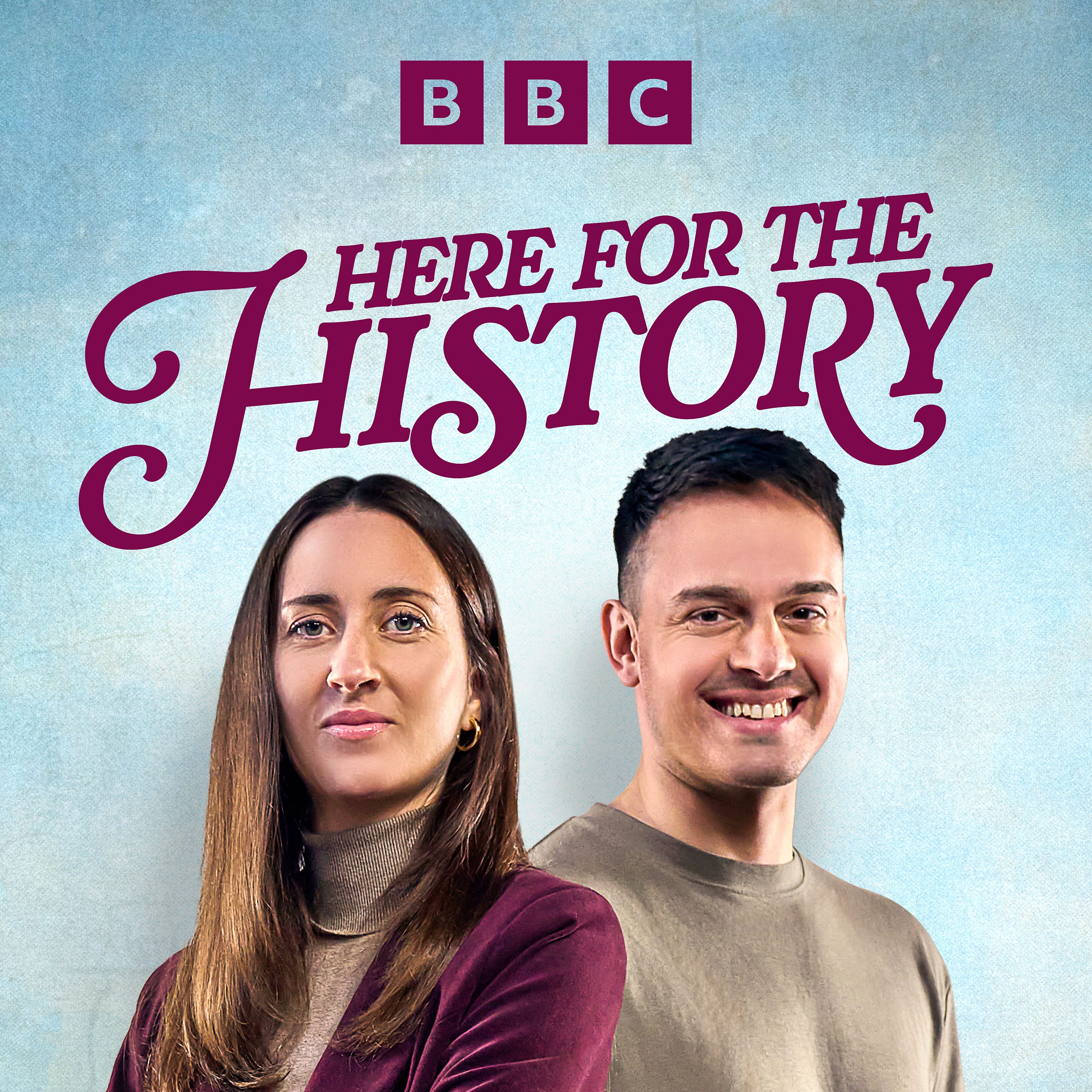
Pockets (from Here For The History)
To the frustration of many, a lot of women’s clothes don’t have pockets. But why on Earth is that the case? Especially when men’s clothing seems to be full of pockets.On Here For The History, Alice Loxton and Ben Henderson track the tumultuous and muddy history of women’s pockets. From capacious beginnings, through many fashion changes, to suffragette campaigning and societal expectations.Alice and Ben unpick the surprising moments of pocket history that have contributed to the inconsistency of these sewn-in marvels today.If you enjoy this episode, you can find more episodes of Here For The History on BBC Sounds. If you’re outside the UK, you can listen on BBC.com or wherever you get your BBC podcasts.KEY SOURCES: Pockets: An Intimate History of How We Keep Things Close by Hannah Carlson The Pocket: A Hidden History of Women's Lives by Arianne Fennetaux and Barbara Burman
Archive: Aphra Behn
Widely regarded as the first professional woman writer in English literature, Aphra Behn (1640-1689) is best known for her plays and her novel Oroonoko, she's been an inspiration to countless writers across the ages.This archive episode, first released in October 2017, was selected as part of a ten-episode series by Misha Glenny. In the episode, Melvyn Bragg and guests discuss the life and times of Behn, who made her name and her living as a playwright, poet and writer of fiction during the Restoration. Virginia Woolf wrote of her: 'All women together, ought to let flowers fall upon the grave of Aphra Behn... for it was she who earned them the right to speak their minds'. Behn may well have spent some of her early life in Surinam, the setting for her novel Oroonoko, and there are records of her working in the Netherlands as a spy for Charles II. She was loyal to the Stuart kings and refused to write a poem on the coronation of William of Orange. She was regarded as an important writer in her lifetime and inspired others to write but fell out of favour for two centuries after her death when her work was seen as too bawdy, the product of a disreputable age.With Janet ToddFormer President of Lucy Cavendish College, Cambridge UniversityRos BallasterProfessor of 18th Century Literature at Mansfield College, University of OxfordandClaire Bowditch Post-doctoral Research Associate in English and Drama at Loughborough University Producer: Simon Tillotson. Reading list: Kate Aughterson, Aphra Behn: The Comedies (Palgrave Macmillan, 2003) Ros Ballaster, Seductive Forms: Women’s Amatory Fiction 1684-1740 (Oxford Clarendon Press, 1991) Aphra Behn (ed. Joanna Lipking), Oroonoko (Norton and Co, 1997) Aphra Behn (ed. Paul Salzman), Oroonoko and Other Writings (Oxford University Press, 2009) Aphra Behn (ed. Jane Spencer), The Rover and Other Plays (Oxford University Press, 2008) Aphra Behn (ed. Janet Todd), Oroonoko (Penguin Classics, 2003) Aphra Behn (ed. Janet Todd), Oroonoko, the Rover and Other Works (Penguin Classics, 1999) Aphra Behn (ed. Janet Todd), The Complete Works of Aphra Behn:7 vols. (Pickering and Chatto, 1992-6) Claire Bowditch, The Works of Aphra Behn (Cambridge University Press, forthcoming) W. J. Cameron, New Light on Aphra Behn (University of Auckland Press, 1961) Maureen Duffy, The Passionate Shepherdess: Aphra Behn, 1640-89 (Jonathan Cape, 1977) Derek Hughes, The Theatre of Aphra Behn (Palgrave Macmillan, 2001) Derek Hughes (ed.), Versions of Blackness: Oroonoko, Race and Slavery (Cambridge University Press, 2007) Jane Spencer, Aphra Behn’s Afterlife (Oxford University Press, 2000) Janet Todd (ed.), Aphra Behn Studies (Cambridge University Press, 1996) Janet Todd, Aphra Behn: A Secret Life (Fentum Press, 2017) Janet Todd and Derek Hughes (eds.), The Cambridge Companion to Aphra Behn (Cambridge University Press, 2004) S. J. Wiseman, Aphra Behn (Northcote House, 1996) In Our Time is a BBC Studios production Spanning history, religion, culture, science and philosophy, In Our Time from BBC Radio 4 is essential listening for the intellectually curious. In each episode, host Misha Glenny and expert guests explore the characters, events and discoveries that have shaped our world.
Seashells
Misha Glenny and guests discuss a familiar feature of our beaches: seashells, from their astonishing shapes and patterns that teach us about Earth’s oceans, to the ways that humans have treasured shells throughout history. Seashells appear in the mythologies of countless cultures across the world - think of Botticelli’s Venus emerging from a giant scallop shell, Vishnu's sacred horn panchajanya, or the Aztec god Quetzalcōātl’s talisman cut from a conch shell. The urge to collect shells seems to be as old as our species. We’ve used them as decoration, currency, and musical instruments. But shells aren’t just beautiful objects washed up on our beaches. Many belong to one of the most diverse groups of the animal kingdom, Mollusca, and the remarkable morphology of forms and structures they grow in offer insight into the past, present, and future of the marine world.With Suzanne Williams Merit Researcher at the Natural History Museum Liz Harper Professor of Evolutionary Malacology in the Department of Earth Sciences and Fellow at Gonville and Caius College, University of Cambridge Helen Scales Marine biologist and Author. Producer: Martha OwenReading list:S. Peter Dance, Shells (DK, 2022)A.R. Irwin, S.T. Williams, D.I. Speiser and N.W. Roberts, ‘The marine gastropod Conomurex luhuanus (Strombidae) has high-resolution spatial vision and eyes with complex retinas’ (Journal of Experimental Biology 225:16, 2022)Michael F. Land and Dan-Eric Nilsson, Animal Eyes (Oxford University Press, 2012) Andreia Salvador, Interesting Shells (The Natural History Museum, 2022)Helen Scales, Shell Day: A Story of 24 Hours and 24 Molluscan Lives (University of Chicago Press, 2026)Helen Scales, The Shell Spotter's Guide (National Trust Books, 2024)Helen Scales, What a Shell Can Tell: Where They Live, What They Eat, How They Move, and More (Phaidon Press, 2022)Helen Scales, Spirals in Time: The Secret Life and Curious Afterlife of Seashells (Bloomsbury Sigma, 2015)Paul D. Taylor, Fossils: The Essential Guide (University of Chicago Press, 2025)Suzanne Williams, ‘Molluscan shell colour’ (Biological Reviews, 2017) In Our Time is a BBC Studios productionSpanning history, religion, culture, science and philosophy, In Our Time from BBC Radio 4 is essential listening for the intellectually curious. In each episode, host Misha Glenny and expert guests explore the characters, events and discoveries that have shaped our world.






Get this podcast on your phone, Free


Create Your Podcast In Minutes
- Full-featured podcast site
- Unlimited storage and bandwidth
- Comprehensive podcast stats
- Distribute to Apple Podcasts, Spotify, and more
- Make money with your podcast
