
Episode List

Ep. 111 Digital Contraceptives in Reproductive Health Care with Dr. Kerry Krauss
Are your patients looking for a nonhormonal option? Digital contraception could be the answer. In this episode of the BackTable Podcast, urologist Dr. Ruchika Talwar sits down with Dr. Kerry Krauss, an OBGYN and Senior Medical Advisor at Natural Cycles, to discuss the evolving landscape of digital health tools in women's reproductive care. --- Get the BackTable app https://www.backtable.com/app --- This podcast is supported by Natural Cycleshttps://www.naturalcycles.com/ --- Timestamps 01:29 - Introduction03:02 - Contraception Pain Points06:16 - Natural Cycles Origin09:46 - How The App Works12:44 - Effectiveness And Variability15:18 - Ideal Users And Red Days17:34 - Modes Beyond Birth Control19:19 - Clinical Insights From Data22:04 - Future And Privacy24:31 - Counseling And Adoption Tips27:19 - Conclusion --- More about this episode Dr. Krauss shares her journey into tech and wearables and provides insights into the functionality, effectiveness, and future prospects of Natural Cycles, a digital contraceptive app. The discussion covers the utility of basal body temperature tracking, the unique features of the Natural Cycles algorithm, and real-world applications and user experiences. They also explore the broader implications and potential surrounding the integration of digital health tools into patient care, emphasizing the importance of meeting patients where they are.

Ep. 110 Integrated Healthcare & Minimally Invasive Hysterectomies with Dr. Eve Zaritsky
What happens when a fully integrated healthcare system aligns training, data, and access to improve surgical outcomes? In this BackTable OBGYN episode, Dr. Eve Zaritsky joins hosts Dr. Mark Hoffman and Dr. Amy Park to discuss how Kaiser’s integrated health system enables rapid care coordination, large-scale quality improvement, and population-level research using one of the largest US datasets. --- Get the BackTable app https://www.backtable.com/app --- Timestamps 01:17 - Introduction 03:35 - How Kaiser Works07:24 - Research Using Big Data09:19 - Changing Hysterectomy Culture13:36 - Ending Racial Disparities15:22 - Handling Large Uteri17:52 - Vaginal Hysterectomy Trends20:38 - Myomectomy Reintervention Rates24:23 - Shared Decision Making26:30 - Mini Lap Versus Robotic27:41 - Hybrid Extraction Strategy29:08 - Credentialing Robotic Myomectomy30:19 - MIG Referral Pathways32:03 - Fibroids Across Asian Subgroups34:55 - Mentoring Research Pipeline36:44 - Funding Analysts Through GME40:49 - Endometriosis Disparities Findings43:59 - Mentorship Mindset --- More about this episode Dr. Zaritsky describes how a coordinated, system-wide effort transformed hysterectomy care, shifting from 80% open procedures to nearly 90% minimally invasive within five to eight years through focused training, reducing low-volume practice, and tracking system metrics, ultimately decreasing racial disparities once minimally invasive rates exceeded 90%. She also highlights Kaiser-based research on variation in vaginal hysterectomy by service area and surgeon volume, long-term reintervention rates for fibroids across procedures, increasing use of minimally invasive myomectomy, and a JAMA analysis showing differences in fibroid diagnosis among Asian subgroups with the highest rates in South Asians. The episode concludes with Dr. Zaritsky calling attention to how Kaiser’s research infrastructure creates robust opportunities for meaningful mentorship across all levels of training, supporting the development of physicians, residents, and medical students. --- Resources Minimally Invasive Hysterectomy and Power Morcellation Trends in a West Coast Integrated Health System https://pubmed.ncbi.nlm.nih.gov/28486359/ Racial Disparities in Endometriosis and Pelvic Pain Treatment Within an Integrated Health Care Delivery System https://pubmed.ncbi.nlm.nih.gov/40839882/ Uterine Fibroid Diagnosis by Race and Ethnicity in an Integrated Health Care Systemhttps://pubmed.ncbi.nlm.nih.gov/40172885/

Ep. 109 Hereditary GYN Cancer Syndromes: Practical Screening & Risk-Reduction Guide with Dr. Marcia Ciccone
When to test, how to prevent, and what you need to know about hereditary gynecologic cancer syndromes. Two USC gynecologic oncologists, Dr. Mona Guo and Dr. Marcia Ciccone, go in-depth in this BackTable OBGYN x Tumor Board crossover episode. --- Get the BackTable app https://www.backtable.com/app --- Timestamps 00:00 - Introduction01:37 - Why Hereditary Cancer Matters04:51 - Family History Red Flags09:01 - Who Should Order Genetic Testing11:32 - Variants and Counseling Pitfalls13:30 - Access and Remote Testing Options19:27 - BRCA1 Positive Patient Walkthrough24:52 - Risk-Reducing Surgeries29:11 - Prevention and Screening Limits32:38 - Why Ovarian Cancer Is Hard34:04 - Combining Breast and Gyn Surgery35:41 - Preop Ultrasound and CA-12536:27 - BRCA Timing and HRT Nuance42:32 - Nonhormonal Menopause Options47:14 - Lynch Syndrome Screening Basics54:22 - Endometrial Biopsy Debate56:43 - Insurance and Coverage Pitfalls59:00 - Fertility Preservation and REI01:01:41 - Cascade Testing01:02:45 - Conclusion --- More about this episode Dr. Guo and Dr. Ciccone discuss how careful family history can identify patients who may benefit from genetic evaluation and highlight key red flags, including a family history of ovarian cancer, breast cancer at age 50 or younger, and metastatic prostate cancer. They explain the role of genetic counseling, including pre- and post-test discussions and how to approach variants of uncertain significance. They then cover BRCA counseling and risk-reduction strategies, including the timing of risk-reducing bilateral salpingo-oophorectomy, ongoing salpingectomy trials, and considerations for hysterectomy. Additionally, they touch on pathology protocols, breast cancer screening, and the potential protective effect of hormonal contraception. The doctors address the limitations of ovarian cancer screening and outline patterns suggestive of Lynch syndrome, such as endometrial cancer occurring alongside gastrointestinal or urinary tract cancers. They review the Lynch workup, including tumor mismatch repair immunohistochemistry and MLH1 hypermethylation testing. Finally, they discuss practical considerations like barriers to access, Medicare coverage challenges, fertility preservation referrals, menopause management, and cascade testing in families, including the timing of testing in children. --- Resources NCCN Guidelines: Detection, Prevention, and Risk Reductionhttps://www.nccn.org/guidelines/category_2

Ep. 108 Treating Urogynecologic Frailty: Perioperative Strategies for Surgeons with Dr. Mary Ackenbom
As our patients' age progresses, so should our definition of 'recovery'. In this episode of BackTable OBGYN, Dr. Mary Ackenbom, associate professor of urogynecology and reconstructive pelvic surgery at the University of Michigan, is welcomed by host Dr. Amy Park to discuss improving outcomes for older surgical patients. --- SYNPOSIS Dr. Ackenbom shares her journey from studying finance at Ohio State to ultimately specializing in urogynecology. The conversation mainly focuses on perioperative cognitive health, particularly in aging populations, and how conditions like frailty and comorbidities impact surgical risk and recovery. Dr. Ackenbom highlights the importance of individualized patient care, early mobility, enhanced recovery protocols, and prehabilitation in improving postoperative outcomes. The episode also explores the prevalence of postoperative cognitive decline and offers practical insights on counseling and managing older patients undergoing urogynecologic surgery. --- TIMESTAMPS 00:00 - Introduction02:18 - Dr. Ackenbom’s Journey to Urogynecology04:47 - Research on Brain Fog06:18 - Personal Support and Hobbies09:54 - Age vs Frailty in Surgery13:05 - Procedures with Perioperative Complexity16:11 - Counseling on Operative Risk20:10 - ERAS and Earlier Discharge23:35 - Patient Goals and Tradeoffs27:53 - Surgical Clearance and Preop Consults33:30 - Prehabilitation Basics36:24 - Minimally Invasive Surgery Benefits37:15 - Surgical Cognitive Complications with Age41:42 - Finding the Surgery Window46:05 - Cognitive and Frailty Screening50:01 - Guidelines for Perioperative Care52:52 - Future Research 54:07 - Conclusion --- RESOURCES Incidence of postoperative cognitive dysfunction in older women undergoing pelvic organ prolapse surgeryhttps://pubmed.ncbi.nlm.nih.gov/32827107/ ACS NSQIP/AGS Optimal Perioperative Care of the Geriatric Patienthttps://www.facs.org/media/y5efmgox/acs-nsqip-geriatric-2016-guidelines.pdf
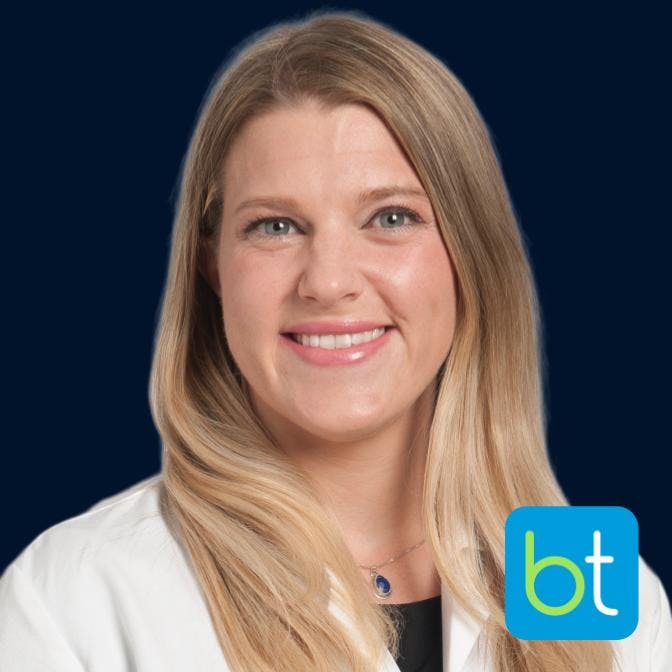
Ep. 107 Multidisciplinary Approaches to Pelvic Floor Disorders with Dr. Shannon Wallace and Dr. Anna Spivak
Trouble with bowel or bladder function? It might be time to partner with a specialist. In this episode of BackTable OBGYN, hosts Dr. Amy Park and Dr. Mark Hoffman are joined by Dr. Shannon Wallace and Dr. Anna Spivak, experts from the Cleveland Clinic specializing in pelvic floor disorders. They dive into the complex world of combined colorectal and urogynecological issues, discussing the importance of a multidisciplinary approach to treat conditions such as rectal prolapse, constipation, and incontinence. --- SYNPOSIS The conversation covers detailed diagnostic methods like manometry and defecography, various surgical options, and the crucial role of pelvic floor physical therapy in patient recovery. They also provide insights into setting up effective multidisciplinary clinics and emphasize the need for teamwork and administrative support in delivering optimal patient care. This episode is a valuable resource for both specialists and generalists aiming to enhance their understanding and treatment of pelvic floor dysfunctions. --- TIMESTAMPS 01:05 - Introduction05:40 - Multi-Compartment Prolapse & Second Opinions08:14 - Pelvic Floor Compartments Explained10:36 - When Internal Prolapse Becomes Surgical11:56 - Incomplete Emptying, Splinting, Fragmentation & Leakage16:55 - Fluoro vs MRI and When to Order It23:47 - Anorectal Manometry26:56 - Physical Therapy, Biofeedback, Meds, Injections, & Motility Workup29:08 - Robotic Mesh Repairs vs Vaginal/Perineal Approaches34:43 - When (and Why) to Consider Biologics36:46 - Resection Rectopexy38:10 - Treating Ehlers-Danlos syndromes (EDS) & Eating Disorders42:55 - Pelvic Floor PT After Surgery and Recovery Timelines47:29- Perineal Prolapse Repairs (Altemeier vs Delorme)49:53 - Symptom Improvement vs Retraining the 'New Normal'52:20 - Fecal Incontinence & Sacral Neuromodulation57:08 - Diarrhea-Driven Incontinence58:56 - Building a Multidisciplinary Pelvic Floor Program01:04:04 - Conclusion --- RESOURCES Pelvic Floor Disorders Consortium (American Society of Colon & Rectal Surgeons) https://fascrs.org/Web/Web/My-ASCRS/Education/Pelvic-Floor-Disorders-Consortium.aspx
You may also like







Get this podcast on your phone, Free


Create Your Podcast In Minutes
- Full-featured podcast site
- Unlimited storage and bandwidth
- Comprehensive podcast stats
- Distribute to Apple Podcasts, Spotify, and more
- Make money with your podcast