Episode List
7 Methods for How to Prevent Candidate Fraud in Hiring
If you are wondering how AI is changing candidate fraud and what recruiters can do about it, this episode breaks it down in practical terms. In this conversation, Terry Terhark, CEO at NXTThing RPO, shares what he is seeing firsthand across enterprise recruiting teams. You will learn what candidate fraud really looks like today, how AI tools are helping applicants misrepresent skills and identity, and what talent acquisition teams can do to protect their hiring process without overreacting. The discussion includes real-world examples of fake resumes, AI-assisted interviews, dual employment, falsified references, and remote hiring risks, along with concrete steps to reduce bad hires and improve hiring integrity. Key Takeaways Candidate fraud today is more sophisticated and often powered by AI tools. Fraud can include fake resumes, fake locations, fake identities, falsified work eligibility, and stand-in interviewees. AI tools can provide real-time interview answers, making it harder to assess real capability. Some candidates hold dual full-time remote jobs without disclosure. The cost of hiring a fraudulent candidate is far higher than candidate ghosting. Employers must clearly define what counts as acceptable AI use versus cheating. Requiring ID checks during video interviews can help verify identity. Asking candidates to share their screen during assessments can expose AI assistance. More companies are returning to in-person interviews to reduce fraud risk. Training recruiters and hiring managers to spot red flags is a critical first line of defense. Connect with Terry on e-mail: terry.terhark@nextthingrpo.com Connect with Terry on LinkedIn: https://www.linkedin.com/in/terryterhark/ Timestamps 00:00 What Is Candidate Fraud Today 04:30 AI Tools Perfecting Resumes 09:15 Real Stories of Fake Remote Hires 14:00 The True Cost of a Bad Hire 18:20 Dual Employment and Remote Risks 22:45 Practical Ways to Verify Identity 27:30 In-Person Interviews Making a Comeback 31:00 Creating Clear AI Usage Policies 35:40 Training Recruiters to Spot Fraud 39:00 The AI Arms Race in Hiring Keywords candidate fraud in hiring AI in recruiting fake resumes AI interview cheating remote hiring risks dual employment fraud identity verification in recruitment background check best practices AI hiring policies talent acquisition challenges

How to Make AI Work for Employees
Guest: Robin Barbacane, Chief Talent Development Officer, Rackspace In this episode, you will learn how to successfully introduce AI into your workplace without creating fear, resistance, or chaos. The conversation breaks down how to build AI literacy and confidence across your workforce, how to use AI agents to solve real business problems, and how to shift HR from a support function to a strategic driver of transformation. You will hear practical examples of AI adoption inside HR, including virtual assistants handling employee questions, AI tools supporting recruiting and employment law across multiple countries, and a structured approach to testing and scaling new AI use cases. If you are wondering how to start with AI, how to handle resistance, how to clean up your data, or how to measure success without demanding instant ROI, this episode offers a clear roadmap. Key Takeaways: AI adoption must focus on both skills and confidence, not just training. Start with hands-on workshops and real business problems instead of abstract theory. Treat AI like a coworker that needs onboarding, training, and performance reviews. Use a hackathon-style approach to generate AI solutions tied to business outcomes. Begin inside one function, prove value, and then scale across the organization. Clean and centralize your data before expecting strong AI results. Create guardrails and governance, but avoid banning AI outright. Identify early adopters and change agents instead of fighting detractors. Expect mistakes and iteration rather than demanding perfect ROI on day one. Shift human effort toward higher-value, revenue-producing work while AI handles routine tasks. Timestamps: 00:00 Why AI confidence matters as much as skills 03:00 Moving from AI education to real action 06:00 Using a hackathon model to solve HR problems 08:00 Building an AI HR assistant to handle employee questions 11:00 Learning from AI mistakes and improving accuracy 16:00 Build versus buy AI tools across global operations 17:30 Creating an AI ambassador certification program 20:00 Why banning AI is a strategic mistake 22:00 Cleaning data before scaling AI 25:00 The human skills that matter most in an AI-driven workplace Top Keywords: AI in HR AI adoption strategy AI workplace transformation HR automation AI employee experience AI coworker model AI governance and guardrails Low-code AI agents HR digital transformation AI change management Connect with Robin on LinkedIn: https://www.linkedin.com/in/robinbarbacane/

Building Human Connection at Work
In this episode, you’ll learn how intentional people practices help fast-growing organizations maintain culture, trust, and connection as they scale. The conversation explores how HR leaders can design meaningful employee experiences, hire for the right mindset, strengthen culture beyond perks, and build human connection in distributed and hybrid environments—all while supporting business growth. Join us as Emma Belconis shares practical, real-world lessons from helping a healthcare fintech company grow rapidly without losing its human core. This episode is supported by Insperity. Key takeaways: Employee experience starts with empathy and asking what would feel meaningful from a human perspective. Rapid growth requires agility, curiosity, and a willingness to figure things out in real time. Hiring for mindset and adaptability matters as much as skills, especially in fast-paced organizations. Clear expectations during recruiting help ensure people thrive in the environment they’re joining. Culture is built through consistent behaviors, not posters, perks, or one-time activities. Executive visibility and authentic leadership set the tone for connection and trust. In-person moments still matter for building relationships, trust, and shared energy. HR leaders must intentionally create spaces for connection; it rarely happens on its own. Trust is foundational to proactive HR, allowing issues to surface earlier and more honestly. Strong culture drives retention, referrals, innovation, and long-term performance. Connect with Emma on LinkedIn: https://www.linkedin.com/in/emma-belconis/ Timestamps: 0:00 Why empathy is central to employee experience 2:00 Navigating rapid growth and organizational change 4:00 Hiring for agility and curiosity 6:30 Setting expectations in recruiting and onboarding 8:10 Maintaining connection as teams scale 10:30 The role of leadership visibility in culture 12:20 Why in-person gatherings still matter 14:30 Building culture beyond perks and benefits 17:00 Trust as the foundation of effective HR 20:00 Advice for new HR leaders in fast-growing companies Keywords: employee experience HR leadership organizational culture human connection at work scaling companies people strategy trust in the workplace hybrid work culture HR best practices leadership and empathy
Stop Rubber Stamping: How AI Changes HR Work
AI is not ending HR but accelerating its evolution into a more strategic function. AI tools can significantly reduce time spent on repetitive HR tasks like policy drafting, reporting, and reviews. The real value of AI comes from connecting data across the entire employee lifecycle, not isolated HR silos. HR professionals need stronger skills in data literacy, technology, and business strategy to succeed. AI can help HR teams surface insights and patterns that humans often miss due to bias or time constraints. Automating compliance and administrative work frees HR to focus on coaching, development, and leadership support. AI will impact jobs and tasks, making workforce planning and reskilling a critical HR responsibility. HR must advocate for people by helping leaders balance automation with long term talent development. Using AI without clean, trustworthy data limits its value and increases risk. The future of HR work is humans plus AI, not humans replaced by AI. Timestamps: 00:00 Why HR has always evolved and why AI is different 05:00 Is AI really the end of HR 07:00 Practical AI use cases for HR professionals 09:30 Using AI beyond HR silos across the talent lifecycle 12:30 Saving time with AI for research, writing, and analysis 15:00 Why HR teams must become more strategic partners 18:00 The growing importance of data and technology skills in HR 22:00 AI, workforce change, and the risk of job displacement 27:00 Advocating for people in AI driven decisions 31:00 What HR hopes AI will eliminate from daily work Keywords: AI in HR HR technology people operations workforce transformation data driven HR AI and jobs HR strategy employee experience talent lifecycle future of work Show Links/Resources: Watch the AI for HR Livestream Replay: https://lhra.io/ai25 Connect with Sandra on LinkedIn: https://www.linkedin.com/in/sandraloughlin Connect with Lane on LinkedIn: https://www.linkedin.com/in/lanem1/
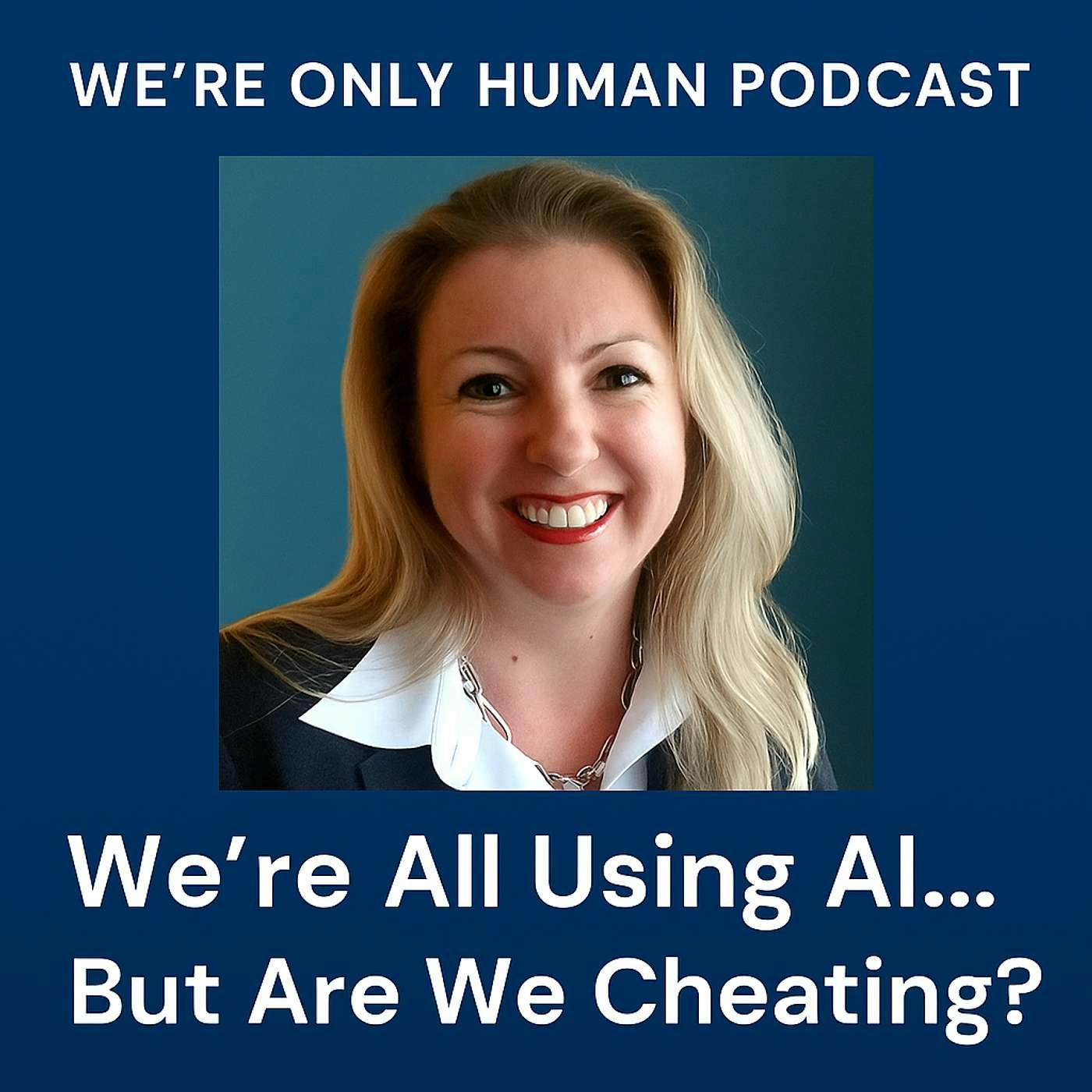
Hiring, Cheating, and the AI Dilemma
Join host Ben Eubanks for a thought-provoking conversation with Dr. Cari Miller about one of the most pressing questions in today's workplace: When does using AI cross the line from productivity tool to cheating? From academic integrity to job applications and workplace performance, they explore the blurred boundaries of AI usage and what it means for workers, employers, and the future of work. This episode tackles the double standards, ethical dilemmas, and practical realities of AI adoption in hiring and beyond.TimestampsEpisode Topics & Timestamps0:00 - Introduction & Guest Background0:50 - Dr. Cari Miller's Research on AI & Worker Impacts3:00 - Academic Integrity vs. AI Literacy Debate5:00 - Defining AI "Cheating" in Education5:40 - Domain Knowledge & Copyright Considerations6:50 - Spell Check Analogy: Tools vs. Cheating11:00 - The Hiring Double Standard12:30 - Should We Test Candidates on AI Skills?13:50 - 61% of Jobs Don't Match Interview Descriptions15:20 - The Broken Application Process17:30 - Emotional Toll of Job Searching18:00 - Networking & Volunteer Work Strategy19:40 - Ben's Story: Volunteering to Break Into HR21:20 - Genuine vs. GPT: When Does AI Feel Like Cheating?23:30 - Disclosure & Context Matter25:00 - Survey Results: What Employers Consider Cheating27:00 - The AI Arms Race in Job Applications30:00 - The Entry-Level Crisis30:50 - Learning in the File Room: Foundation Skills32:00 - Junior vs. Senior Workers Using AI33:00 - The DOS to Windows Analogy35:30 - CEOs vs. Managers: Who Decides on AI?36:30 - AI Procurement & Process Design38:30 - Finding the Middle Ground39:00 - Connect with Dr. Cari Miller on LinkedIn40:15 - Closing ThoughtsConnect with Cari: https://www.linkedin.com/in/cari-miller/ See the show archives and sign up for episode updates





Get this podcast on your phone, Free


Create Your Podcast In Minutes
- Full-featured podcast site
- Unlimited storage and bandwidth
- Comprehensive podcast stats
- Distribute to Apple Podcasts, Spotify, and more
- Make money with your podcast