
Procurement Legends
https://api.substack.com/feed/podcast/1331541.rssEpisode List
6 AI Procurement Capability Pillars You Need
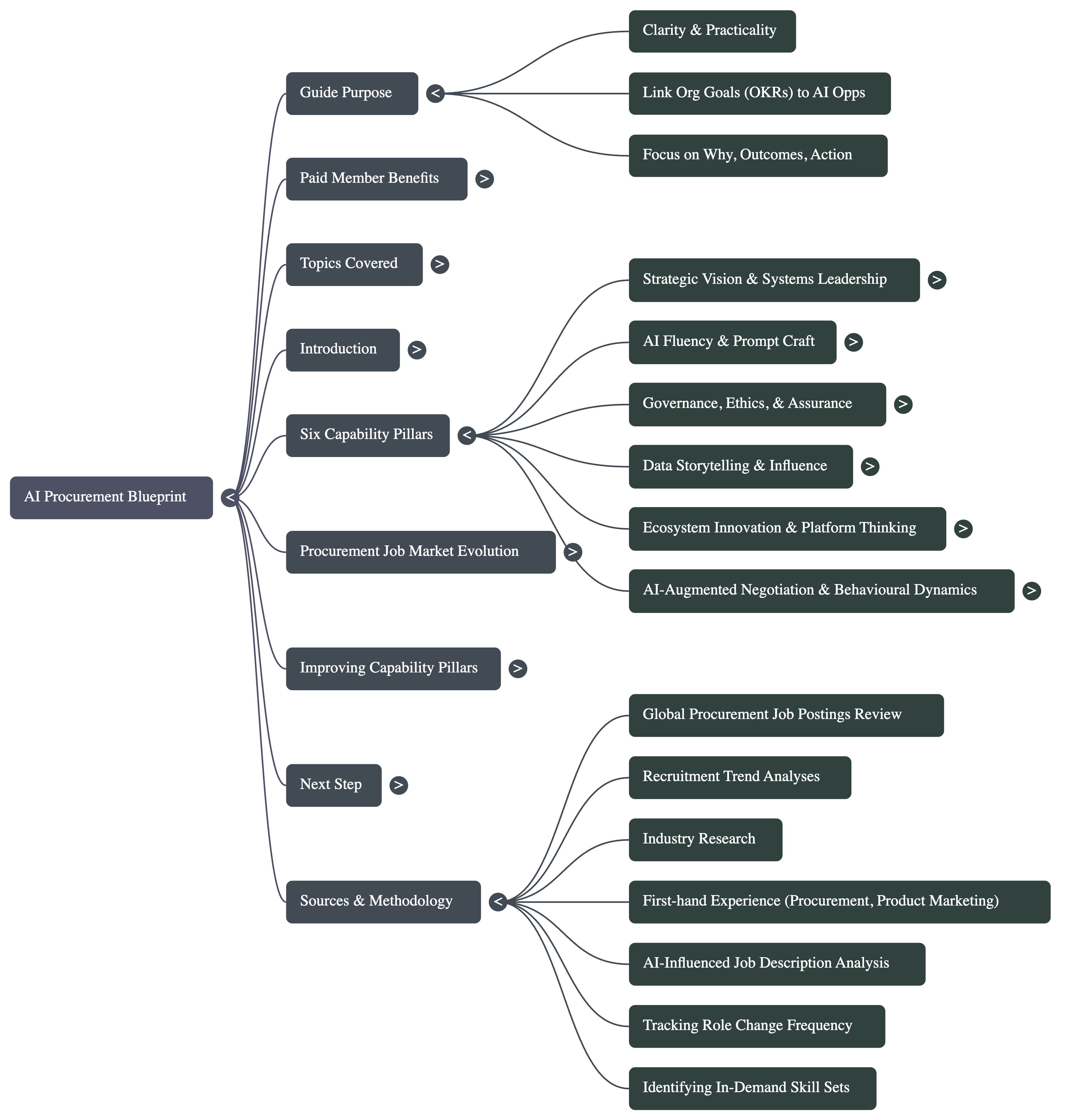
The AI Procurement Blueprint is a reader-supported publication. To receive new posts and support my work, consider becoming a free or paid subscriber.The "AI Procurement Blueprint" is presented as a practical guide for integrating artificial intelligence into procurement processes, catering to professionals at all experience levels. It outlines six key capability pillars necessary for success, including strategic vision, AI fluency, governance, data storytelling, ecosystem innovation, and AI-augmented negotiation. The source emphasises that AI's role is not to replace human jobs but to elevate capabilities and redefine responsibilities, leading to more strategic, technology-enabled, and outcomes-focused procurement. It further details how various procurement roles are evolving into hybrid, tech-enabled positions, providing actionable steps for individuals and organisations to develop these crucial skills and implement AI pilots effectively.How is AI transforming the procurement profession, and what is its impact on existing roles?AI is fundamentally reshaping procurement by elevating capabilities and redefining responsibilities, moving the profession towards a more strategic, technology-enabled, and outcomes-focused approach. It is not about replacing people but about augmenting their abilities. Existing roles are evolving into hybrid, tech-enabled positions where AI handles repetitive, rules-based tasks, freeing up professionals to focus on higher-value work. For instance, category managers are now designing supplier ecosystems and co-innovation programmes, sourcing analysts are managing AI-driven sourcing waves, and contract specialists are overseeing AI-assisted contract creation. New senior roles like AI Procurement Manager and Head of Digital Procurement & AI are also emerging to orchestrate AI operating models and platform strategies.What are the six key capability pillars essential for procurement professionals in an AI-driven future?The six essential capability pillars for procurement professionals in an AI-driven future are:* Strategic Vision and Systems Leadership: Aligning AI adoption with broader business goals like growth, resilience, and sustainability, and building connected systems.* AI Fluency and Prompt Craft: Confidently using AI tools, guiding them with clear instructions, checking their accuracy, and transforming outputs into actionable insights.* Governance, Ethics, and Assurance: Ensuring compliance with regulations (e.g., EU AI Act), applying strong controls, performing bias checks, and maintaining human oversight for transparent and auditable AI-assisted decisions.* Data Storytelling and Influence: Presenting AI-driven insights as compelling narratives that demonstrate clear business impact (e.g., cost reduction, risk mitigation, sustainability improvements).* Ecosystem Innovation and Platform Thinking: Working collaboratively with suppliers to share data in real-time, leveraging supplier network data as a strategic asset for better AI decisions.* AI-Augmented Negotiation and Behavioural Dynamics: Understanding when to automate routine negotiations with AI and when human judgment is crucial for complex or sensitive deals.How can organisations practically implement AI in procurement, particularly concerning pilot projects?Organisations can implement AI by linking AI opportunities directly to their organisational goals (OKRs) and running small-scale, low-risk pilot projects. The blueprint suggests identifying high-impact opportunities across the procure-to-pay lifecycle, selecting one clear pilot tied to a key result, and designing it with success metrics, guardrails, and human oversight. A "first-month plan" example is an autonomous tail-spend buying pilot to streamline low-risk purchases, minimise manual effort, reduce costs, and maintain compliance. The focus is on building a plain-language leadership case that quantifies benefits, clarifies risks and controls, and secures approval.What is the role of data in AI-driven procurement, and how does "data storytelling" come into play?Data is a strategic asset in AI-driven procurement. Real-time data sharing with suppliers enables AI models to make better decisions. "Data storytelling" is crucial for translating AI-driven insights into narratives that resonate with stakeholders. It moves beyond static reporting, presenting data in a way that clearly demonstrates business impact, whether it's reducing costs, cutting risk, or improving sustainability. This skill helps procurement professionals influence decisions and showcase the tangible value derived from AI applications.How can procurement professionals improve their AI fluency and prompt craft?Procurement professionals can improve their AI fluency and prompt craft by actively experimenting with AI tools in a safe, sandboxed environment. Practical steps include using vendor-provided trial accounts, following prompt design guides, and regularly practising the creation of multi-step instructions tailored for specific procurement scenarios. This hands-on experience builds confidence in guiding AI tools effectively and transforming their outputs into actionable insights.What are the key considerations for governance, ethics, and compliance when adopting AI in procurement?Key considerations for governance, ethics, and compliance include staying compliant with emerging regulations such as the EU AI Act. It is essential to apply strong controls, conduct bias checks, and ensure human oversight in all AI-assisted decisions to maintain transparency and auditability. Practical steps for professionals involve developing an AI risk checklist for their function, attending webinars on AI governance, and creating bias audit templates to ensure responsible AI adoption.How does AI impact negotiation strategies in procurement?AI impacts negotiation strategies by augmenting human capabilities, allowing for more efficient and data-driven approaches. Procurement professionals need to understand when AI can effectively handle routine negotiations (e.g., processing tail-spend purchases with autonomous buying agents) and when human judgment, creativity, and relationship-building skills are essential for complex or sensitive deals. Simulating negotiations with AI tools and comparing outcomes to human-led versions can help identify the best-fit use cases for automation, ensuring a strategic blend of AI and human expertise.What is the recommended approach for procurement professionals to develop these new AI capabilities?The recommended approach for procurement professionals to develop these new AI capabilities is to pick one capability pillar to focus on for a 90-day period. Within this period, they should define one measurable goal, design one experiment related to that goal, and identify one learning resource to support their growth. This focused approach allows for tangible progress and builds a stronger foundation for thriving in the AI-driven future of procurement. Practical steps for each pillar are provided, from joining cross-functional projects and mapping AI opportunities to OKRs, to experimenting with AI tools and building relationships for data sharing. This is a public episode. If you'd like to discuss this with other subscribers or get access to bonus episodes, visit worldofprocurement.substack.com/subscribe
Water Systems: Procurement's Transformative Power
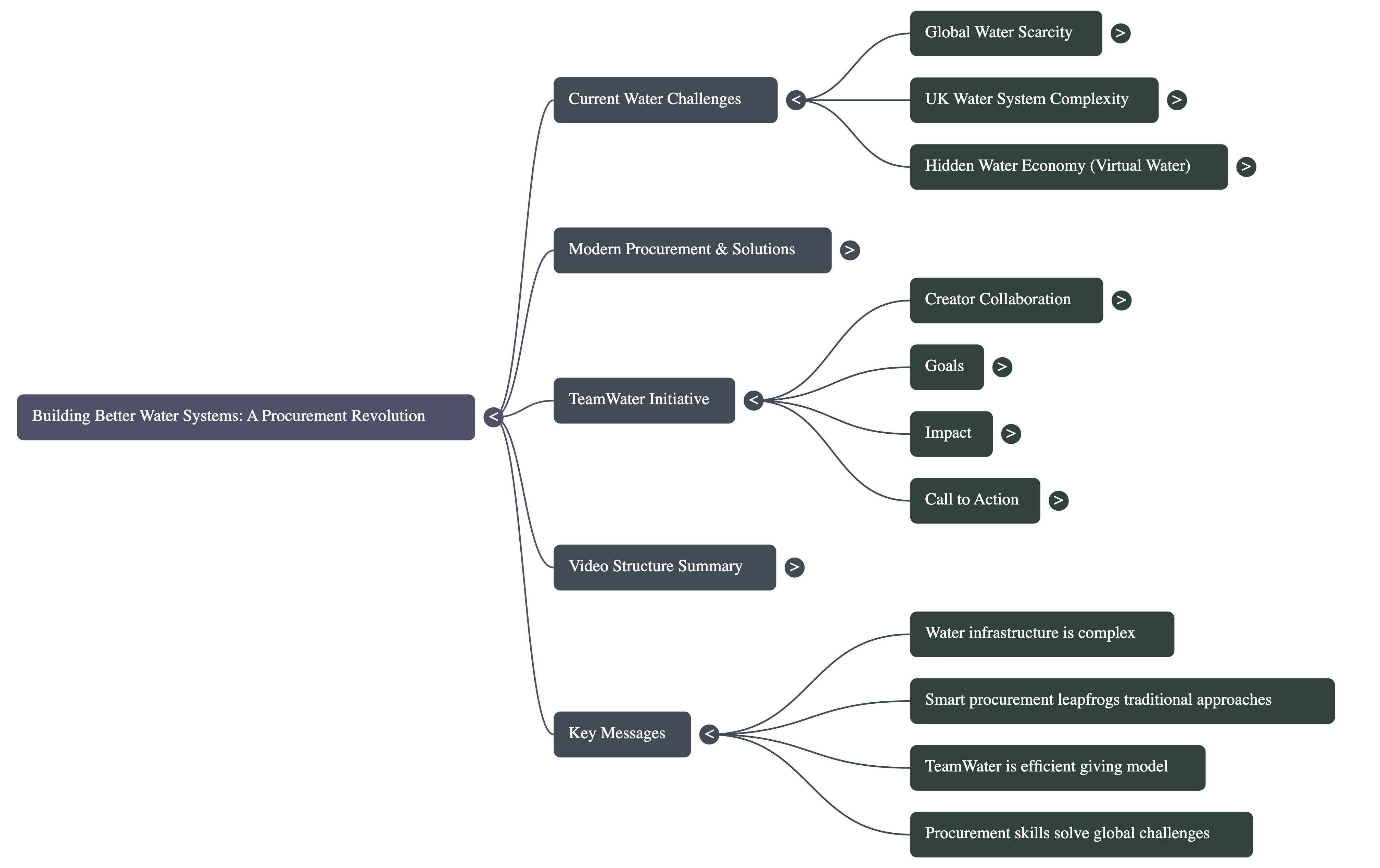
The AI Procurement Blueprint is a reader-supported publication. To receive new posts and support my work, consider becoming a free or paid subscriber.🔗 JOIN TEAMWATER RIGHT NOW: Campaign ends August 31 - every day counts! Donate/Join: TeamWater.orgA different episode today. This is all about raising awareness in collaboration with Team Water!The provided sources primarily discuss the complexities of existing water infrastructure, exemplified by the UK's extensive yet leaky network, and contrast this with innovative, modern procurement strategies for establishing new water systems. They highlight how "leapfrog" approaches, such as modular, solar-powered water solutions and mobile payment-enabled water ATMs in East Africa, offer a more efficient and cost-effective way to provide clean water. The texts emphasise the critical role of smart procurement and supply chain management in these projects, advocating for practices like framework agreements, local assembly, and digital monitoring to optimise delivery and ensure sustainability, ultimately linking these methods to philanthropic efforts like the TeamWater campaign.Q1: What is the main problem with existing water systems, and how does it compare to building new ones?Existing water systems, like the one in the UK, are incredibly complex and expensive to maintain. The UK, for example, has 800,000 km of water pipes, and it's projected to invest £50 billion over the next 15-20 years just for maintenance [1, 5]. Despite this massive investment, 3 billion litres of water are lost daily to leaks, accounting for 19-22% of the total water input [6, 7]. Lead times for essential equipment, such as ductile iron pipes, can be as long as 18 months, compared to 3 months previously [1]. Surprisingly, the sources suggest that building a new, modern water system from scratch can be easier and more efficient than constantly repairing and upgrading an outdated, vast network.Q2: What is "virtual water," and why is it relevant to water resource management?"Virtual water" refers to the hidden water used in the production of goods and services. Essentially, when you buy products like jeans, smartphones, or steel, you are indirectly purchasing a significant amount of water that was consumed during their manufacturing processes [1, 5]. For instance, a pair of jeans uses 3,781 litres of water, and a smartphone requires 13 tonnes of water cradle to grave [1]. This concept highlights that every supply chain decision is, in effect, a water decision, making it crucial for procurement professionals to consider the water footprint of products and processes.Q3: How do modern procurement and supply chain thinking offer a solution to water scarcity, especially in developing regions?Modern procurement and supply chain thinking enable a "leapfrog revolution" in water provision, especially in areas starting from scratch. Instead of replicating traditional, large-scale infrastructure, these approaches focus on modular, scalable, and digitally-enabled solutions [1, 24, 25]. For example, in Kabati, Kenya, a solar-powered reverse osmosis (RO) system costing under $40,000 was operational in 12 weeks, providing 6-7 cubic meters of WHO-standard drinking water daily to 1,500 residents [1, 9, 10]. This contrasts sharply with traditional water mains extensions, which can take years and cost hundreds of thousands [1].Q4: What are the key features of these "leapfrog" water systems?The "leapfrog" water systems are characterised by:* Modularity: Often contained within standard shipping containers, making them easy to transport and install [1, 12].* Renewable Energy: Primarily powered by solar panels, reducing reliance on expensive and unreliable fossil fuels [1, 9].* Advanced Filtration: Incorporate technologies like reverse osmosis and UV sterilisation to provide hospital-grade water [1].* Digital Integration: Utilise water-vending "ATMs" and mobile payment systems (e.g., M-Pesa in Kenya) for transparent transactions and revenue collection, often with cloud monitoring [1, 13, 14].* Localisation: Prioritise local sourcing of up to 70% of components and local assembly, cutting lead times by 40% and fostering local job creation [1, 18, 19].Q5: Can you provide examples of these modern water solutions in action?* Kabati, Kenya: A solar-powered RO system provides 6-7 cubic meters of water daily to 1,500 residents via water ATMs, significantly improving access to clean water and replacing costly diesel pumps [1, 9, 10].* Nzokani, Kenya: A water-ATM sells 13 cubic meters of water daily through the M-Pesa mobile money system, demonstrating increased revenue collection compared to traditional methods [1].* WaterKiosk Africa (East Africa): This organisation and its partner, Boreal Light, have installed over 100 solar-powered desalination and purification systems in hospitals, schools, and communities, serving over 6 million beneficiaries annually and proving the speed and flexibility of the plug-and-play model, particularly during critical times like the COVID-19 pandemic [18, 19, 21, 22].Q6: What specific procurement best practices contribute to the success of these modern water projects?Smart procurement decisions are vital for these projects' success. Key practices include [1]:* Modular Specifications: Tendering processes should be designed around standardised units, such as ISO container footprints.* Framework Agreements: Bulk purchasing of components like pumps and membranes across multiple projects can lead to 15-20% price reductions [1].* Local Assembly Hubs: Establishing facilities to train and employ local welders and electricians within 50km of projects.* Performance-based Operations & Maintenance (O&M): Paying operators based on the volume of water delivered rather than asset ownership ensures continuous functionality.* Digital Twin First: Requiring telemetry and cloud monitoring from the outset for real-time data and remote management.Q7: How do these modern water systems contribute to sustainability beyond just providing clean water?These modular, solar-powered systems contribute to sustainability in several ways:* Reduced Carbon Emissions: They replace diesel-powered pumps, significantly lowering carbon footprints. Each kiosk can offset 264 tonnes of CO2 per year, generating carbon credits [1].* Economic Empowerment: Revenue from water sales and carbon credits can be reinvested to cover operational costs, such as filter replacements, ensuring long-term sustainability and reducing reliance on external funding [1, 19, 23].* Local Job Creation: Prioritising local assembly and training builds local capacity and creates sustainable employment opportunities [1, 18].* Improved Efficiency: Digital monitoring and mobile payment systems increase transparency and efficiency in water management, reducing non-revenue water and improving service delivery [1, 25, 27].Q8: What is TeamWater, and how does it exemplify this new model of efficient water provision?TeamWater is a large-scale creator collaboration launched by MrBeast and Mark Rober, aiming to raise $40 million to bring clean water to 2 million people [1, 3]. It embodies the new model of efficient philanthropy by leveraging smart procurement and supply chain thinking. The goal is to provide clean water for decades at an approximate cost of $20 per person [1]. This cost-effectiveness is attributed to the adoption of modular, digitally-enabled, and locally-sourced water solutions, demonstrating that modern procurement can deliver better outcomes, faster, and at a lower cost than traditional methods [1]. This is a public episode. If you'd like to discuss this with other subscribers or get access to bonus episodes, visit worldofprocurement.substack.com/subscribe
The AI Procurement Blueprint: Trends and Strategic Implications
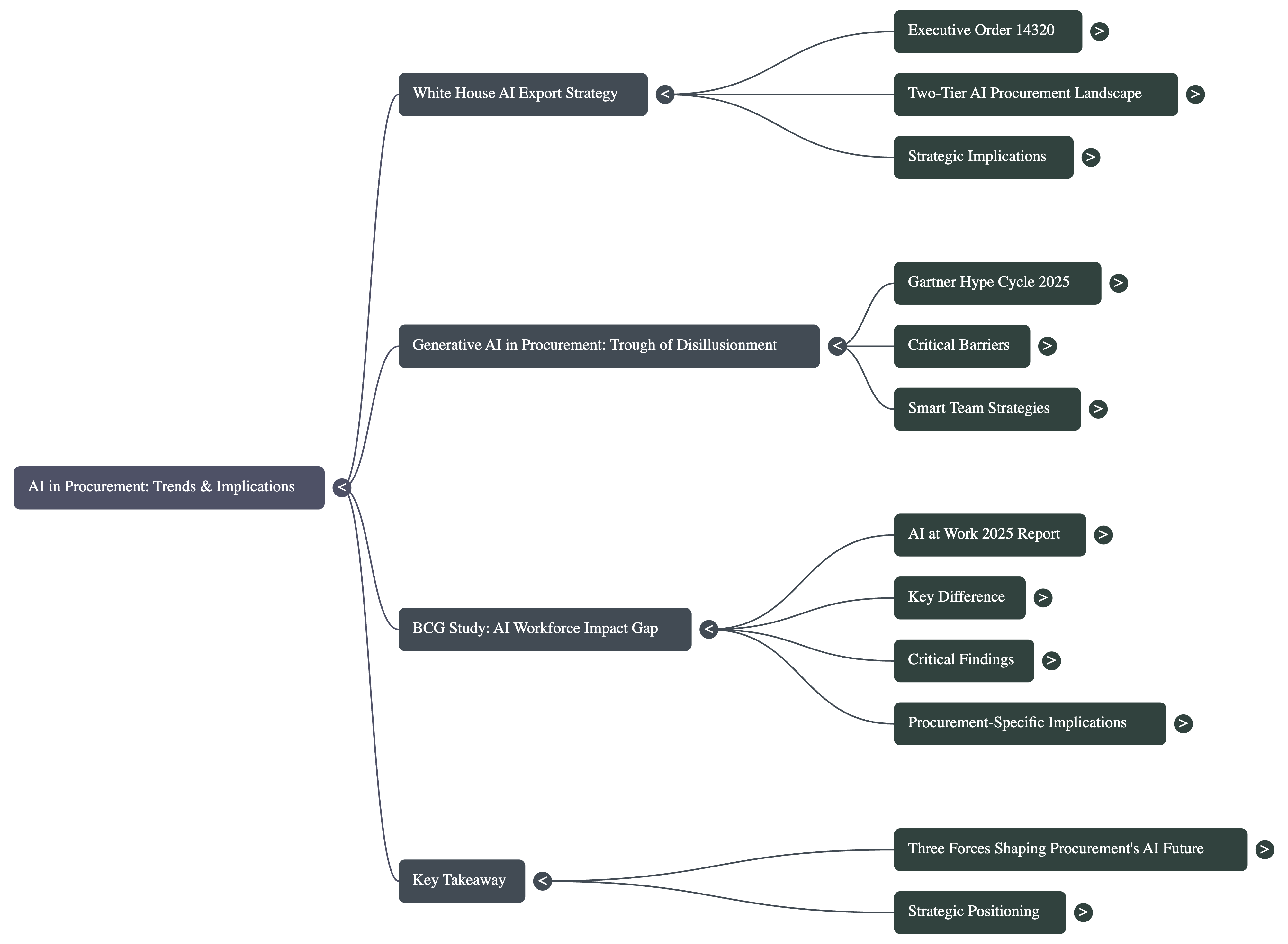
The AI Procurement Blueprint is a reader-supported publication. To receive new posts and support my work, consider becoming a free or paid subscriber.The sources discuss emerging trends and strategic implications of Artificial Intelligence (AI) in procurement. They highlight geopolitical shifts impacting AI procurement landscapes, such as new regulations requiring federal agencies to procure AI systems based on "Unbiased AI Principles" and promoting US AI technology exports. The texts also address the challenges in generative AI adoption within procurement, noting a "trough of disillusionment" due to fragmented data, integration issues, and inconsistent return on investment (ROI). Finally, the sources emphasise the importance of workflow redesign for realising significant business value from AI, explaining that simply adopting AI tools without deeper integration and upskilling the workforce leads to an "impact gap."1. How is the "American AI Exports Program" reshaping the global procurement landscape for AI systems?The "American AI Exports Program," established by President Trump's Executive Order 14320, is creating a two-tier AI procurement landscape. Firstly, it mandates that US federal agencies only procure AI systems from vendors adhering to new "Unbiased AI Principles," requiring models to be free from ideological bias and pursuing objective truth. Secondly, the Department of Commerce will actively promote "full-stack AI export packages" (including hardware, models, software, applications, and standards) to allied countries through federal financing. This means multinational companies will face increased complexity, as AI systems from non-US origins may be restricted or deemed ineligible for procurement in national security-critical sectors. Conversely, US-based AI vendors will receive significant government support for international expansion, potentially altering negotiation leverage in procurement discussions. Organisations will need to audit their AI supplier base and consider geographic diversification strategies.2. Why is generative AI in procurement currently experiencing a "trough of disillusionment," and what are the main challenges?Generative AI in procurement is currently in a "trough of disillusionment" because the initial excitement is being tempered by the realities of implementation. While some early adopters report efficiency gains, many organisations are encountering significant barriers. These include fragmented and low-quality data across existing procurement systems, complex integration challenges with current platforms, concerns around job security, and high, unpredictable costs. Despite 53% of supply chain and procurement executives reallocating funds to support GenAI initiatives, many are struggling with the technical specifications required to make these initiatives work effectively.3. What are "smart teams" doing to overcome the challenges of generative AI adoption in procurement?"Smart teams" are successfully navigating the generative AI "trough of disillusionment" by focusing on specific, measurable use cases rather than pursuing broad transformation promises. Examples include automated supplier recommendations, streamlining contract management workflows, and generating RFx documents. A key insight for these successful adopters is the critical importance of investing in clean, integrated data architecture before deploying AI capabilities. Organisations with well-integrated data systems have reported achieving AI implementation timelines that are three times faster.4. What is the "AI Workforce Impact Gap" identified by BCG, and why is it significant for procurement?The "AI Workforce Impact Gap" refers to the disparity between AI adoption rates and the actual business value being captured by companies. A BCG study of over 10,600 workers revealed that while 72% regularly use AI, only a small proportion of companies are realising significant business value. The critical difference lies in whether companies are merely deploying AI tools or fundamentally redesigning entire workflows to leverage AI. For procurement teams, this is significant because it suggests that simply introducing AI tools will not yield substantial returns. Instead, the winning strategy involves deep implementation in specific, high-impact areas like contract analysis, supplier risk management, and spend analytics, rather than a broad proliferation of AI tools across all processes. Less than one-third of companies have effectively upskilled even 25% of their workforce to use AI, further contributing to this gap.5. What are the key findings from the BCG "AI at Work 2025" report regarding AI integration and frontline adoption?The BCG "AI at Work 2025" report highlights several critical findings: three-quarters of respondents believe AI agents are vital for future success, yet only 13% report these agents are broadly integrated into workflows, and just one-third understand how they function. Furthermore, frontline worker adoption of AI has stalled at 51% (a 1% decrease from 2023), while job security fears are on the rise, particularly in countries with high AI adoption. This indicates a disconnect between perceived importance and practical, effective integration of AI into daily operations.6. How can organisations achieve greater ROI from their AI initiatives, particularly in procurement?Organisations can achieve greater ROI from their AI initiatives by focusing on a limited number of projects and systematically measuring their operational returns. The BCG study found that companies focusing on an average of 3.5 AI initiatives (compared to 6.1 for others) achieved 2.1 times greater ROI. This suggests a strategic approach of deep implementation in specific, high-value areas within procurement, such as contract analysis, supplier risk assessment, and spend analytics, is more effective than a broad, unfocused deployment of AI tools across all processes. Investing in workforce upskilling is also crucial, as less than one-third of companies have adequately trained their employees to effectively use AI.7. What are the overarching forces currently shaping the future of AI in procurement?The future of AI in procurement is being shaped by three primary forces. Firstly, geopolitical complexity is creating new compliance requirements, exemplified by the "American AI Exports Program" which dictates procurement eligibility based on origin and AI principles. Secondly, the implementation reality is tempering initial enthusiasm for generative AI, as organisations encounter challenges like fragmented data, integration issues, and uneven ROI, leading to a "trough of disillusionment." Lastly, the emergence of clear "winners" who prioritise workflow redesign over mere tool adoption is defining success, demonstrating that capturing significant business value from AI requires fundamental process transformation rather than simply deploying new technologies.8. What is the key takeaway for procurement teams looking to strategically position themselves in the evolving AI landscape?The key takeaway for procurement teams is that the window for strategic positioning in the AI transformation is narrowing. To capture disproportionate value, teams must focus on workflow transformation rather than simply the proliferation of AI tools. This means moving beyond basic AI adoption to deeply integrating AI capabilities into specific, high-impact procurement processes and redesigning those workflows to leverage AI effectively. This strategic focus, coupled with addressing data quality and integration challenges, and investing in workforce upskilling, will be crucial for success. This is a public episode. If you'd like to discuss this with other subscribers or get access to bonus episodes, visit worldofprocurement.substack.com/subscribe

AI-First Procurement: The iPhone Moment
The AI Procurement Blueprint is a reader-supported publication. To receive new posts and support my work, consider becoming a free or paid subscriber.AI-First Procurement: The iPhone Moment – Revolutionising Efficiency & SpeedEpisode Summary: Join us for a deep dive into "AI-First Procurement: The iPhone Moment," a revolutionary shift that's fundamentally rewriting what's possible with human potential in the procurement world. This isn't just about making processes faster; it's about AI agents transforming entire industries, much like smartphones did. We'll explore how embracing an AI-first mindset, combined with flatter organisational structures, is delivering unparalleled speed, cost-efficiency, and strategic advantages, making traditional procurement approaches increasingly obsolete.Key Discussion Points:* The "iPhone Moment" in Procurement:* This isn't an incremental improvement, but a fundamental transformation where AI agents are replacing industries and redefining human potential.* If you're still viewing AI as an "add-on," you're missing the revolution. The future belongs to those who understand that one strategically augmented human can outperform entire traditional teams.* Busting the Cost Myth: Embedded AI is the Future:* Forget the narrative that AI will break your budget; this is "dangerously misleading".* Embedded AI capabilities are becoming standard features in SaaS, not premium add-ons, with costs plummeting from $50K to $30K by 2027, a stark contrast to standalone AI tools projected to rise from $150K to $330K.* The "smart money is on platforms that embed intelligence as a core feature".* The David vs. Goliath Reality: Transformational Efficiency Metrics:* This isn't theory, but a "measurable reality". A single AI-first procurement professional managing eight specialised AI agents can achieve 60% of a traditional 10-person team's annual spend management ($35M vs $58M).* Dramatic Speed Increases:* A single AI-first professional is "9x faster in decision-making (2 days vs 18 days)".* Agentic teams maintain "2 to 5 day decision cycles compared to 8 to 18 days for traditional teams".* The comprehensive radar analysis rates agentic teams significantly higher on "decision speed (9 vs 4)".* Superior Cost-Effectiveness:* They are "51% more cost-effective ($28K vs $57K per million managed)".* Agentic teams deliver "40 to 50% lower cost per million dollars managed".* The radar analysis confirms superior "cost efficiency (8.5 vs 5.5)".* Massive Performance Multipliers (Throughput):* Single AI-first professionals achieve "5.6x more contracts processed monthly, 8.4x more suppliers evaluated, 9.0x more compliance checks completed, 7.3x more risk assessments conducted, and 7.5x more strategic projects delivered quarterly".* They manage "3.5x higher annual spend capacity on average".* These "performance multipliers remain consistent" (around 3.4x to 3.6x) even as teams scale from 1 to 10 people, because the "fundamental efficiency comes from the human-AI collaboration model".* Enhanced Compliance & Risk Reduction:* Agentic teams achieve "compliance scores of 95 to 98% versus 75 to 84% for traditional approaches".* They outperform in "compliance scores (9.6 vs 7.9)" and "risk reduction (8.8 vs 4.9)". AI agents can monitor hundreds of suppliers and process thousands of checks without fatigue.* Shift to Strategic Focus:* Critically, the AI-first professional is freed from "hierarchical approvals, manual compliance checks, and coordination overhead" to "focus on strategic decisions, relationship building, and value creation".* This leads to a much higher "strategic focus (8.7 vs 3.2)" for agentic teams.* The Flat Structure Advantage: Speed:* Traditional structures kill speed with "multiple layers of approval, handoffs, and coordination overhead".* Agentic structures maintain flat hierarchies where each human directly manages specialised AI agents, eliminating these bottlenecks and enabling dramatically faster decision cycles and greater agility.* The Mid-Market Sweet Spot:* For mid-market organisations, evidence "strongly supports a strategic shift toward lean, AI-first procurement structures".* Instead of traditional 5-10 person teams, 1 to 3 AI-augmented professionals can achieve superior outcomes at a lower cost.* "Smaller, AI-augmented teams consistently outperform larger traditional ones".* Your Next Steps: Becoming AI-First:* This transformation "isn't coming, but it's here." The question is whether you'll lead it or be left behind.* Start small but start now: Experiment with AI tools in your current role.* Develop crucial technical skills without becoming a programmer: "Prompt engineering is becoming as important as contract negotiation skills". Understanding how to brief and manage AI agents is vital.* Focus on strategic thinking as routine tasks become automated.* Build cross-functional relationships that will be crucial in flatter organisations.* Stay curious about emerging technologies and their procurement applications.* Consider learning platforms like Replit to understand the "technical foundations".* The Competitive Reality:* Organisations adopting agentic structures now will gain a compelling value proposition and establish "competitive advantages that become increasingly difficult for traditional approaches to match".* The "future belongs to lean AI-fast teams that will crush traditional structures in capability".Call to Action: What's your experience with AI in procurement? Are you seeing the performance multipliers we've discussed? Share your thoughts in the comments below, and don't forget to subscribe to the AI Procurement Blueprint for more insights on becoming AI-first in procurement!The AI Procurement Blueprint is a reader-supported publication. To receive new posts and support my work, consider becoming a free or paid subscriber. This is a public episode. If you'd like to discuss this with other subscribers or get access to bonus episodes, visit worldofprocurement.substack.com/subscribe

Navigating the Future of Procurement with AI - Mark Perera and Daniel Barnes
In this conversation, Daniel is joined by Procurement OG Mark Perera in the run-up to DPW (Digital Procurement World) New York 2025. DPW is the leading tech conference for Procurement. They discuss the rapid evolution of AI in procurement, emphasising the importance of curiosity and adaptability in the face of technological change. They explore the future roles within procurement, the necessity of adopting AI-first operating models, and the shifting landscape of SaaS and AI native companies. The discussion highlights the need for procurement professionals to embrace new technologies and methodologies to remain relevant and effective.The AI Procurement Blueprint is a reader-supported publication. To receive new posts and support my work, consider becoming a free or paid subscriber.Takeaways* AI is evolving rapidly and has significant implications for procurement.* Curiosity and adaptability are essential for procurement professionals.* The future of procurement roles will change significantly due to AI.* An AI-first mindset can transform procurement operations.* Navigating the tech landscape requires understanding AI native companies.* The pricing models for AI solutions are shifting from traditional methods.* Collaboration between humans and AI will enhance procurement functions.* Procurement must focus on value creation beyond cost savings.* The integration of AI into existing systems is a complex challenge.* Building safe environments for AI experimentation is crucial for organizations.Chapters00:00 Introduction and Anticipation for DPW03:09 The AI Revolution in Procurement06:09 Curiosity and Capability in Procurement08:56 The Future of Procurement Roles12:12 AI-First Operating Models14:53 Navigating AI in Procurement Tech18:01 The Changing Landscape of SaaS and AI21:06 The Importance of AI Native Companies23:47 Conclusion and Future Outlook This is a public episode. If you'd like to discuss this with other subscribers or get access to bonus episodes, visit worldofprocurement.substack.com/subscribe









Get this podcast on your phone, Free


Create Your Podcast In Minutes
- Full-featured podcast site
- Unlimited storage and bandwidth
- Comprehensive podcast stats
- Distribute to Apple Podcasts, Spotify, and more
- Make money with your podcast