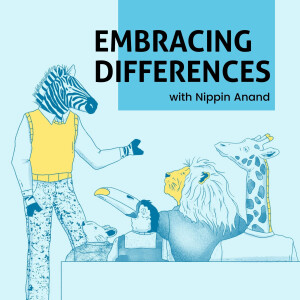
Embracing Differences
https://anchor.fm/s/4366d7d8/podcast/rssEpisode List
Interviewing the interviewer
Mary Conquest, the famous host of the podcast, Safety Labs, has interviewed over a hundred people (including myself). I thought it would be a wonderful opportunity to engage with her and find out what she has learned through this journey. In this podcast, Mary reflects on her interviewing skills and what it makes to conduct good interviews. I’ very fortunate to be interviewing the interviewer in this podcast and if you listen until the end, you will also learn that she is a wonderful human being at heart. Thank you Mary, it’s nice to meet a fellow anthropologist.
Enclosed space risks: what are we missing?
Enclosed space risks have been haunting many high-risk industries for decades. The maritime industry has not seen much change with deaths and injuries in enclosed spaces despite our best efforts to control the risks. What are we focusing on and what are we missing?An open conversation with two persons - both ex-seafarers and now working as insurers for a reputable insurance company. We get personal and so you can hear their stories and relate with them.
What it means when someone says 'I don't know'
One of the least understood responses in an investigation is when we hear someone say ‘I don’t know’. It is considered a sign of incompetence and ignorance. It is a source of shame and stigma for those being investigated. Online session:https://novellus.solutions/mec-events/sporonline2026/Accident Investigation workshop https://novellus.solutions/mec-events/accident-investigation-program/Read my book:https://nippinanand.com/learning-from-accidents/It is the biproduct of living in a rational society. Years of research and practice has helped me realise that ‘I don’t know’ has little to do with competence or ignorance. If at all, it reflects our own ignorance and not the one being investigated.
How accident narratives impede learning
After an accident, we create a narrative to give meaning to misfortune. these narratives are packed in the discourse of science and they claim to prevent future recurrences (formal investigation reports) and learn from accidents?But to what extent are these narratives true? can they really prevent anything? do they help us to learn from accidents? here's my talk at the Library of Accidents in Edinburgh drawing upon examples from the Costa Concordia and the US Airways 1549. both the narratives are underpinned in myth although they are presented as 'scientific and objective' truths.
Reflections, confessions and personal stories behind research with Dr Bikram S. Bhatia.
This podcast is an open-ended conversation with Dr (Captain) Bikram S. Bhatia about how he became interested in researching seafarers hours of rest and work. From family expectations to workplace realities, it is Bikram's search for meaning and purpose. It is a lesson in understanding that our questions and our curiosity cannot be separated from our research. The formal and the informal; the subjective and the objective; the researcher and the research are always in a dance. I always imagined this conversation to be a cafe chat between two ex-mariners - informal and replete with stories of past ships. I could have titled this podcast many things:👉 A personal conversation with a social scientist 👉 The inside story of ‘objective research’👉 The myth of the scientific method (a great reading)👉 Stop saying I'm unbiased👉 The power of storytelling But I chose to call it ‘The Confessions of a Researcher’. From enclosed space fatalities to seafarers fatigue and mental health, the maritime industry tries to hard to claim authority and win trust through evidence-based research. And yet, it is often in our vulnerabilities and our stories that we bring people together and create opportunities for unlearning, learning and change. I found this conversation with Bikram deeply personal and relatable to my own life stories. I hope someone standing their midnight watch in the middle of the ocean will listen to this podcast and find meaning and hope in this story. Visit our website for more info: www.novellus.solutions


Get this podcast on your phone, Free


Create Your Podcast In Minutes
- Full-featured podcast site
- Unlimited storage and bandwidth
- Comprehensive podcast stats
- Distribute to Apple Podcasts, Spotify, and more
- Make money with your podcast