Episode List
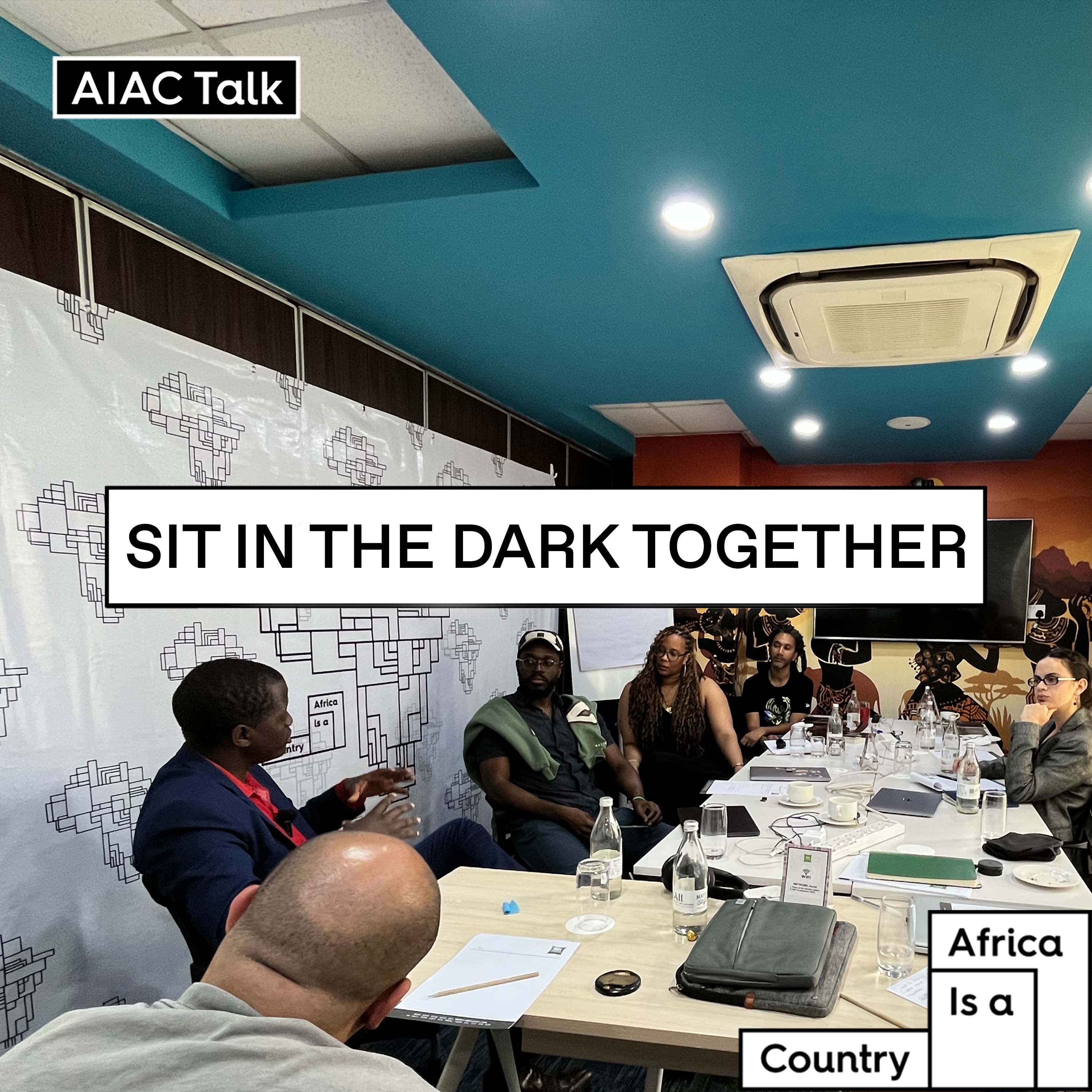
We must learn to sit in the dark together
In June 2025, Africa Is a Country held its inaugural Festival of Ideas in Nairobi—a week of screenings, workshops, panels, and long, searching conversations about the future of political and cultural life on the continent. As part of the trip, our editorial team sat down with Joe Kobuthi of The Elephant, one of Kenya’s leading platforms for critical commentary and analysis.Kobuthi has long been a trenchant observer of the Kenyan public sphere, and in this wide-ranging roundtable, he reflects on the country’s shifting political landscape: from the promises of the 2010 constitution and the disillusionment of Jubilee-era politics to the emergence of a new Gen Z–led revolt demanding a wholesale renegotiation of Kenya’s social contract.As fellow travelers in the struggle to build a more critical, independent, and solidaristic media, we approached this conversation with Kobuthi not simply as observers but as participants. The crises facing Kenya—shrinking civic space, intensified repression, the return of theological-authoritarian rhetoric—are not unique. They resonate across the continent and beyond, including in our own work. What are our responsibilities, as editors and writers, in such a moment? What new forms of public imagination are needed? How do we hold space for resistance while sustaining institutions of critique?This wide-ranging discussion explores those questions. From the ghosts of Kenya’s post-independence promises to the radical promise of Gen Z revolt, from the ideological decay wrought by structural adjustment to the shifting terrain of faith and power, Kobuthi offers a sobering and searching diagnosis of where things stand—and what might come next.
Nepal's Gen Z reckoning
In September 2025, Nepal experienced one of the most significant waves of political unrest in its recent history. Led largely by Gen Z protesters, the movement brought down the governing coalition and forced a national reckoning with the failures of a political class that had long promised transformation but delivered little. Coming nearly two decades after the end of the Maoist civil war and the abolition of the monarchy, the uprising was not just about corruption or unemployment—it was about a deeper sense of betrayal. What had happened to the revolution?In this episode, editor William Shoki speaks to Feyzi Ismail, a political scientist and longtime observer of Nepalese politics, about what the uprising revealed—and what might come next. Together, they trace the longue durée of struggle in Nepal, from the armed insurgency and the resulting fragile peace, to the rise and demobilization of the Maoists, to today’s fractured political landscape. What does the Gen Z rebellion tell us about the future of left politics in Nepal? What kind of economic or geopolitical program could emerge from this moment? And is it possible to imagine a new political formation rising from the ashes of disillusionment?
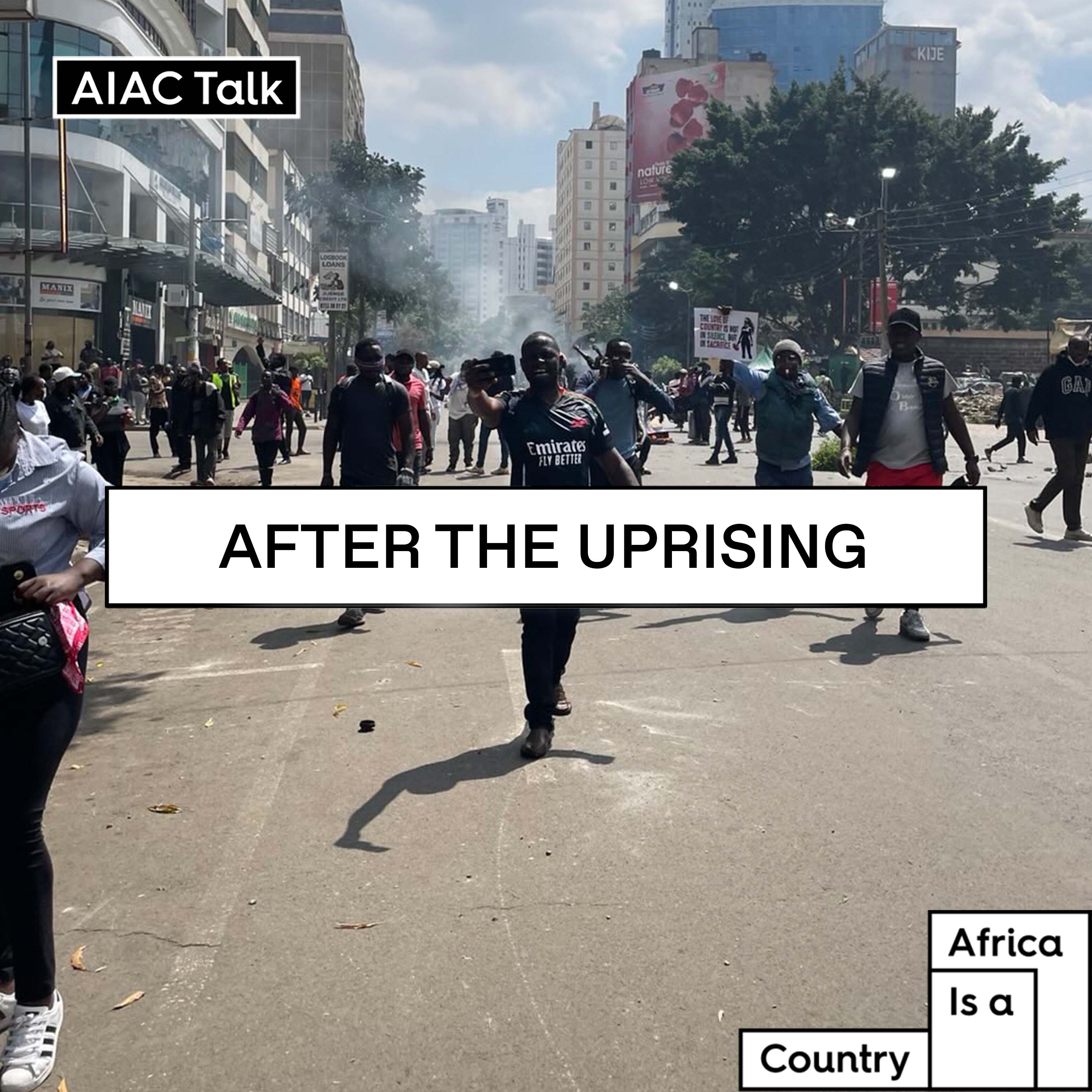
After the uprising
On June 25, 2024, Kenya entered a new political era. Sparked by opposition to the Finance Bill—a package of regressive taxes pushed by President William Ruto’s government—the protests that began in Nairobi quickly spread nationwide, escalating into a mass rebellion against austerity, elite impunity, and the hollowing out of democratic life. Dozens were killed, hundreds detained or disappeared. What followed was not simply a policy defeat for the state, but a profound crisis of legitimacy.For weeks, the streets became a site of generational reckoning. Disillusioned with formal politics and disconnected from traditional civil society, a new political subjectivity emerged—youth-led, digitally coordinated, ideologically inchoate but morally resolute. Even after the Finance Bill was withdrawn, the protests continued. By June 2025, they had reignited in response to the death of Albert Omondi Ojwang in police custody, now squarely targeting state violence and the wider political order. The demands had shifted: no longer just focused on reform, but on complete rupture. Still, if the movement has posed powerful questions, there remains the matter of answers: What comes next? How do we sustain this moment? Who is building a politics for the long term?In this episode of the Africa Is a Country podcast, editor William Shoki is joined by Sungu Oyoo, a longtime activist, writer, and community organizer based in Nairobi—and a 2027 presidential candidate in Kenya’s presidential elections. Sungu is the national spokesperson of Kongamano La Mapinduzi (“Congress of the Revolution”), a socialist formation that emerged out of years of student and community organizing. He is also a founding member of the Kenya Left Alliance, a broad coalition of progressive organizations that is trying to turn the country’s popular discontent into a durable, anti-capitalist political force.In this conversation, they discuss Sungu’s personal path to politics, the failure of Kenya’s elite-led independence project, the broken promises of the 2010 constitution, and why the post-2022 period has been marked by such sharp disillusionment. They also talk through the class composition of the recent protests, the limits of “Gen Z” as a political category, and what it means to build a left electoral project without falling into the traps of clientelism or cynicism.
De-dollarization from below
Discussions about ongoing attempts to move beyond the US dollar as the hegemonic currency of world trade often focus on the official policies of nation-states. Frequently referenced in such debates, for instance, are attempts by central banks to issue digital currencies, the recently mooted BRICS currency, and various measures taken by countries in the Global South to hold larger shares of their foreign reserves in currencies other than the dollar.But what is often missing from these conversations are the perspectives and practical considerations of citizens who interact with multiple currencies by necessity or by choice —whether through trade, remittances, or other forms of cross-border exchange. To what extent is de-dollarization already a practical outcome of increasing Africa-China trade? Are Igbo importers of Chinese-made goods at the vanguard of a multi-currency fluency which nation-states will ultimately have to adopt?The Nigerian Scam explores these issues on the most recent Africa Is a Country podcast through a conversation with Dr. Jing Jing Liu, focused on her recently published study “Decentering the Dollar in Africa–China Trade: How Nigerian Entrepreneurs Navigate Currency Swaps and Digital Currencies in an Era of USD Hegemony and RMB Internationalization.”
What's left of Nigeria's feminist left?
This episode was recorded in the wake of the recent public controversy surrounding the suspension of Nigerian Senator Natasha Akpoti-Uduaghan, following sexual harassment allegations she leveled against Godswill Akpabio, the current president of the Nigerian senate. Nigerian public commentary has been polarized by the controversy, reflecting a deeper division that is characteristic of debates about the current state of women in Nigeria. On one hand, the suspended senator’s cause has been championed by supporters of women’s rights and feminist politics, who have grown increasingly vocal in the past two decades. This is evident in the rising prominence of women’s rights advocacy in the media and civic spaces, the proliferation of online feminist organizing, and the recurrence of feminist-oriented protests and organizations, such as the Market March protests against sexual harassment in 2019 and the role played by the Feminist Coalition in the 2020 #EndSARS protests. The gains of Nigerian women in recent times are also manifest in the realms of culture and international organizations. Leading lights such as acclaimed writer Chimamanda Ngozi Adichie, World Trade Organization Director-General Ngozi Okonjo-Iweala, and United Nations Deputy Secretary-General Amina Mohammed have broken barriers for women within and beyond Nigeria. The measure of public outcry and protest that has accompanied the suspension of Senator Akpoti-Uduaghan is best understood within the context of these moderate advancements in the struggle for women’s rights and recognition in Nigeria.On the other hand, a powerful constituency—which appears to include the majority of her fellow senators—have accepted or even applauded the suspension of Akpoti-Uduaghan. Likewise, the handful of women in elective office, which, to be fair, are a vanishing minority in Nigeria, have given lukewarm support at best or been critical of Senator Akpoti-Uduaghan. This all suggests that despite the momentum in public discourse, popular culture, and international institutions, the achievements of the women’s movement in the realm of formal politics in Nigeria have been severely limited. The profound inequalities experienced by women in the workplace and across most other metrics of development appear as both a cause and consequence of their political marginalization under conditions of nominal democracy. Such political marginalization persists despite the fact that women’s organizing, in the form of popular organizations such as Women in Nigeria (WIN), played leading roles in the pro-democracy struggle. Nor has the emergence in recent years of a multimillion-dollar global industry for funding and programming for “women’s political leadership” improved the state of women’s political participation in Nigeria.This contradictory situation—characterized by both new momentum and enduring marginalization—prompts critical questions about the state of the women’s movement in contemporary Nigeria. What are the origins and history of feminism in Nigeria? How did the forms of Nigerian feminist and women’s organizing evolve from the colonial and military period till the present? Why, despite the modest achievements of Nigerian women, has Nigerian politics remained desperately patriarchal?In this episode, Sa’eed Husaini and Emeka Ugwu are joined by Hauwa Mustapha, a Nigerian feminist, trade unionist, and development economist, to explore the past, present, and future trajectory of Nigerian...







Get this podcast on your phone, Free


Create Your Podcast In Minutes
- Full-featured podcast site
- Unlimited storage and bandwidth
- Comprehensive podcast stats
- Distribute to Apple Podcasts, Spotify, and more
- Make money with your podcast