Episode List
Low Back Pain That Wasn't a Back Problem
Her back hurt. But her back wasn't the problem. This is where the nuance comes in. In this episode, I dive into a fascinating clinical case involving a hypermobile pole dancer presenting with low back pain — where the lumbar spine was the pain generator but not the driver. The real culprits? Her knee and foot. Surprised? I walk through the clinical reasoning process that shifted the treatment focus away from the low back and down the kinetic chain, and explore what that looked like in practice through progressive exercise programming geared towards her real drivers. This patient had a history of ACL surgery with lateral meniscus repair, along with a torn right AND left hamstring. If you don't think that is relevant to her low back pain, think again. Make the connection. Key Takeaways: ✅ Always ask youself: "Is this the pain generator or the driver?" ✅ In hypermobile patients, control and stiffness are often the missing ingredients — not flexibility ✅ Pilates offers an exceptional framework for graded loading in hypermobile movers when applied thoughtfully ✅ Treating distally can resolve proximal pain — trust the kinetic chain ✅ Know your patient's sport or art form — it shapes everything about your programming

When Exercise Isn't Working
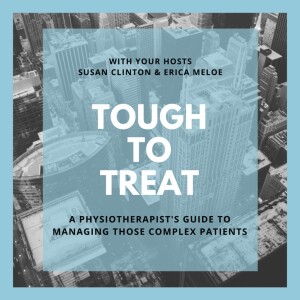
If you have patients or are a person who "does all the exercises," gets stronger, and still doesn't feel better—this episode is for you. In this episode, Erica dives into how to advance exercise prescription for patients who are often labeled as "tough to treat." These are the individuals who don't respond well to traditional strengthening or mobility programs and may experience pain, guarding, or flare-ups with exercise. She explores how exercise positioning, load selection, and movement strategy can dramatically change outcomes. Rather than defaulting to more reps or heavier weights, she discusses how altering body position and the relationship to gravity can allow patients to move with less threat, better control, and more efficiency. One aspect of this episode is working with people who chronically grip or brace their low back muscles. She talks through practical strategies to reduce excessive tone and reintroduce movement without reinforcing protective patterns that limit progress. Erica also discusses the role of advanced exercise positions and Pilates-based approaches, highlighting how these methods can be used thoughtfully to improve load tolerance—especially for patients who need more than basic exercises but aren't ready for high-demand training. This episode challenges the idea that "tough to treat" patients need more effort or tougher exercises, and instead reframes progress around smarter positioning, intentional loading, and movement quality to help people move with confidence again. Related links: Erica's Website Susan's Website
Advanced Clinical Reasoning: Applications Across the PT Spectrum
In this episode, Erica explores how clinical reasoning informs decision-making across diverse areas of physical therapy practice. This is a clinical pearls discussion that will save you lots of time in the clinic. From CKC to OKC brain mapping in an MMA fighter to exercise progression in ACL rehabilitation to thoracic dysfunction in a post partum runner experiencing hip pain and incontinence, she highlights key clinical reasoning strategies that guide effective treatment and exercise progression. For example, if your patient has a bracing strategy in their lumbar spine where they always "grip" their back when they sit, stand and even go supine, how would you prescribe exercise to "take out" that strategy to give them more options for movement? Many people do this in our "sit up straight" culture. This will make a huge difference in your practice! Related links: Tough To Treat Website Erica’s Website Susan’s Website
Treatment Timelines and Tackling HEP Non-Compliance: Real Patient Cases
How long should you keep treating a patient? And what’s the best approach when they’re skipping their home exercise program? In this listener Q&A episode, Erica shares practical strategies—illustrated through two real patient cases, one a golfer and the other a cyclist—for answering the tough question of treatment length and for addressing non-compliance. She highlights how building a strong therapeutic relationship can improve follow-through and make these conversations more productive. Erica also highlights the most important phases of an exercise program to ensure efficiency and compliance. To close, Erica offers a brief update from her doctoral research on menopause, focusing on the role of muscle power in older women and why it may be a more critical predictor of function than strength alone. Related links: Tough To Treat Website Erica’s Website Susan’s Website
Why is an old foot injury responsible for my current neck pain?
In this episode, Erica dives into a fascinating case of a patient experiencing neck pain and how that seemingly isolated symptom actually traced back to an old foot injury. This case exemplifies the deep, interconnected nature of the human body. For those you have been listening for a while, this should not surprise you. She unpacks the biomechanical and neural links between the foot and cervical spine, exploring how altered load distribution and compensatory patterns can persist long after the original injury appears to have healed. A key focus of the discussion is the role of the center of mass—how shifts in its control can influence motor strategy and postural control, ultimately impacting regions far from the original site of injury. Erica also covers exercise options, including progressions that integrate both the foot and cervical spine. How to adapt your treatment when load transfer is compromised is a key factor in this patient’s outcome. This episode is a reminder that in rehab, it’s rarely just about the joint that hurts—it’s about the whole system that moves around it. Related links: Tough To Treat Website Erica’s Website Susan’s Website
You may also like








Get this podcast on your phone, Free


Create Your Podcast In Minutes
- Full-featured podcast site
- Unlimited storage and bandwidth
- Comprehensive podcast stats
- Distribute to Apple Podcasts, Spotify, and more
- Make money with your podcast
