
Episode List

Tyler Collings: Validity, Reliability and Measuring What Matters
In this episode of VALDCAST, our host Ryan sits down with biomechanist and Griffith University researcher, Tyler Collings, to break down one of the most common and most misunderstood topics in sports technology: validity and reliability.Tyler explains what these terms actually mean in practice, why they’re often confused and how human variability, testing protocols and “gold standards” influence the data practitioners rely on every day. The conversation unpacks common misconceptions in validation research, how to interpret reliability and validity papers and what practitioners should really be looking for when assessing performance and rehab technology.They also dive into Tyler’s work validating field-based tools like force plates and strength testing devices, the importance of transparency in research and how laboratory findings translate into real-world performance and rehab settings.

Bobby Esbrandt: Building Athlete Profiles Beyond the CMJ
In this episode of VALDCAST, Dylan sits down with physical therapist and Impact Sports Physical Therapy founder Bobby Esbrandt to unpack what it really means to assess, treat and develop athletes beyond a single metric. Bobby shares why relying solely on the countermovement jump can leave critical gaps in decision-making, and how building a complete athlete profile — spanning strength, power, rate of force development and reactive qualities — leads to better outcomes, particularly in post-op and ACL rehabilitation. The conversation also explores integrating technology into clinical practice, maintaining continuity of care across multiple clinics and balancing business growth with hands-on clinical excellence.If you’re a physio, S&C coach or clinician looking to move past surface-level testing, improve athlete buy-in and deliver higher-quality, data-informed rehab, this episode is for you.

Taylor Evernden: Bridging Rehab and Performance Through Data, Culture and Care
In this episode of VALDCAST, Ryan sits down with Taylor Evernden, coach and Co-Founder of ORKA Performance, to explore what truly effective return-to-performance looks like when rehab, performance and people are fully aligned.Taylor shares how ORKA has built a collaborative model that moves athletes seamlessly from acute rehab into performance — balancing objective data, subjective feedback and the human side of coaching. The conversation spans RTP evolution, criteria-based transitions, communication breakdowns and how technology like force plates and strength testing fits across the entire athlete journey.They also dive into scaling a performance business, building culture across multiple locations, onboarding staff and why relationships, trust and critical thinking still matter more than any tool.If you’re a physio, S&C coach or clinic owner interested in RTP pathways, integrated care models, performance testing, or scaling without losing culture, this episode is for you.

Hannah Marchant: Managing Complex Knees with Data-Informed Rehab
In this episode of VALDCAST, Dylan sits down with physical therapist at New York City Football Club, Hannah Marchant, to unpack one of the most challenging cases in knee rehabilitation: medial patellofemoral ligament (MPFL) reconstruction, recurrent patellar instability and complex cartilage lesions in a Division I-bound football athlete.Hannah walks us through the full journey — from baseline testing and load management to force plate assessments, athlete decision-making, asymmetry debates and what happens when setbacks hit. She shares how she blended evidence, technology, surgical constraints and clinical reasoning to guide her ultimate return-to-sport decision.If you’re a physio, S&C coach or clinician navigating post-op knees, complex cases or high-performance environments, this conversation on practical problem-solving and data-informed rehab is for you.
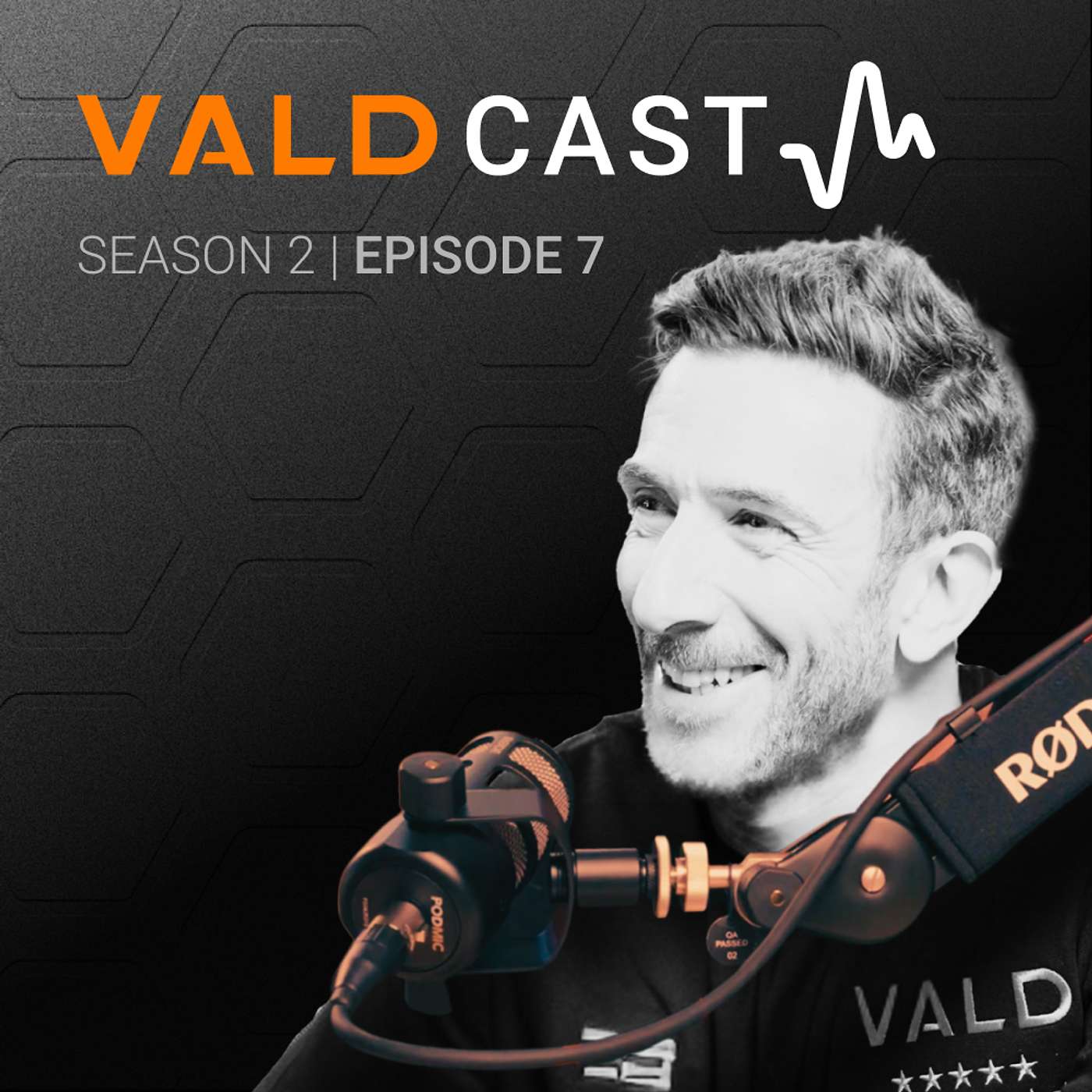
Daniel Cohen: Decoding Force Plate Truths
In this episode of the VALDCAST, our host Ryan sits down with the co-founder of ForceDecks Dr. Daniel Cohen — sports scientist, researcher and long-time leader in force plate methodology. Together they unpack one of the most important (and misunderstood) areas in athlete assessment: what force plate data actually means.Dan breaks down the insights behind VALD's 2024-25 Premier League Report, including which CMJ metrics truly discriminate elite from sub-elite, why “fatigue monitoring” misses the point and how practitioners can think more clearly about profiling vs monitoring — all through the lens of real-world data.He also dives into asymmetry (and why the 10% rule doesn’t cut it), the rise of single-leg jumps and the one thing every practitioner must master before worrying about metrics: data hygiene.
You may also like










Get this podcast on your phone, Free


Create Your Podcast In Minutes
- Full-featured podcast site
- Unlimited storage and bandwidth
- Comprehensive podcast stats
- Distribute to Apple Podcasts, Spotify, and more
- Make money with your podcast
