
The Science of Happiness
http://feeds.feedburner.com/TheScienceOfHappinessEpisode List

Happiness Break: A Practice In Moving Through Stress
Join yoga and meditation teacher Jonathan Relucio for a trauma-informed practice combining mindful movement and breathing to reduce tension and build resilience to stress.How To Do This Practice: Get comfortable: Sit or lie down and notice the support beneath your body, keeping your eyes open or closed—whichever feels comfortable. Connect with your body: Bring your attention inward and notice how your body, mind, and heart feel in the present moment. Release tension: Inhale as you gently shrug your shoulders toward your ears, then exhale as you relax and release them. Move with your breath: Inhale as you reach your arms overhead, then exhale as you gently bend from side to side, noticing the sensations in your body. Breathe into your belly: Place one hand on your belly and notice it expand as you inhale and relax as you exhale, following the natural rhythm of your breath. Pause and notice: Return to your natural breathing and take a moment to notice how your body and mind feel before continuing with your day. Scroll down for a transcription of this episode.Today’s Happiness Break Guide:JONATHAN RELUCIO is a trauma-informed yoga and meditation teacher with 20 years of experience in community organizing, social services, training, and leadership development.Learn more about Jonathan here: https://www.jonathanrelucio.com/Related Happiness Break episodes:Embodying Resilience: https://tinyurl.com/3d2ma8twVisualizing Your Purpose: https://tinyurl.com/mwze59jxThe Healing Power of Your Own Touch: https://tinyurl.com/rrtpje2xRelated Science of Happiness episodes:How To Feel Better About Yourself: https://tinyurl.com/3jave7h2What To Do When Stress Takes Over: https://tinyurl.com/yxf3jawnThe Contagious Power of Compassion: https://tinyurl.com/y6bpvbv5We’d love to hear about your experience with this practice! Share your thoughts at happinesspod@berkeley.edu or use the hashtag #happinesspod.Find us on Apple Podcasts: https://tinyurl.com/2p9h5aapHelp us share Happiness Break! Leave a 5-star review and share this link: https://tinyurl.com/2p9h5aapTranscription: https://tinyurl.com/3v9rapra

Where To Look For Joy
How can we feel more moments of joy? Explore how joy is rooted in connection, gratitude, and paying attention to the people and moments that bring meaning to our lives.Summary: Did you know that joy isn’t just something we feel, but something we practice? On this episode of The Science of Happiness, poet Ross Gay shares how connection and attention can help us cultivate more joy, while psychologist Philip Watkins explains how gratitude can amplify that feeling. Learn how hanging out, noticing moments of connection, and reflecting on joyful experiences can help bring more joy into your life.How To Do This Practice: Notice connection: Pay attention to the people, places, animals, and natural world that make you feel connected. Make time to be together: Look for opportunities to hang out, share experiences, and spend time with others without an agenda. Pay attention to the small moments: Notice everyday interactions and moments of goodness that you might otherwise overlook. Share your joy: Tell someone about something that delights you, celebrate good moments together, or help someone else carry their joy. Savor what feels good: When you experience joy, pause and let yourself fully appreciate and celebrate the moment. Reflect with gratitude: Think or write about a joyful experience and what it meant to you or how it made you feel connected. Scroll down for a transcription of this episode. Today’s Guests:ROSS GAY is an award-winning American poet and author. His latest book explores the complexities of joy and its connection to feelings like gratitude and sorrow.Learn more about Ross: https://www.rossgay.net/aboutPHILIP WATKINS is a psychology professor at Eastern Washington University. He conducts research on different aspects of well-being including gratitude, happiness, and joy.Learn more about Philip and his work: https://greatergood.berkeley.edu/profile/phil_watkinsRelated Science of Happiness episodes:How Joy Helps Save the Planet: https://tinyurl.com/2d5hjz9sAre You Remembering the Good Times: https://tinyurl.com/ysbwrnr4The Contagious Power of Compassion: https://tinyurl.com/y6bpvbv5Related Happiness Break episodes:Tap Into the Joy That Surrounds You: https://tinyurl.com/ykuz28zaHow to Awaken Joy, with Spring Washam: https://tinyurl.com/ybpuvuj6The Unexpected Joy of Slow Looking: https://tinyurl.com/4uudwwc2Message us or leave a comment on Instagram @scienceofhappinesspod. E-mail us at happinesspod@berkeley.edu or use the hashtag #happinesspod.Help us share The Science of Happiness! Leave us a 5-star review on Apple Podcasts or share this link with someone who might like the show: https://tinyurl.com/2p9h5aapTranscription: https://tinyurl.com/2aext75x
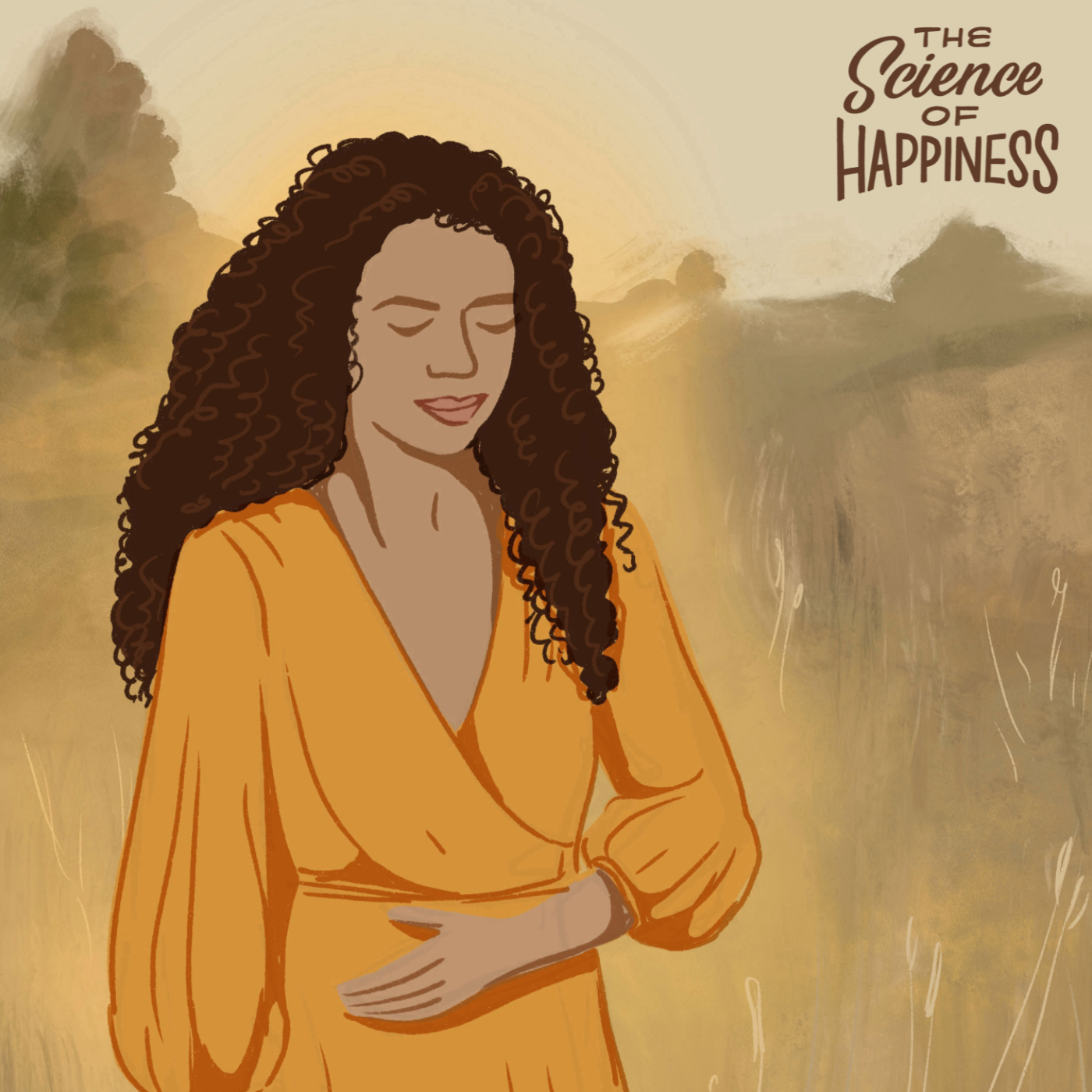
Happiness Break: A Body Scan for Calm and Ease
Meditation teacher Spring Washam guides us in a practice of embodied awareness, helping us use the body as an anchor during stressful or overwhelming moments.How To Do This Practice: Find a comfortable position: Sit upright in a relaxed position where you can comfortably notice the flow of your breath. Begin at the top of your body: Close your eyes and bring your attention to your head, neck, face, and jaw. Notice any tightness and allow those areas to soften. Move your awareness downward: Slowly scan through your shoulders, arms, hands, chest, and belly, noticing any sensations, emotions, or areas where you may be holding tension. Breathe into your belly: Place a hand below your belly button if it feels comfortable. Let your belly expand with each in-breath, and imagine releasing tension with every out-breath. Feel your connection to the ground: Bring your attention to your sitting bones, legs, knees, and feet. Notice where your body makes contact with the chair, floor, or other surface, using those sensations to anchor yourself in the present moment. Take in your whole body: Become aware of your body as a whole, returning to the breath whenever your mind wanders. To close, place a hand on your heart and offer yourself a wish for peace, happiness, and ease. Scroll down for a transcription of this episode.Today’s Happiness Break Guide:SPRING WASHAM is a meditation teacher based in Oakland, California. She is also the author of the book, The Spirit of Harriet Tubman: Awakening from the Underground. Learn more about Spring Washam here: https://www.springwasham.com/Related Happiness Break episodes:A Meditation to Find Grounding in the New Year, With Spring Washam: https://tinyurl.com/3tpasst9How to Awaken Joy, with Spring Washam: https://tinyurl.com/ybpuvuj6The Healing Power of Your Own Touch: https://tinyurl.com/rrtpje2xRelated Science of Happiness episodes:How To Feel Better About Yourself: https://tinyurl.com/3jave7h2What To Do When Stress Takes Over: https://tinyurl.com/yxf3jawnThe Contagious Power of Compassion: https://tinyurl.com/y6bpvbv5We’d love to hear about your experience with this practice! Share your thoughts at happinesspod@berkeley.edu or use the hashtag #happinesspod.Find us on Apple Podcasts: https://tinyurl.com/2p9h5aapHelp us share Happiness Break! Leave a 5-star review and share this link: https://tinyurl.com/2p9h5aapTranscription: https://tinyurl.com/2223k9b7

Ear Hustle Podcast: Corny-Ass Episode
Scroll down for a transcription of this episode.Nigel says no matter where you are, everyone has a story to tell about a hug: good, bad, or awkward. Earlonne isn’t buying it. Ear Hustle is a proud member of Radiotopia, from PRX.You can download the episode here and find the transcript here.

Why You Can’t Do It Alone
Can anyone truly succeed alone? We explore how role models, mentors, and strong social support make upward mobility far more possible than grit alone.Summary: What role do the people around us play in shaping our success? Brothers Danny and Gilbert Murillo share how education, mentorship, and their evolving relationship helped them overcome incarceration and systemic barriers to build lives of purpose. Then, Social Mobility Lab founder Bob McKinnon explains why success is never a solo journey and how recognizing our own "dream team" can expand what's possible for ourselves and others.How To Do This Practice: Reflect on your journey: Think about where you are today and the moments that shaped your path. Consider both the opportunities you had and the challenges you overcame. Identify your dream team: Write down the people who have encouraged, protected, guided, or inspired you throughout your life. They might be family members, teachers, friends, mentors, coaches, or colleagues. Recognize their impact: For each person, note one way they helped you grow or see new possibilities. Notice how your achievements are connected not only to your own efforts, but also to the support you received. Look ahead with intention: Ask yourself what kind of support you need right now. Is there someone you could learn from, ask for advice, or build a stronger relationship with as you work toward your next goal? Move forward with self-compassion: As you pursue your goals, remember that success and setbacks are never yours alone. Focus on what you can control, ask for help when you need it, and offer yourself the same grace you'd extend to someone you care about. Scroll down for a transcription of this episode.DANNY MURILLO is the co-founder of Underground Scholars, a program that creates pathways to higher education for incarcerated, formerly incarcerated, and system-impacted people. Learn more about Danny here: https://undergroundscholars.berkeley.edu/membersGILBERT MURILLO is a policy advocate and researcher who draws on his own experience with incarceration to reform California's criminal justice system.Learn more about Gilbert here: https://capolicylab.org/staff/gilbert-murillo/BOB MCKINNON is an author, teacher, and Director of the Social Mobility Lab at the Colin Powell School for Civic and Global Leadership at The City College of New YorkLearn more about Bob here: https://greatergood.berkeley.edu/profile/bob_mckinnonRelated Science of Happiness episodes:Why Compassion Requires Vulnerability: https://tinyurl.com/mrxsad33Related Happiness Break episodes:A Science-Backed Path to Self-Forgiveness: https://tinyurl.com/2js59anmMessage us or leave a comment on Instagram @scienceofhappinesspod. E-mail us at happinesspod@berkeley.edu or use the hashtag #happinesspod.Help us share The Science of Happiness! Leave us a 5-star review on Apple Podcasts or share this link with someone who might like the show: https://tinyurl.com/2p9h5aapTranscription: https://tinyurl.com/3j352txy










Get this podcast on your phone, Free


Create Your Podcast In Minutes
- Full-featured podcast site
- Unlimited storage and bandwidth
- Comprehensive podcast stats
- Distribute to Apple Podcasts, Spotify, and more
- Make money with your podcast
