Everyday Injustice
https://feeds.soundcloud.com/users/soundcloud:users:666650381/sounds.rssEpisode List
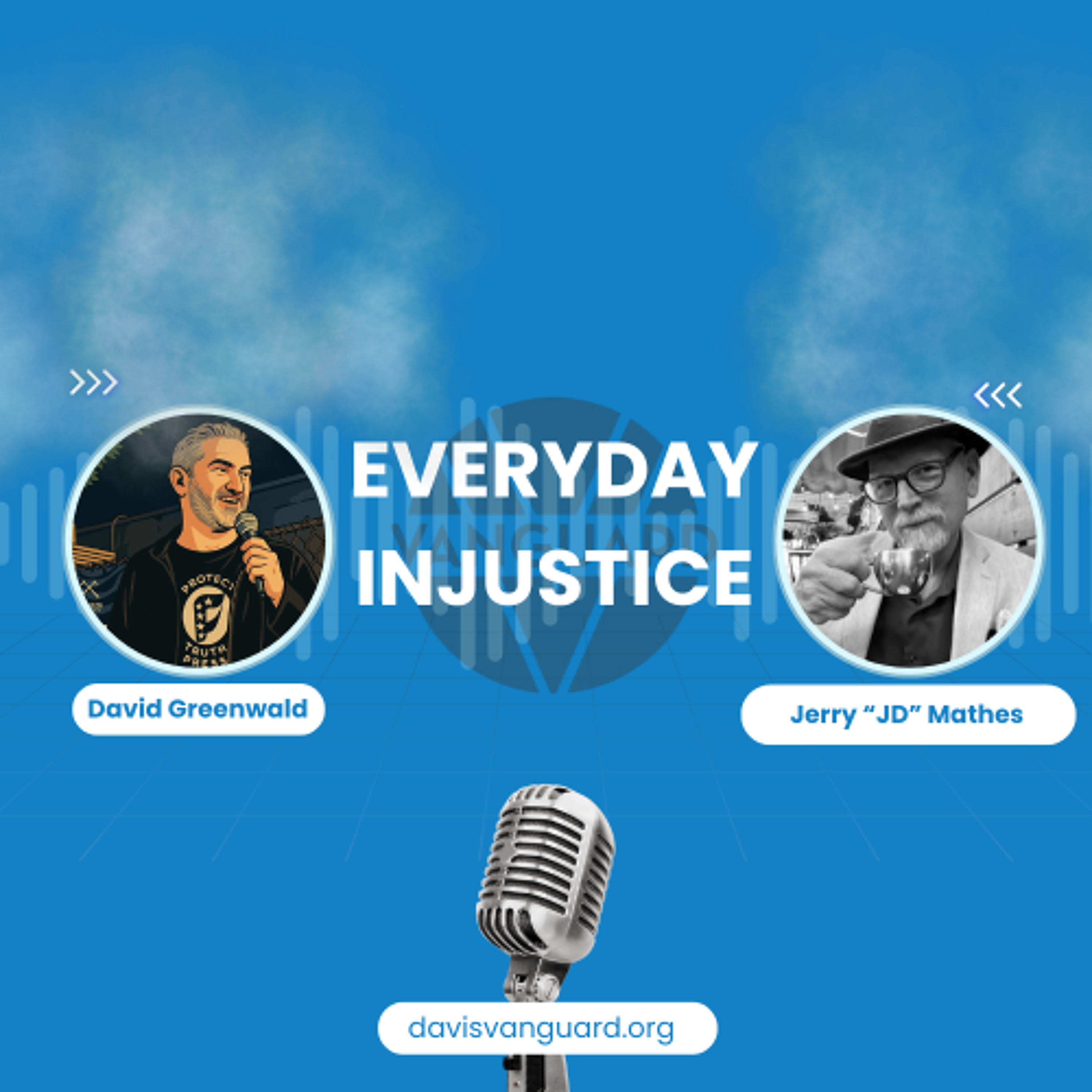
Everyday Injustice Podcast Episode 318: From Soldier to Storyteller
Jerry “JD” Mathis on Reentry, Shame, and Finding a Voice On this episode of the Everyday Injustice podcast, host David Greenwald speaks with Jerry “JD” Mathis, an award-winning author, PEN America Writing for Justice Fellow, and formerly incarcerated writer whose work centers on mass incarceration, reentry, and the redemptive power of storytelling. Mathis’ life arc—from decorated National Guard soldier to federal prison camp to acclaimed writer—offers a stark case study in how a single mistake can permanently alter a life, and how narrative becomes a way to survive what comes after. Mathis recounts how, at age 20, he was convicted in federal court for his role in covering up the theft of a machine gun from his National Guard unit, a crime that resulted in a two-year prison sentence while the primary offender was never charged. Once celebrated as a top gunner and model soldier, Mathis found himself publicly branded, prosecuted as a dangerous figure, and thrust into a criminal legal system that treated him not as a young person who made a grave error, but as a permanent threat. The punishment, he explains, did not end with his release. The conversation centers on reentry as what Mathis calls the “hidden punishment” of incarceration: the long afterlife of stigma, unemployment, restricted housing, and social exclusion that follows people long after they leave custody. Drawing on his own struggles—and comparative models like Norway’s—Mathis argues that the United States systematically undermines public safety by making successful reentry nearly impossible. Rather than addressing trauma, addiction, or the structural causes of harm, the system relies on exclusion and moral judgment, pushing people further to the margins. Ultimately, Mathis describes how writing became a way to reclaim a stolen narrative. Through the PEN America Writing for Justice Fellowship, he finally found the language to tell his story without shame—first to the public, and then to his daughters. That act of storytelling, he says, was not only personal catharsis but political intervention: a refusal to let prosecutors, headlines, or stigma define who he is. The episode is a powerful meditation on punishment, identity, and what it actually takes to rebuild a life after prison.
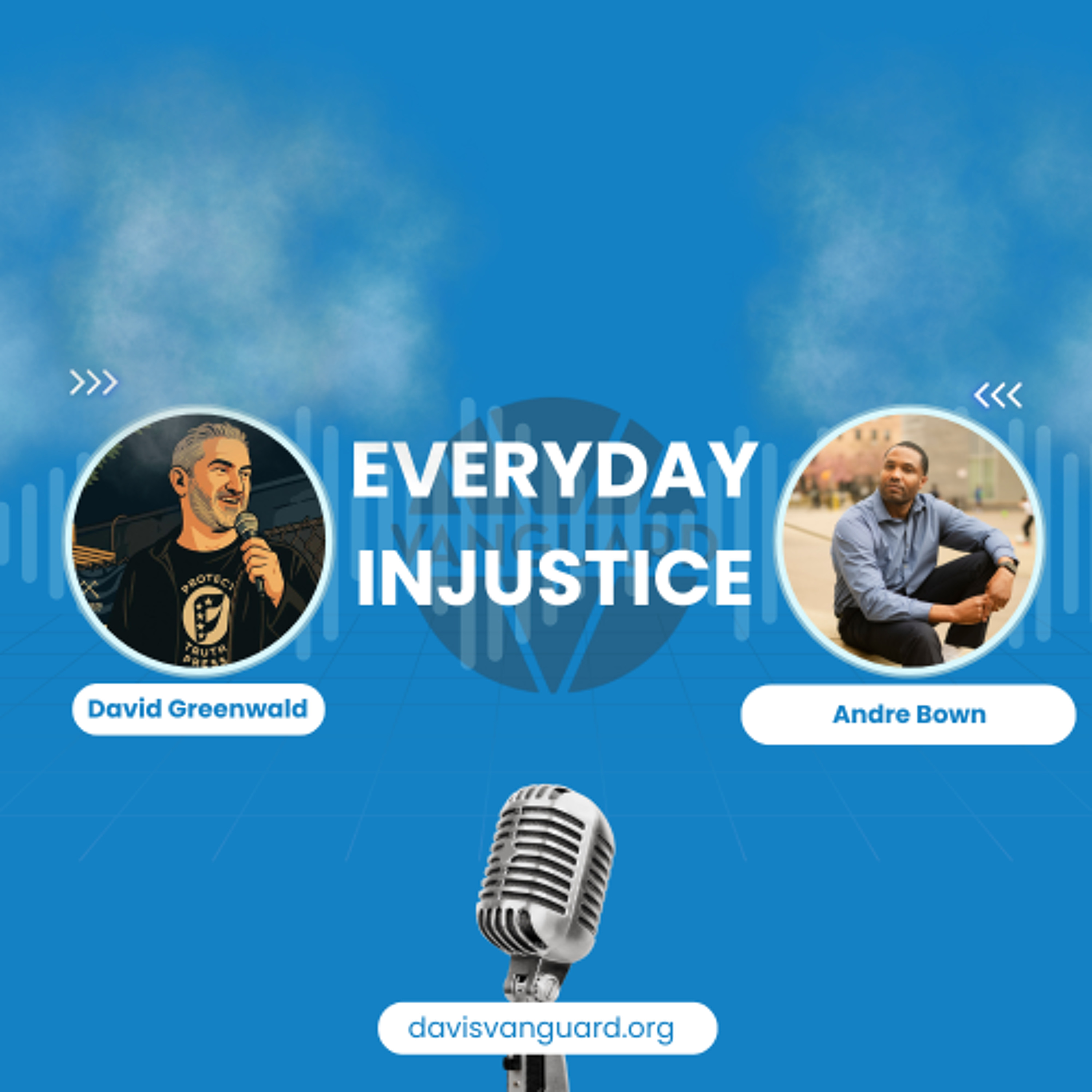
Everyday Injustice Podcast Episode 317: Andre Brown, Wrongful Convictions, and the Limits of Finality
In this episode of the Everyday Injustice Podcast, host David Greenwald is joined by Jeffrey Deskovic, Oscar Michelen, and Andre Brown for an unvarnished conversation about a wrongful conviction case that nearly resulted in a second, devastating return to prison. Brown, who spent 23 years incarcerated for a crime he maintains he did not commit, had his conviction vacated in 2022, only to face the threat of being sent back to prison after the appellate court reversed that ruling nearly two years later . The discussion traces the extraordinary procedural twists of the case, including last-minute surrender orders, emergency motions, a denied appeal to New York’s highest court, and a clemency petition left undecided. Ultimately, a resentencing motion based on ineffective assistance of counsel resulted in Brown being resentenced to concurrent terms that recognized the time he had already served, allowing him to remain free. The episode lays bare how appellate courts’ deference to “finality” can override compelling evidence and how narrowly justice can turn on timing, discretion, and institutional posture . Brown speaks candidly about living in legal limbo—free but never secure—describing sleepless nights, the strain on his family, and the psychological toll of knowing he could be returned to prison at any moment. At the same time, he reflects on the community, legal advocates, and family members who sustained him, and on the work he undertook while free: mentoring youth, participating in education programs, and becoming an advocate within the wrongful conviction community . The conversation broadens into a systemic critique, with Deskovic and Michelen examining how courts handle claims of innocence, ineffective counsel, and newly discovered evidence, particularly in non-DNA cases. The episode underscores how rare corrections remain, how much persistence they require, and how much depends on actors willing to look beyond the record toward real-world justice. It is a sobering reminder that even when freedom is regained, the fight for exoneration—and for a more accountable legal system—often continues .
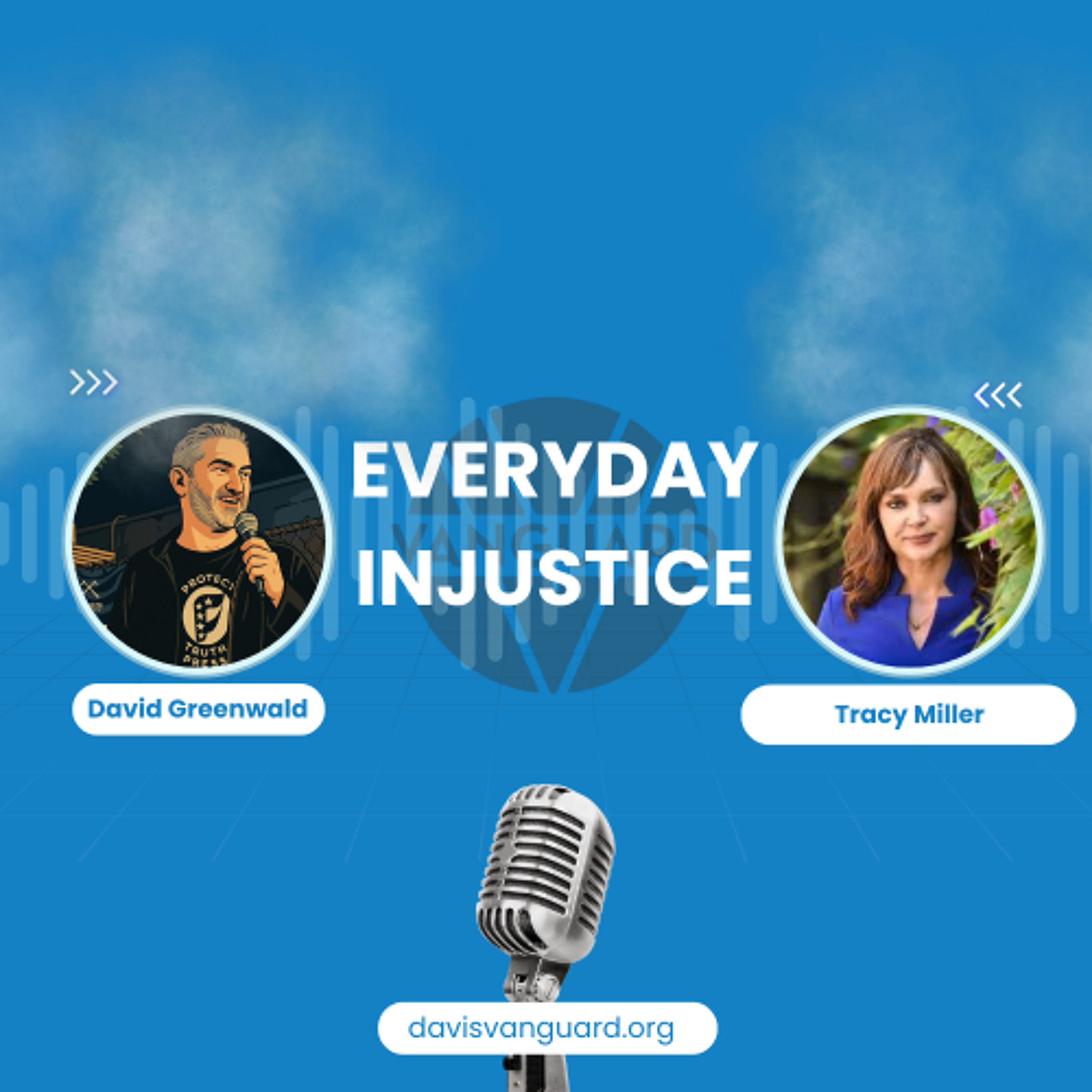
Everyday Injustice Podcast Episode 316: Fr Prosecutor on Retaliation, Accountability, Truth Telling
On this episode of Everyday Injustice, host David Greenwald speaks with Tracy Miller, a veteran prosecutor whose career inside one of the nation’s largest district attorney’s offices ended not with honors, but with retaliation, isolation, and a landmark lawsuit. Miller spent 25 years at the Orange County District Attorney’s Office, rising to senior leadership and building one of the country’s largest gang prevention programs, before becoming one of several employees who reported sexual harassment by a politically powerful insider. What followed, Miller explains, was not institutional self-correction but institutional protection. Despite multiple reports, a county investigation, and widespread internal knowledge of the misconduct, the alleged harasser was promoted while those who spoke out faced marginalization. Miller recounts being stripped of her office, pushed into a conference room during the final days of her career, and denied the basic dignity routinely afforded to departing senior staff. The experience, she says, revealed how easily stated commitments to justice collapse when power is threatened. Miller ultimately filed suit against Orange County, a decision she describes as deeply painful and disorienting, akin to “suing herself” after a lifetime of public service. When the case finally went to trial in 2025, the sitting district attorney spent days on the witness stand, an extraordinary public reckoning for an office tasked with enforcing the law. For Miller, the trial was not just about damages, but about forcing the truth into the open in a system accustomed to silence and deference. In the conversation, Miller reflects on vulnerability, courage, and the double standard prosecutors impose on victims while often failing to protect their own. She frames her case as part of a larger struggle over accountability inside the criminal legal system, where misconduct persists not only because of bad actors, but because too many others look away. Now working as an executive coach and consultant, Miller sees truth-telling as both a professional obligation and a form of resistance—and hopes her story helps others understand they are not alone.
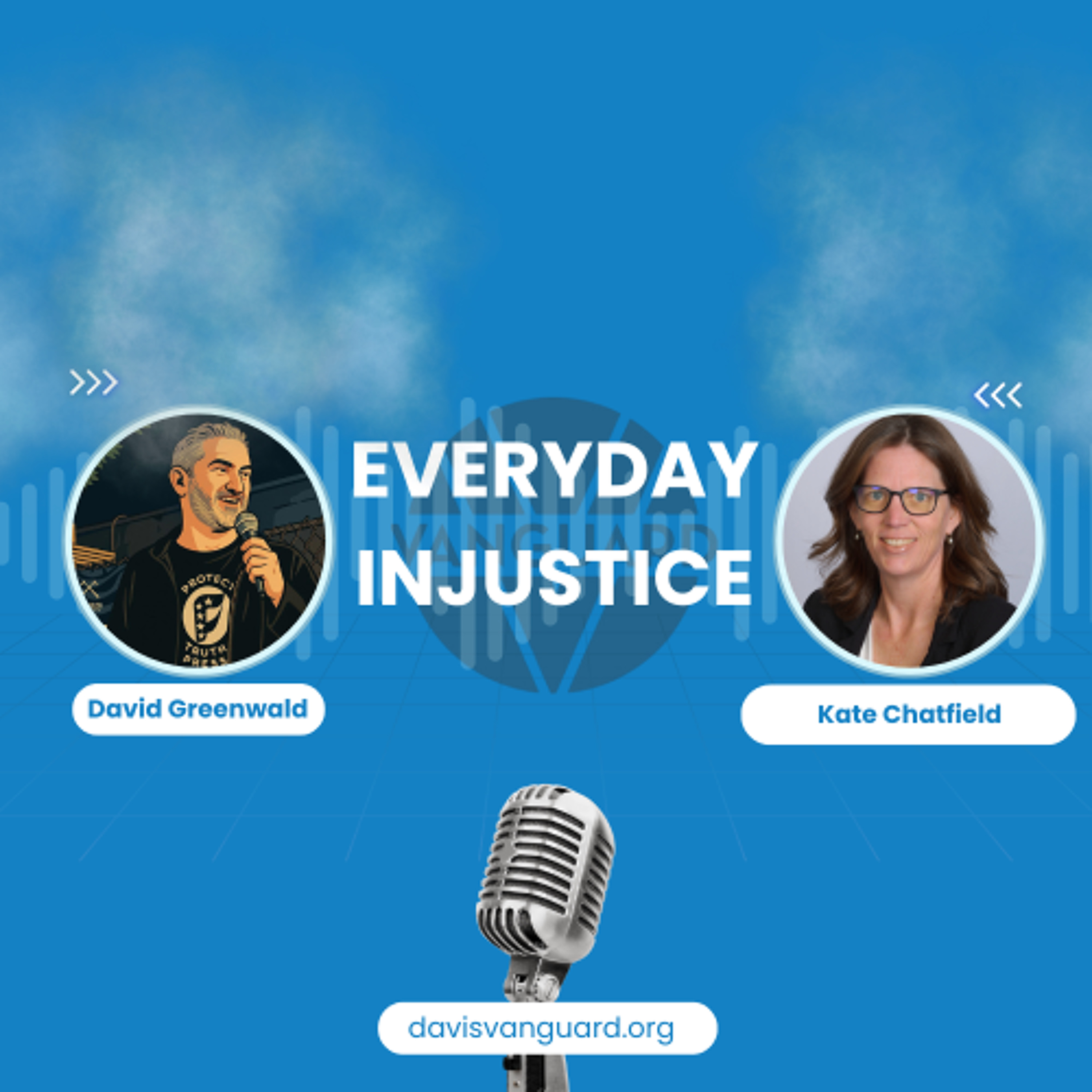
Everyday Injustice Podcast Episode 315: Public Defense, Felony Murder, Limits of Incarceration
On this episode of Everyday Injustice, host David Greenwald speaks with Kate Chatfield, executive director of the California Public Defenders Association, about the mounting crisis in California’s public defense system and what it reveals about deeper structural failures in the criminal legal system. Chatfield explains that public defenders now represent roughly 90 percent of people charged with crimes, yet remain chronically underfunded and overwhelmed, a reality that directly undermines the constitutional promise of meaningful legal representation . Chatfield describes how excessive caseloads make it nearly impossible for defenders to provide the level of advocacy required even in so-called low-level cases. She notes that misdemeanors routinely carry severe collateral consequences, including loss of employment, housing instability, and immigration harm, and that many clients are navigating homelessness, mental illness, or substance use disorders. These underlying conditions, she argues, are routinely criminalized rather than addressed through social services, placing public defenders on the front lines of systemic neglect . The discussion also turns to SB 1437, the landmark 2018 reform that narrowed California’s felony murder rule. As the bill’s lead drafter, Chatfield recounts how survey and appellate research revealed that felony murder disproportionately impacted young people, particularly young Black and Latino men, and frequently sentenced accomplices who were not the actual killers to life terms. She emphasizes that resentencing data following SB 1437 show extremely low recidivism rates, undercutting claims that such reforms threaten public safety . Finally, Chatfield weighs in on Proposition 36 and broader claims that increased incarceration can be justified as “treatment.” She argues that such measures are disingenuous, expanding jail populations while diverting resources away from housing, health care, and voluntary treatment—the very investments proven to prevent harm. True public safety, she concludes, will not come from deeper entanglement with the criminal legal system, but from sustained commitment to meeting human needs before people ever enter it .
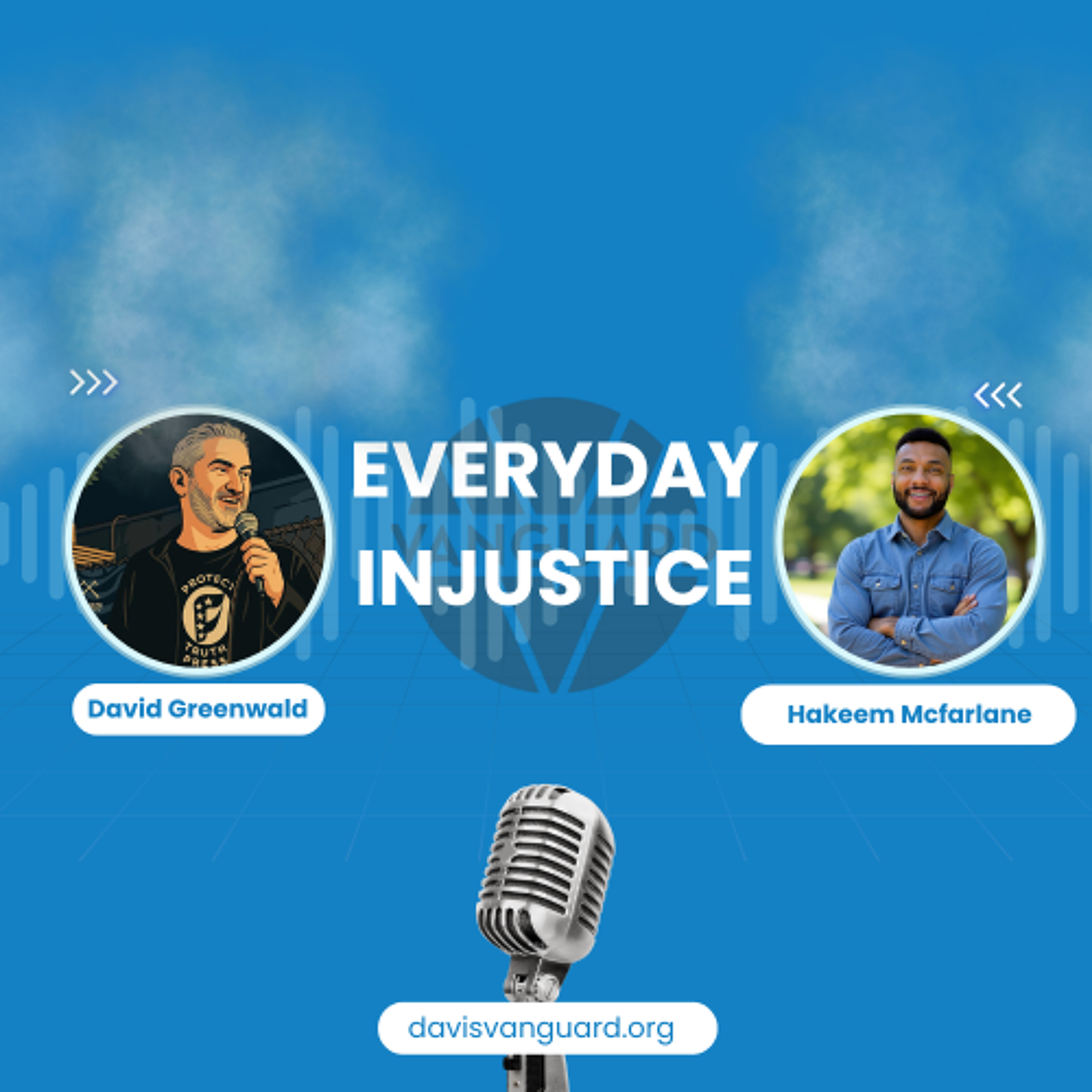
Everyday Injustice Podcast Episode 314: Hakeem McFarland on Purpose, Accountability, Transformation
Choosing Yourself Before Life Forces the Choice On the latest episode of Everyday Injustice, host David Greenwald speaks with Hakeem McFarland, a motivational speaker, wellness coach, author, and the founder of the Choose Yourself Movement, a philosophy built around reclaiming identity, integrity, and purpose in a culture driven by external validation. McFarland’s message is direct and uncompromising: before chasing achievement, status, or approval, people must first confront who they are when no one is watching and take responsibility for the systems that shape their daily lives. McFarland traces the origins of his work to repeated personal breaking points marked by grief, loss, addiction, and incarceration, culminating in a period of enforced solitude that forced him to confront himself without distraction or numbing. Rather than framing transformation as a sudden epiphany, he describes it as a disciplined process built through small, repeatable actions—sleep routines, mindful consumption, accountability, and habits that prioritize delayed gratification over instant relief. Choosing oneself, he argues, is not an abstract affirmation but a measurable practice rooted in what a person consistently does for their own well-being. At the center of this philosophy is the Choose Yourself Movement, a community designed as what McFarland calls an “integrity loop,” where participants publicly commit to personal goals and support one another in following through. Through weekly meetings, challenges, retreats, and daily accountability, the movement seeks to disrupt cycles of self-neglect and avoidance by replacing them with structure, honesty, and shared responsibility. McFarland emphasizes that community is not about motivation alone, but about creating conditions where excuses become harder to sustain. In the conversation, McFarland also reflects on authenticity as the foundation of lasting change, arguing that people often struggle because they are living versions of themselves shaped by conditioning rather than conviction. The episode explores why guilt, fear of judgment, and consumption-driven habits keep people stuck, and how confronting discomfort—rather than avoiding it—is essential to reclaiming agency. For listeners navigating burnout, identity loss, or a sense of stagnation, the discussion offers a stark but grounded challenge: no one is coming to save you, but the tools to begin are already within reach.









Get this podcast on your phone, Free


Create Your Podcast In Minutes
- Full-featured podcast site
- Unlimited storage and bandwidth
- Comprehensive podcast stats
- Distribute to Apple Podcasts, Spotify, and more
- Make money with your podcast