Mindfulness, Movement, and Exercise
https://api.substack.com/feed/podcast/1183770.rssEpisode List
Build Hanging Stamina Through Play: Leg Movement Variations
There is a surprisingly effective trick for staying on the bar longer, and it has nothing to do with grip strength.It’s your legs.When most people hang, their legs just … dangle. Inert. Waiting. But your legs are heavy, and how you hold and move them has a direct effect on how your hands, arms, and shoulders are loaded. More importantly, moving your legs gives your grip something to negotiate with — and that negotiation, it turns out, is excellent training.This tutorial is about building hanging stamina not by white-knuckling your way through longer hangs, but by keeping yourself interested while you’re up there.How It WorksGrab your pull-up bar. Feet on the ground or off — your choice, and neither is cheating. Start shifting some weight into your hands. Then, keeping your arms relatively still, begin moving your legs.Start big. Paint slow circles with both legs, like you’re trying to trace the largest possible shape in the space around you. Reach behind you. Sweep side to side. Move forward and back. Turn your feet. Then start breaking the symmetry — one leg at a time, one going clockwise while the other goes counterclockwise, an eggbeater motion, legs going the same direction, legs going opposite directions.The arms stay quiet. The legs do the exploring.Why This Builds StaminaWhen you’re focused on a task — what shape can I make? what happens if I do this? — you stop obsessing over how long you’ve been hanging. The mental engagement changes your relationship to the discomfort. But there’s also something mechanical happening: shifting your legs around redistributes load through your core and changes the demand on your grip in subtle, constantly varying ways. You’re essentially giving your hands and forearms a moving target rather than a fixed one, which trains adaptability alongside raw endurance.Tap your feet down whenever you need a rest. That’s not giving up — that’s exactly the right approach. Touch down, reset, go again.The Only RuleCome up with as many ways to move your legs as possible. There is no correct sequence, no rep count, no timer to beat. The goal is simple: stay curious, keep exploring, and see what you discover.You might find certain movements that immediately make the hang feel harder. Others might surprisingly give you relief. Some combinations will feel coordinated and fluid; others will feel hilariously awkward. All of it is useful. All of it counts.Give it a try and let me know how it goes — drop a comment and tell me what leg variations you discovered. I’d love to hear what you came up with.If this was helpful, please like, share, and subscribe. More in the hanging series coming soon. This is a public episode. If you'd like to discuss this with other subscribers or get access to bonus episodes, visit jennpilotti.substack.com/subscribe
Play Your Way to Better Shoulders
There is a certain kind of gym culture that insists everything must be optimized — the perfect grip width, the ideal scapular position, the precisely calibrated hang duration. It’s well-meaning. It’s also, quite often, the fastest route to a practice you abandon by February.This tutorial is not that. This is the other thing: permission to play.“Give yourself permission to play. Don’t worry about how long you’re up there for.”All you need is a pull-up bar. Whether your feet stay on the ground or come off it entirely is your call — both are valid, both are useful, and neither makes you more or less serious about your practice.What the Tutorial CoversThe premise is beautifully simple: grab the bar, and start asking:what if? What if one hand shifts its position? What if you move a little sideways? What if you let yourself drift one direction and see what that reveals about where you’re stiff, where you’re free, where your body has been quietly waiting for attention?This mirrors the approach we took in the leg tutorial — the idea that curiosity is a better teacher than correction. Your nervous system responds differently when it’s exploring versus when it’s performing. The same shoulder that locks up under a prescribed protocol often opens right up when you’re just … seeing what happens. This is a public episode. If you'd like to discuss this with other subscribers or get access to bonus episodes, visit jennpilotti.substack.com/subscribe
Unlock Your Hips: A Two-Part Mobility Flow for Deeper Range and Strength
Unlock Your Hips: A Two-Part Mobility Flow for Deeper Range and StrengthWe often think of mobility work as purely passive stretching, but the most effective hip mobility comes from combining relaxation with active control. This tutorial walks you through a simple yet powerful sequence that does exactly that—first teaching your nervous system to relax into new ranges, then building the strength to own those positions.The Relaxed Approach: Seated Pretzel RocksStart on your hands and knees. Slide your right leg straight back, then angle it slightly to the side. Now comes the “pretzel” part: bend that back knee and tuck it directly behind your front knee. You’re creating a crossed-leg position that might feel strange at first, but trust the process.Walk your hands back slightly and begin rocking your hips backward and forward. The key here is softness—let gravity do the work. Don’t force anything. Rock gently a few times, exploring the sensation without tension.On your final rock backward, walk your hands all the way back until you’re seated in this pretzel position. Breathe here. This is your baseline.The Active Challenge: The Reaching Leg ExtensionNow we’re going to wake up those hip muscles, particularly your glute medius. From your seated pretzel, you’ll unwind the top leg through active control.Place the hand of your bottom leg on the floor for support. Here’s where it gets interesting: reach that top leg as far away from your body as possible—really reach it, like you’re trying to touch the wall behind you. Keep that knee rotated forward (though you can experiment with rotating it outward to see how it feels differently).Continue reaching as you slowly slide the leg back until it fully extends. You should feel serious work happening in the glute med of your bottom leg. This isn’t passive anymore—this is strength work disguised as mobility.Slide back into the pretzel and repeat. Each rep teaches your hip to control the range you just passively explored.Why This WorksThe genius of this sequence is in its structure. First, you use gentle rocking to signal safety to your nervous system, accessing hip rotation without triggering protective tension. Then, you immediately reinforce that new range with active strength work. You’re not just stretching—you’re teaching your body that this range is safe and functional.The reaching action also creates something called irradiation—when you create tension in one area (the reaching leg), it can help stabilize and strengthen neighboring areas. That glute med burn you feel? That’s your hip learning to support these positions, which is what makes mobility stick.Try this on both sides, moving slowly and staying curious about the sensations. Your hips will thank you. This is a public episode. If you'd like to discuss this with other subscribers or get access to bonus episodes, visit jennpilotti.substack.com/subscribe
Understanding Movement: How Sensory Input Shapes Your Body and Mind
In this introduction, I share the core framework that guides my work as a mind-body movement specialist: sensory input drives how we move. I explore proprioception (your unconscious body awareness), interoception (your internal sensations), and how these systems influence everything from chronic pain to mental health. You'll learn about the difference between top-down and bottom-up processing, why movement is one of the most accessible entry points to mindfulness, and how developing body awareness can transform your relationship with pain and stress. Whether you're dealing with chronic discomfort, looking to deepen your movement practice, or simply curious about the brain-body connection, this overview offers a foundation for understanding how conscious movement can improve your overall wellbeing. This is a public episode. If you'd like to discuss this with other subscribers or get access to bonus episodes, visit jennpilotti.substack.com/subscribe
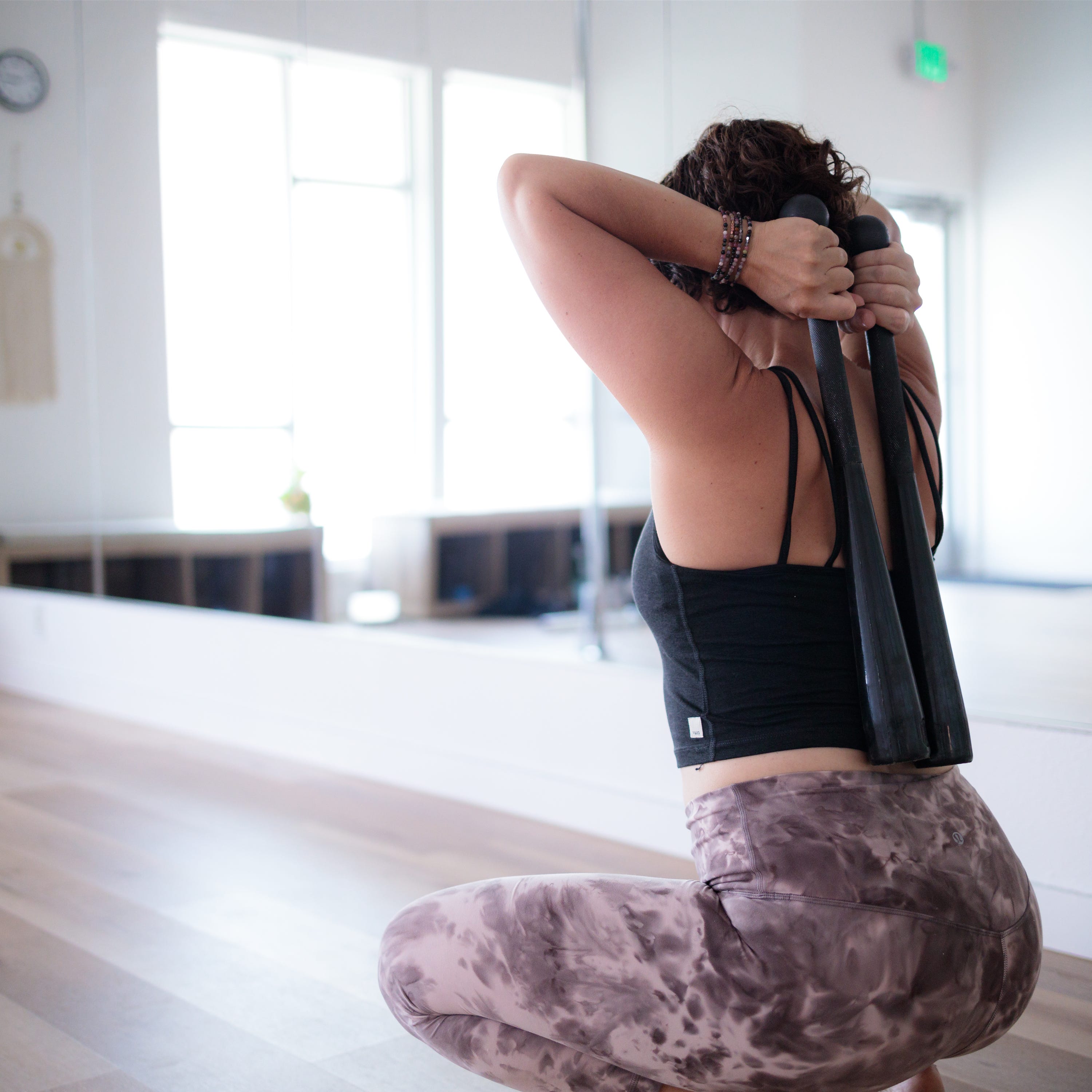
Relief for Computer-Related Wrist, Elbow, and Shoulder Pain
If you spend long hours at your computer, you’ve probably experienced that familiar ache in your wrists, elbows, or shoulders. This simple wall stretch can help address the tension that builds up from repetitive keyboard and mouse work.How to do it:Start by standing next to a wall. Place your hand flat against it—or if that’s difficult, get your fingers to the wall first and then reach the heel of your palm toward it. Press firmly through the center of your palm while creating a sense of lifting through your forearm. Let your upper arm rotate naturally, and keep your shoulder down, not hunched up by your ear.From here, take your opposite hand, touch the shoulder of your extended arm, and open it outward. Watch your fingers as you do this. Your feet can be close together or slightly apart—whatever feels stable.After you finish, rest your hands by your sides and take a moment to notice how the stretched arm feels compared to the other side. Then repeat with the other arm.This quick exercise helps counteract the effects of staying in one position for extended periods. It’s particularly effective when done regularly throughout your workday—you don’t need to wait until pain develops.Give it a try during your next work break and notice the difference. This is a public episode. If you'd like to discuss this with other subscribers or get access to bonus episodes, visit jennpilotti.substack.com/subscribe
You may also like






Get this podcast on your phone, Free


Create Your Podcast In Minutes
- Full-featured podcast site
- Unlimited storage and bandwidth
- Comprehensive podcast stats
- Distribute to Apple Podcasts, Spotify, and more
- Make money with your podcast